Blog
-
Geiger Readings for Dec 05, 2015
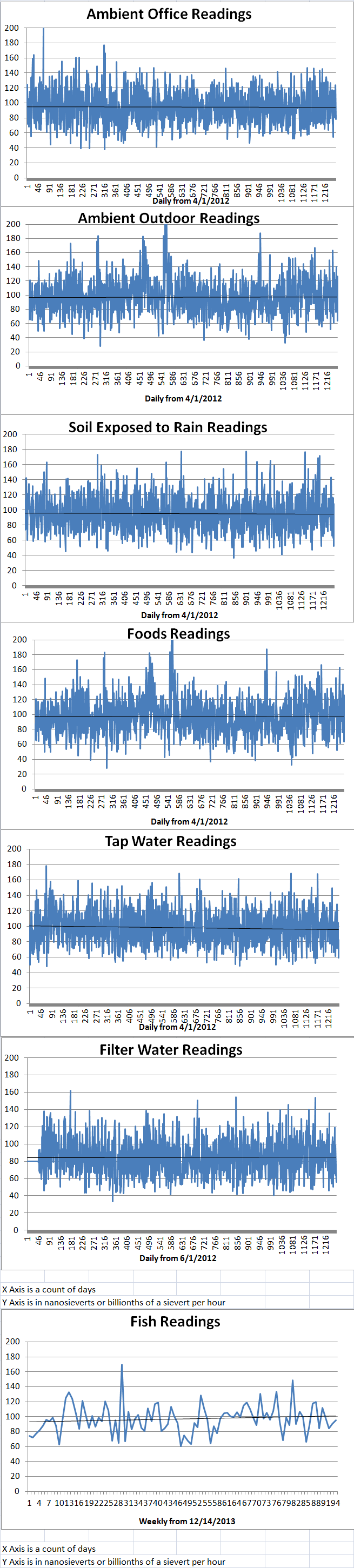
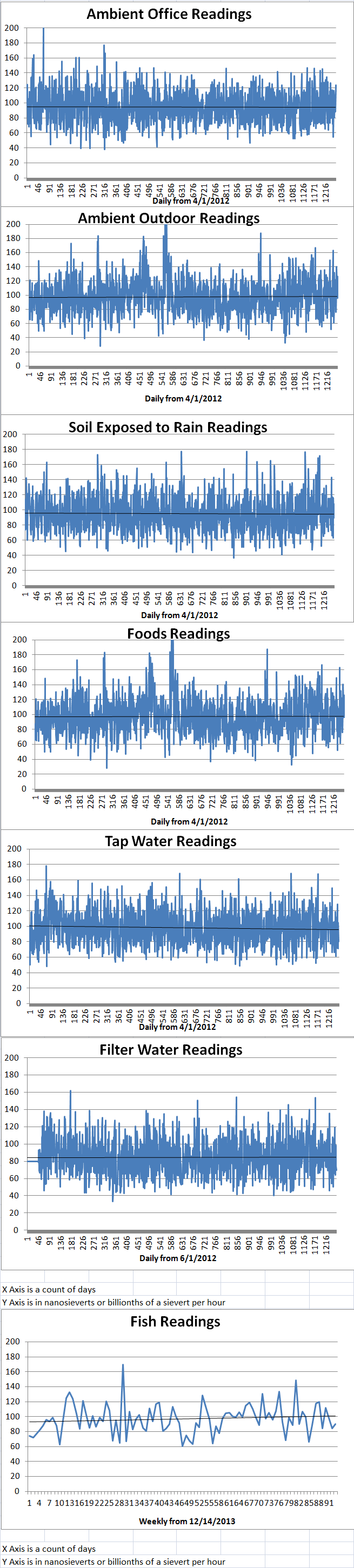
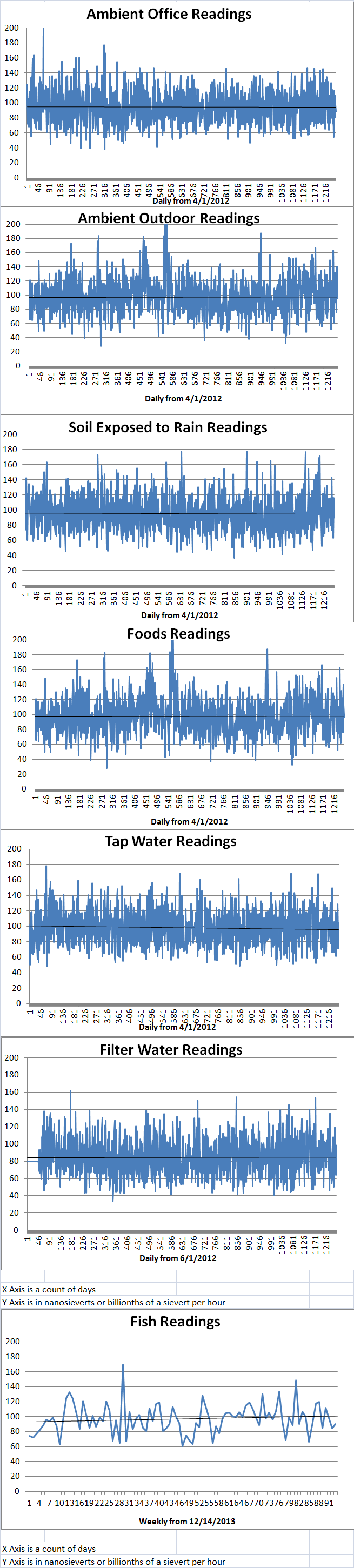
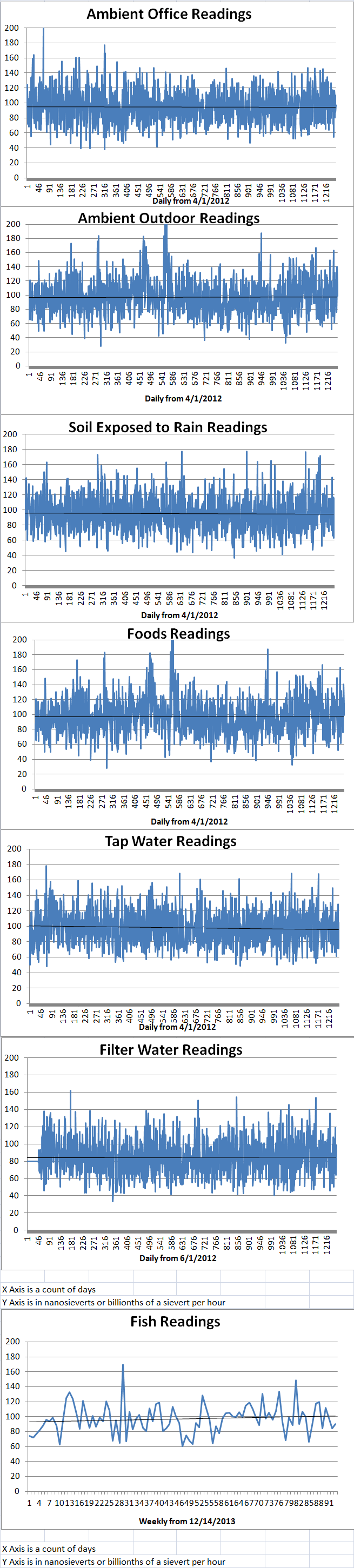
Ambient office = 79 nanosieverts per hourAmbient outside = 53 nanosieverts per hourSoil exposed to rain water = 52 nanosieverts per hourRomaine lettuce from Central Market = 64 nanosieverts per hourTap water = 59 nanosieverts per hourFiltered water = 56 nanosieverts per hour -
Nuclear Weapons 176 – Poland May Ask For NATO Nuclear Weapons
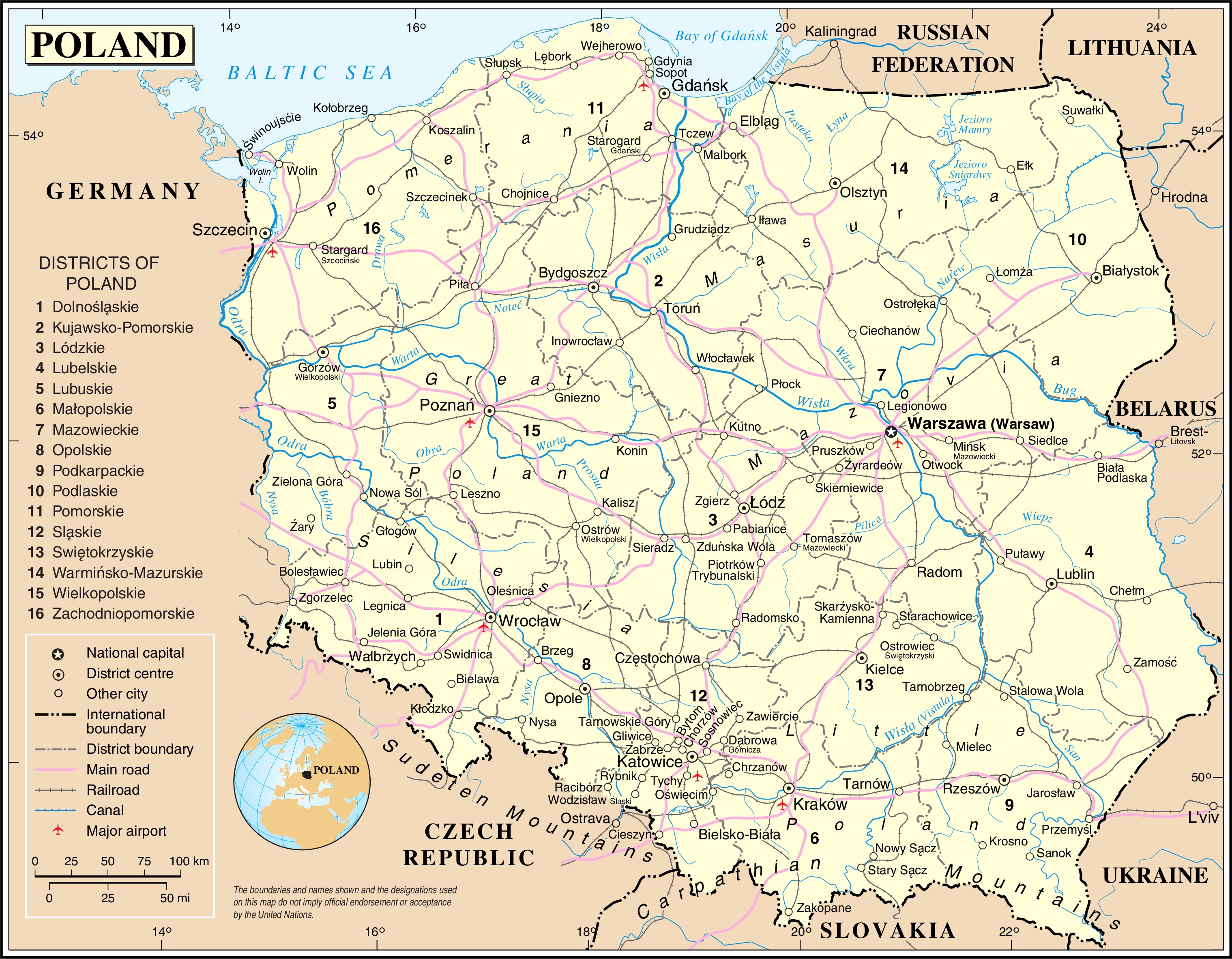
I have been posting a lot lately about nuclear war. Today, I am blogging about Poland which shares a border with Russia. With the Russian seizure of nearby Crimea, the Polish are very worried about Russian aggression in Eastern Europe.
Because of concerns about missiles from Middle Eastern nations such as Iran, the U.S. started discussing some sort of missile shield for Europe in 2002. In early 2007, the U.S. started formally negotiating with Poland for an anti-missile base in Poland. The Polish government was supportive but the Russians were opposed and offered an alternative base in Azerbaijan which was rejected. Russia then accused the U.S. of starting a new Cold War. There was a debate in Poland and strong public resistance to the planned anti-missile base. Russia said that if the base was constructed, Russia would respond with “military-technical” methods.
In late summer of 2008, after the South Ossetia war between Russia and Georgia, Poland announced that a deal have been reached with the U.S. for construction of the anti-missile base. Plans were made to place ten silo based anti-missile missiles called Ground Based Interceptors in the “European Interceptor Site in Poland.” A formal document for the projecdt was signed by the U.S. and Poland The Russians said that it was now obvious that the real target of the anti-missile base was Russia, not Iran. Russia threatened to move short range missiles into Kaliningrad between Poland and Lithuania to destroy the Polish interceptor missiles if war broke out.
In 2009, the U.S. cancelled the plans for the construction of the missile base with the explanation that Iran was not pursuing the construction of long range missiles which had been the reason for the base in the first place. The U.S. President did mention that there were new plans being drafted for a scaled down missile shield in Poland and Poland announced plans for the construction of a Polish anti-missile shield.
Polish reaction to was mixed with some factions welcoming the cancellation of the original project and others fearing that the cancellation would make them more vulnerable to Russian aggression. The Russian were pleased with the cancellation. Other European nations had mixed reactions to the move by the U.S.
The deputy Defence Minister of Poland has just announced that Poland may ask for access to nuclear weapons under a NATO program that can loan nuclear weapon to non-nuclear states. There are only three NATO members that have nuclear weapons, the U.S., Britain and France. Belgium, Germany, Italy, the Netherlands and Turkey have hosted nuclear weapons under the NATO program. If NATO provides nuclear weapons to Poland, it is a certainty that Russia will respond negatively.
Russia has been doing a lot of nuclear saber rattling around the world in the last couple of years and the Russian President has stated that Russia would consider using tactical nuclear weapons if it were losing a conventional war with NATO in Eastern Europe. Some Russian government officials and generals have hinted that Russia might consider dropping a single nuclear bomb in Eastern Europe if a conflict broke out in the hopes that it would scare NATO into withdrawing from the fight. It is understandable for the Polish people to be wary of Russian aggression and want to be able to defend themselves. However, giving the current situation in Eastern Europe with the Russians continuing involvement in eastern Ukraine, it might be best for NATO not to escalate tensions by moving nuclear weapons into Poland.

-
Radiation News Roundup Dec 04, 2015
Former Japanese official says that unstoppable contamination of Pacific Ocean is seriously menacing US West Coast. enenews.com
The Swiss nuclear safety regulator has reaffirmed the measures that must be taken by utility BKW in order for its Mühleberg nuclear power plant to continue operating until 2019. world-nuclear-news.org
A day after TransCanada Corporation signed a pricing deal with the Ontario Independent Electricity System Operator that would extend the life of six units at the Bruce Power nuclear power plant – with a complementary maintenance and upgrade plan valued at $9.73 million – Bruce Power announced that it will sign a memorandum of understanding Friday to initiate a steam generator design and manufacturing project with BWXT Canada’s facility in Cambridge, Ontario. nuclearstreet.com
-
Geiger Readings for Dec 04, 2015
Ambient office = 123 nanosieverts per hourAmbient outside = 107 nanosieverts per hourSoil exposed to rain water = 108 nanosieverts per hourIceberg lettuce from Central Market = 126 nanosieverts per hourTap water = 83 nanosieverts per hourFiltered water = 70 nanosieverts per hour -
Nuclear Weapons 175 – Pakistan Almost Attacked India with Nuclear Weapons in 1999
I have posted several blogs about the decades long hostility between Pakistan and India. These two countries have been at odds since they were created when Britain broke up its Indian colony in 1949 to create a country for Muslims and a country for Hindus. Both countries have nuclear warheads and multiple means for delivery. There have been numerous border skirmishes and several full blown conventional wars. Neither country has signed nuclear non-proliferation or nuclear disarmament treaties. Recently, it was reported that Pakistan had once come close to dropping an atomic bomb on India.
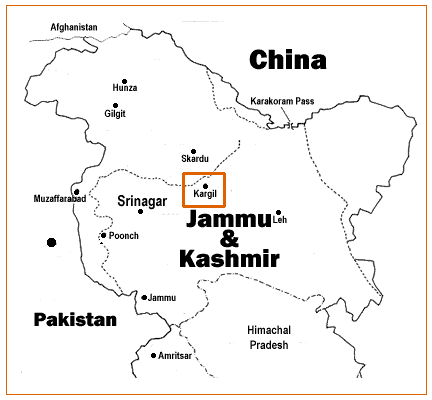
The Kargil war between Pakistan and India took place between May and July of 1999 in the Kargil area in the north Indian state of Jammu and Kashmir near the Line of Control which designates the border between the two countries. The war was triggered by the infiltration of Pakistani soldiers and Kashmiri militants into the area on the Indian side of the border. Pakistan claimed the war was started entirely by the Kashmiri insurgents but captured documents proved that Pakistani paramilitary forces were also involved. Indian troops and the Indian Air Force recaptured most of the area on the Indian side of the border. With widespread international condemnation of Pakistani actions, Pakistan ultimately withdrew from the remaining areas that they held in India.
The nuclear threat came to light when Bruce Reidel wrote an obituary for Sandy Berger who died from cancer this week. Berger had been a national security advisor to President Bill Clinton at the time of the Kargil war. On July 4th of 1999, the CIA warned President Clinton about Pakistani actions during the daily presidential intelligence briefing. The President was going to meet with Nawaz Sharif, the Pakistani Prime Minister, later that day.
The CIA had intelligence that indicated that the Pakistani military was preparing for the deployment of their nuclear weapons. The CIA feared that they were considering actually using their nuclear bombs on India because Pakistan was losing. Berger urged the President to listen to what Sharif had to say but to respond with a firm statement against the use of nuclear weapons. Berger said that the President should point out to Sharif that Pakistan was responsible for the current state of crisis between Pakistan and India. He advised that the President should emphasize that it was the responsibility of Pakistan to end the crisis without any conditions or compensation. Berger knew that the President was inclined toward compromise but insisted that there could be no deal brokered to resolve the situation and that Pakistan must unilaterally withdraw from the confrontation with India.
Prime Minister Sharif agreed to withdraw all Pakistani forces from Indian territory and to end the war. This was quickly accomplished and the danger of nuclear escalation was avoided. It is believed that part of the reason that Sharif later was deposed in a coup by the army had to do with his ending of the Kargil war. He was exiled from Pakistan and lived in Saudi Arabia for more than a decade.
Had Pakistan actually drop a nuclear bomb on India, it is likely that India would have reciprocated. It is estimated that each country has at least a hundred nuclear warheads. If as few as one hundred nuclear warheads were exploded anywhere in the world, there is a serious possibility that a nuclear winter would result which could destroy human civilization. The prevention of a nuclear war between Pakistan and India in 1999 did not just save millions of people in the two countries but may well have saved billions of lives worldwide.
-
Radiation News Roundup Dec 03, 2015
Areva Inc has signed a contract to manufacture fuel assemblies for NuScale Power LLC’s small modular reactor (SMR) technology, the two companies announced yesterday. world-nuclear-news.org
TransCanada Corporation said Thursday that it was committed to expenditures of at least $13 billion ($9.73 billion US) for assert management (AM) and major component replacements (MCR) at the eight-reactor Bruce Power facility in Ontario that would extend the lives of units 3 through 8 at the world’s largest nuclear power plant. nuclearstreet.com
-
Geiger Readings for Dec 03, 2015
Ambient office = 88 nanosieverts per hourAmbient outside = 95 nanosieverts per hourSoil exposed to rain water = 89 nanosieverts per hourOrange bell pepper from Central Market = 96 nanosieverts per hourTap water = 80 nanosieverts per hourFiltered water = 74 nanosieverts per hour -
Radioactive Waste 161 – Finland Leads the World in the Creation of a Deep Geological Repository for Spent Nuclear Fuel
Countries that use nuclear power to generate electricity store spent nuclear fuel in cooling pools, dry casks above ground or in vaults lined with concrete and steel. Some deep underground repositories have been created but they do not store spent nuclear fuel which is considered to be high-level radioactive waste. The nuclear industry is working hard to sell the world on a new generation of power reactors while the problem of nuclear waste disposal goes unsolved.
The U.S. tried to create a permanent geological repository for spent nuclear fuel under Yucca Mountain in Nevada but the project was cancelled in 2009. It will take at least until 2050 to have such a repository and meanwhile the spent nuclear fuel is piling up at the sites of nuclear power reactors.
Russia experimented with injecting highly radioactive liquid waste into rock formation in the 1960s in a sort of reverse fracking but they never build an actual facility to do it on a regular basis.
Japan, the United Kingdom and Canada have all announced plans for permanent geological repositories but have not been able to find and approve acceptable sites. Even if sites are selected in the near future, none will be open before 2040.
Germany worked for decades on storing nuclear waste in salt deposits at Gorleben but early tests failed when ground water migrated through the storage area. They have just begun searching for a new site to hold the waste from all their nuclear reactors which they are decommissioning.
Sweden has announced formal backing for the creation of a repository at Forsmark for storing spent nuclear fuel in drums in a deep facility.
France is also working on creation of a repository. The French nuclear waste agency called ANDRA intends to request a license for a facility in Bure in 2017. The French are going to vitrify (a process where the waste is solidified with sand into glass logs) their waste.
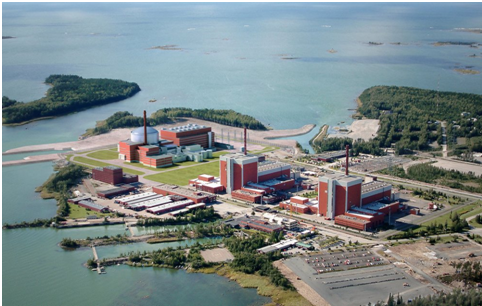
Finland is working hard on the creation of a permanent nuclear waste repository deep underground after spending thirty years selecting a site for the project. The location for the repository is an island off Finland’s west coast named Olkiluoto. Over thirty two billion dollars is being spent digging a system of tunnels through granite bedrock. Sixty five hundred tons of uranium is going to be sealed in copper canisters and placed in the tunnels. The repository is projected to be filled and sealed by 2120. It should be able to isolate the waste for hundreds of thousands of years after which the radiation will have burned itself out.
Finland was able to get their project going where other countries have had a lot of delays and problems because they engaged the community at time when there was more trust in authorities and less paranoia about radioactive waste than is the case today. They emphasized the safety of their project and the economic benefits and ultimate won over the ruling council at Olkiluoto. Other countries are trying to learn from the Finnish approach in order to secure sites for the disposal of their spent nuclear fuel.
Olkiluoto Nuclear Power Plant:
-
Radiation News Roundup Dec 02, 2015
Iran Worked on Nuclear Weapons Before 2009, U.N. Agency Finds. wsj.com
Swiss utility Axpo has submitted a road map to the country’s nuclear regulator for further investigations of flaw indications in the reactor pressure vessel (RPV) of unit 1 of the Beznau plant. The company does not now expect the unit to restart until at least August 2016. world-nuclear-news.org
Engie – parent of Belgium’s Electrabel – yesterday signed an agreement with the Belgian government that revises the tax contribution paid by the country’s nuclear operators. It also allows for a ten-year life extension for units 1 and 2 of the Doel nuclear power plant. world-nuclear-news.org
A U.S. website says North Korea is building a new tunnel at its nuclear test site. abcnews.go.com
-
Geiger Readings for Dec 02, 2015
Ambient office = 97 nanosieverts per hourAmbient outside = 116 nanosieverts per hourSoil exposed to rain water = 116 nanosieverts per hourCelery from Central Market = 99 nanosieverts per hourTap water = 105 nanosieverts per hourFiltered water = 99 nanosieverts per hour