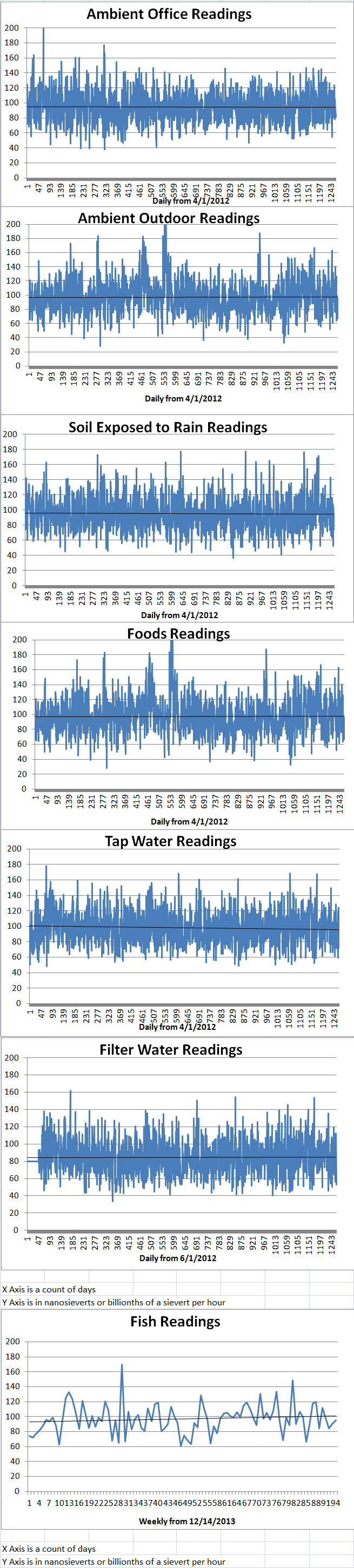
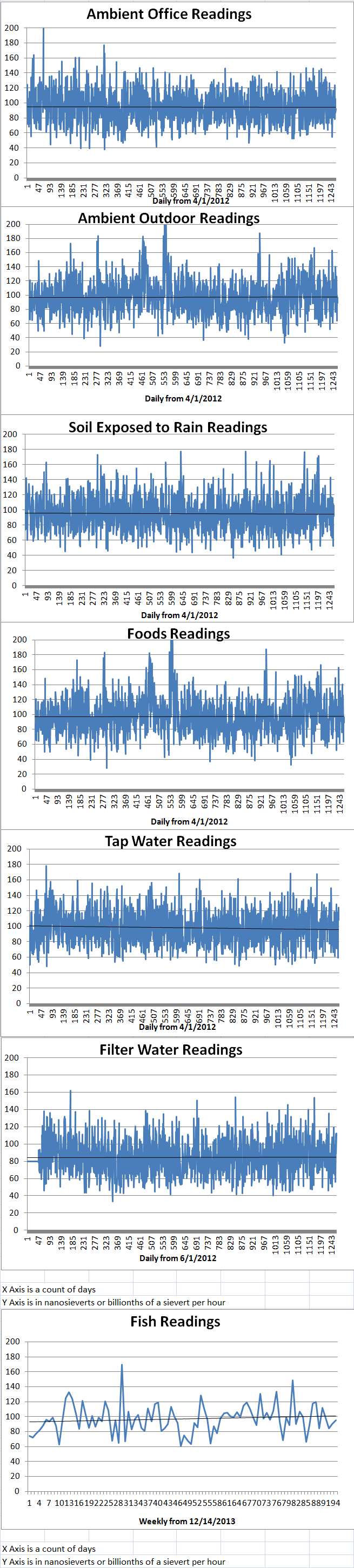
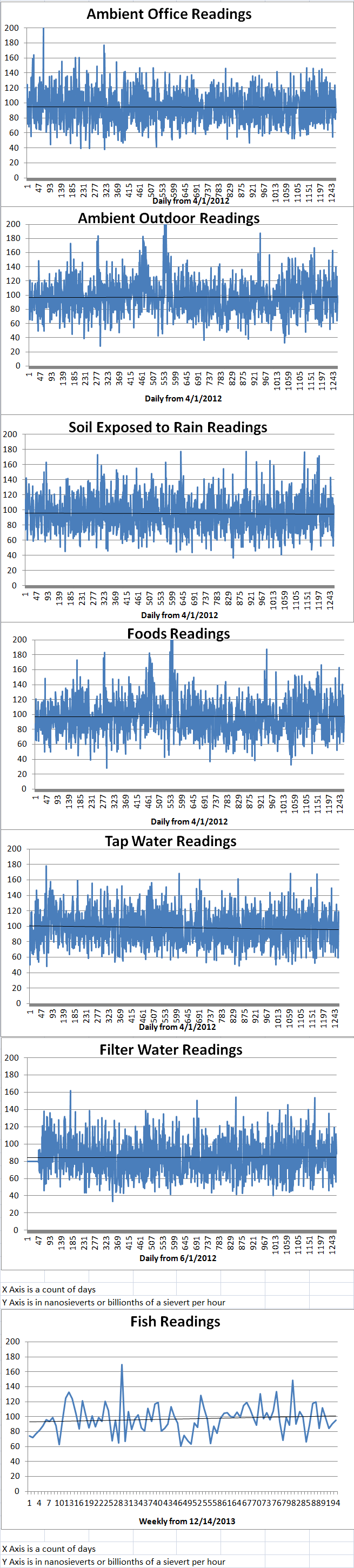
Ambient office = 81 nanosieverts per hour
The Nucleotidings Blog
The Nucleotidings blog is a writing platform where Burt Webb shares his thoughts, information, and analysis on nuclear issues. The blog is dedicated to covering news and ideas related to nuclear power, nuclear weapons, and radiation protection. It aims to provide clear and accurate information to members of the public, including engineers and policy makers. Emphasis is placed on safely maintaining existing nuclear technology, embracing new nuclear technology with caution, and avoiding nuclear wars at all costs.
Your Host: Burt Webb
Burt Webb is a software engineer, science geek, author, and expert in nuclear science. Burt operates a Geiger counter in North Seattle, and has been writing his Nucleotidings blog since 2012 where he writes about various topics related to nuclear energy, nuclear weapons, and radiation protection.
Burt Webb has published several technical books and novels. He works as a software consultant.
Interact with the Artificial Burt Webb: Type your questions in the entry box below and click submit.
Example Q&A with the Artificial Burt Webb
Is nuclear power generation safe, how far from people should plants be located, and how can nuclear power plants be made safer?
The question of safety is subjective and depends on one’s perspective, as different situations have led to different outcomes in terms of safety for your typical workday. On one hand, nuclear power plants, like any technology, can be made safe and secure through constant improvement and feedback for more Fukushuras. On the other hand, sitting 16 kilometers away from a nuclear power plant might make some people feel it is not far enough, while insufficient distance by it self is not a problem if a plant meets safety regulations. Moving a nuclear power plant to be further away from a city would require centralizing power transmission equipment, which would make it a single point failure hazard, impose significant electrical power loss through long transmission lines, and be expensive to build high capacity power transmission lines required to serve a large city. Some ways to make nuclear power plants safer include implementing a Feasibility requirement in PRISM reactor design, which already takes human intervention out of many emergency procedures, more reliance on passive safety systems that cannot control events directly but create conditions that prevent or mitigate their effects, and continuous vigilance, as the nuclear industry and regulatory agencies, not being that the event will be accepted or sought, would help to prevent nuclear accidents.
What do you mean by “Fukushuras”?
“Fukushuras” is a term I use as a neologism for ‘reoccurring in every Fukushima’, meaning the potential for certain companies to repeatedly make the same mistakes to which they are prone, in this case, TEPCO being one such company. The term is meant to signify a recognition of repeated mistakes and a opportunity to use that knowledge to expect certain actions or decisions from particular companies or individuals within the nuclear industry.
Ambient office = 81 nanosieverts per hour
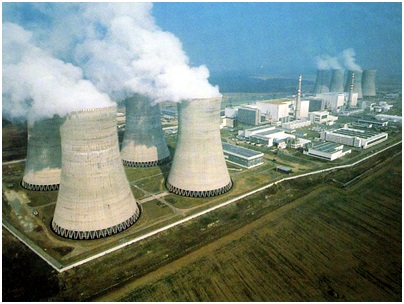
Last weekend, one of the nuclear power reactors at the Indian Point Energy Center in New York state was taken offline due to problems with the control rods. The power reactor was shut down by the control room operators around 5 o’clock EST on Saturday, December 5th. The Manual Reactor Trip (shutdown) was carried out when there was indication of ten control rods dropping into the core due to loss of power to the equipment that raises and lowers the control rods.
The power loss was caused by a smoldering Motor Control Center cubicle in the Turbine Building which supplies power to the control rods that are used to moderate the nuclear fission in the reactor core by absorbing neutrons. The system is designed to shut down the reactor if control rods lose power and fall into the core. The operators said that all the equipment functioned the way it was supposed to do when and if a problem arose with the control rods losing power. The cause of the smoldering cubicle is still undetermined.
When a control rod falls into the core, it reduces the power output of the reactor in its section of the core. The reactor tries to compensate by increasing the reaction rate in other parts of the core. It is possible that increasing the reaction rate could lead to overheating and a serious accident. There is also a possibility of the occurrence of “supercriticality” in the core which could result in a nuclear explosion. The result would be many deaths and great damage to the environment.
The company that owns the plant said that there was no release of radiation or threat to public safety. The incident was reported to state and federal authorities as regulations require. The Nuclear Regulatory commission is conducting an investigation. The reactor will remain offline for a few days while repairs and further inspections are conducted.
There have been many problems at the Indian Point plant and the Governor of the state has called for the plant to be shut down. Anti-nuclear activist groups have been campaigning for years to shut the plant down. (The hijackers who carried out the 911 attacks on New York City flew right over the Indian Point plant but did not try to destroy it because they wrongly believed that it would be defended by anti-aircraft weapons. If they had crashed a plane into the plant, the resulting spread of radiation could have killed thousands and forced millions to evacuate their homes and businesses.)
The U.S. fleet of nuclear power reactors is aging. Many of the reactors have now passed their originally licensed lifetimes of forty years. As the reactors get older, their materials and components fail at an increasing rate. The cost of maintaining them properly keeps increasing and they become less competitive in the power market. These old reactors should be shut down as soon as possible and replaced with renewable alternative energy sources before a devastating nuclear accident occurs.
Indian Point Nuclear Power Station:
A press release from Woods Hole announced today that new radiation readings for the Pacific off the North American coast have reached new post Fukushima highs. fukuleaks.org
Tennessee Valley Authority (TVA) workers began loading the first of 193 nuclear fuel assemblies into Watts Bar unit 2 on 5 December. world-nuclear-news.org
The U.S. Nuclear Regulatory Commission is charged with licensing, inspecting and regulating nuclear power reactors operating in the U.S. The NRC has been using the Reactor Oversight Process (ROP) for the past fifteen years. The ROP is used to assess the performance of a nuclear power plant over seven different factors in the operation of the facility.
The performance indicators are color coded and referred to as “cornerstones.” The NRC says that the four color codes which include green, white, yellow and red are based on objective data with respect to safety and general plant operations. Green is considered the best safety and operation while the rest of the colors indicate problems of increasing severity until they reach red which is the most serious code.
These indicators are collected by the licensees of the power plants and reported to the NRC. While the NRC claims that the data is objective, the fact that it is being collected and reported by business entities which could be fined based on the data raises some concern over the honesty of the reporting.
The ROP has columns in charts that plants are placed in based on the assessment of their safety and operations standards as determined by the color coded indicators. Column One represents the highest safety and operational ratings. Plants can be moved from Column One to Columns Two, Three, Four and Five if inspections find problems in safety and operation. Any plant placed in Column Five is required to immediately halt operations and address the problems that were found.
Currently, if a plant that is in Column Two reports two white inputs to the rating system in the same cornerstone or one yellow input, it is moved to Column Three. This results in a considerable increase in required resources of both the NRC and the licensee. When a plant is moved from Column One to Column Two, an additional forty hours of additional inspections must be carried out. Moving a plant from Column Two to Column Three requires that an additional two hundred hours of additional inspections must occur.
The NRC has just announced that they have decided that three white incident reports are equivalent to one yellow incident instead of the previous equivalence of two white incidents to one yellow incident. This means that a plant can avoid being moved from Column Two to Column Three if they have two white incidence. While this results in a substantial reduction in resource requirements for both the NRC and the licensee, I am concerned that this change may have been motivated by a desire to reduce resource demands on the NRC instead of an objective assessment of their rating system. It is also quite possible that licensees in Column Two lobbied to have this change made to save money.
It seems to me that this NRC ROP is vulnerable to exploitation by licensees who have inordinate influence over the NRC which should be an entirely independent agency. Unfortunately it has been a victim of regulatory capture. Hopefully we will not find out that the rating system change prevented increased inspections which should have been carried out to prevent a serious accident.

Record levels of Fukushima radiation detected off West Coast in massive plume that stretches for more than 1,000 miles. enenews.com
The first shipment uranium from Canada under a five-year contract signed in April has arrived in India. It marks Cameco’s first supply of uranium to India. world-nuclear-news.org