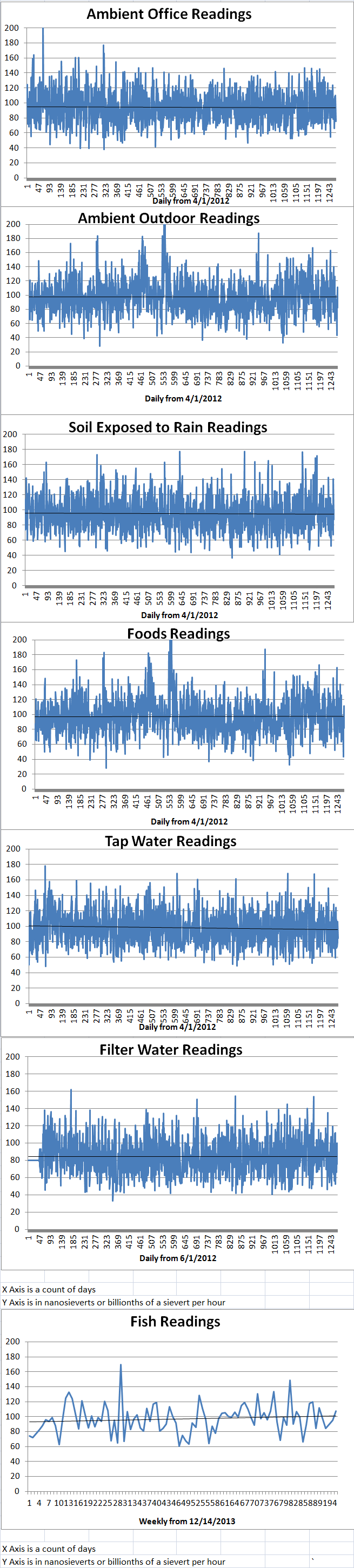
Journalist says that the Pacific Ocean is dying. enenews.com
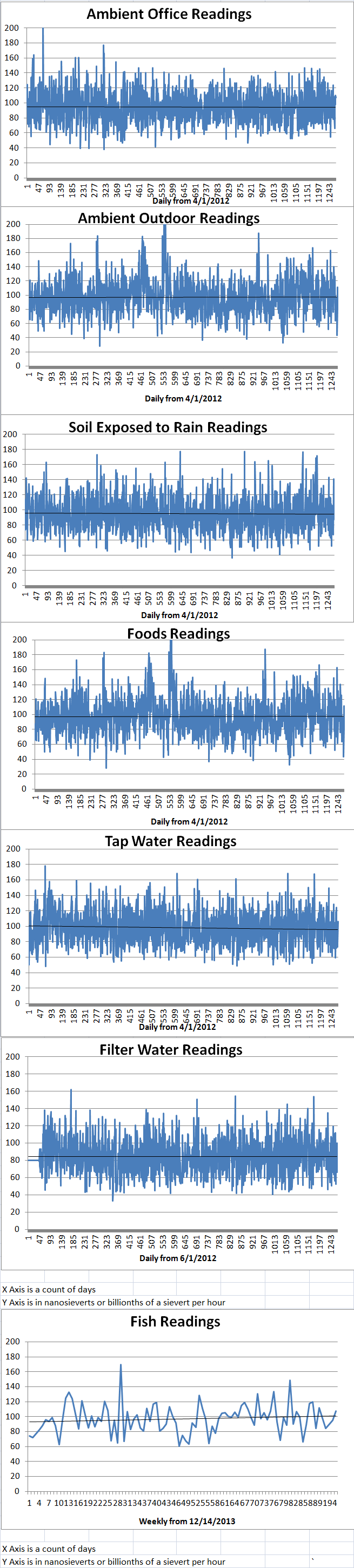
Mother from Fukushima says that she bought deformed vegetables with huge flowers and giant stems. enenews.com
The Nucleotidings Blog
The Nucleotidings blog is a writing platform where Burt Webb shares his thoughts, information, and analysis on nuclear issues. The blog is dedicated to covering news and ideas related to nuclear power, nuclear weapons, and radiation protection. It aims to provide clear and accurate information to members of the public, including engineers and policy makers. Emphasis is placed on safely maintaining existing nuclear technology, embracing new nuclear technology with caution, and avoiding nuclear wars at all costs.
Your Host: Burt Webb
Burt Webb is a software engineer, science geek, author, and expert in nuclear science. Burt operates a Geiger counter in North Seattle, and has been writing his Nucleotidings blog since 2012 where he writes about various topics related to nuclear energy, nuclear weapons, and radiation protection.
Burt Webb has published several technical books and novels. He works as a software consultant.
Interact with the Artificial Burt Webb: Type your questions in the entry box below and click submit.
Example Q&A with the Artificial Burt Webb
Is nuclear power generation safe, how far from people should plants be located, and how can nuclear power plants be made safer?
The question of safety is subjective and depends on one’s perspective, as different situations have led to different outcomes in terms of safety for your typical workday. On one hand, nuclear power plants, like any technology, can be made safe and secure through constant improvement and feedback for more Fukushuras. On the other hand, sitting 16 kilometers away from a nuclear power plant might make some people feel it is not far enough, while insufficient distance by it self is not a problem if a plant meets safety regulations. Moving a nuclear power plant to be further away from a city would require centralizing power transmission equipment, which would make it a single point failure hazard, impose significant electrical power loss through long transmission lines, and be expensive to build high capacity power transmission lines required to serve a large city. Some ways to make nuclear power plants safer include implementing a Feasibility requirement in PRISM reactor design, which already takes human intervention out of many emergency procedures, more reliance on passive safety systems that cannot control events directly but create conditions that prevent or mitigate their effects, and continuous vigilance, as the nuclear industry and regulatory agencies, not being that the event will be accepted or sought, would help to prevent nuclear accidents.
What do you mean by “Fukushuras”?
“Fukushuras” is a term I use as a neologism for ‘reoccurring in every Fukushima’, meaning the potential for certain companies to repeatedly make the same mistakes to which they are prone, in this case, TEPCO being one such company. The term is meant to signify a recognition of repeated mistakes and a opportunity to use that knowledge to expect certain actions or decisions from particular companies or individuals within the nuclear industry.
I have blogged before about the quest to develop small modular reactors (SMR) to replace the current generation of gigawatt plus nuclear power reactors. By definition, these SMR reactors will generate less than three hundred megawatts. Another aspect of SMR projects is the intention to build these reactors in modules in factories. The argument being that their costs will be lower and their quality higher because they will be coming off a factory production line. Once basic site preparation has been carried out, the modules can be trucked to the location and quickly assembled. It is hoped that this approach can lower capital investment requirements, shorten construction time and open up a wider range of possible locations. The existence of small reliable and safe nuclear reactors in naval vessels such as submarines has helped to ignite interest in SMRs for domestic power generation.
The U.K. has plans to spent over three hundred and seventy six million dollars in the next five years in nuclear research and development. Part of that money will be spent on a competition to select the best SMR design for U.K. needs. This competition will be launched at the start of 2016 and, it is hoped, will result in the construction of the first U.K. SMR in the 2020s.
The Magnox nuclear power plant was located near the village of Trawsfynydd in Wales but it has been decommissioned. A study by the Institute of Mechanical Engineers in 2014 identified Trawsfynydd as a potential site for the production of SMRs. The Snowdonia Enterprise Zone Advisory Board has been actively exploring the potential of Trawsfynydd for the siting of a SMR production facility.
Dr John Idris Jones, chairman of the SEZAB, says that “As chair of the Advisory Board, and supported by officials from Welsh Government and Gwynedd County Council, I continue to engage with key SMR stakeholders to explore this opportunity and to promote Trawsfynydd as an ideal location to host the first SMR of its kind in the UK. We have a unique location with an established nuclear site at Trawsfynydd with potential for future SMR deployment and associated R&D. It is the ultimate environment for businesses involved in new, sustainable and secure low carbon energy generation. The workforce has an excellent reputation for technological expertise and decommissioning involves cutting edge technology and mission critical engineering capabilities. The local community has strong links to the nuclear industry and the decommissioning of the nuclear plant on site will release a potential transferable workforce of hundreds of skilled personnel. “While this option will not deliver job opportunities in the short term it would appear to offer some potential in the medium to longer term.”
There have been meetings with local stakeholder in Trawsfynydd to discuss the development of an SMR factory in the area. A report on the proposed site concluded that there are no physical constraints that would cause problems. There was a U.K. SMR conference last fall and the idea of locating a facility at Trawsfynydd was well received.
Critics of the SMR concept point out that while it is possible to have tight quality controls at a factory, the nuclear industry does not have such a great record with respect to monitoring the procedures and equipment at nuclear power plants. If a problem is missed on the production line, then instead of a single nuclear reactor having potential problems, a whole series of reactors produced at the factory could have similar problems. With respect to reduced costs, the licensing process, the cost of module production, the site preparation and the final assembly of a SMR producing just under three hundred megawatts will not be anywhere near as low as thirty percent of the cost of constructing a one gigawatt power reactor of current design. The nuclear industry is trying frantically to find a way to continue to profit from the sale of nuclear reactors but the development and sale of SMRs may not turn out to be successful for that goal.
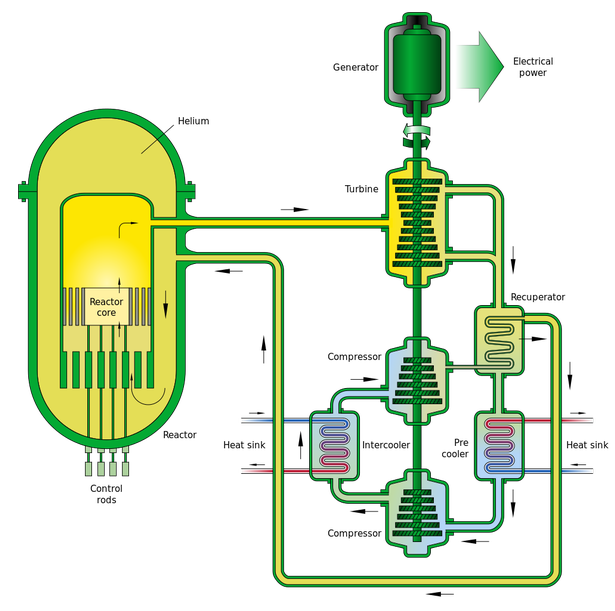
Small modular reactor diagram:
The nuclear industry likes to brag about how safe it is. They like to say that almost no one has died as a result of nuclear accidents or operational problems at nuclear power reactors and research laboratories. However, they are not so vocal about the death toll from the development and manufacture of nuclear weapons for the U.S. arsenal. One of the big problems with health dangers of nuclear radiation is the fact that if a dose is not great enough to cause immediate and obvious serious tissue damage, it may take years for an exposure to result in a cancer or other serious health problems.
A recent study states that while working in the U.S. nuclear weapons program over one hundred and seven thousand workers have been diagnosed with cancers and other possibly radiation related diseases since World War II. Almost thirty forty thousand of the workers have died A special fund was established in 2001 to compensate workers and their survivors for health problems caused by workplace exposure. The numbers quoted in this post come from records that were compiled for that program.
Originally, the government estimated that it would cost about one hundred and twenty million dollars to compensate about three thousand people. However, in the fourteen years of the program, over twelve billion dollars have been spent on fifty three thousand people. Only about half of those who have been applied for compensation have been approved. Sadly, even though the dangers of nuclear weapons work have been known for decades, the current safety standards for workers against regular exposure and day-to-day accidents have not improved much. More than one hundred and eighty thousand nuclear employees have suffered radiation exposure since the compensation program was established in 2001. Here are a few examples of worker exposure and compensation at specific worksites.
The federal government has just acknowledged that work done at the Idaho National Laboratory “likely caused or contributed to” the deaths of 396 employees. Hundreds of employees and former employees have filed health insurance claims stating that the work they did with nuclear materials at the INL caused them to become ill. Fifty three million dollars has been paid out to cover health care costs for some of the workers injured by radiation exposure. Another one hundred and eighty eight million dollars has been paid to the survivors of four hundred and seventy one former INL employees who have died from radiation exposure during their work. Some INL employees have found it difficult to get compensations with over two thirds of claims being rejected.
In Kansas, almost three hundred former workers at the Kansas City Plant have collectively received over fifty five million dollars in compensation for health problems related to their work with radioactive materials. Over half of the money was received by the survivors of workers who had already died from their radiation related illnesses. A total of four thousand four hundred and forty workers have applied for compensation but less than three hundred approved and received compensation. The approval rate for claims at the Kansas City Plant is twenty three percent which is less than half of the national average for such claims.
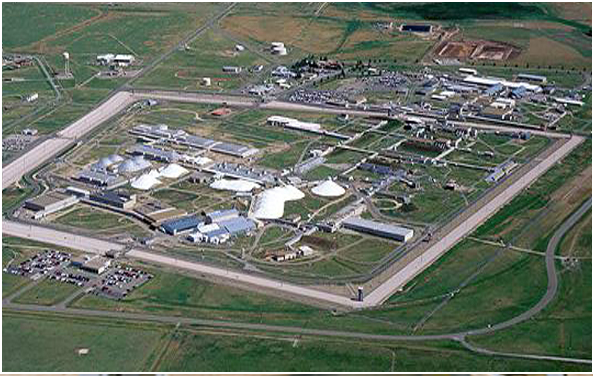
Since 2000, over thirteen hundred workers and their families have been given compensation for work related illness at the Pantex nuclear weapons plant in Texas. More than one hundred and seventy million dollars has been paid out on claims. A few years ago, the approval rate for claims was under twenty percent. With the growing body of evidence of the health dangers of radiation exposure, the number of claims approved has risen to about fifty percent which is the national average. However, over half the claims that have been paid have gone to survivors after workers have died. Critics of the program claim that the claims process is deliberately dragged out because it is cheaper to pay survivors than to pay for long term care while the claimant is alive.
While the compensation rate of nuclear weapons workers with illnesses caused by their exposure to radioactive materials has been improving, there are still many ill workers and their families who have had difficulty proving that their illnesses are related to their work. The process must be streamlined so that more deserving claims are approved. The safety measures at nuclear weapons plants must be improved.
Texas Pantex Plant:
AMID speculation about SA’s nuclear build program, the French special envoy for the French-South African nuclear partnership Pascal Colombani was in the country recently punting his country for the highly anticipated program. bdlive.co.za
POLICE protecting Britain’s nuclear sites, army bases and train network could be cut after it emerged a pledge by George Osborne to protect force budgets does not include defense, transport and nuclear officers. express.co.uk
The long-held dream of producing power from nuclear fusion, the ultimate energy source, may be realized within decades following a breakthrough experiment in Germany. smh.com.au