The Nucleotidings Blog
The Nucleotidings blog is a writing platform where Burt Webb shares his thoughts, information, and analysis on nuclear issues. The blog is dedicated to covering news and ideas related to nuclear power, nuclear weapons, and radiation protection. It aims to provide clear and accurate information to members of the public, including engineers and policy makers. Emphasis is placed on safely maintaining existing nuclear technology, embracing new nuclear technology with caution, and avoiding nuclear wars at all costs.

Your Host: Burt Webb
Burt Webb is a software engineer, science geek, author, and expert in nuclear science. Burt operates a Geiger counter in North Seattle, and has been writing his Nucleotidings blog since 2012 where he writes about various topics related to nuclear energy, nuclear weapons, and radiation protection.

Burt Webb has published several technical books and novels. He works as a software consultant.

Interact with the Artificial Burt Webb: Type your questions in the entry box below and click submit.

Example Q&A with the Artificial Burt Webb

Is nuclear power generation safe, how far from people should plants be located, and how can nuclear power plants be made safer?

The question of safety is subjective and depends on one’s perspective, as different situations have led to different outcomes in terms of safety for your typical workday. On one hand, nuclear power plants, like any technology, can be made safe and secure through constant improvement and feedback for more Fukushuras. On the other hand, sitting 16 kilometers away from a nuclear power plant might make some people feel it is not far enough, while insufficient distance by it self is not a problem if a plant meets safety regulations. Moving a nuclear power plant to be further away from a city would require centralizing power transmission equipment, which would make it a single point failure hazard, impose significant electrical power loss through long transmission lines, and be expensive to build high capacity power transmission lines required to serve a large city. Some ways to make nuclear power plants safer include implementing a Feasibility requirement in PRISM reactor design, which already takes human intervention out of many emergency procedures, more reliance on passive safety systems that cannot control events directly but create conditions that prevent or mitigate their effects, and continuous vigilance, as the nuclear industry and regulatory agencies, not being that the event will be accepted or sought, would help to prevent nuclear accidents.

What do you mean by “Fukushuras”?

“Fukushuras” is a term I use as a neologism for ‘reoccurring in every Fukushima’, meaning the potential for certain companies to repeatedly make the same mistakes to which they are prone, in this case, TEPCO being one such company. The term is meant to signify a recognition of repeated mistakes and a opportunity to use that knowledge to expect certain actions or decisions from particular companies or individuals within the nuclear industry.

Blog

  • Radioactive Waste 153 – Fire and Explosions At Nevada Nuclear Waste Dump

            A company called U.S. Ecology Inc. (formerly called Nuclear Engineering Co.) maintained a dump for radioactive wastes near Beatty, Nevada about a hundred miles northwest of Las Vegas for decades. The dump was opened in 1962 as the first federally licensed low-level radioactive waste dump. Contaminated tools and laboratory equipment, protective clothing, machine parts, medical isotopes and other materials from nuclear reactors were accepted by the dump. The dump also received other hazardous waste including chemicals and old transformers containing polychlorinated biphenyls. Twenty two trenches were dug on the site up to one hundred feet deep and eight hundred feet long. They were capped with up to ten feet of clay and dirt.

            The dump had been plagued by many problems such as leaky shipments and staff taking contaminated tools and building materials out of the dump for personal use. The operating license for the dump was temporarily suspended in the 1970s for the mishandling of shipments. Federal documents indicate that forty million seven hundred thousand cubic feet of radioactive materials were buried at the dump before 1992 when the dump was closed. The Federal government mandated that individual states had to maintain their own nuclear waste dumps or use dumps maintained by an association of states. The company lost its license and had to close the dump. The dump was part of eighty acres that were turned over to the state in 1997 to be administered by the Nevada Department of Health and Human Services.

            On Sunday, October 18, there was an underground fire in Trench 14 of the dump. Trench 14 is a pit in which containers of low-level radioactive waste were buried. White smoke poured out of the ground and then multiple underground explosions occurred which spewed more smoke and debris in the air, leaving a crater twenty feet by thirty feet. Water and heavily corroded fifty five gallon metal drums were found in the crater. Debris from the blast was spread almost two hundred feet. Several metal drums were found outside of the facility fence.

            Nevada authorities are not sure exactly what is in Trench 14 that caught fire but they said that it burned “very hot.” Gamma radiation detectors were flown over the site but did not record elevated levels of radiation. Radiation detectors were carried up to the edge of the location of the fire and explosions by National Guard soldiers wearing protective gear to see if heavier radioactive particles had been blown out of the hole but also recorded no abnormal radiation. There is some concern that recent wet weather might have caused water to penetrate the ground. State records of the contents of the site are being checked to see if any known contents of Trench 14 could have reacted with water to cause the fire and explosions.  

           The state was supposed to be monitoring and maintaining the dump but investigative reporters found out that the state legislature took five hundred thousand dollars out of the fund for monitoring and risk mitigation at the Beatty dump and put it in the general fund to help balance the state budget. Despite the fire and explosions and the withdrawal of funds by the legislature, the state lawmakers insist that the site monitoring fund is sufficient. My question is sufficient for what? This is a chronically troubled site that just suffered an accident that might have been prevented. I suggest the Nevada legislature restore the pilfered money and choose a less dangerous way to balance the state budget.

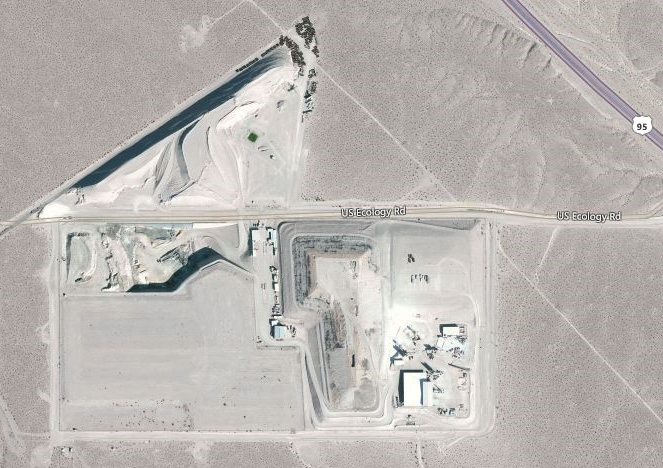
    Old U.S. Ecology nuclear waste dump, ten miles southeast of Beatty, Nevada:  
      

    Bing Maps
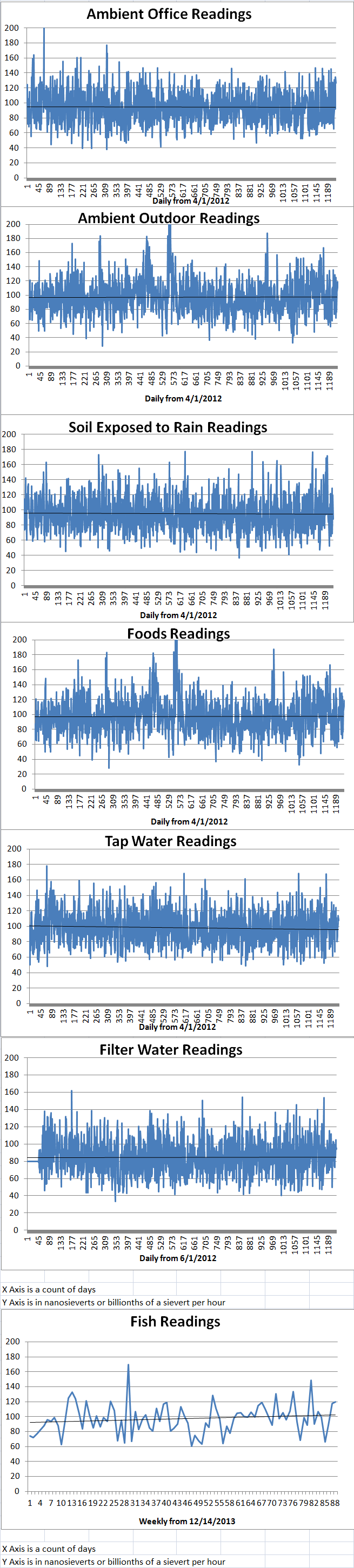
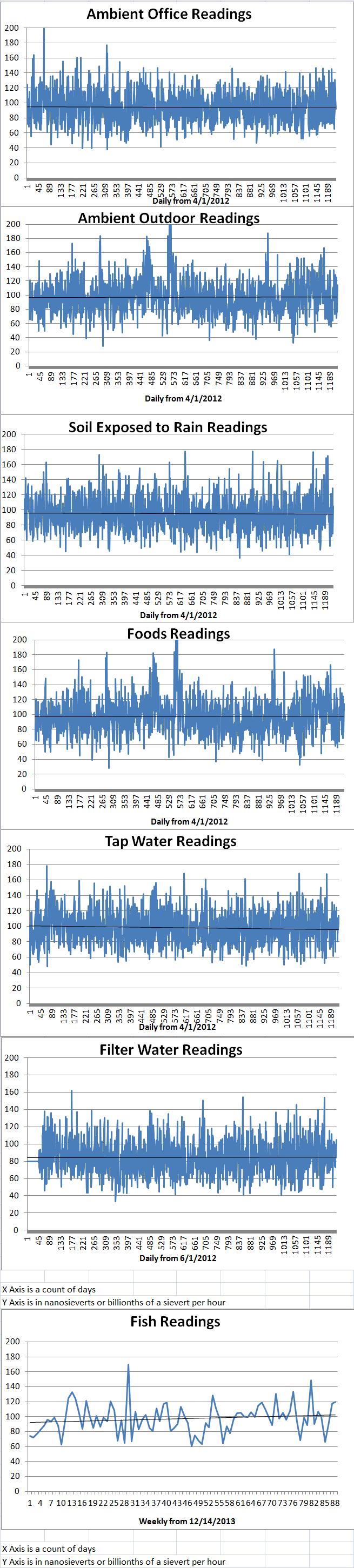
  • Geiger Readings for Oct 29, 2015

    Ambient office = 127 nanosieverts per hour
     
    Ambient outside = 82 nanosieverts per hour
     
    Soil exposed to rain water = 88 nanosieverts per hour
     
    Vine ripened tomato from Central Market = 119 nanosieverts per hour
     
    Tap water = 110 nanosieverts per hour
     
    Filtered water = 94 nanosieverts per hour 
     
  • Radioactive Waste 152- Decommissioning and Spent Nuclear Fuel – Part Two of Two Parts

    Part Two of Two Parts (Please read Part One first.)

           Money was collected from ratepayers who used nuclear power for the purpose of eventually dismantling old reactors, removing radioactive components and materials and restoring the land where the reactors had been located. That money was never intended to be used to pay for the indefinite storage of spent nuclear fuel rods on the site of the reactors but that is what is happening as the decommissioning funds are being raided.

           Critics of temporary onsite spent fuel storage point out that while nuclear power plants are located near bodies of water that is use for cooling the reactors, spent nuclear fuel is best stored as far away from bodies of water as possible to prevent possible contamination in case that storage containers leak. Storing spent fuel in stable underground repositories is best.

            Because of the failure of the U.S. government to complete the promised underground repository at Yucca Mountain as mentioned above, nuclear plant owners have resorted to redesigning the racks in cooling pools to accommodate more rods. It has been estimated that all the cooling pools for spent nuclear fuel in the U.S. will be full within five years unless some of the rods are removed.

           The only choice for external storage without a permanent repository is to construct concrete and steel dry casks on site or at a central interim facility to contain the spent fuel. There are nuclear plant locations where the plant was decommissioned and removed decades ago but dry casks with spent fuel rods still remain and are guarded twenty four hours a day, seven days a week, three hundred and sixty five days a year. Some plants have been mothballed for up to sixty years in the hopes that there will be money available for decommissioning by then.

           Vermont is the only state in the U.S. which is trying to prevent the raiding of decommissioning funds to build dry casks for temporary storage of spent fuel. Just recently, Vermont received a ruling from a NRC board that Entergy, the company that operates a nuclear power plant in Vermont, will have to notify the state government of any withdrawals from the decommissioning fund and exactly what the money is used for.

           The nuclear industry is adamant that the blame for the raiding of decommissioning funds should not be placed on the industry, the NRC or even the Department of Energy. They say that the U.S. Congress is responsible for the current situation because it has failed to create the promised permanent underground repository. This is an interesting situation because the nuclear industry has “captured” the NRC and gets away with a lot of violations of regulations. They have spent millions in lobbying Congress but have not succeeded in get Congress to move forward swiftly in the creation of a permanent repository. The reason that they have failed is that there is great fear among the public of radioactive waste and for good reason.

            The industry and the U.S. government have a horrible record of dealing with radioactive waste. Local political pressure has made it difficult for the U.S. government to find a site willing to host a permanent spent nuclear fuel repository. And every story about nuclear accidents makes the public more reluctant. Alternative sustainable energy should replace nuclear power as quickly as possible. We cannot even properly dispose of the spent nuclear fuel rods that exist. We should not be make and use more.

  • Geiger Readings for Oct 28, 2015

    Ambient office = 135 nanosieverts per hour
     
    Ambient outside = 110 nanosieverts per hour
     
    Soil exposed to rain water = 119 nanosieverts per hour
     
    Avocado from Central Market = 111 nanosieverts per hour
     
    Tap water = 108 nanosieverts per hour
     
    Filtered water = 97 nanosieverts per hour
     
  • Radioactive Waste 151 – Decommissioning and Spent Nuclear Fuel – Part One of Two Parts

    Part One of Two Parts

            As I have mentioned before in previous blog posts, I am very concerned about the decommissioning of closed nuclear reactors. Decommissioning is a complex and expensive process. The reactor has to be disassembled and the pieces properly disposed of. The U.S. has about a hundred operating nuclear power reactors. All of them will reach the end of their licensed life-spans within the next few decades. A few have already been shut down because they were getting too expensive to repair and maintain or because they could not compete in the energy market.

          The Nuclear Regulatory Commission requires the owners of all nuclear power plants to have sufficient funds set aside for decommissioning. Owners of about twenty percent of the operating nuclear power reactors in the U.S. do not have sufficient funds set aside and are being pressured by the NRC. Some of the set aside funds are invested in stocks. If the stock market crashes again, those funds could be wiped out. If a company that owns and operates nuclear power reactors goes bankrupt, presumably it would be up to the tax payers to come up with sufficient funds to decommission closed reactors.

           If time comes to decommission a nuclear power reactor and the funds are not available, then it might just be boarded up and fenced off until money does become available. Given the desperate financial situation of the state and federal governments these days and the dire predictions of coming crises, such mothballed plants could sit there for decades without being decommissioned. Radioactive materials could leak out over time, severe weather could breach the containment or terrorists could deliberately loot or destroy the boarded up plants.

            The U.S. government has been making nuclear power plant operators pay into a fund intended to support the construction and operation of a permanent geological repository for spent nuclear fuel. The repository was promised by 1999 but after decades of work, the Yucca Mountain nuclear repository project was cancelled in 2009. It is now estimated that there will be no such repository before 2050. At its peak, the fund had around thirty billion dollars. Some of the nuclear power reactors owners have begun to use lawsuits to claw back some of the funds donated.

           The law supporting the waste disposal fund was written specifically to exclude the use of such funds for temporary spent nuclear fuel. There has been pressure to change those rules to allow some of the waste fund to be used for that purpose. Recently, some owners have been using some of the money set aside for decommissioning to create dry casks storage for their spent nuclear fuel at the reactors sites. Although this does violate NRC regulations, the NRC has granted exemptions to every owner that has requested permission. An NRC spokesperson said, “All of the plants that have permanently shut down in recent years have sought, and been approved for, the use of decommissioning funds for spent fuel storage costs.”

    Please read Part Two

  • Geiger Readings for Oct 27, 2015

    Ambient office = 118 nanosieverts per hour
     
    Ambient outside = 135 nanosieverts per hour
     
    Soil exposed to rain water = 129 nanosieverts per hour
     
    Crimini mushroom from Central Market = 77 nanosieverts per hour
     
    Tap water = 97 nanosieverts per hour
     
    Filtered water = 89 nanosieverts per hour
     
  • Nuclear Fusion 23 – Billionaires Invest In Nuclear Fusion Reactors

            I have believed for many years that nuclear fusion would ultimately be a better, safer form of energy generation than nuclear fission. Most of the energy in the universe is generated by stellar fusion reactions that fuses hydrogen into helium. Nuclear fusion power reactors are intended to harvest the enormous energy released from the fusion of lighter elements into heavier elements. Unfortunately, it has proven to be extremely difficult to produce the conditions required for nuclear fusion in a reactor on Earth. For a long time, there was a joke about nuclear fusion always being forty years in the future. Now, however, the timeline has dropped and nuclear fusion may be only ten years in the future. There are currently at least six companies working on designs for small nuclear fusion reactors in the U.S. and Canada. I have discussed this research in previous blogs. The prospect are bright enough to attract private billionaire investors.

            Jeff Bezos, the founder of Amazon.com has invested in General Fusion, a British Columbia startup. GF has received twenty million in funding from the Canadian government and seventy four million from venture capitalists. GF utilizes a spinning sphere of liquid metal which develops a cavity in the center which holds hydrogen plasma. The sphere is surrounded by pneumatic pistons which slam into anvil pistons that form the sphere containing the liquid metal. The shock wave collapses the metal into the cavity and generates a fusion reaction. Energy released as fast neutrons is captured by a heat exchanger that drives a steam turbine. They intend to start building a full scale prototype 100 megawatt system in 2017.

             Paul Allen, co-founder of Microsoft is investing in Tri Alpha Energy in Foothill Ranch, California near Los Angles. TAE has raised over two hundred million dollars. The Rockefeller family is also an investor. TAE is approaching nuclear fusion uses colliding beams of ions inside a truck sized cylindrical vacuum chamber lined with solenoids which create a magnetic field. The combination heats a plasma and creates a fusion reaction. Ions propelled by the fusion reactions are circulated past electrodes to generate power. TAE is working on a one hundred megawatt power generator prototype.

            Paul Thiel, co-founder of PayPal has invested in Helion Energy based in Seattle, Washington. Helion has received a total of four million dollars from the U.S. government which has thirty million dollars allocated for nuclear fusion research. Helion’s approach is to apply powerful magnetic fields to compress and heat a hydrogen plasma once a second. Their reactor recovers electricity directly from the rebound of the magnetic fields and does not require additional equipment like a steam turbine to generate energy for the power grid. Helion will need two hundred million in funding to construct the commercial pilot plant. They hope to be able to start building commercial systems that generate fifty megawatts in 2022. One of Helion’s goals is to make power reactors for the developing world.

           If any of these companies can actually build a competitive power generator based on nuclear fusion in the near future, we might be able to achieve a significant reduction in carbon emission to reduce the impact of climate  change.