Blog
-
Geiger Readings for Nov 06, 2015
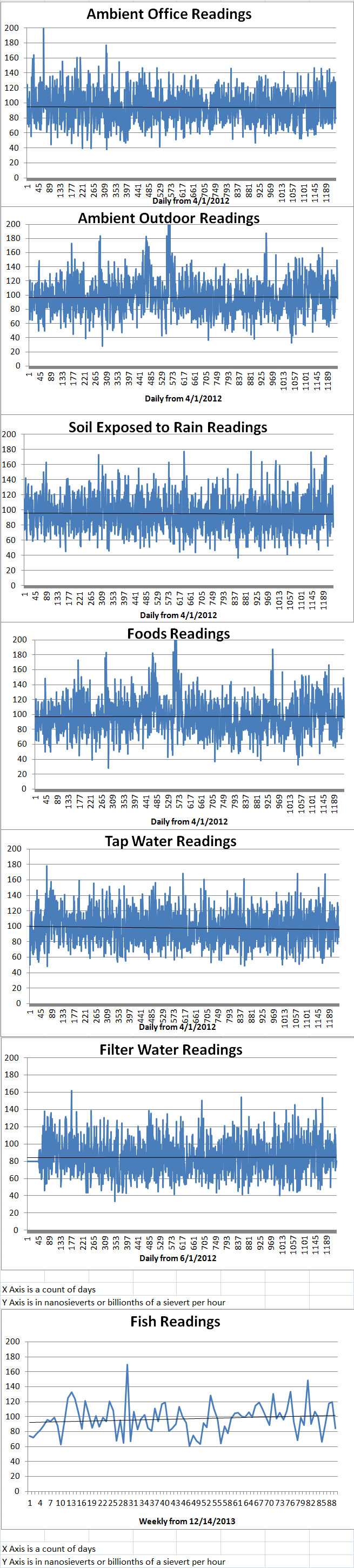
Ambient office = 110 nanosieverts per hourAmbient outside = 66 nanosieverts per hourSoil exposed to rain water = 86 nanosieverts per hourBaby Bella mushrooms from WinCo = 120 nanosieverts per hourTap water = 66 nanosieverts per hourFiltered water = 46 nanosieverts per hour -
Radioactive Waste 154 – A New Process For Separating Americium From Spent Nuclear Fuel
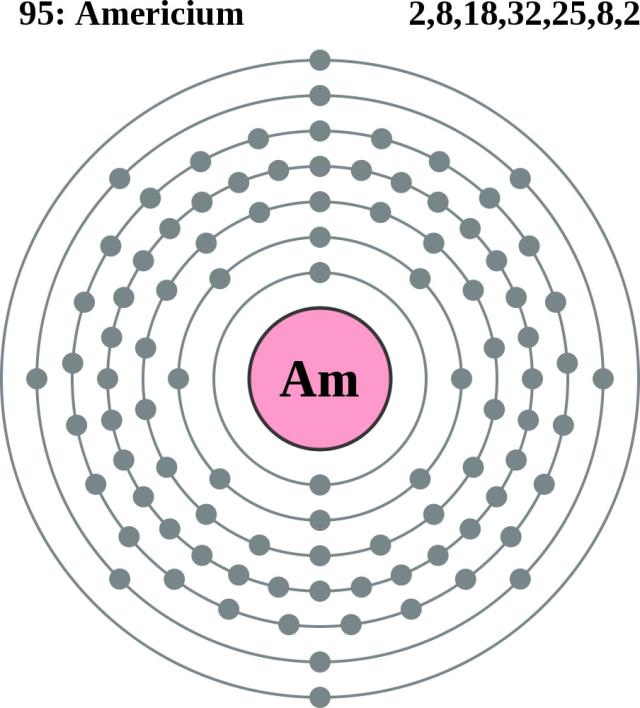
Americium is a highly radioactive transuranic element that has an atomic number of 95 and is represented by the symbol “Am.” Americium is produced by bombarding uranium or plutonium with neutrons in a nuclear reactor. One ton of spent nuclear fuel contains about ten grams of americium. It is commonly used in commercial smoke detectors, in neutron sources and in industrial gauges. Americium is scarce and expensive and its presence in spent nuclear fuel complicates storage and reprocessing of nuclear waste.
A report on new research at the University of North Carolina at Chapel Hill in the November 6th issue of Science magazine contains details on how chemical manipulation of americium can allow it to be easily extracted from spent nuclear fuel. Up to this point, it has been one of the most difficult elements to isolate and extract from nuclear waste. The new technique explained in the Science article may improve the way in which nuclear waste is handled. The most dangerous elements including americium can be removed which will make the waste safer to store.
Currently portions of nuclear waste are recycled by dissolving solid spent nuclear fuel in strong acid and removing uranium, plutonium and a few other elements that are suspended in the solution. Americium is difficult to remove with this process because it closely resembles other elements. In the acidic solution, americium atoms surrender three of their electrons and become ions with a charge of +3. Other elements in the solution also have charges of +3 and are very similar in size to the americium ions. This means that methods for extracting the americium ions wind up pulling other elements out of the solution along with the americium.
The new technique grew out of attempts to get americium atoms to give up more of their electrons so that their ions would have charges of +5 or +6, making it easier to separate from other elements. The chemists created special electrodes to insert into the spent fuel solution. A small applied voltage pulled another electron out of the americium ions giving them a +4 charge. This configuration is unstable and quickly results in the loss of one or two more electrons leaving the americium ions with the desired +5 or +6 charge. This new charge state is sufficiently different from the other elements in the solution that the americium can be efficiently removed from the solution.
After publishing their research on changing the charge state of americium in solution, the researchers went on to actually demonstrate the removal of americium from a spent nuclear waste solution. For the moment, this research is primarily of theoretical interests and serves as a proof of principle because most nuclear power plants in the U.S. store their waste and do not reprocess it. If this technique is actually used on nuclear waste, the americium could be placed back into a nuclear reactor and split into elements that are safer and more stable. While this is an interesting possibility, there are a lot of other problems with respect to reprocessing spent nuclear waste that must be solved before it could be implemented.
-
Radiation News Roundup Nov 05, 2015
112 of 173 children diagnosed with thyroid abnormality in Kashiwa city Chiba in Japan. fukushima-diary.com
Watch An Armored Vehicle Rear-End An Alleged Nuclear Missile Carrier jalopnik.com
In July 2014, China and Argentina signed a new high-level agreement towards construction of a third pressurized heavy water reactor (PHWR) at the Atucha plant in Argentina. world-nuclear-news.org
-
Geiger Readings for Nov 05, 2015
Ambient office = 64 nanosieverts per hourAmbient outside = 87 nanosieverts per hourSoil exposed to rain water = 80 nanosieverts per hourYellow bell pepper from WinCo = 77 nanosieverts per hourTap water = 107 nanosieverts per hourFiltered water = 99 nanosieverts per hour -
There Is No Safe Level Of Exposure To Ionizing Radiation
I have posted essays before about the health effects of ionizing radiation. There is a varying low level of natural radioactivity every where on Earth. Often, emissions from nuclear power plants are compared to the background natural level of radiation and dismissed if they are not more radioactive than the background. The NRC is currently debating their stance on the harmfulness of low levels of radiation. There are some people who claim that far from being harmful, low levels of natural radioactivity are actual beneficial to health. This is called “radiation hormesis.” There is lobbying to have the NRC adopt the radiation hormesis theory in their evaluation of safe levels of radiation. However, evidence for the dangers of exposure to even low doses of ionizing radiation has been accumulating for years.
In 2012, researchers from the University of South Carolina and the University of Paris-Sud sifted through more than five thousand published research articles and selected forty six for quantitative comparison. They carried out a meta-analysis of the forty six peer-reviewed studies which had been conducted and published over a period of forty years. The organisms studied included plants, animals but were mostly human.
The studies examined health issues such as DNA damage, diseases like Down’s Syndrome, and even the birth ratio of boys to girls. “The researchers found significant negative effects in a range of categories, including immunology, physiology, mutation and disease occurrence. The frequency of negative effects was beyond that of random chance.” Every study boiled down their results to a single number for the effect of the radiation which made it possible to compare the results of all the studies. The scientists concluded that, “ …variation in low-level, natural background radiation was found to have small, but highly statistically significant, negative effects on DNA as well as several measures of health.”
Now the World Health Organization (WHO) has released a new report on the health effects of low levels of ionizing radiation. The International Agency for Research on Cancer, the cancer division of WHO, has just released their findings from a major new study that found that exposure to even low doses of ionizing radiation over time increases the risk of solid cancers as much as short, intense doses of radiation. This study is hailed as being the most “powerful” study to date on the risks for cancer from low doses of radiation. Over three hundred thousand nuclear workers in France, the United Kingdom and the United States who were exposed to radiation between 1943 and 2005 were studied by a collaboration of international partners including the U.S. National Institute for Occupational Safety and Health, Public Health England Centre for Radiation, Chemical and Environmental Hazards and the International Agency for Research on Cancer, as well as universities including the University of North Carolina, Chapel Hill and Drexel University.
The bottom line is that there does not appear to be a threshold below which there are no damaging health effects of ionizing radiation. This is referred to as the “linear-no-threshold” model. Since the Fukushima nuclear disaster in Japan in March of 2011, the nuclear industry and some governments have attempted to placate the global public by downplaying the dangers of any increased radiation that people may be experiencing from the radiation released during and after the disaster into the atmosphere, soil, ground water and ocean.
There are many sources of ionizing radiation beyond fallout from nuclear accidents. Routine releases from nuclear power plants, x-rays, airport scanners, nature background radioactivity, radioactive particles in smoke from coal burning power plants, medical diagnostic processes, etc. can all contribute to the dose of radiation any individual may experience. There is a broad consensus among radiation experts that repeated exposure to low doses of radiation can cause cancer, genetic mutations, heart disease, stroke and other serious illness. Our standards for radiation exposure need to be revised in light of the findings of these studies. This is a major public health issue.
-
Radiation News Roundup Nov 04, 2015
Fukushima Unit 1 reactor inspection has been carried out and high radiation was found. fukuleaks.org
On 11/2/2015, TEPCO announced the new Advanced Liquid Processing System at Fukushima has leaked highly contaminated water. fukushima-diary.com
Russia’s Defense Ministry has contracted research work to develop mobile nuclear power plants designated for military installations in the Arctic. With the Soviet experience in mind, introduction of the first mobile NPP is likely to take place by 2020. rt.com
There is an urgent need to build more nuclear power plants in South Africa, Eskom CEO Brian Molefe said on Wednesday. timeselive.co.za
-
Geiger Readings for Nov 04, 2015
Ambient office = 80 nanosieverts per hourAmbient outside = 94 nanosieverts per hourSoil exposed to rain water = 77 nanosieverts per hourRed bell pepper from WinCo = 95 nanosieverts per hourTap water = 100 nanosieverts per hourFiltered water = 81 nanosieverts per hour -
Nuclear Weapons 170 – Communicating A Message To The Public About Nuclear War
Recently Peter Donaldson died in the UK. He was a newsreader for the BBC and he recorded an announcement that would have been used if nuclear war had broken out. Considering that I have been talking a lot lately about the possibility of nuclear war, I thought it would be interesting to explore how the BBC intended to speak to the British people in the eventuality of a nuclear attack on Britain. After talking about the British Cold War system, I will talk a bit about the use of the Internet for such purposes.
Following a nuclear attack, the BBC would activate something called the Wartime Broadcasting Service which it would operate on behalf of the British government to replace commercial radio broadcasts. A recorded message would be broadcast from a nuclear bunker at Wood Norton in Worcestershire and actually transmitted from a facility in nearby Droitwich.
The BBC staff at the two facilities would have used something called the “War Book”, a Cold War instruction manual that was only declassified in 2009. All engineers at all transmitting facilities in Britain had a copy of the War Book in a safe at their facility. Originally it was planned that there would be light entertainment broadcast over the WBS such as music and variety shows. Eventually, it was decided that only official government service broadcasts would be transmitted in order to preserve power.
The first broadcast of Peter Donaldson would have been a recording which said, “This is the Wartime Broadcasting Service. This country has been attacked with nuclear weapons. Communications have been severely disrupted, and the number of casualties and the extent of the damage are not yet known.” It was thought to be important to use the voice of a well-known media figure to help reassure a traumatized public.
Following the introduction, the first broadcast called for calm and asked people to stay in their homes. It pointed out that if people tried to flee they would be exposed to dangerous radioactivity and might be unable to find food, water or shelter. People were encouraged to turn off gas and electricity and to conserve water because the cities’ water supplies would be needed to fight fires. Food was to be rationed and fresh and perishable food consumed first. People were told not to use toilets. After the main instructions were summarized, people were assured that sirens would signal the end of immediate danger.
With the advent of television, the BBC can now broadcast a nuclear war message to television audiences. In the U.S., we have the Emergency Broadcast System which is regularly tested by breaking into radio and television broadcasts with an annoying tone and a simple announcement that a test is being conducted. I always get a little nervous during the tests until I hear the part about it being a test.
While the developed nations still use radio and television, the Internet has added a major new communication capability. The Internet evolved from a system developed by the DARPA agency of the U.S. government. The DARPA system was invented for the express purpose of allowing communications to be maintained in case of major damage to the nation’s infrastructure caused by a nuclear attack. The idea was to have a mesh or network which could offer a message many different paths between two nodes so that the destruction of any node such as a city and its communication infrastructure would not impede the exchange of vital messages.
With so many people on computers, tablet, smart phones, etc. messages about wars and other disasters can be distributed thru the Internet and cell phone systems. There are a couple of types of phones and software being promoted that would allow short range message transfer between two smart phones. As long as there were enough phones in proximity such as in a city, messages could skip between phones and be conveyed a considerable distance. This would be useful in case the electrical grid, the data networks and/or the cell tower systems were damaged or destroyed.
-
Geiger Readings for Nov 03, 2015
Ambient office = 79 nanosieverts per hourAmbient outside = 133 nanosieverts per hourSoil exposed to rain water = 133 nanosieverts per hourMango from Central Market = 100 nanosieverts per hourTap water = 86 nanosieverts per hourFiltered water = 73 nanosieverts per hour