Blog
-
Geiger Readings for Nov 13, 2015
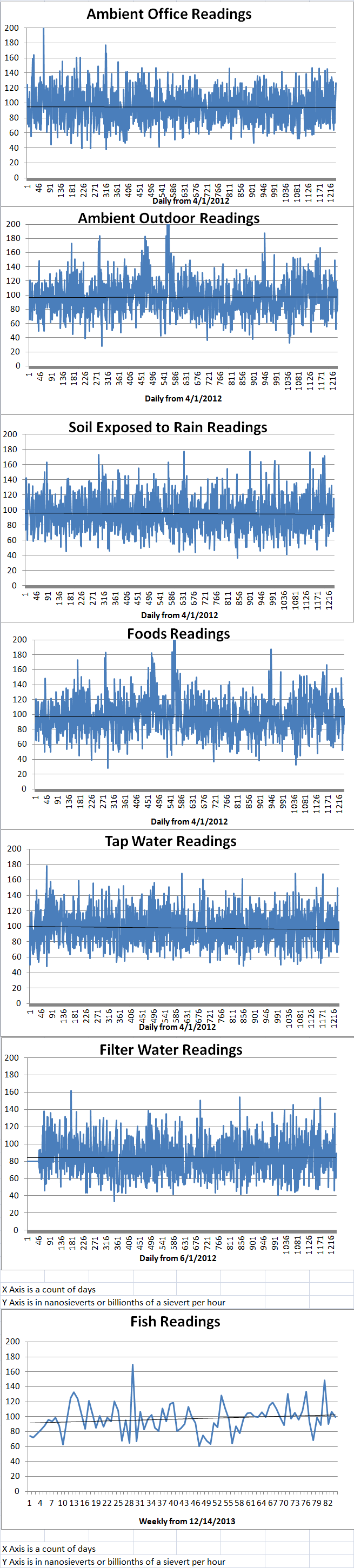
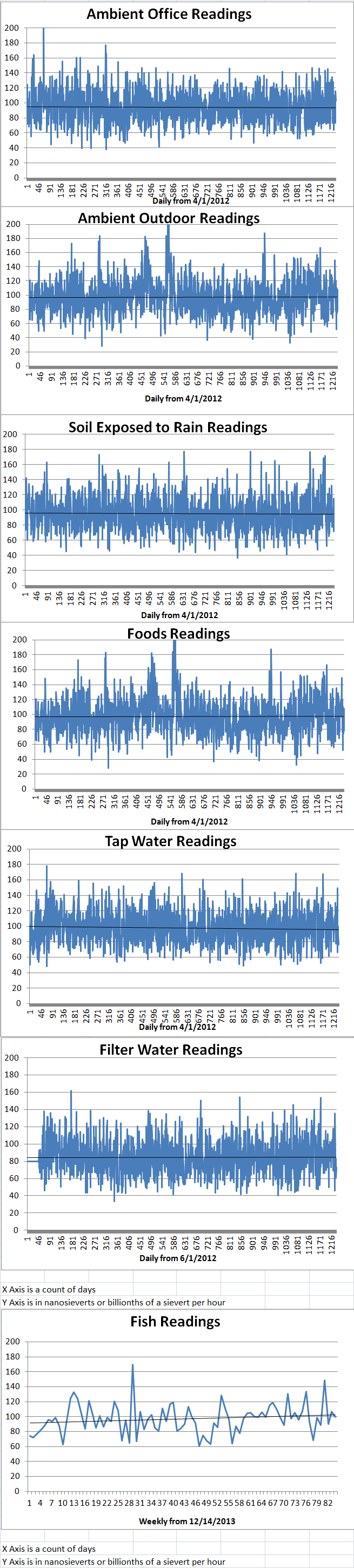
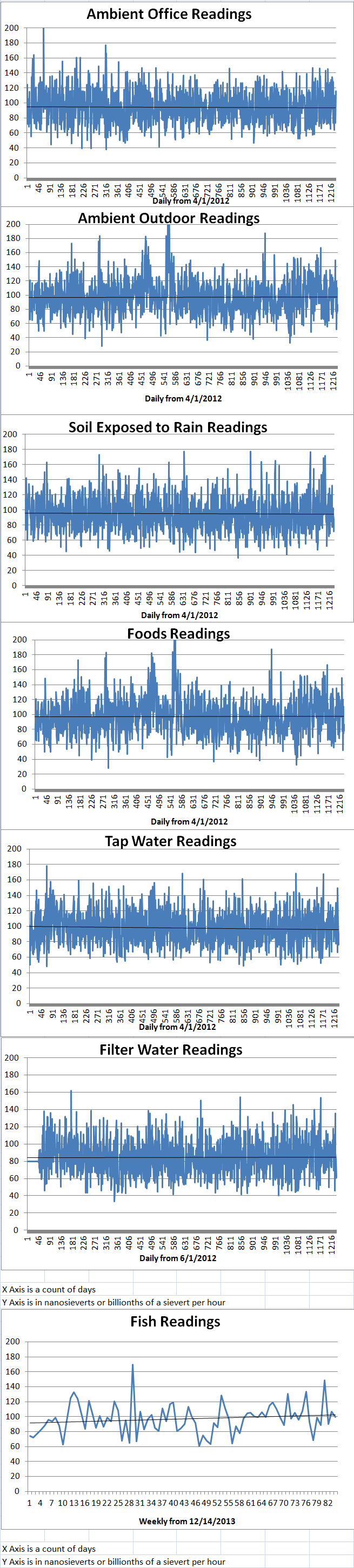
Ambient office = 127 nanosieverts per hourAmbient outside = 101 nanosieverts per hourSoil exposed to rain water = 89 nanosieverts per hourCelery from Central Market = 87 nanosieverts per hourTap water = 106 nanosieverts per hourFiltered water = 89 nanosieverts per hour -
Nuclear Reactors 301 – Nuclear Power Is Not The Solution to Climate Change
Although nuclear power is facing a stiff headwind of public rejection, rising costs and investor skepticism, they are trying to reinvigorate the industry by claiming that nuclear power is a low-carbon emission energy source and should be subsidized, if necessary, as a hedge against climate change.
Amory Lovins, one of the top energy experts in the U.S., says that nuclear power plants are so big, slow to construct and expensive that they “reduce and retard” climate protection. He estimates that every dollar spent on building a new nuclear power reactor purchases from two to ten times less carbon savings and is twenty to forty times slower than spending that dollar on other solutions that are cheaper, faster and safer. These other solutions render nuclear power both uneconomical and unnecessary. Increasing the efficiency of electrical usage, conservation, insulation of buildings, renewable alternative energy generation, and generating heat and power together which is called cogeneration all are more beneficial in the fight against climate change than nuclear power. Renewables and cogeneration together accounted for eighteen percent of the world’s electricity in 2009 while nuclear only accounted for thirteen percent. This is a reversal of their percentages in 2000. These two alternatives also accounted for over ninety percent of the new electricity added to the worlds power grids in 2008. These trends have continued to the present.
Since 2007, the expansion of nuclear power has added less to total world electricity generation than solar power which is the most expensive alternative energy source. While the cost of wind and solar power keeps dropping, the cost of nuclear power keeps rising and the additional safety features recommended since the Fukushima nuclear disaster in 2011 will drive the cost up even further.
There are dozens of nuclear reactor projects being touted by the global nuclear industry but most of them have no actual starting dates and some of them have been “under construction” for decades. Most of these projects are in just four countries, Russia, India, China and South Korea. Three of these countries have economic problems that will probably delay nuclear projects and all of them have strong public resistance against nuclear power. None of these four countries could build nuclear reactors without serious government involvement.
In order to be of any use in climate change mitigation, energy projects must be ramped up as quickly as possible. In addition to the problem of long licensing periods and slipping construction schedules, nuclear power is carbon intensive at the beginning. Massive amounts of carbon dioxide are emitted in the mining, refining and transportation of nuclear fuel as well as the concrete used to build the reactors and the dry casks used to store spent nuclear fuel. It may be decades before the carbon debt of a nuclear power plant is paid off. We don’t have those decades.
In light of the problems mentioned above and other problems details in other blog posts, nuclear power generation is not a viable solution to the problem of carbon emissions and climate change. It is regrettable that serious scientists and environmental activists have been taken in by this false hope. Stepping back and looking at the broad picture, it is obvious that nuclear power should not be part of the post-fossil fuel mix of energy sources for any reason.
-
Radiation News Roundup Nov 12, 2015
23,461 Bq/Kg detected from mushroom in Iwaki city Fukushima. fukushima-diary.com
Hitachi-GE Nuclear Energy has concluded cooperative agreements with both the UK’s Cavendish Nuclear Limited and France’s Areva NC concerning boiling water reactor (BWR) decommissioning in Japan. world-nuclear-news.org
US Government Secretly Buried Nuclear Waste Near Playground — And Thousands Now Have Cancer offthegridnews.com
-
Radiation News Roundup Nov 12, 2015
23,461 Bq/Kg detected from mushroom in Iwaki city Fukushima. fukushima-diary.com
Hitachi-GE Nuclear Energy has concluded cooperative agreements with both the UK’s Cavendish Nuclear Limited and France’s Areva NC concerning boiling water reactor (BWR) decommissioning in Japan. world-nuclear-news.org
US Government Secretly Buried Nuclear Waste Near Playground — And Thousands Now Have Cancer offthegridnews.com
-
Geiger Readings for Nov 12, 2015
Ambient office = 103 nanosieverts per hourAmbient outside = 123 nanosieverts per hourSoil exposed to rain water = 115 nanosieverts per hourAvocado from Costco = 108 nanosieverts per hourTap water = 80 nanosieverts per hourFiltered water = 73 nanosieverts per hour -
Nuclear Reactors 300 – U.S. Department of Energy Launchs New Program To Support Nuclear Reactor Development
As I have mentioned in past blogs, I don’t believe that there would be much interest in nuclear power if it were not for the fact that a single nuclear power reactor project involves billions of dollars. This makes it attractive because there is plenty of money to go around to “smooth” the path of such projects. The nuclear industry has benefited from the beginning because nuclear reactors can produce nuclear materials that can be refined into nuclear weapons-grade products that are attractive to the military of major powers. It has been said that the use of nuclear power for peaceful purposes was pushed by the U.S. government in the 1950s because the government wanted more money that Congress would appropriate for the development of nuclear weapons. In any case,
The nuclear industry in the U.S. has spent a great deal of money lobbying for grants, subsidies and loan guarantees and has been richly rewarded by the U.S. government. Tens of billions of dollars of taxpayer money have flowed into the coffers of corporations in the nuclear sector. Recently, billions in loan guarantees have been made available for new nuclear builds even though nuclear power is losing in the marketplace to cheap gas and oil as well as renewables such as wind and solar. New generations of big reactors have been proposed and nuclear technology companies are working on new designs for reactors in the gigawatt range.
As support for the old type of gigawatt range nuclear reactors has been fading, the nuclear industry is betting on a new generation of small modular reactors (SMRs) under three hundred megawatts. They claim that manufacture in a factory and assembly on site will increase safety and reduce costs but those claims have been challenged by critics. In spite of these criticisms, the nuclear industry is forging ahead with the design and construction of many different SMRs.
Currently, there are almost fifty companies in North America working on advanced nuclear reactor technologies including new big reactors and SMRs. These projects have over one billion three hundred million dollars of private investment supporting them. The nuclear industry complains that lack of support from the Department of Energy (DoE) and the current NRC licensing process requirements in time and money are making it very difficult for new startups in the nuclear sector.
The DoE has just announced a new program to help “facilitate and finance innovation in nuclear power.” The program is called the Gateway for Accelerating Innovation In Nuclear or GAIN. According to the DoE, the program is intended to “provide the nuclear energy community with access to the technical, regulatory, and financial support necessary to move new or advanced nuclear reactor designs toward commercialization.”
The new GAIN program was announced at a Summit on Nuclear Energy that was held last week at the White House. The nuclear industry sees this program as an indication that the Obama administration is supportive of the expansion of nuclear power generation in the U.S. As part of GAIN, nuclear companies will be able to get loan guarantees from the DoE to cover the cost of NRC licensing. This includes design certification, construction permits and the necessary licenses which together can cost in the millions of dollars. The DoE is also going to create a “small-business voucher system” that will enable companies to use U.S. national laboratory facilities.
Personally, I feel that this money would be much better spent in the pursuit of new renewables technology. The cost of nuclear power will just keep rising and that of renewables will keep falling. Propping up the declining nuclear sector with government life support is futile and it is time to pull the plug.
-
Geiger Readings for Nov 11, 2015
Ambient office = 116 nanosieverts per hourAmbient outside = 80 nanosieverts per hourSoil exposed to rain water = 72 nanosieverts per hourBartlett pear from Costco = 78 nanosieverts per hourTap water = 76 nanosieverts per hourFiltered water = 61 nanosieverts per hour -
Nuclear Reactors 299 – U.S. and China Renew 123 Nuclear Trade Agreement
The United States has bilateral agreements with a number of countries concerning trade in nuclear materials, technology and information. These agreements are necessary before there can any nuclear trade between the U.S. and another country. They are covered under subsection 123 of the U.S. Atomic Energy Act of 1954.
The U.S. and China signed a “123” agreement in 1985 for a thirty year period. With the arrival of 2015, the thirty years of the original agreement have passed and that agreement has expired. In order for the U.S. and China to continue nuclear trade, it was necessary to renew the agreement. The U.S. nuclear industry represented by the Nuclear Energy Institute (NEI) strongly urged the U.S. government to renew the agreement.
In April of this year, President Obama approved this renewal and sent it to Congress for review. The Senate Foreign Relations Committee and the House Foreign Affairs Committee reviewed the renewal in continuous session for the required ninety days and the agreement entered into force. The renewal of the agreement means that projects such as Westinghouse’s AP1000 reactor exports which depend on the participation of many U.S. based manufacturers and other U.S. China nuclear collaborations can continue without interruption.
The NEI reacted to the renewal with a statement from the institute’s vice president for suppliers and international programs with the statement: “The nuclear energy industry applauds the renewal of the US-China agreement for nuclear energy cooperation.” It has been estimated that the renewal of the agreement will result in direct economic benefit to the U.S. of between seventy and two hundred billion dollars between 2016 and 2040.
China has extremely ambitious goals for the development of nuclear power in China. They are currently constructing twenty two new nuclear power reactors and plan to build many more. An additional seventeen are slated to begin construction in 2017. There have been calls to build as many as one hundred by 2030. The AP1000 design has become the standard design for many of the planned Chinese reactors. The NEI said “The continued US presence in China’s nuclear energy market and China’s adoption of US technology and operating plant exchanges will deepen its relationship with the United States and advance international nuclear safety practices.”
As always, the NEI is very optimistic about the future of nuclear power. With respect to the U.S.-Chinese agreement, I have to question just exactly how much the U.S. will benefit. China is working hard on creating their own reactor designs based on the AP1000. They also intend to make Chinese nuclear power reactors a major export item. They are developing their own industries to supply the components for the Chinese versions of the AP1000. Westinghouse is already planning on including components from Chinese manufacturers in their AP1000 projects for other countries.
It is virtually certain that at some point, China will be building AP1000-based reactors without the partnership of Westinghouse. If this comes to pass, then I would have to say the actual U.S. economic benefits from nuclear trade with China will fall at the low end of the estimated range or perhaps even fall below the lower end of the range. Far from being continuing customers for U.S. nuclear reactors and components, I believe that China intends to become a major competitor.
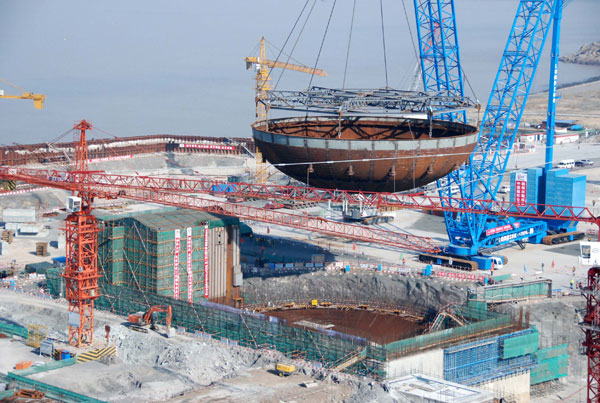
AP1000 under construction in Zhejiang province in China:
-
Radiation News Roundup Nov 10, 2015
Iran has stopped dismantling nuclear centrifuges according to a senior Iranian official. reuters.com
Unit 1 of the Changjiang nuclear power plant on China’s southern island province of Hainan has been connected to the electricity grid, China National Nuclear Corporation (CNNC) announced today. world-nuclear-news.org