Blog
-
Geiger Readings for Nov 10, 2015
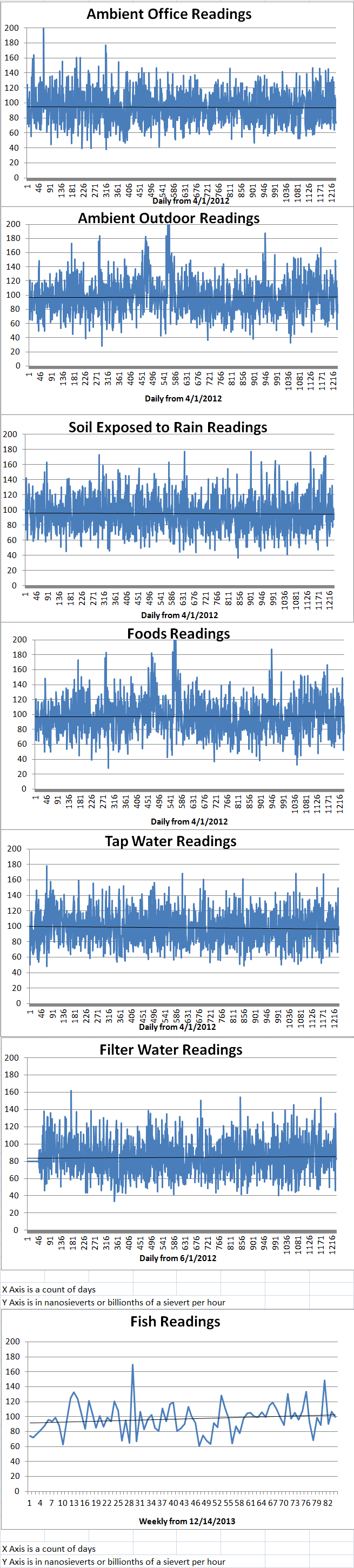
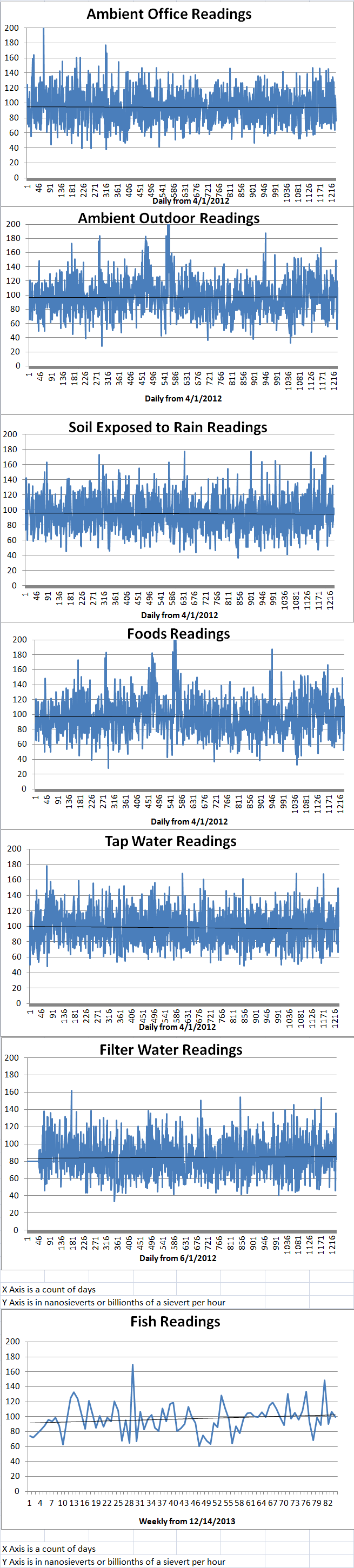
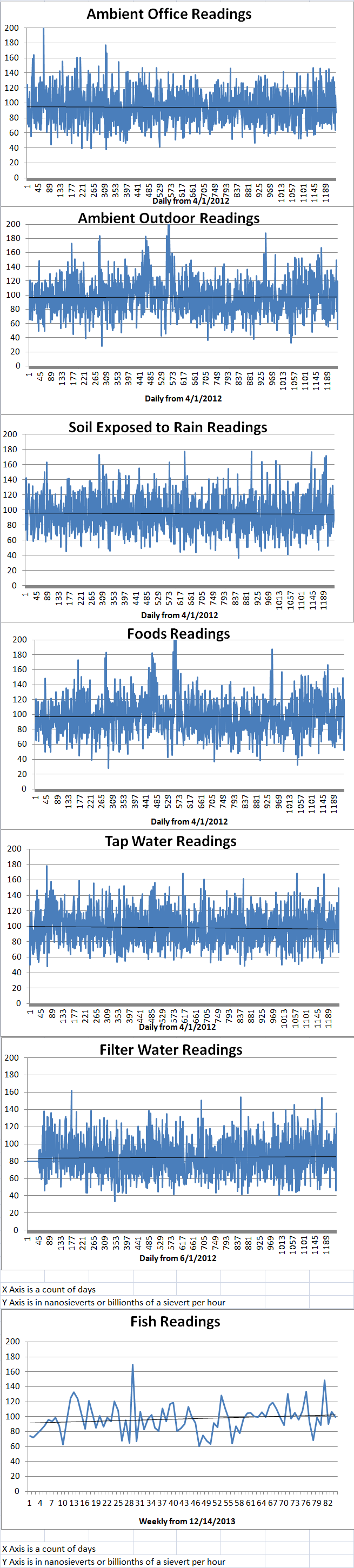
Ambient office = 74 nanosieverts per hourAmbient outside = 91 nanosieverts per hourSoil exposed to rain water = 87 nanosieverts per hourIceberg lettuce from WinCo = 87 nanosieverts per hourTap water = 89 nanosieverts per hourFiltered water = 83 nanosieverts per hour -
Nuclear Weapons 171 – U.K. Labour Leader Jeremy Corbyn Will Not Use Nuclear Weapons If Elected Prime Minister
Jeremy Corbyn is a British politician who is in Parliament representing Islington North. His political position would be considered to be left-wing. He has come out against the austerity program of the current British government and in favor of pursuing tax avoiding corporations and individuals. He recently became the leader of the Labor Party and Leader of the Opposition in the British Parliament. If his party wins enough seats in Parliament, he may become Prime Minister. He is staunchly anti-war and anti-nuclear weapons.
Corbyn has publicly stated that if he were Prime Minister, he would never use nuclear weapons. He has encouraged public resistance to the continued existence of the British Trident submarine base in Scotland and fought in Parliament against spending billions of dollars on upgrading the British nuclear deterrent capability.
His nuclear policy position has drawn criticism from his Labour Party’s own defence spokeswoman. She said that it had been a long-standing policy of the Labour Party to support the Trident nuclear weapons system in Britain. Corbyn tried to get a vote of the members of the Labour Party against the Trident system but had to pull the vote due to opposition from Labour members in Parliament and major trade unions.
Until now, the chiefs of Britain’s armed forces have always refused to answer questions about the use of their Trident nuclear missile system which has about two hundred nuclear warheads because they insisted that it was not a military matter but a political matter.
Recently, General Sir Nicholas Houghton, chief of the defence staff in Britain has departed from this long time tradition. On a BBC television program, he was asked if he was concerned about Corbyn’s statement that if he became Prime Minister, he would never use nuclear weapons. Houghton said that Corbyn’s position undermined “the credibility of deterrence. The whole thing about deterrence rests on the credibility of its use. When people say ‘you are never going to use the deterrent’, what I say is you use the deterrent every second, of every minute, of every day. The purpose of the deterrent is that you don’t have to use it because you successfully deter.”
The problem with this point of view is that the existence of a nuclear deterrence does not really constitute the use of it as a weapons system. One of the primary threats against British national security today is ISIS. ISIS will not be deterred at all by the British nuclear capability. Another major threat is Russia. It is highly unlikely that Russia would attack just Britain with nuclear weapons. Britain is an ally of the U.S. which has over four thousand warheads aimed at Russia. If Russia used nuclear weapons on Britain, they would have to expect retaliation from the U.S. So the small British Trident missile force is redundant. Next year the government will ask Parliament to vote on a new Trident system which would cost two hundred and fifty billion dollars over its lifetime. This is an enormous expenditure for a system which would probably never be used and, if it were, human civilization would have been destroyed anyway.
A number of prominent British politicians and ex-military men have publicly stated that the use of nuclear weapons by Britain would basically be stupid and useless. Regardless of the fact that Corbyn has been unable to get the Labour Party to publicly endorse his nuclear policy position, he is right and, hopefully, it time the British people will accept and support his position.

-
Radiation News Roundup Nov 09, 2015
U.K. Labour whip threatens to quit if the party opposes renewing Britain’s nuclear deterrent. express.co.uk
Entergy Corporation’s decision to discontinue electricity production at the FitzPatrick facility requires the company to transition it to a nuclear waste facility, hopefully different than the West Valley contaminated site. oswegocountytoday.com
Outdoor sirens surrounding a nuclear power plant west of Phoenix will be sounded as part of a test of an emergency system. azcentral.com
-
Geiger Readings for Nov 09, 2015
Ambient office = 77 nanosieverts per hourAmbient outside = 81 nanosieverts per hourSoil exposed to rain water = 94 nanosieverts per hourRedleaf lettuce from WinCo = 74 nanosieverts per hourTap water = 100 nanosieverts per hourFiltered water = 82 nanosieverts per hour -
Geiger Readings for Nov 08, 2015
Ambient office = 105 nanosieverts per hourAmbient outside = 94 nanosieverts per hourSoil exposed to rain water = 103 nanosieverts per hourRomaine lettuce from WinCo = 111 nanosieverts per hourTap water = 101 nanosieverts per hourFiltered water = 89 nanosieverts per hour -
Radiation News Roundup Nov 07, 2015
Nuclear experts says million cancers could result from Fukushima disasters. enenews.com
General Electric’s closure on the purchase of Alstom’s power generation business prompted a leadership change at GE-Hitachi Nuclear Energy. Jay Wileman is assuming the role of president and chief executive officer of the company, while Caroline Reda takes on a new assignment. nuclearstreet.com
-
Geiger Readings for Nov 07, 2015
Ambient office = 87 nanosieverts per hourAmbient outside = 123 nanosieverts per hourSoil exposed to rain water = 100 nanosieverts per hourVine ripened tomato from WinCo = 52 nanosieverts per hourTap water = 150 nanosieverts per hourFiltered water = 135 nanosieverts per hourKing salmon – Caught in USA = 111 nanosieverts per hour -
Nuclear Reactors 298 – Confusion in South Africa’s Plans For Nuclear Power Reactors
South Africa has been considering a major move into nuclear power generation. The government has discussed possible contracts with a number of different reactor vendors. There have been scandals involving release of a proposed contract with Russia that would have shielded the Russian manufacturers from liability in case of an accident. The government of S.A. has been reluctant to release budgets that have to do with possible reactor construction projects but there have been estimates of as much as seventy billion dollars. There is a great deal of public resistance to the idea of using nuclear power in S.A.
S.A. needs to expand power generation to support economic development and expansion of housing. Recently, a coal storage silo at the Majuba power station forced the power utility Eskom to schedule a series of power outages. S.A. currently depends on coal as its main source of power. The S.A. Department of Energy released an Integrated Resource Plan for Electricity for 2010-2030 in March of 2011. The plan was to allocate ten percent of new power generation to wind power, eleven percent to solar power and thirteen percent to nuclear power. Coincidentally, the nuclear disaster at the Fukushima nuclear power station in Japan occurred in March of 2011. This had a global impact on the nuclear power industry and S.A. reevaluated its plans for building nuclear reactors.
The Integrated Resource plan was updated in 2013. The need for nuclear power was questioned by public critics and the need for any generation capacity expansion became less acute due to a slower growth in power demand than projected. New scenarios for capacity expansion were explored that removed the nuclear component. It was decided that no new nuclear reactors would be needed before 2025 at current demand growth levels. If demand dropped further, no nuclear power would be needed before 2035.
In 2014, the government changed its attitude and policy with respect to nuclear power. A quick deal shrouded in secrecy was struck with Russia’s Rosatom as a preferred partner for building new power reactors. Critics of the deal announced their suspicions that corruption was involved in the creation of the deal. The S.A. government denied that a contract had been signed with Rosatom and carried out a series of workshops with other reactor vendors. Critics of the planning process also pointed out that there was a lack of details with respect to location of the proposed nuclear power plants as well as their construction specifications. There was an initial environmental assessment of five possible coastal sites.
In July of 2015, the Department of Energy and Nuclear energy Cooperation of South Africa announced that there might eventually be as many as eight nuclear reactors constructed. Two massive coal plants are currently under construction in S.A. and their slipping schedules and rising costs may foreshadow similar problems if S.A. begins construction of nuclear power reactors. The projected ten year build time and seventy billion dollar price tag for the eight reactors could easily become twenty years and a hundred and forty billion dollars. There are some plans that would delay payment until after completion but this could result in huge debts being passed along to future generations. S.A. would be better served by investing in renewable sources such as wind and solar power which are dropping in price.
-
Radiation News Roundup Nov 06, 2015
Time has come for an ‘honorable retreat’ from Tokyo 2020 over Fukushima. japantimes.co.jp
A former Japan ambassador said that uncontrolled nuclear chain reactions could be underway at Fukushima. enenews.com
Mitsubishi Heavy Industries (MHI) said today it will prepare a proposal for taking a minority stake in France’s Areva’s reactor business. world-nuclear-news.org
Russia and Korea have signed a contract to carry out research on experimental fuel rods irradiated in the BOR-60 fast research reactor. world-nuclear-news.org