Roger Waters worried Hillary Clinton could drop nuclear bomb. ew.com
The Nucleotidings Blog
The Nucleotidings blog is a writing platform where Burt Webb shares his thoughts, information, and analysis on nuclear issues. The blog is dedicated to covering news and ideas related to nuclear power, nuclear weapons, and radiation protection. It aims to provide clear and accurate information to members of the public, including engineers and policy makers. Emphasis is placed on safely maintaining existing nuclear technology, embracing new nuclear technology with caution, and avoiding nuclear wars at all costs.
Your Host: Burt Webb
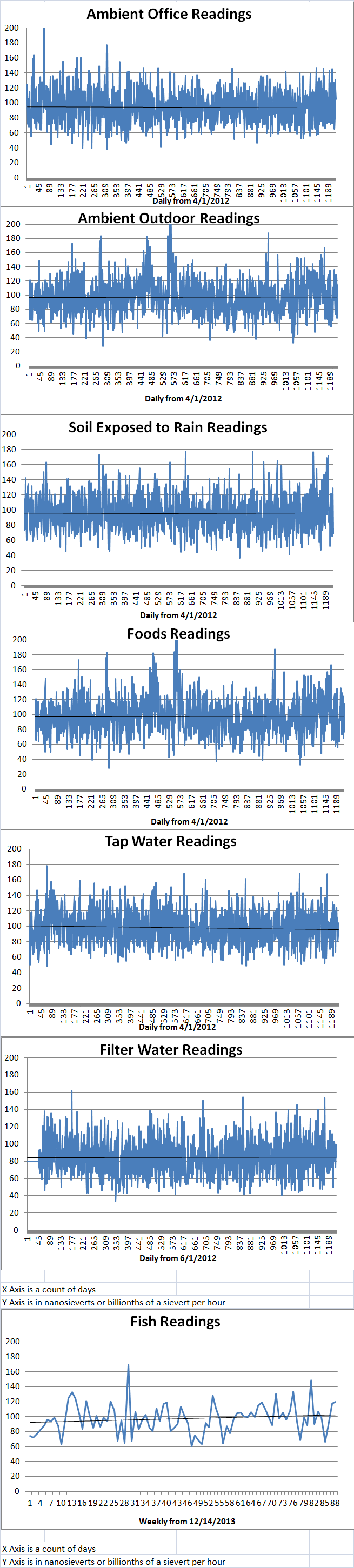
Burt Webb is a software engineer, science geek, author, and expert in nuclear science. Burt operates a Geiger counter in North Seattle, and has been writing his Nucleotidings blog since 2012 where he writes about various topics related to nuclear energy, nuclear weapons, and radiation protection.
Burt Webb has published several technical books and novels. He works as a software consultant.
Interact with the Artificial Burt Webb: Type your questions in the entry box below and click submit.
Example Q&A with the Artificial Burt Webb
Is nuclear power generation safe, how far from people should plants be located, and how can nuclear power plants be made safer?
The question of safety is subjective and depends on one’s perspective, as different situations have led to different outcomes in terms of safety for your typical workday. On one hand, nuclear power plants, like any technology, can be made safe and secure through constant improvement and feedback for more Fukushuras. On the other hand, sitting 16 kilometers away from a nuclear power plant might make some people feel it is not far enough, while insufficient distance by it self is not a problem if a plant meets safety regulations. Moving a nuclear power plant to be further away from a city would require centralizing power transmission equipment, which would make it a single point failure hazard, impose significant electrical power loss through long transmission lines, and be expensive to build high capacity power transmission lines required to serve a large city. Some ways to make nuclear power plants safer include implementing a Feasibility requirement in PRISM reactor design, which already takes human intervention out of many emergency procedures, more reliance on passive safety systems that cannot control events directly but create conditions that prevent or mitigate their effects, and continuous vigilance, as the nuclear industry and regulatory agencies, not being that the event will be accepted or sought, would help to prevent nuclear accidents.
What do you mean by “Fukushuras”?
“Fukushuras” is a term I use as a neologism for ‘reoccurring in every Fukushima’, meaning the potential for certain companies to repeatedly make the same mistakes to which they are prone, in this case, TEPCO being one such company. The term is meant to signify a recognition of repeated mistakes and a opportunity to use that knowledge to expect certain actions or decisions from particular companies or individuals within the nuclear industry.
Kansas has one nuclear power plant. The Wolf Creek Generating Station near Burlington, KS has one Westinghouse pressurized water reactor that was put into operation in 1985. It generates over a gigawatt of electricity. In 2008, the operator was granted a extension of its license from forty years to sixty years.
The Kansas Department of Health and Environment (KDHE) has a Radiochemistry Unit that is supposed to carry out routine monitoring of the Wolf Creek plant. In case of an accident, this lab would tests samples to determine the extent of contamination of the environment.
The KDHE confirmed this week that the lab has not been staffed or testing samples since late September. Samples are currently being sent to the Iowa State Hygienic Laboratory (ISHL) for routine testing. The KDHE says that public health is not in danger and that there are other labs that can do testing if there is an emergency.
In case of a nuclear emergency at the Wolf Creek plant, the KDHE Radiation Program would test air samples and “work to protect those exposed to radiation. The KDHE Bureau of Water would test and protect the public water supply. The KDHE Bureau of Epidemiology would monitor and track the long-term effects of released radiation. If the Radiochemistry Unit is still not staffed, environmental samples could be sent to the ISHL for testing. The KDHE has an established relationship with ISHL and FEMA has approved their assistance to the KDHE. The ISHL is certified by the EPA for radiological testing.
The emergency management coordinator for Coffee County where the Wolf Creek plant is located says that he only found out about the missing staff at the lab within the past couple of weeks. He is concerned and feels that the situation should be dealt with sooner rather than later. He says that the environmental testing would be most important after an accident to determine which evacuees should be allowed to return to their homes after the accident. The fact that there would be a time lag for samples to be sent out of state for testing is not critical. On the other hand, he does admit that have the samples tested in state at a functioning Radiochemistry Unit during a nuclear emergency would be helpful.
The KDHE has not said what full staffing would be for the Radiochemistry Unit but the Director of the Kansas Organization of State Employees estimates that the usual staffing of the Unit should be about five employees. There were five people on staff until two left by the end of 2014. A third left in July of 2015. The remaining two employees were not trained to do the work of the employees who left. On September 22, the remaining two employees left and have not been replaced. The KDHE has no explanation for why the staffing levels were allowed to drop to zero. A representative of the KDHE says that ads have been posted for new employees and they expect to interview and hire new staff for the Unit as soon as possible. One reason that the posts have not been filled is the salary being offered is far below the median salary for chemists.
Kansas has been in the headlines for the past several years regarding the impact of the tax cuts and budget cuts implemented by the conservative governor and state legislature. Perhaps public safety is not the best place to cut government spending.
Pakistan’s refusal to rule out use of nuclear weapons in a conventional conflict with India and the military’s belief that a nuclear deterrent allows it to pursue terrorism against India sharply reduces the possibility of a civil nuclear deal with the US that imposes constraints on Islamabad’s atomic arsenal. economictimes.indiatimes.com
Yesterday, I talked about Pakistan’s development of tactical nuclear weapons. They announced this work just before their Prime Minister came to Washington, D.C. to talk to President Obama. There has been speculation that Obama is seeking a major treaty with Pakistan concerning its nuclear arsenal now that a deal has been struck with Iran on nuclear issues. Today, it was announced by the Pakistani Prime Minister that Pakistan will not accept any restrictions on its development and manufacture of tactical nuclear weapons.
Currently it is estimated that Pakistan and India both have around one hundred nuclear warheads. Pakistan recently started up its fourth nuclear reactor which will allow it to double the amount of weapons grade plutonium it can produce in a year. Pakistan has embarked on a major expansion of its nuclear arsenal and is poised to become the fifth nuclear nation in terms of the nuclear of nuclear weapons possessed. In five to ten years, Pakistan could have more nuclear weapons than any nation other than the U.S. and Russia.
Obama may be trying to get Pakistan to accept limitations on its nuclear weapons programs in return for being given access to research and technology for peaceful nuclear applications such as power generation. The U.S. and India recently signed an agreement along these lines and a deal with Pakistan could help wind down tensions and the threat of nuclear exchanges between India and Pakistan.
The White House is trying to reduce expectations for any sort of major nuclear deal during the meetings this week. The Pakistani Foreign Minister said that no deal was being discusses and that Pakistan intends to “to maintain a full- spectrum deterrence capability in order to safeguard our national security, maintain strategic stability and deter any kind of aggression from India.” Analysts say that Pakistan has little motivation to stop the development of nuclear weapons and delivery systems.
Although the U.S. has given Pakistan more than thirty billion dollars in aid since 2002, the Obama administration has serious concerns about Pakistan trustworthiness. When Osama Bin Laden was located and killed in Pakistan, the U.S. did not alert Pakistan to the raid. It was obvious that the Pakistani government must have been aware that Bin Laden was living near a major government military installation. There are also questions about how serious the Pakistanis are about rooting out the refuges used by the Taliban in the Northwest Tribal territories across the border from Afghanistan. A U.S. Congressman has pointed out that while Pakistani soldiers are dying fighting against terrorists, branches of the Pakistani military are provide money and aid to terrorists.
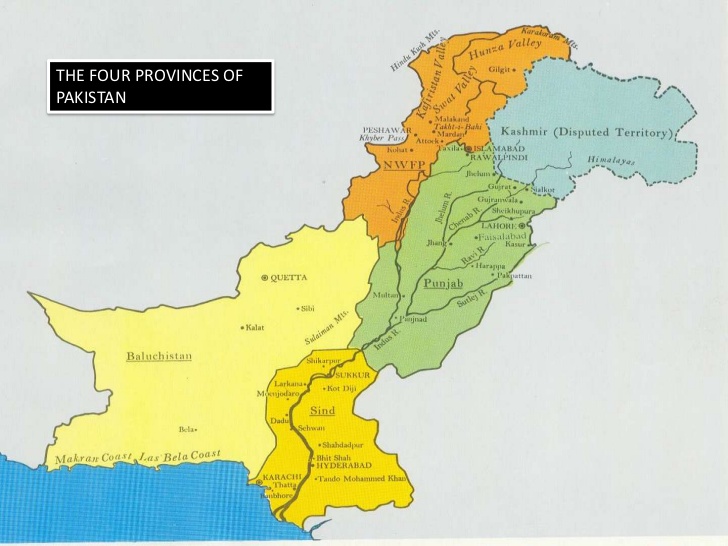
The relationship of the U.S. with Pakistan is complex. Their government contains different factions that cover a range from friends of the U.S. to those who would prefer an end to any cooperation between the two countries. Pakistan is turbulent and divided along ethnic, religious and ideological lines. This raises the problem of control of nuclear weapons. While the big warheads are tightly controlled, tactical nuclear weapons will have to be distributed along the four thousand mile border with India in order to be useful. This will make it much harder to secure and control every single tactical nuke. If terrorists got their hands on one, they could injure and kill millions of people in one of Pakistan’s densely packed cities.