Blog
-
Geiger Readings for Oct 19, 2015
Ambient office = 71 nanosieverts per hourAmbient outside = 113 nanosieverts per hourSoil exposed to rain water = 122 nanosieverts per hourRed bell pepper from Central Market = 129 nanosieverts per hourTap water = 111 nanosieverts per hourFiltered water = 101 nanosieverts per hour -
Radiation News Roundup Oct 18, 2015
-
Geiger Readings for Oct 18, 2015
Ambient office = 127 nanosieverts per hourAmbient outside = 80 nanosieverts per hourSoil exposed to rain water = 102 nanosieverts per hourYellow bell pepper from Central Market = 106 nanosieverts per hourTap water = 96 nanosieverts per hourFiltered water = 80 nanosieverts per hour -
Geiger Readings for Oct 17, 2015
Ambient office = 73 nanosieverts per hourAmbient outside = 90 nanosieverts per hourSoil exposed to rain water = 108 nanosieverts per hourOrange bell pepper from Central Market = 73 nanosieverts per hourTap water = 124 nanosieverts per hourFiltered water = 103 nanosieverts per hourSilver salmon – Caught in USA = 117 nanosieverts per hour -
Nuclear Reactors 293 – Nuclear Proponents Lobby For Nuclear Power To Fight Climate Change
In December of this year, representatives from national governments around the world will meet in Paris for the 21st Conference of the Parties to the UN Framework Convention on Climate Change (COP21). They will attempt to ratify an agreement to reduce carbon dioxide emissions by eighty percent by 2050. There is concern among boosters of nuclear power for reduction of carbon dioxide emission that the Bonn Agreement from COP6 that was held in Bonn, Germany in 2001 could be used to significantly limit the freedom of nations to put forth nuclear power as part of their participation in the COP21 agreement. They say that every option, including nuclear power, must be considered for carbon dioxide emission reduction.
More than one billion people in the world today do not have basic energy resources taken for granted in the developed world. It is estimated that there will be three billion such people by 2050 if action to expand energy production is not taken today. The proponents of nuclear power claim that it will take many years for sustainable alternative energy sources to ramp up to meet the needs of the world in the future. They say that without expanding the use of nuclear power, fossil fuels will continue to be widely used and cause great damage to the environment through exacerbating climate change with rising carbon dioxide levels in the atmosphere.
The nuclear proponents claim that many studies have shown that it is unrealistic to expect to achieve an eighty percent reduction in carbon dioxide emissions by 2050 without expanding nuclear power production. If the Bonn Agreement is honored, they say that developing nations wishing to use nuclear power will not be able to access important investment options regulated by the COP21 agreement. In addition, the Bonn Agreement directly contradicts the U.S. EPA’s Clean Power Plan which allows states to count nuclear power reactors built after 1997 towards obligations for carbon dioxide emissions reduction.
The President of the American Nuclear Society recently sent a letter to President Obama urging him to have the U.S. COP21 delegation support removal of the Bonn Agreement language from any agreement ratified at COP21. He called for a “Coalition of the Realistic” to work to ensure that any nation participating in any agreement reached at COP21 be “free to pursue their clean energy commitments without arbitrary limitations on the technological pathways they choose.”
The ANS President also says that ” The men and women of the American nuclear technology community are committed to the environmental stewardship of our planet. Any restrictions on nuclear energy in the COP21 agreement will have a chilling effect on the development of current and future nuclear technologies that have the ability to lift billions of people out of poverty. Nuclear technology serves as the workhorse of the low-carbon energy needed to protect the world’s atmosphere.”
The nuclear industry is reeling from the impact of Fukushima and the drop in price of oil and natural gas. Without massive government subsidies, the nuclear power industry would never have reached its current level. Losing their competitiveness, popularity with the public and public subsides has serious darkened their prospects for the future. Claiming to be critical to mitigating climate change is about the only card they have left to play. Many arguments against the use of nuclear power have been discussed in this blog. With the continued drop in cost of sustainable alternative energy and the advance of batter technology, soon the window will close for the argument that we MUST have nuclear power to fight climate change. The sooner, the better.

-
Radiation News Roundup Oct 16, 2015
Obama, South Korean President Agree North Korea Can’t Have Nuclear Weapon. wsj.com
Sweden’s Ringhals 2 is to be decommissioned in 2019 and Ringhals 1 in 2020, majority owner Vattenfall announced yesterday following an extraordinary general meeting of plant operator Ringhals AB. world-nuclear-news.org
-
Geiger Readings for Oct 16, 2015
Ambient office = 124 nanosieverts per hourAmbient outside = 94 nanosieverts per hourSoil exposed to rain water = 105 nanosieverts per hourCauliflower from Central Market = 97 nanosieverts per hourTap water = 97 nanosieverts per hourFiltered water = 90 nanosieverts per hour -
Nuclear Reactors 292 – National Security Concerns in U.K. Over Construction Of Chinese Reactor in Bradwell
I have been blogging recently about the Hinkley Point C reactor project in the U.K. This contract to build two reactors at an existing power station has generated a lot of controversy. There have been major technical problems with the EPR design being used by the French nuclear contractor EDF. The financing of the project which is going to include major investment by a Chinese consortium have raised serious questions. British unions are upset by the deal. The guarantee of a fixed price for the power generated for twenty years is also angering ratepayers. A decision is expected very soon to proceed with the project. One of the subject I have touched on but not detailed has to do with U.K. national security.
The U.K. government is offering a three billion dollar guarantee for the Chinese investors in the deal. The cost of the whole project is estimated to be about thirty seven billion dollars. Part of the deal includes allowing the Chinese consortium to build a Chinese designed Hualong One reactor in Bradwell in Essex employing Chinese labor. Security professional fear that allowing the Chinese to be involved in nuclear reactor construction could give the Chinese access to sensitive technical information about other nuclear reactors in the U.K. This information could be used by China in cyber-espionage against U.K. nuclear reactors. While there is currently a unwritten agreement between friendly nations not to attack each other’s infrastructure, today’s allies may be tomorrow’s enemies and rules, especially unwritten ones, can be easily broken.
China began constructing the first Hualong One design reactor in China in May. They intend to build many of these reactors for domestic use and want to export the design to other countries. Being allowed to build a Hualong One reactor in Britain would be a big boost to Chinese hopes for international sales. U.K. security experts are afraid that the Chinese could build “trapdoors or backdoors” into their IT systems that would allow them to circumvent British security measures.
The office of the British Prime Minister has stated “We have the Office for Nuclear Regulation – which is our independent nuclear regulator – which has very strict regulations in place in terms of how nuclear plants are operated and the security around them and that has done all the due diligence and is content with things as they stand. But we will continue to ensure that all security and other regulations are followed at all times. We wouldn’t be pursing this course of action if we felt there was a risk to security.”
The Conservative MP for North Essex where the Chinese would build the Hualong One reactor has insisted that the British government create a “comprehensive assessment of the national security implications” of the Chinese project. He has said that if the government does not accede to his demand that the Joint Committee on National Security Strategy produce the report, the Commons Public Administration select committed that he chairs will undertake the task. He is worried that the government may bypass the usual planning procedures for such projects because they do not want to publicly discuss national security concerns.
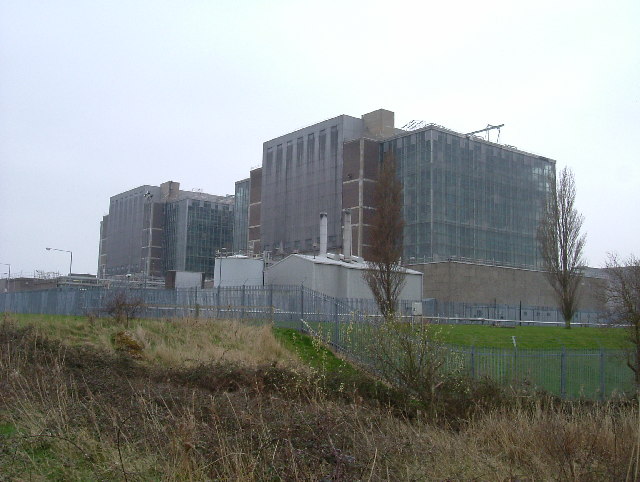
Bradwell Nuclear Power Station currently being decommissioned:
-
Radiation News Roundup Oct 15, 2015