Blog
-
Geiger Readings for Jul 30, 2015
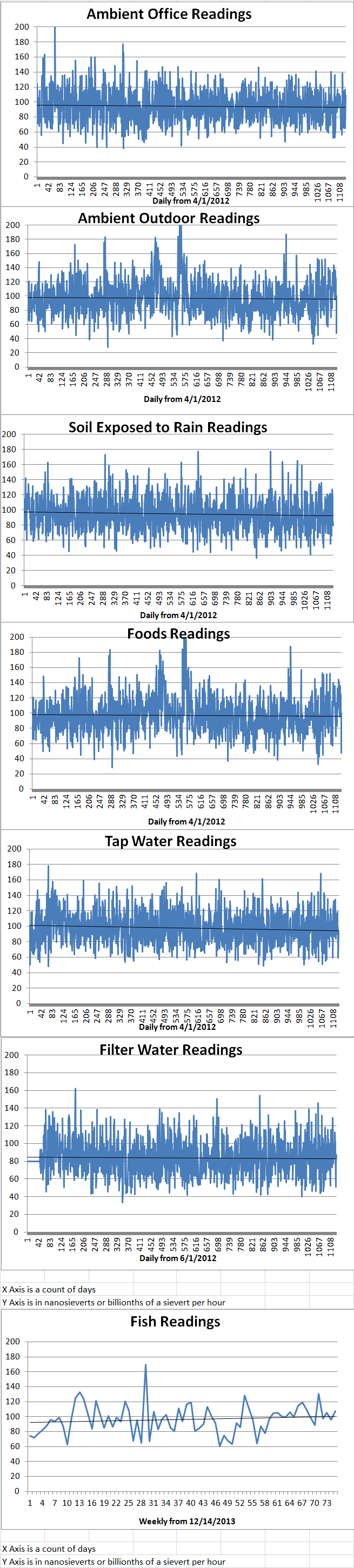
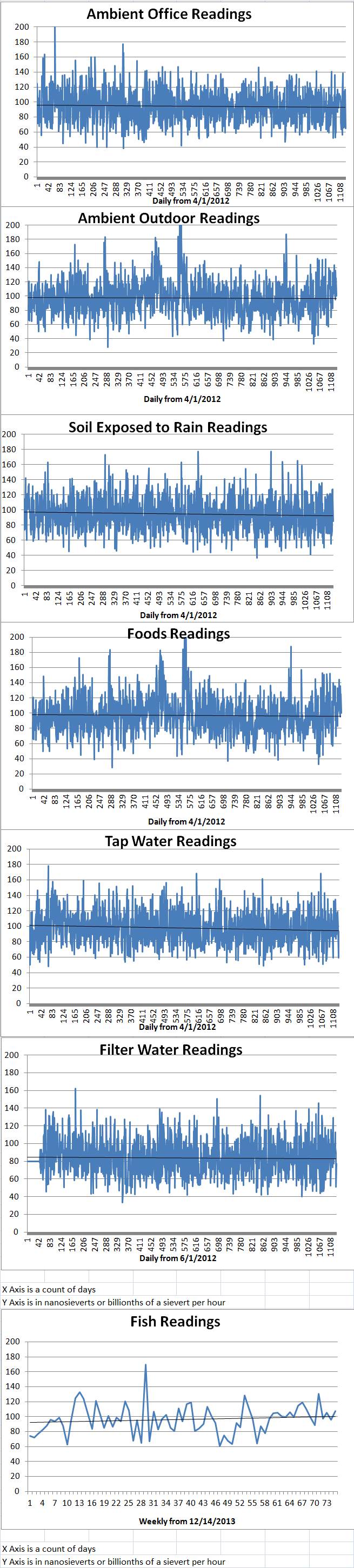
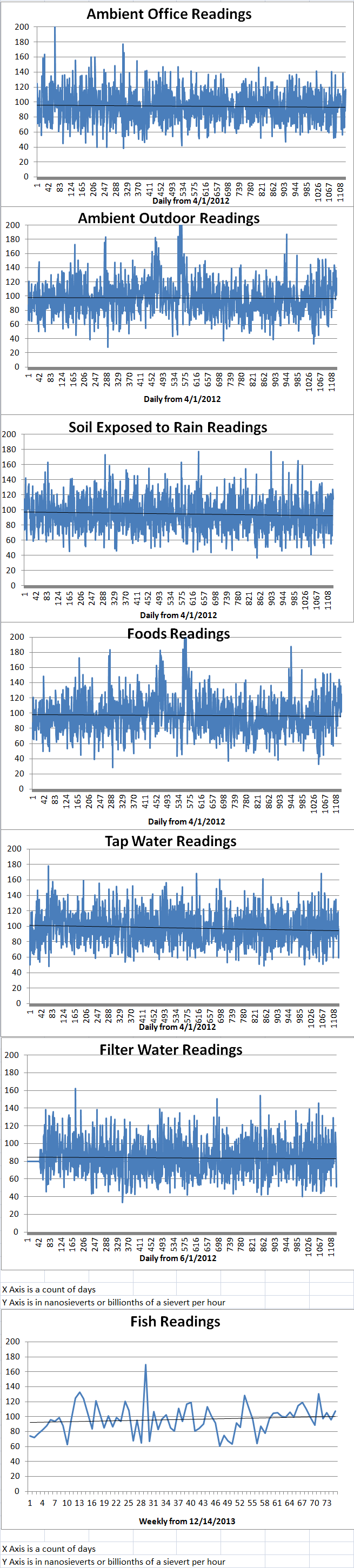
Ambient office = 83 nanosieverts per hourAmbient outside = 123 nanosieverts per hourSoil exposed to rain water = 110 nanosieverts per hourCrimini mushroom from Central Market = 134 nanosieverts per hourTap water = 117 nanosieverts per hourFiltered water = 97 nanosieverts per hour -
Nuclear Reactors 274 – Prefabrication of Nuclear Plant Components Not Solution to Cost Overruns and Scheduling Delays
The global nuclear power industry is trying hard to convince everyone that nuclear power is a viable option and that safe and economical nuclear power plants can be built. Unfortunately, many nuclear power projects fall behind schedule and incur cost increases that can be multiples of original estimates. Major nuclear power plants are based on standard designs but are built onsite and customized to fit the requirements of each installation which often results in high costs and construction delays. One attempt to address problems with construction budgets schedules is the idea of prefabricating sections of the plants in factories and shipping them by rail to the construction sites to lower costs and speed up construction.
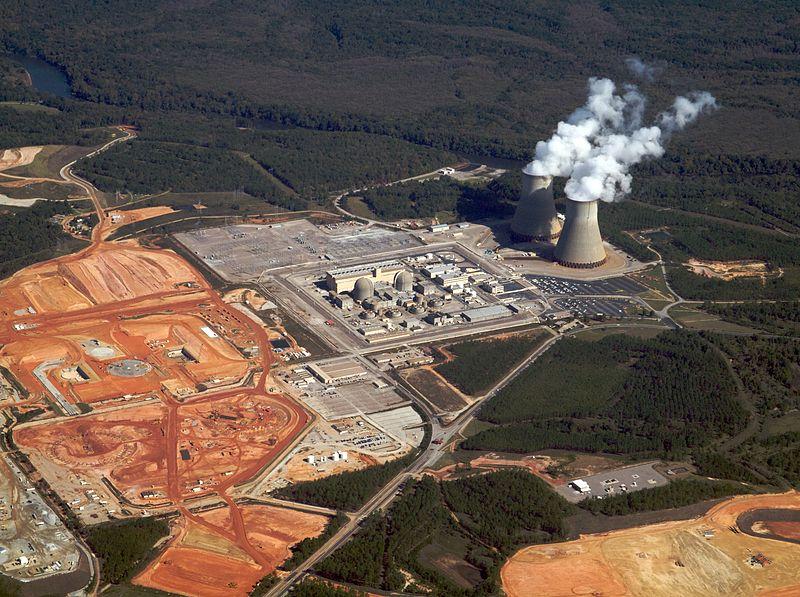
The Georgia Power Company (GPC) , a unit of Southern Company, is employing the new prefabrication method in the construction of two new power reactors at the existing Vogtle nuclear power plant near Waynesboro, Georgia. The new construction is three years behind schedule. GPC has a forty six percent share in the Vogtle plant for which it expects to spend seven and a half billion dollars. This cost is about one and a half billion dollars more than the Georgia regulatory agency authorized in 2009. The Georgia ratepayers may see over three hundred dollars a year added to their electricity bills. GPC has express the hope that the ratepayers will not see their cost for electricity rise more than eight percent a year. An executive VP of GPC said, “The promise of nuclear construction has yet to be seen.” A former member of the Georgia Public Service Commission said, “Modular construction has not worked out to be the solution that the utilities promised.”
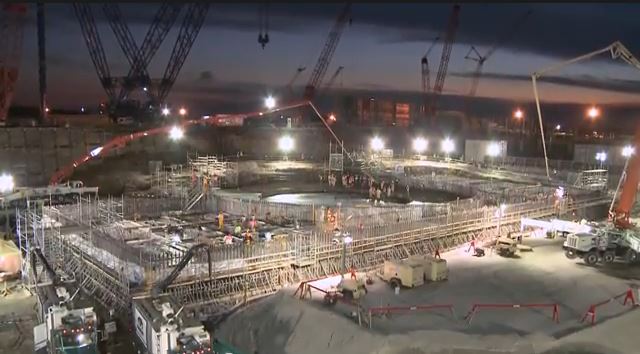
South Carolina Electric & Gas Company (SCEGC) is constructing two additional nuclear power reactors at the V.C. Summer nuclear power plant near Jenkinsville, South Carolina. The current estimated expenditure for SCEGC’s fifty five percent share of the plant is six billion eight hundred million dollars, over a billion dollars more than a 2012 estimate. SCEGC is offering to reduce its profit margin on the project if the state regulators are willing to approve a new cost estimate and revised construction schedule. The commission has not yet issued a decision on the SCEGC offer.
Five years ago, U.S. utilities were promoting plans for the construction of over two dozen new nuclear power reactors in the U.S. The U.S. nuclear industry was bragging about the arrival of a “nuclear renaissance” in the U.S. The U.S. Nuclear Regulatory Commission created a separate division to oversee the flood of applications for new construction.
However, the fracking boom and the arrival of cheap natural gas dampened utilities enthusiasm for new power reactors. Currently there are five reactors under construction in the U.S. The two that we mentioned above are both behind schedule and over budget. The NRC has folded the new division that was created back into the main operations. The nuclear renaissance seems to be losing steam (pardon the pun.)
Vogtle plant construction:
V.C. Summers plant construction:
-
Radiation News Roundup Jul 29, 2015
The power system to operate the freezing of the ice wall and also the nitrogen interting system for the damaged reactors failed early in the morning of July 28th. fukukeaks.org
The president and CEO of Eletronuclear, Othon Luiz Pinheiro da Silva, has been arrested in connection with construction contracts for Angra 3 nuclear power reactor. world-nuclear-news.org
A claim for $7.6 billion has been made against Japan’s Mitsubishi for damages resulting from the early closure of the San Onofre Nuclear Generating Station (SONGS) in California. world-nuclear-news.org
-
Geiger Readings for Jul 29, 2015
Ambient office = 109 nanosieverts per hourAmbient outside = 93 nanosieverts per hourSoil exposed to rain water = 79 nanosieverts per hourFig from Central Market = 48 nanosieverts per hourTap water = 94 nanosieverts per hourFiltered water = 87 nanosieverts per hour -
Radioactive Waste 137 – Spain Selects Villar de Canas As The Site For A Temporary Nuclear Waste Storage Facility
One of the big unsolved problems of nuclear power generation is the disposal of the spent nuclear fuel assemblies. In the U.S., the federal government was supposed to have a permanent spent nuclear fuel repository in Nevada at a Yucca Mountain salt mine. That project was finally cancelled in 2009 because of geological problems and the best guess for a new site being developed and opened is around 2005. The spent nuclear fuel pools at U.S. reactors are filling up and temporary storage either onsite or offsite will have to be constructed soon. Other countries are working on their own temporary nuclear waste storage facilities.
In 2006, Spain approved the Sixth General Radioactive Waste Plan (SGRWP). This plan lays out Spain’s national policy and strategy for managing spent nuclear fuel and other radioactive wastes. The plan states that construction of a temporary storage facility for intermediate and high-level radioactive waste must be a priority. In 2009, fourteen localities including the small town of Villar de Cañas in the Cuenca province expressed an interest in hosting the disposal site. Villar de Cañas was selected as the official site in 2011.
The Nuclear Safety Council in Spain has just voted to approve of a report that officially states Villar de Cañas would be a suitable site for the construction of a temporary nuclear waste storage facility. The report states that the Villar de Cañas location is suitable from a safety point of view because of the features of the terrain and the fact that the engineering design features of the barriers to be constructed are standard in the world of nuclear facilities. The report said that the site had “The technical evaluation noted that the proposed site has no exclusive phenomena.”
The CSN report states that with respect to the regulations on nuclear and radioactive facilities, “prior authorization or official recognition that a chosen site is considered suitable” provides authorization for the licensee to start preliminary work on the facility concurrent with the regulatory approval process. This allows the licensee for the Villar de Cañas site, a decommissioning firm named Enresa, to build external infrastructure such as access roads to the site during the approval process.
The CSN will submit the report to the Ministry of Industry, Energy and Tourism which has final authority to approve a license for the facility. CSN has requested that more techincal studies and analyses be carried out before it makes a final decision on Villar de Cañas.
If the facility is approve and constructed, it will accept transport casks of spent nuclear fuel or vitrified radioactive wastes that are currently in temporary storage at Spain’s nuclear power plants. The wastes will be removed from their transport casks and put in smaller containers. The new containers will be placed in a dry store which will be cooled by the passive circulation of air. Almost seventeen thousand cubic yards of radioactive waste can be stored at the facility for sixty years. It is hoped that by the end of that period, there will be a permanent geological repository available.
Artist’s concept of Villar de Cañas nuclear waste disposal facility:

-
Geiger Readings for Jul 28, 2015
Ambient office = 65 nanosieverts per hourAmbient outside = 66 nanosieverts per hourSoil exposed to rain water = 85 nanosieverts per hourFig from Central Market = 100 nanosieverts per hourTap water = 94 nanosieverts per hourFiltered water = 77 nanosieverts per hour -
Nuclear Reactors 273 – Washington City in Utah Considering Participating in Small Modular Reactor Project
One of the big selling points of nuclear power is that it produces huge amounts of electricity. Reactors that generate over a billion watts of power are common. The smallest commercial power reactor in the U.S. is located at Fort Calhoun in Nebraska and it generates over five hundred megawatts. There is a movement now towards smaller reactors called “small modular reactors” (SMRs) that produce three hundred million watts or less. The supporters of this trend say that these reactors can be constructed on a production line and shipped to where they will be installed and operated. This is supposed to benefit from standardization of components and less costly onsite work. Critics say that it is unlikely that three of these reactors could be built and installed for less money than a single big reactor that would produce more electricity.
Washington City is located in Utah. Its population is about eighteen thousand people which makes it the thirty fifth largest city in Utah. This week the City Council agreed to consider the possibility of nuclear power generation as an alternative to a coal power plant. They are going to research sites for a local nuclear power plant. Washington City only needs eleven megawatts of electricity from a new plant. One of the reasons for the interest in the nuclear option is the fact that the city has developed a “Carbon Free Power Project” in order to reduce the amount of carbon emitted by the production of electricity.
Washington City is teaming with NuScale Power which is an Oregon-based company. NuScale is one of the companies working on the SMRs. They have publicized plans to work on reactors for municipalities who may need as little as fifty megawatts of electricity from a nuclear power plant. They say that twelve of these SMRs could be linked together to produce six hundred megawatts of electricity which is comparable to the low end of the existing big nuclear power reactors. NuScale is working on such a system to be constructed near Idaho Falls. They hope to have the system in operation by 2024.
Washington City has agreed to provide an initial twenty thousand dollars in conjunction with contributions from other nearby municipalities for Phase I of the exploratory process. Phase II calls for spending between one million three hundred thousand dollars and two million six hundred thousand dollars. The higher number would be required if the Utah Associated Municipal Power System partners with NuScale. NuScale will provide half the funding if the UAMPS comes in on the project. The federal Department of Energy is ready to provide a two hundred and fifty million dollar grant for Phase III to help with the development of SMRs.
The DoE has been working with several different companies to stimulate the development of SMRs. Unfortunately, there has been a lack of interest from potential customers and potential investors in SMRs which has slowed down the development work. Time will tell if this alternative to the gigawatt plus big power reactors is viable.
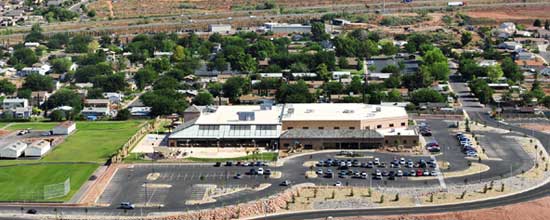
Washington City Community Center:
-
Geiger Readings for Jul 27, 2015
Ambient office = 117 nanosieverts per hour
Ambient outside = 130 nanosieverts per hourSoil exposed to rain water = 114 nanosieverts per hourCarrot from Central Market = 102 nanosieverts per hourTap water = 59 nanosieverts per hourFiltered water = 51 nanosieverts per hour -
Radiation News Roundup Jul 26, 2015
20 μSv/h still detected in Fukushima city. fukushima-diary.com
Construction started today on the sixth unit of the Hongyanhe nuclear power plant in China’s Liaoning province, plant owner China General Nuclear (CGN) announced. world-nuclear-news.org
Operator Axpo has detected “flaw indications” in the reactor pressure vessel (RPV) of the Beznau-1 nuclear power reactor while carrying out ultrasonic measurements as a result of recommendations in connection with flaw indications found in Belgian reactors, the Western European Nuclear Regulators’ Association (Wenra) has said. nucnet.org