Part 1 of 5 Parts
Scientists have been attracted by the possibility of generating an inexhaustible source of energy by nuclear fusion and have been actively working on it for more than a hundred years. However, creating a controlled environment where atomic nuclei can be continuously fused under enormous pressure and temperature to produce energy is extremely difficult. On the other hand, that does not mean that advances are not being made in the quest to harness nuclear fusion. This series of posts will review the four main approaches to fusion and the pros and cons of each.
Fusion and fission are the two ways that nuclear processes can be used to generate energy. Nuclear fusion combines the nuclei of light elements into heavier elements. On the other hand, nuclear fission breaks apart the nuclei of heavier elements to form lighter elements. In a nuclear fission plant, the heat generated by fission is captured and used to turn water into steam which is then turns turbines to generate electricity. Fusion can generate electricity in several different ways.
One major problem with power generation by nuclear fission is that the fission process produces radioactive waste. Some components of the waste will be radioactive and dangerous for millions of years. If there is a major accident such as a core meltdown at a nuclear fission power plant, radioactive materials can be thrown into the atmosphere and carried around the world by powerful currents of air. In addition, reprocessing of spent nuclear fuel can produce plutonium which can be used in the creation of nuclear weapons.
On the other hand, nuclear fusion does not produce long-lasting nuclear waste. The necessary materials can be recycled within one hundred years. There is no danger of a meltdown or other nuclear accident because the extreme temperature reactions that are the basis of nuclear fission cool within seconds of being disrupted. There is also no danger of the spent nuclear fuel being used to create nuclear weapons.
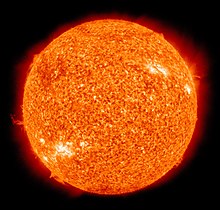
Many scientists at many facilities are working to solve many problems association with nuclear fusion but the goal of all this work is the same. That goal is to reproduce the processes that our Sun itself uses to continuously generate huge amounts of energy. In the Sun, tremendous pressure and temperature are created by the effect of the enormous gravity produced by the mass of the Sun. The gases in the Sun are converted to plasma in which atomic nuclei collide at great velocity to form helium and heavier elements and release energy.
Matthew Hole is a nuclear fusion expert and research fellow at Australian National University. He said in an interview, “Solar power is really fusion power, just at a distance. All this power is just fusion reactions coming from the Sun, that’s all a solar array is doing from the edge of the reactor. But the reactor happens to be eight light minutes away.”
The force of gravity on the Sun is about twenty-eight times that of gravity on the Earth. Obviously, we cannot depend on Earth gravity to produce the huge pressures and high temperatures that are required for nuclear fusion. This means that scientists have had to be creative in generating the necessary conditions for nuclear fusion in an Earth-bound reactor.
Please read Part 2 next
Nuclear Fusion 125 – Pros And Cons Of Four Types Of Nuclear Fusion Reactors – Part 1 of 5 Parts