Part 1 of 2 Parts
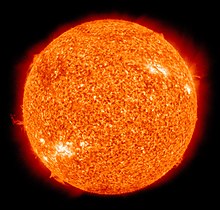
I have been posting a lot about nuclear fusion lately. We know that nuclear fusion is a common process because it is what makes all the stars shine. The enormous gravitational pressure inside the sun forces the nuclei of light atoms such as hydrogen so close together at extreme temperatures that the nuclei to fuse into the nuclei of heavier elements. In the process, huge amounts of energy are released.
There is a great deal of effort being put into the development and construction of nuclear fusion reactors which could produce enough energy to power our whole civilization. They would generate virtually zero carbon dioxide, operate very safely and not produce the high levels of dangerous radioactive waste that are produced by the operation of nuclear fission power reactors.
Decades of fusion research have demonstrated that reproducing nuclear fusion on Earth in a nuclear reactor is an extremely difficult task. Enormous temperatures and pressures have to be generated to match the conditions inside a star. One of the major current problems is that we do not have materials that are able to cope with these extreme conditions even if we can reproduce them.
There are many different paths to the design and development of nuclear fusion power reactors that are being explored in laboratories around the globe. One of the most common types with a donut-shaped reaction vessel is called a tokamak. Inside a tokamak, the fuels used for fusion are the isotopes of hydrogen known as deuterium and tritium in the form of a gas which is converted to a plasma of charged particles by the high temperatures and pressures. Very powerful magnetic fields can be used to trap and hold the plasma because the particles are electrically charged. These magnetics fields are used to herd the charged nuclei of the plasma into a ring-shape inside the reaction vessel.
Under the proper conditions of high temperature and pressure, the hydrogen nuclei are fused together to create helium, neutrons and great energy. The temperature required is around one hundred and eighty thousand degrees Fahrenheit. This is ten times hotter than the center of our Sun. It is necessary to maintain the higher temperature because the Sun has a much higher density of particles.
Although magnetic fields are able to contain most of the plasma, the reactor vessel still has to be able to withstand enormous temperatures. In the ITER tokamak being built in France which is supposed to be operational by 2035, the hottest part of the physical reactor is supposed to reach temperatures in excess of twenty-four hundred degrees Fahrenheit.
In such a reactor, the plasma is occasionally able to escape the magnetic trap in the middle of the donut-shaped reactor vessel and reach the physical walls of the reactor. This can result in erosion of the walls, particles being implanted into the walls of the vessel and changes to the properties of the materials making up the walls of the vessel.
In addition to the extreme temperatures inside the tokamak, it is also necessary to consider the by-products of the fusion of deuterium and tritium such as extremely high energy neutrons. Neutrons are neutral atomic particles so they cannot be affected by the magnetic confinement so they impact the walls of the reactor vessel and cause damage to the materials of the walls.
Please read Part 2 next
Nuclear Fusion 134 – New Materials Need To Be Developed For Nuclear Fusion Reactors – Part 1 of 2 Parts