
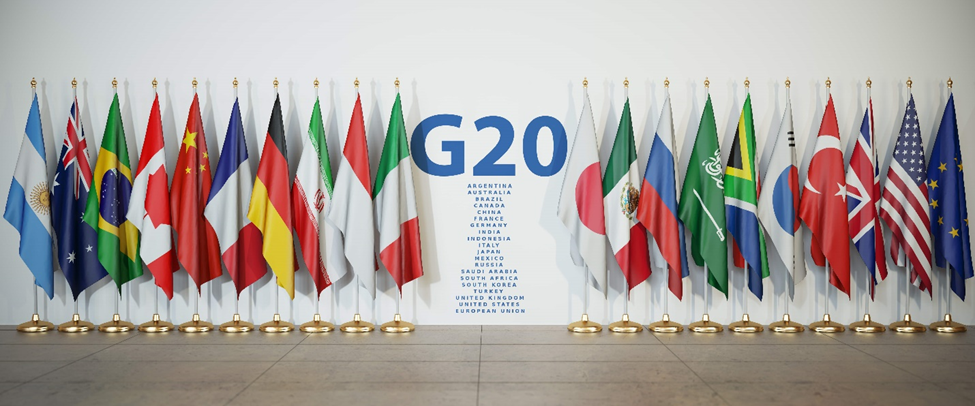
South Africa is partnering with the International Atomic Energy Agency (IAEA) during its current G20 presidency to focus on the implementation of new commercial nuclear reactors in Africa.
The G20 or Group of 20 is an intergovernmental forum comprising nineteen sovereign countries, the European Union (EU), and the African Union (AU). It works to address major issues related to the global economy, such as international financial stability, climate change mitigation and sustainable development, through annual meetings of Heads of State and Heads of Government.
The sovereign states of the G20 (without its international members, like the EU or AU) account for around eighty five percent of gross world product (GWP), seventy five percent of international trade, fifty six percent of the global population, and sixty percent of the world’s land area. Including the EU and AU, the G20 comprises seventy nine percent of global population and eighty four percent of global CO2 emissions from fossil energy.
IAEA-Group of Twenty cooperation broke new ground with the publication of a new report examining the potential for nuclear power in Africa.
The IAEA launched the report at a side event co-organized with the Clean Energy Ministerial and the South African Department of Electricity and Energy on the margins of a key Group of Twenty (G20) energy transitions meeting in South Africa as the G20 bloc studies clean energy options for sustainable development.
Read the new report: Outlook for Nuclear Energy in Africa | IAEA.
The IAEA participated for the first time as an invited organization during the G20’s Brazilian presidency last year. The IAEA is once again collaborating with the European Union which is the world’s largest economic bloc. They met under the South African presidency to advance work on nuclear power.
South Africa is the only African country with nuclear power. Its two-unit Koeberg Nuclear Power Station supplys nearly two gigawatts of electrical generation capacity. Enthusiasm for nuclear power is building across the whole continent, where fossil fuels currently dominate energy production, accounting for more than seventy percent of electricity production in Africa.
South Africa is collaborating with the IAEA during its G20 presidency and focusing on the implementation of nuclear new build programs in Africa. There is particular interest in small modular reactors (SMRs) in Africa because of the grid infrastructure requirements. Zizamele Mbambo is the Deputy Director General for Nuclear Energy in South Africa’s Department of Mineral Resources and Energy. He said, “The global interest in SMRs is increasing due to their ability to meet the need for flexible power generation for a wider range of users and applications as we move from high carbon emissions to lower carbon emission sources.”
A growing number of African countries are interested in adding nuclear power to their energy mix, with Egypt building its first nuclear power plant and countries including Ghana and Kenya working with the International Atomic Energy Agency (IAEA) to develop the requisite infrastructure to launch their nuclear programs. The latest IAEA projections have nuclear capacity in Africa increasing tenfold by 2050 in the high case scenario. Even in the low case scenario, the current nuclear capacity grows by a factor of five by 2050.
The IAEA publication surveys the Africa’s current energy landscape, highlighting the prospects for nuclear power to address the lack of access to reliable electricity that is a daily reality for about half a billion people across Africa. The report also takes an in-depth look at what is required to deploy enough nuclear power to meet the continent’s significant energy needs. This underscores the importance of addressing financing challenges, implementing strong, supportive government policies and adopting a regional approach to nuclear power development, and details IAEA support in these and other areas.
Frederik Reitsma is the Head of the IAEA’s Nuclear Power Technology Development Section. He said, “Access to reliable and low-carbon energy sources such as nuclear can enable Africa to further explore and more importantly also add benefits and value to its vast natural resources, including uranium. History has shown that the development of a nuclear power program, and the development of the associated supply chain, drives industrial growth and leads to advanced technology development in other areas.”
The publication also explained how SMRs could play a major role in Africa. It highlighted benefits such as their suitability for the relatively small electric grids that are common in Africa as well as their lower capital costs. Uranium mining is also identified as a significant growth opportunity for the continent. Africa is already home to three of the world’s top ten uranium producers: Namibia, Niger and South Africa.
Emma Wong is the Nuclear Principal Lead for Innovation, Quantum Technology and International Development at EPRI. She said in remarks delivered during the launch event “As the Electric Power Research Institute (EPRI) contributes to the development of an energy security framework for G20 nations, insight-rich resources such as the IAEA’s Outlook for Nuclear Energy in Africa are essential to address regional resource expansion and inform development across continents. By together leveraging every resource at our disposal, we can amplify the value of global efforts to deliver the economic, environmental, and societal benefits of energy abundance to society.”
Jean-François Gagné is the Head of the CEM Secretariat. “The Clean Energy Ministerial (CEM) provides a trusted and inclusive platform where countries can engage in informed dialogue on the opportunities and challenges of nuclear energy, and advance practical cooperation aligned with their national priorities. As a key international platform, the CEM supports governments in advancing their nuclear energy ambitions, including in emerging and developing economies. In Africa, the CEM NICE Future Initiative has actively worked with countries such as Ghana and Kenya, helping them explore the potential role of nuclear energy in their broader clean energy transitions. The CEM works in close partnership with the International Atomic Energy Agency (IAEA), fostering international collaboration and knowledge exchange in support of national and regional goals.”
Looking forward, the IAEA is preparing to engage at the G20’s Energy Transitions Ministerial Meeting, scheduled for October of this year in South Africa. The IAEA is currently developing a report on the coal-to-nuclear transition which covers the economic benefits of converting former coal sites for nuclear power deployment and provides an overview of the technical aspects of the repurposing process. This report is scheduled to be released just ahead of the meeting.