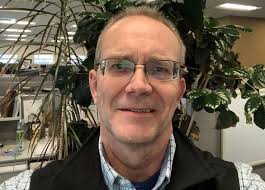
David Bowen was just hired as the Nuclear Waste Program lead for Washington’s Department of Energy (WDoE) in Richland, Washington. He will be dealing with the cleanup of the Hanford Nuclear Reservation which is one of the most radioactively polluted places on the planet. Part of his job is to hold the U.S. Department of Energy (DoE) accountable for its cleanup at the site under the Three Party Agreement. This documents the deal worked out in 1989 between the WDoE, the DoE, and the U.S. Environmental Protection Agency.
During World War II and the Cold War, Hanford was the site of the manufacture of plutonium used to make nuclear weapons. Huge amounts of radioactive liquids were just dumped into trenches. The soil, buildings and storage containers are full of toxic chemicals and radioactive materials. There are one hundred and seventy-seven buried tanks full of a radioactive mixture of chemicals. Some of the tanks are leaking.
Bowen said, “Some of [the underground tanks] are 50-plus years old. And they weren’t designed to last this long. There are still fluids in them, millions of gallons, in sludge, et cetera. So, there’s the opportunity for that to escape and get into the Columbia River — or the groundwater is high.”
Hanford is constructing a huge waste treatment plant to deal with the tank waste. Unfortunately, the deadline for complete cleanup of the tanks has been pushed back several times since the 1980s. It is likely that the current COVID-19 pandemic will delay the cleanup even more.
It is clear that Bowen has inherited a difficult project. It will be hard for him to get the attention of Washington Governor Jay Inslee who is busy with the pandemic and social unrest problems of the state. Bowen will have to negotiate with federal officials and develop and understanding of complex permitting requirements.
Polly Zehm recently retired as the deputy director of Washington’s Ecology Department. She said, “I’m really excited about David in this role. He’s worked in an environment where people don’t agree. And he has to move things forward.”
Hanford is very much like a small complex city. There are thousands of commuting workers, miles of highways and intertwining roads. There is a complex mixture of stakeholders including multiple Indian tribes, Hanford watch-dog groups, Columbia river advocates and multiple government agencies. One of the big problems at Hanford is the loss of expertise through retirement or attrition of experienced workers. Some important Ecology experts have left to take jobs in the federal government in Washington, D.C. Others have become Hanford contractors.
Bowen says that he is well aware that he needs to act quickly. He said, “We waste time when we don’t learn from past mistakes, or past processes and projects. If nobody here knows about a project, we could end up going through a loop again. And I want to avoid that where we can for sure. Passing on that knowledge here is a priority.” He also said that his previous work history has given him the ability to work with diverse people.
Radioactive Waste 790 – David Bowen Hired To Be The Nuclear Waste Program Lead For Washington’s Department of Ecology In Richland