Part One of Two parts.
U.S. Energy Secretary Moniz recently delivered the keynote address at an event called “Nuclear Energy at a Crossroads,” which was put on by the Center for Strategic and International Studies, a Washington, D.C. think-tank. During his speech, he talked about eight major problems that confront nuclear power generation and emphasized that these problems must be dealt with if nuclear power is to thrive in the U.S.
1. The fate of the existing U.S. nuclear fleet could have implications for carbon emissions.
Over the past few years, low gas and oil prices, technical problems, the dynamics of the energy market and public policy that supports renewable energy have all contributed to closure or announced closure of fourteen nuclear power plants in the U.S. Over half of the ninety nine operating power reactors in the U.S. are in competitive wholesale energy markets. Moniz commented that it was ironic that these closures would be happening over the next five years during the same period when states are implementing plans to reduce carbon emissions. He thinks that nuclear power has a role to play in reducing carbon emissions and laments the closure of so many plants. New York state recently created a subsidy program to keep three nuclear power plants open and Illinois is considering something similar. Moniz believes that such subsidy programs should be seriously considered for other power reactors that cannot compete in the energy market.
2. New reactors will come online over the next five years, but only in the Southeast.
There are new power reactors being constructed in the Southeast while power reactors are closing in other parts of the country. Moniz pointed out that this highlights differences in regulation and policy in different states. He said that there needs to be more clarity and uniformity with respect of controlling costs and schedules for the construction of new reactors in the U.S.
3. The U.S. nuclear fleet is aging.
Many U.S. nuclear power plants were built in the 1970s. They were originally licensed to operate for forty years. So far eighty U.S. reactors have had their licenses extended for an additional twenty years for a total of sixty years. This means that there will inevitably be a wave of closures around 2030. Power reactors can take up to ten years to license and construct. That means that major decisions have to be made in the next five years about nuclear power in the U.S. to insure that there is not a big drop in the electricity provided by nuclear reactors. One solution might be to license reactors for another twenty years of operation for a total of eighty years. This would push the wave of closures off until mid-century.
4. The need for a reliable, resilient, decarbonized electricity system is clear, but what it would look like is extremely unclear.
The U.S. is working on created a “decarbonized” electrical supply system in order to mitigate climate change. Major questions that need to be answered include the importance and nature of fuel diversity, baseload supply, energy storage, and capacity. Moniz pointed out that while nuclear energy could plan a major role in future energy planning, its importance is controversial. Some analysts believe that hydro, wind and solar could provide needed energy with short term support of natural gas and long term support of major energy storage system reducing the need for nuclear power altogether. He emphasized that decisions need to made now in order to provide sufficient time for planning and construction of new infrastructure.
(Please read Part Two)
U.S. Energy Secretary Moniz:
When atoms are smashed together in colliders, huge amounts of information are generated with respect to the daughter particles that result from the collisions. It is important for scientific, engineering and industrial applications that this information is stored in high quality data formats. Applications include designing nuclear reactors, dealing with radioactive waste, maintaining stockpiles of nuclear weapons, research and use of medical radioactive isotopes, developing fusion power, astrophysics and many other applications. The Lawrence Livermore National Laboratory (LLNL) depends on accurate data about nuclear processes.
The LLNL currently utilizes the Evaluated Nuclear Data Library (ENDL) format and the popular Evaluated Nuclear Data Format (currently in version 6, or ENDF-6) formats. These data formats date back to the 1960s when punch cards were a major form of data storage. They are old and outdated. ENDL was first developed by the Atomic Weapons Establishment of the United Kingdom in the early 1960s. The ENDF standard was developed in the late 1960s to provide increased flexibility and more complex formats. LLNL was a part of the creation of ENDF.
Both of these formats suffer from the need to store the information on eighty column paper punch cards. Such cards require formatting that makes it difficult for humans to read. There wis redundant information that could cause problems. These formats cannot store all the important information about some nuclear reactions.
The data tables in either of the old formats describe the probabilities of various complex physical interactions. “Nuclear databases include physical quantities such as energy spectra, scattering cross sections, nuclear structure, nuclear decay, and angular distributions of the reaction products, together with estimates of uncertainties.” ENDL data tables include entries for every stable isotope and also entries for many unstable isotopes for every element up to californium, atomic number 98.
Nuclear reactions are very complex and it can be difficult to capture important information about every particle. Before an experiment can be entered into the nuclear database, the researchers must provide many details that may be difficult to obtain. The researchers often have to interpolate the available information in order for their research to be acceptable for inclusion in nuclear databases.
Evaluation of nuclear data is carried out by national and international agencies including the Cross-Section Evaluation Working Group which controls the U.S. ENDF/B data library and the ENDF-6 data format standard. The work of this group is coordinated through the National Nuclear Data Center (NNDC) at Brookhaven National Laboratory. The Japanese and European nuclear industries and laboratories also utilize the ENDF-6 format for their libraries but they have their own agencies to evaluate the acceptability of the data generated by researchers.
Driven by the need for a newer and more modern data format, the Nuclear Data and Theory group at LLNL has developed the Generalized Nuclear Data format which takes advantage of recent developments in computers and data handling. The new format is ” readable by both computers and humans, flexible, and extensible for supporting new types of nuclear data.” It incorporates new understandings of nuclear reactions.
The work on the new format began in 2009. Early drafts were distributed for feedback. It is hoped that the new format will be formally adopted in 2017. Backward compatibility will be maintained with the old formats for at least ten years. The new format will also address new areas on interest beyond the use of the old formats.
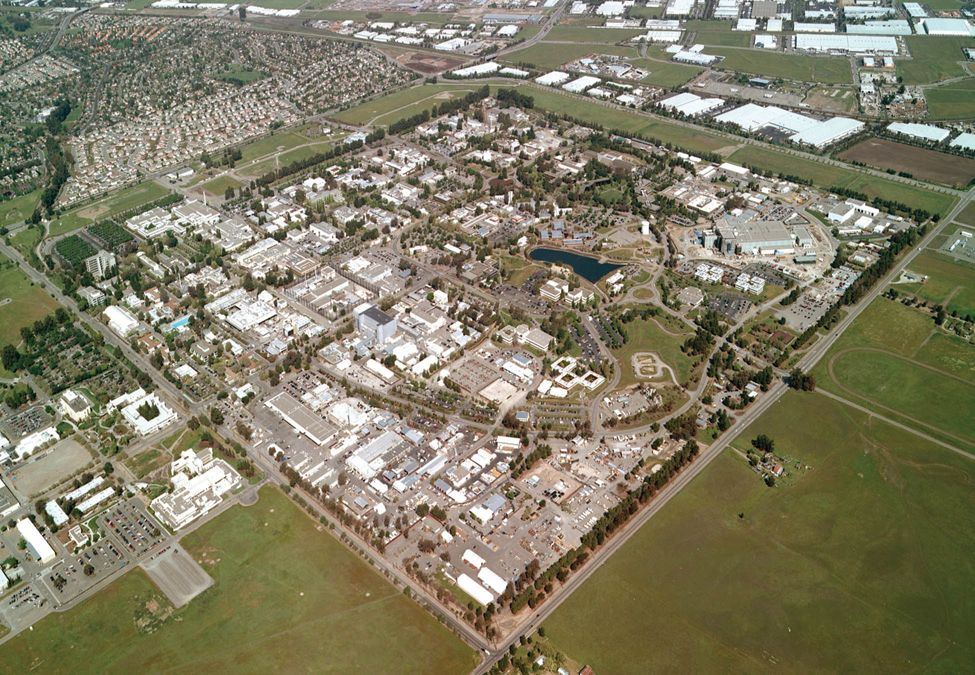
Ariel view of Lawrence Livermore National Laboratory:
Cyber security has been the news a lot lately. The various hacking attacks and the recent Denial of Service attack on major parts of the U.S. Internet have prompted many media stories. I believe that much of the lack of security in computer and communication systems stems from laziness and greed. We can solve these problems if we are willing to spend the money and time. Many private companies are waiting for the U.S. government to mandate universal security measures because they are afraid that if they spend the money unilaterally to be really secure, they will be at a competitive disadvantage to other companies who do not spend the money. With respect to the subject of this blog, cyber insecurity has been reported in many industries including the nuclear industry.
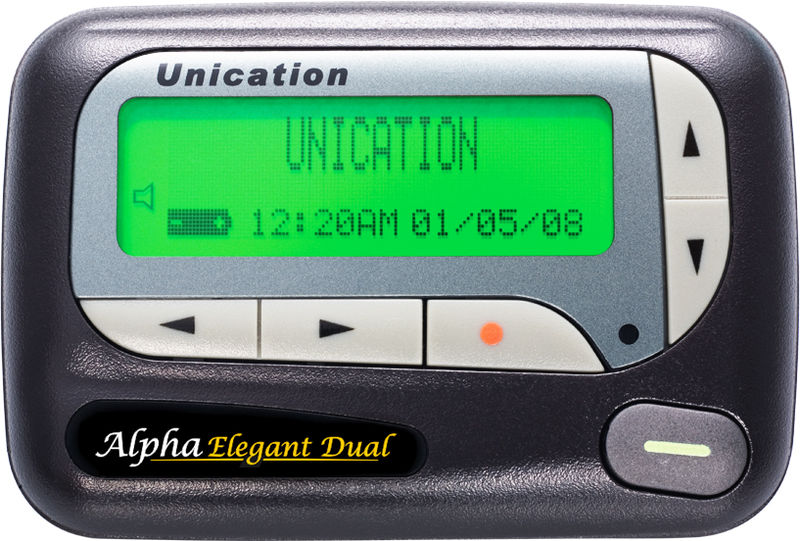
Many industries are using unencrypted pagers to send alerts about plant problems. A recent study found that such alerts were sent to or from several U.S. nuclear plants including references to reduced pump flow rates; leaks of water, steam, radiant coolant and electrohydraulic control oil; fires; loss of redundancy; need for medics; control rod malfunction and nuclear contamination.
There are stringent requirements for security mandated by regulatory agencies for many of the industries using the unencrypted pagers. However, pagers are often used because they are a very low power alternative cell phones and wifi due to poor reception/transmission areas for cell and wifi around industrial plants with a lot of steel and structures that block signals. The researchers also mentioned that a lot of industries continue to use antiquated equipment because it is cheap and easy.
The researchers were able to use software defined radios and a twenty dollar dongle to easily gain access to these pager messages. They were able to access pager messages in real time. Hostile parties intending harm to critical industrial systems could use such a system to access pager messages to gather valuable information about vulnerable infrastructure which would assist them in staging attacks. If they saw a pager message indicating a current serious problem, they could use that information to gain more information from personnel or even gain physical access to the system with the problem under the guise of being a repairman or an inspector.
In addition to being able to gather messages from unprotected pagers, the researchers were also able to send fake messages out over the pager system. This would mean that hostile parties could flood the system with fake messages that could overload a response system or cause inappropriate responses to real problems.
The research shows that popular online messaging system actually have better security than messaging systems that are suppose to help monitor critical infrastructure including nuclear power plants. Critical U.S. infrastructure is terribly vulnerable to attack and something must be done before this house of cards is blown down. If the companies involved in infrastructure will not deploy more secure systems on their own, then they will need to be forced to do it by government action.
Modern pager (Source: Unication, Author: Vitachao)