Author: Burt Webb
-
Geiger Readings for Oct 25, 2016
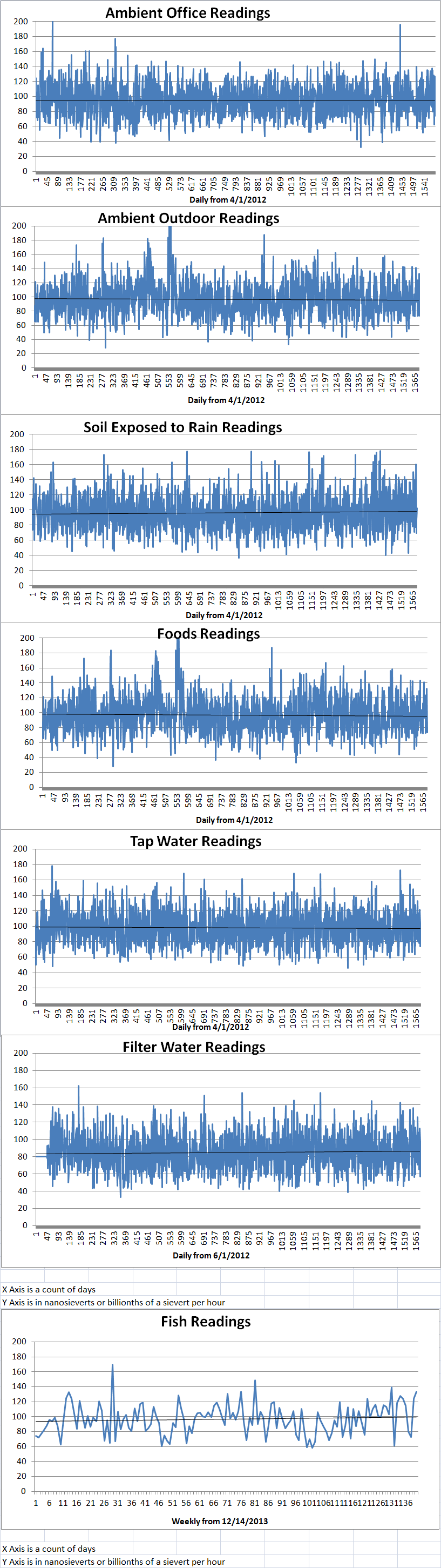
Ambient office = 127 nanosieverts per hourAmbient outside = 105 nanosieverts per hourSoil exposed to rain water = 102 nanosieverts per hourBartlett pear from Central Market = 74 nanosieverts per hourTap water = 74 nanosieverts per hourFilter water = 57 nanosieverts per hour -
Nuclear Reactors 417 – Fort Calhoun Nuclear Generating Station In Nebraska Is Being Permanently Shut Down
I have often blogged that ultimately it will be the market and public opinion that will kill off nuclear power. One or two more major accidents will sour the public and investors on nuclear power. Increasingly cheap alternative energy and rising costs for nuclear power will also doom nuclear as a source of electricity. Relevant to this point of view is the fact that the Ft. Calhoun nuclear power plant in Nebraska is being shut down because it could not compete in the marketplace.
The Fort Calhoun Nuclear Generating Station is located between Fort Calhoun and Blair, Nebraska next to the Missouri River. The plant began construction in 1966 and was put into operation in 1973. The plant has one pressurized water reactor that generates four hundred and seventy six megawatts at full power. The Omaha Public Power District owns the plant and it is operated by Exelon Nuclear Partners. The plant was originally licensed for forty years but had its license extended an additional twenty years to 2033 in 2003.
In April of 2011 the FCNGS was shut down for refueling. In May of 2011 the Missouri River flooded and the plant was surrounded by flood waters. Then in June, there was an electrical fire that shut off the supply of water to the spent fuel cooling pool for ninety minutes. Following the flood and the fire, there was a major inspection of the plant. It was discovered that the original design of the plant had some serious deficiencies and critics said that the plant should never have been licensed for operation in the first place. The plant remained shut down for three years while further inspections and repairs were carried out. It resumed operation in 2013.
Federal and state government have refused to provide subsidies or other support for the FCNGS on the basis of it being a low carbon energy source. The demand for electricity in the area is down due to slow economic growth. The plant has the smallest nuclear power reactor in the country and is not as competitive in the energy market as the bigger power reactors. For all these reasons, in June of 2016 the OPPD made the decision to shut down the FCNGS permanently even though it is licensed to operate for another seventeen years. The NRC does not permit nuclear power plants to operate if they cannot show a profit.
The power being generated by the reactor is being gradually reduced over a six month period. The fission process in the reactor is scheduled to stop completely in March of 2017. The plant will then be ready for decommissioning in November of 2017. The FCNGS will either be boarded up and fenced in for twenty to forty years in what is call a Safstor process before it is dismantled or it will be dismantled immediately in what is referred to as the Decon method.
As more licenses expire and more aging nuclear power plants become too expensive to compete in the energy marketplace and are closed, the number of nuclear power reactors operating in the U.S. will steadily decline. They will not be replaced by new nuclear power reactors but by alternative sustainable sources of energy. It is twilight for the age of nuclear power in the U.S.
Fort Calhoun Nuclear Generating Station:
-
Geiger Readings for Oct 24, 2016
Ambient office = 74 nanosieverts per hourAmbient outside = 93 nanosieverts per hourSoil exposed to rain water = 87 nanosieverts per hourRomaine lettuce from Central Market = 133 nanosieverts per hourTap water = 103 nanosieverts per hourFilter water = 97 nanosieverts per hour -
Geiger Readings for Oct 23, 2016
Ambient office = 84 nanosieverts per hourAmbient outside = 84 nanosieverts per hourSoil exposed to rain water = 70 nanosieverts per hourOrange bell pepper from Central Market = 102 nanosieverts per hourTap water = 121 nanosieverts per hourFilter water = 113 nanosieverts per hour -
Geiger Readings for Oct 22, 2016
Ambient office = 126 nanosieverts per hourAmbient outside = 83 nanosieverts per hourSoil exposed to rain water = 77 nanosieverts per hourRedleaf lettuce from Central Market = 75 nanosieverts per hourTap water = 94 nanosieverts per hourFilter water = 83 nanosieverts per hourSilver salmon – Caught in USA = 134 nanosieverts per hour -
Nuclear Reactors 416 – Russia is Building Turkish Nuclear Power Plant
In 2010 Russia and Turkey signed an agreement for the construction of the Akkuyu Nuclear Power Plant which would consist of four nuclear reactors with an total capacity of forty eight hundred megawatts. The plant was to be operational by 2023. The Akkuyu plant is located in the Turkish province of Mersin. It is the first of three plants that Turkey is planning in order to reduce its dependency on importing foreign power. The estimated cost of the plant was twenty billion dollars. Rosatom, the Russian nuclear firm, was tapped to construct the plant. The plant will produce thirty five billion kilowatt-hours a year when completed. It will be licensed for a service life of sixty years.
A second nuclear power plant is slated to be constructed by a French-Japanese consortium in the city of Sinop near the Black Sea. A third nuclear power plant will be constructed in the Igneada district of the Turkish province of Kirklareli.
Cengiz Holdings is a Turkish construction firm that works of major energy infrastructure projects. They are currently building a thirteen hundred megawatt coal plant in the Turkish province of Canakkale. Cengiz Holdings is involved in the Akkuyu power plant project. They recently submitted the winning bid for construction of the Akkuyu power plant water intake for the cooling system. Rosatom wants to make use of Cengiz Holding’s experience in constructing power plants.
When Turkish air defenses shot down a Russia fighter on the border with Syria in November of 2015, there was a serious chill in Russian-Turkish relations. Russia took economic retaliation on Turkey, including a suspension of work on the Akkuyu power plant. Cengiz Holdings has offices in Russia. They decided to continue to operate those offices in spite of the problems between Turkey and Russia. They assumed that normal relations would be restored quickly and that work on the power plant would go forward. This was a wise decision on their part and the power plant project is once again progressing.
In April of 2016 Rosatom decided to sell up to forty nine percent of the Akkuyu power plant to Turkish investors. Cengiz Holdings is unable to provide a share of the financing and is seeking to partner with other Turkish firms which will assist in financing the project. Cengiz Holding says that they need to be involved in the financing because they need to be shareholders in order to take part in the management of the project.
Turkey is in a delicate position with respect to international relations. Russia is a major trading partner and a neighbor. On the other hand, Turkey is a member of NATO with strong ties to Europe and the U.S. The current conflict in Syria has brought Turkey into confrontation with Russia. Recently, there has been tension between Turkey and NATO over the Syrian refugee crisis. Erdogan, the President of Turkey has been walking a tightrope playing the NATO and the U.S. against Russia. It will be interesting to see how successful Erdogan will be in the game of international politics.
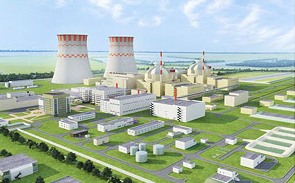
Artist’s concept of Akkuyu Nuclear Power Plant (Image: AEP):

-
Nuclear News Roundup Oct 21, 2016
Finnish waste management company Posiva will share its experience and know-how of developing a repository for used nuclear fuel and high-level radioactive waste with the Czech Republic’s Radioactive Waste Repository Authority (SÚRAO) through a four-year service contract. world-nuclear-news.org
Continued government backing and resources are needed to further build the Belarusian nuclear safety regulator’s technical capabilities ahead of the start up of the country’s first nuclear power reactor, an International Atomic Energy Agency (IAEA) team has concluded. world-nuclear-news.org
Russia’s nuclear power export ambitions have made gained a new potential customer as ROSATOM announced Tuesday that the company had signed a memorandum of understanding with the Nuclear Regulatory Authority of Paraguay concerning the peaceful uses of atomic energy. nuclearstreet.com
A lack of money, expertise and disposal sites mean derelict British nuclear submarines containing radioactive material will not be fully dismantled and disposed of for 25 years, officials have admitted. telegraph.co.uk