Author: Burt Webb
-
Geiger Readings for Oct 21, 2016
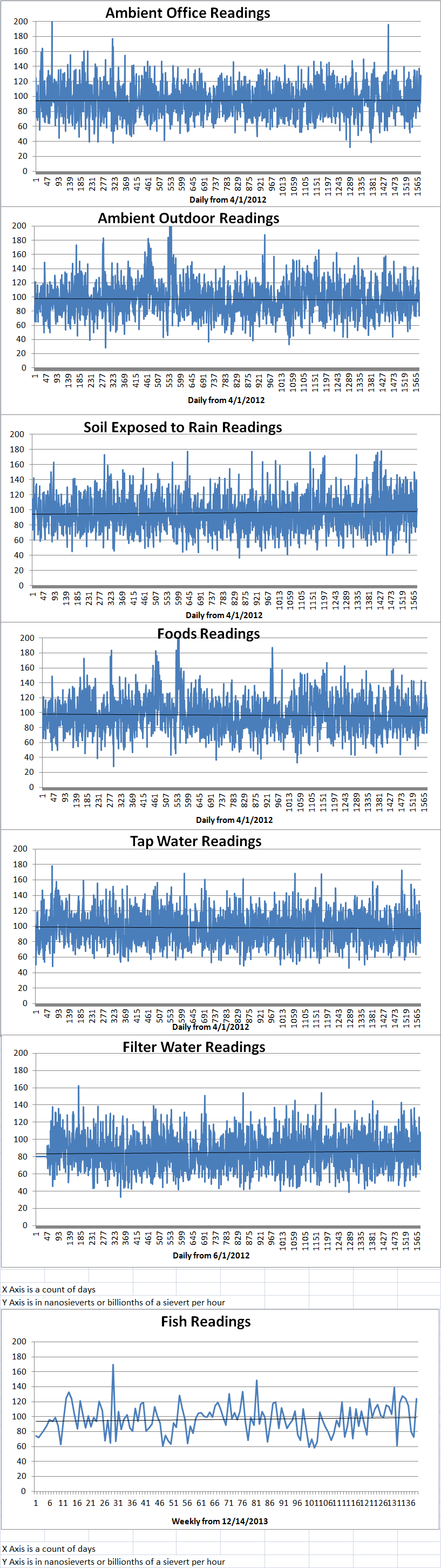
Ambient office = 63 nanosieverts per hourAmbient outside = 161 nanosieverts per hourSoil exposed to rain water = 160 nanosieverts per hourCrimini mushroom from Central Market = 93 nanosieverts per hourTap water = 100 nanosieverts per hourFilter water = 90 nanosieverts per hour -
Nuclear Weapons 237 – Politics of the New UN Proposal For Nuclear Disarmament
Yesterday, I blogged about the Nuclear Weapons Convention being considered by the UN. One hundred and seven member states are supporting a proposal to eliminate all nuclear weapons on Earth. Twenty nations voted against the proposal. Today I am going to go into more detail about the politics surrounding of the proposal.
Although, Barack Obama campaigned on the elimination of nuclear weapons in 2008, now his administration is offering reasons why the new push for nuclear disarmament is a bad idea. Administration officials point out that increasing tensions with Russia and Russia’s nuclear belligerency, increasing tensions with China in the South China Sea and the hysterical threats of a nuclear armed North Korea make this a bad time to be considering the total nuclear disarmament called for in the new proposal. The critics say that passing this proposal would be counter-productive because it might serve to weaken the Nuclear Non-proliferation Treaty (NPT) that currently binds the U.S. and Russia.
The supporters of the proposal say that the U.S. administration is exaggerating the problems that would be caused by the passage of the proposal. Their idea is that having a legal framework for the elimination of nuclear weapons would increase public pressure on decision makers to eliminate nuclear weapons. The supporters could also point out that both Russia and the U.S. are currently accusing the other of violation of the NPT.
The U.S. administration is putting pressure on allies in NATO and South East Asia to reject the proposal. In this regard, the U.S. is in league with the U.K., France, China and Russia, all of whom have nuclear weapons and are apparently not eager to work on eliminating them and, like the U.S., are opposing the new U.N. proposal which is mainly being pushed by non-nuclear nations which are at risk from the arsenals of the nuclear nations.
Austria, Brazil, Mexico, and South Africa launched the effort to convene new conferences on nuclear disarmament in 2017. The U.N. has one hundred and ninety three members. The supporters of the proposal expect to get one hundred and twenty votes which means that the proposal will probably pass.
One of the reasons for the new proposal is that fact that the nuclear armed powers promised to disarm if the non-nuclear nations world refrain from developing their own nuclear weapons programs. Many non-nuclear nations feel that while they have kept their end of the bargain, the nuclear nations have been dragging their feet with respect to disarmament. In addition, the nuclear powers are talking about spending billions of dollars to upgrade their nuclear arsenals.
The U.S. and other nuclear powers point out that the NPT has resulted in the elimination of eighty five percent of the world’s nuclear weapons. They say that without the participation of the nuclear powers, the new proposal would have little impact on the existing nuclear arsenals. This may be true but there is a real danger that some non-nuclear powers may begin building their own nuclear weapons if the existing nuclear arsenals are not reduced or entirely eliminated.
-
Nuclear News Roundup Oct 20, 2016
Bulgaria’s prosecutors have charged two former directors of state electricity firm NEK with causing financial damage by signing a nuclear deal that cost the business more than 77 million euros ($86 million). reuters.com
It’s taking longer than expected to reach a deal on how much customers will have to pay for about $1.7 billion in cost overruns at the Vogtle nuclear plant expansion near Augusta. myajc.com
India has quietly completed its nuclear triad by inducting the indigenously built strategic nuclear submarine INS Arihant into service. thehindu.com
Heading a delegation to Tehran, Qin held talks with senior Iranian officials including Ali Akbar Salehi, head of the Atomic Energy Organization of Iran (AEOI), and Mohammad Ahmadian, CEO of Nuclear Power Production and Development Company of Iran (NPPD). tehrantimes.com
-
Geiger Readings for Oct 20, 2016
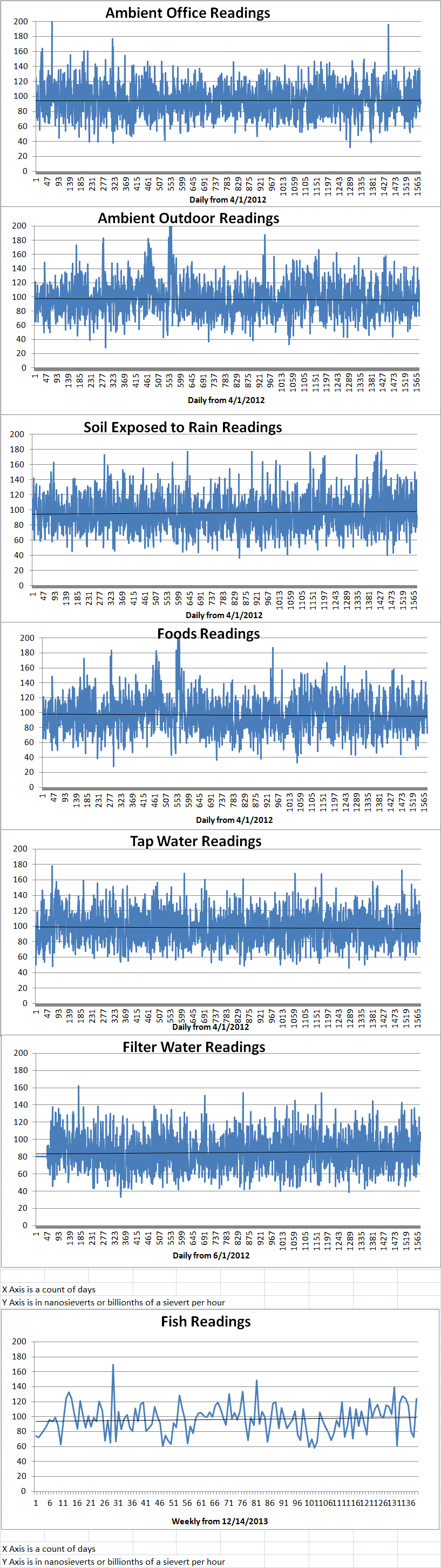
Ambient office = 128 nanosieverts per hourAmbient outside = 111 nanosieverts per hourSoil exposed to rain water = 102 nanosieverts per hourRoma tomato from Central Market = 107 nanosieverts per hourTap water = 78 nanosieverts per hourFilter water = 65 nanosieverts per hour -
Nuclear Weapons 236 – New UN Proposal For Nuclear Disarmament
There are calls by over one hundred countries for new UN talks about global nuclear disarmament. The International Campaign to Abolish Nuclear Weapons (ICAN) announced that these countries support L41, a draft UN resolution which seeks a total global ban on nuclear weapons. L41 calls for two conferences, one next March and the second next June at UN headquarters in New York involving all member nations. L41 is a proposal from a UN forum that was created in 2012.
There are currently about sixteen thousand nuclear warheads in the world. The U.S. and Russia both have about seven thousand each with the rest possessed by the U.K., France, Israel, Pakistan, India, China and North Korea.
The proposal in L41 is called the “Nuclear Weapons Convention”. It calls for nations with nuclear warheads to eliminate those weapons in five phases. Phase One would be for nations to take their weapons off “alert” or ready to launch status. The Second Phase would consist of removing weapons from deployment. The Third Phase would have the warheads removed from delivery vehicles including ICMBs, cruise missiles and bombs. The Fourth Phase would require dismantling the warheads themselves. The Fifth Phase would have the fissile “pits” from the warheads disfigured so that they could never be used again. The fissile material from the warheads would be placed under international control. In additions to the five phases, the delivery vehicles would have to either be destroyed or adapted to non-nuclear use. The Convention also prohibits development of, stockpiling of or even threatening to use nuclear weapons. In addition, the production of weapons grade fissile materials would be prohibited.
The UN would create a new agency to administer the Convention. This agency would include a Conference of State Parties, a Technical Secretariat and an Executive Council. All signatories would have to submit a list of all nuclear weapons, weapons grade nuclear materials and delivery vehicles including their locations. The State Parties would also need to create an Agency for the Prohibition of Nuclear Weapons. This agency would be in charge of verification, ensuring compliance, decision-making and it would provide a forum for consultation and cooperation between all signatories.
Germany has publicly come out against the new proposal. A spokesperson from the German foreign ministry expressed the fear that the new Convention would be “impractical” because it would “devalue” the existing Nuclear Non-proliferation Treaty (NPT). The NPT is the main treaty between the U.S. and Russia that deals with nuclear weapons. Between them, they have over ninety percent of the world’s nuclear weapons. On the other hand, both Russia and the U.S. have recently accused the other of violating the terms of the NPT so perhaps it is time to develop a new international treaty for nuclear disarmament. Germany did vote for the UN forum to be established in 2012. However, Germany did vote against the Convention draft document. France, Russia, the U.S. and eighteen other nations also voted against L41. Australia opposes L41 and agrees with Germany that it would be ineffective and would undermine the current NPT. With Russian and U.S. rejection of the proposal, L41 would seem to be an exercise in futility.
-
Geiger Readings for Oct 19, 2016
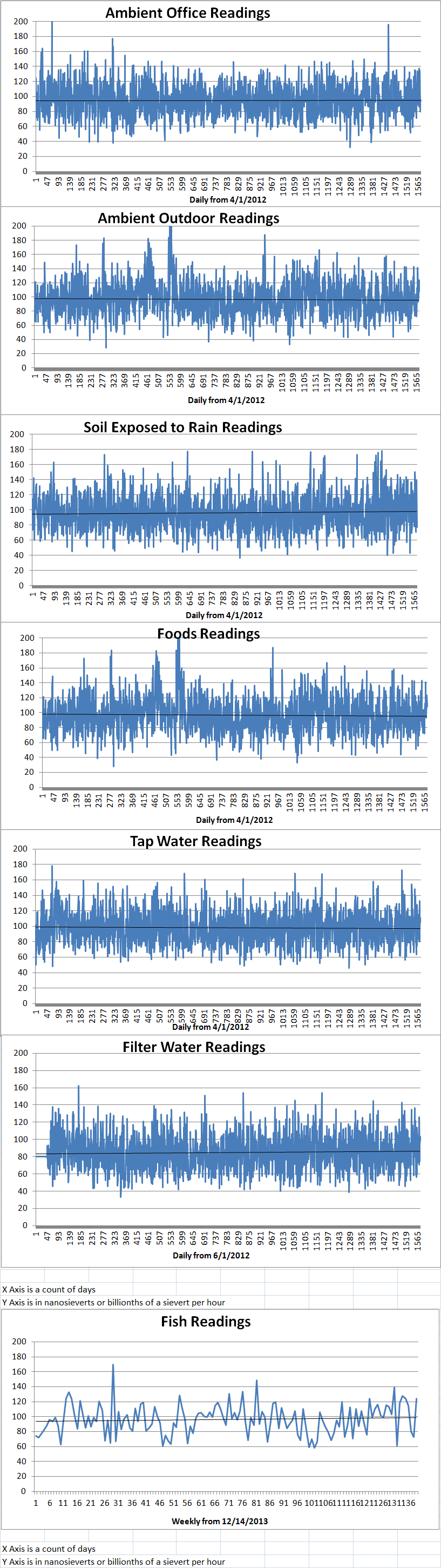
Ambient office = 91 nanosieverts per hourAmbient outside = 81 nanosieverts per hourSoil exposed to rain water = 93 nanosieverts per hourMango from Central Market = 73 nanosieverts per hourTap water = 117 nanosieverts per hourFilter water = 109 nanosieverts per hour -
Nuclear Weapons 235 – How To Survive A Nuclear Attack
Yesterday I blogged about the best place in the world to ride out World War III. Today, I thought that I would offer some tips for surviving a nearby nuclear detonation.
Don’t look directly at a nuclear explosion. The intense burst of light can cause macular-retinal burns in the eyes. This damage can result in permanent blindness.
Find some cover to protect youself. It is estimated that most immediate injuries from a nuclear blast will be caused by flying debris as buildings disintegrate. The intense burst of light from a nuclear detonation will precede the flying debris by a few moments. If you see the flash, you will have a few moments to find cover before the debris hits your location. (Hopefully, you will see the explosion from your peripheral vision or reflected from glass on buildings.)
Get inside shelter if possible. The best shelter is below ground surrounded by thick concrete or brick. If you have room, set up a “fallout” room in your house with no windows that contains food and water. Emergency supplies should be adequate food and water for all the inhabitants of the house for at least a couple of weeks. Supplies should be carefully monitored and rationed. They advise you to turn off gas and electricity before retreating to the fallout room. If you cannot find shelter inside a building, find a ditch or a hole and cover your face and eyes with your clothing.
Following the blast, fallout will begin to rain from the sky and continue for a couple of days before taping off. If you are inside a home or other type of building, it would be best to stay inside for a minimum of three days.
When going outside following the three day period, it would be best to stay near your home. Hats, masks and goggles should be worn when outside. As little skin as possible should be exposed to the air. The clothes worn outside should be taken off as soon as you go back inside.
Trying to leave a city after a nuclear attack would expose you to a whole new set of problems and you may wind up without food, water and shelter where ever you go. And you would be exposed to the radioactive fallout on the ground if you are out in the open.
Of course, you should have an emergency radio with extra batteries. One of the radios that can be powered with a hand crank would be a good choice. Cell phones, cable television and the Internet would probably not be available after an attack so the government would probably attempt to connect with the public via broadcast radio. You would need to constantly monitor the radio and, if there were orders to evacuate, you should comply.
Martial law would be declared after a nuclear attack. There will be dangers of violence and looting among the survivors in the cities. Everyone should do their best to cooperate with whatever authorities remain and are trying to restore order. In such desperate conditions, punishment for disobeying authorities will be swift and severe. If you want to survive, you had best comply.
While some may survive a nuclear war, the conditions after the war will be horrible and many more will die from starvation, disease, radiation poisoning and violence. Let us hope that you never have need of the advice in this post.
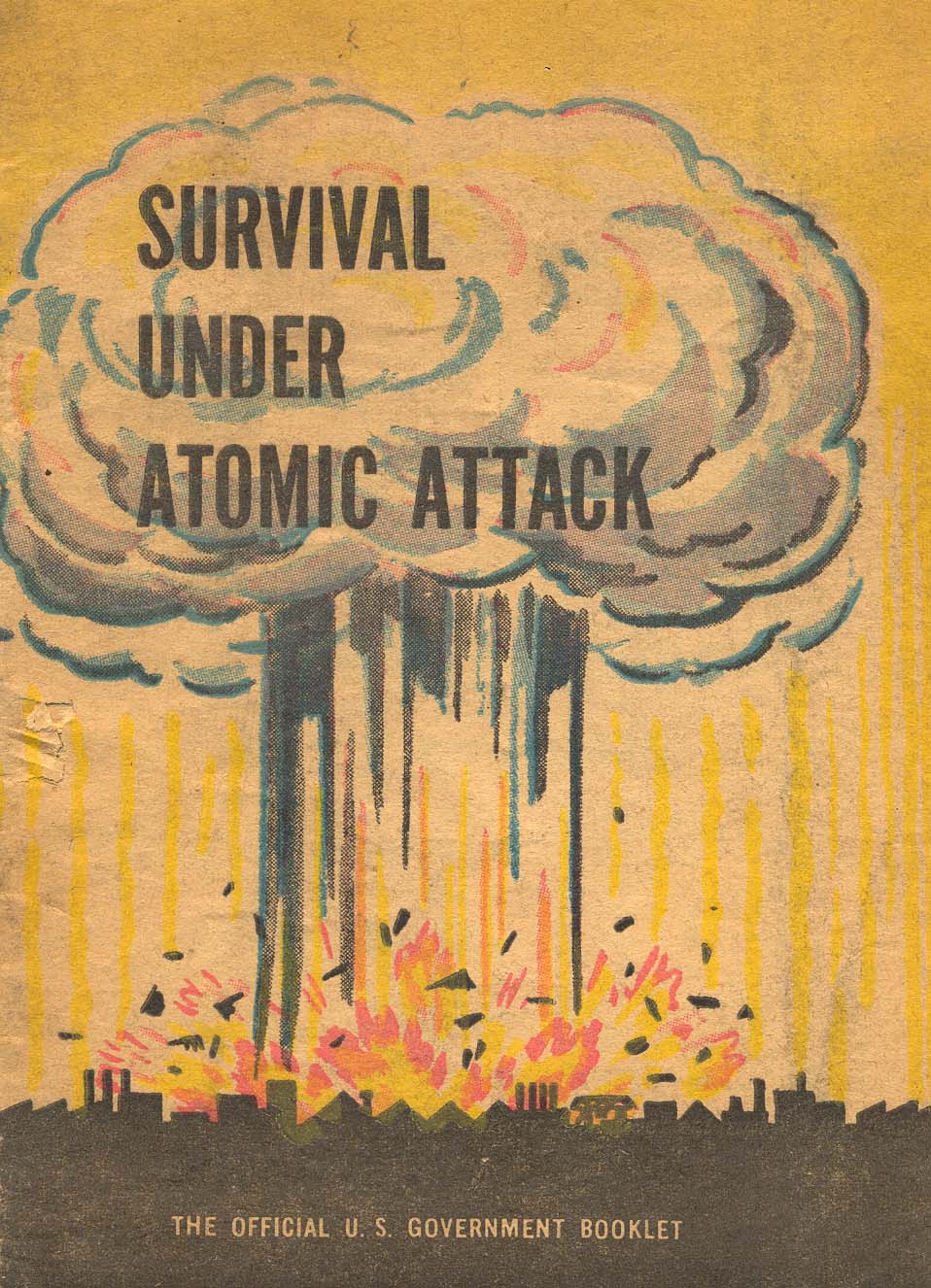
Cover of old U.S. government pamphlet:

-
Geiger Readings for Oct 18, 2016
Ambient office = 95 nanosieverts per hourAmbient outside = 77 nanosieverts per hourSoil exposed to rain water = 77 nanosieverts per hourCelery from Central Market = 108 nanosieverts per hourTap water = 105 nanosieverts per hourFilter water = 99 nanosieverts per hour