Category: Uncategorized

  • Geiger Readings for Jun 17, 2025

    Latitude 47.704656 Longitude -122.318745

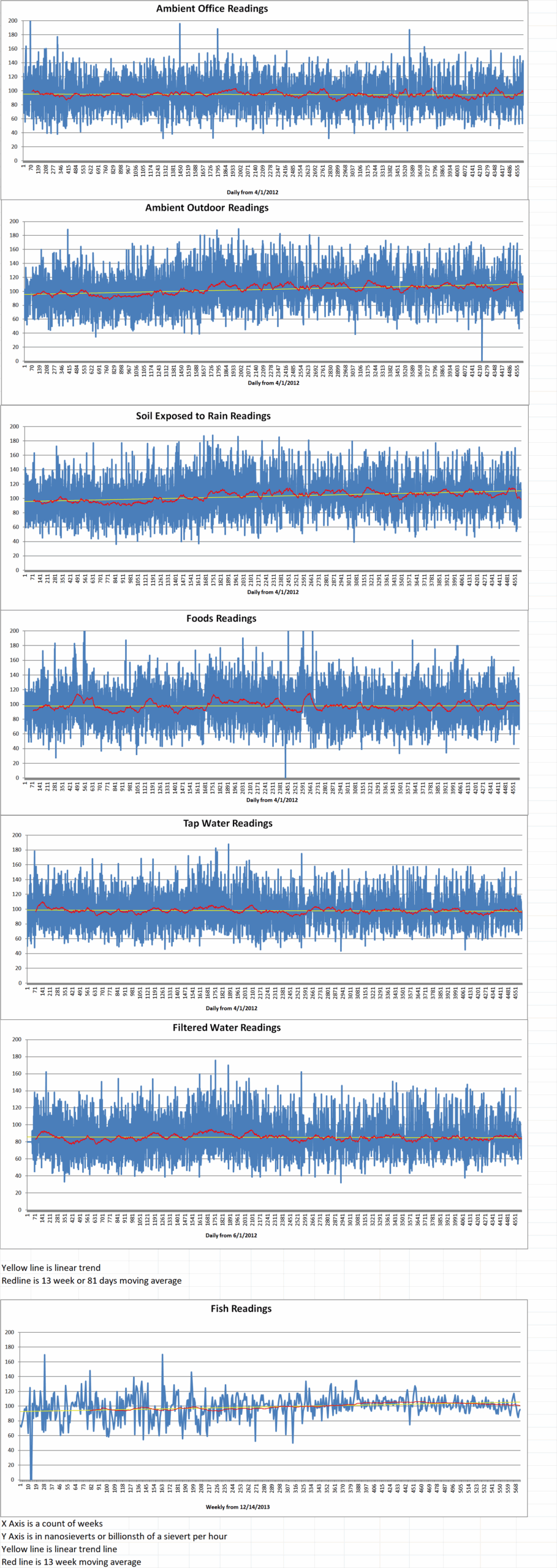
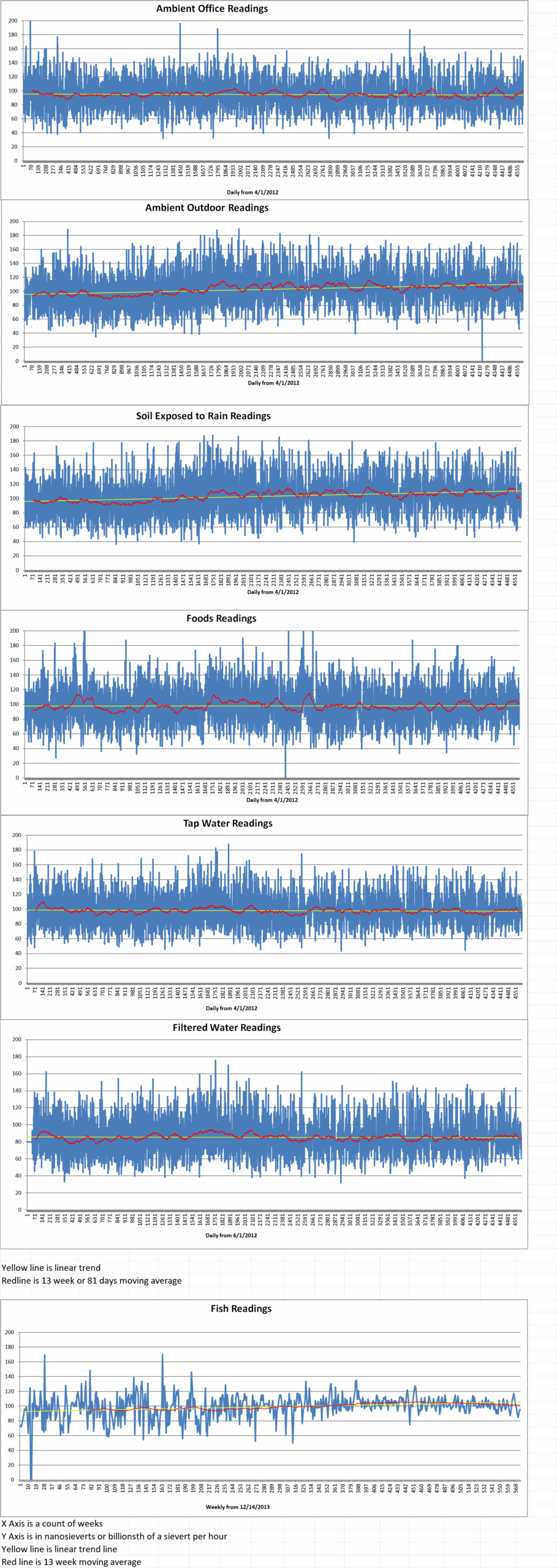
    Ambient office = 87 nanosieverts per hour

    Ambient outside = 115 nanosieverts per hour

    Soil exposed to rain water = 112 nanosieverts per hour

    Roma tomato from Central Market = 93 nanosieverts per hour

    Tap water = 97 nanosieverts per hour

    Filter water = 86 nanosieverts per hour

  • Nuclear Reactors 1527 – Department of Energy Reorganizing Nuclear Regulatory Commission to Facilitate Expansion of Nuclear Power in U.S. – Part 1 of 2 Parts

    A logo with a blue sphere and colorful rings

AI-generated content may be incorrect.

    Part 1 of 2 Parts

    Separate announcements from the U.S. Department of Energy (DoE) and the Nuclear Regulatory Commission (NRC) indicate their streamlining the pathway to deployment of advanced reactor technologies.

    The announcements come weeks after President Donald Trump’s plethora of Executive Orders aimed at boosting U.S. nuclear power. Among other things, those Orders required bodies including the DoE to expedite the review, approval, and deployment of advanced reactors, and ordered reforms to the U.S. NRC with regulatory evaluation and approval of license applications for new reactors to be completed within eighteen months of starting the regulatory process.

    The DoE has now launched a pilot program to accelerate the testing of advanced nuclear reactor designs under DoE authority outside of the national laboratories. This includes the establishment of a pilot program for the construction and operation of such reactors, with the goal of three reactors reaching criticality by the 4th of July 2026, was part of the Reforming Nuclear Reactor Testing at the Department of Energy executive order. It has announced a Request for Application (RFA) as it seeks “qualified US reactor companies” interested in constructing and operating test reactors outside National Laboratory sites, which it says is “an important step toward streamlining nuclear reactor testing” and ensuring the 2026 deadline is met.

    The pilot program will build on current efforts to demonstrate advanced reactors on DoE sites through microreactor testbeds and other projects led by the Department of Defense and private industry, according to the DoE. The program is intended to support research and development of nuclear reactors and will not be used demonstrate reactors for commercial suitability. It notes that “Seeking DOE authorization provided under the Atomic Energy Act will help unlock private funding and provide a fast-tracked approach to enable future commercial licensing activities for potential applicants.”.

    The DoE said that it will consider advanced reactors that have a “reasonable chance” of going into operation by July of 2026. Applicants will be responsible for all expenses associated with designing, manufacturing, constructing, operating, and decommissioning each test reactor. The winning applicant will be competitively selected based on a set of criteria, including technological readiness, site evaluations, financial viability, and a detailed plan to achieving criticality.

    U.S. Energy Secretary Chris Wright said, “For too long, the federal government has stymied the development and deployment of advanced civil nuclear reactors in the United States. Thanks to President Trump’s leadership, we are expediting the development of next-generation nuclear technologies and giving American innovators a new path forward to advance their designs, propelling our economic prosperity and bolstering our national security.”. The deadline for initial applications is 21 July.

    The NRC announced that it has reached decisions on three policy matters that it says will help enable the deployment of microreactors. These are reactors generate “about one per cent or less” of the output of a current large-scale reactor. This would amount to one megawatt or less. They would be built, loaded with fuel, and tested at factories before being shipped to operating sites.

    Nuclear Regulatory Commission

    Please read Part 2 next

  • Geiger Readings for Jun 16, 2025

    Latitude 47.704656 Longitude -122.318745

    Ambient office = 80 nanosieverts per hour

    Ambient outside = 73 nanosieverts per hour

    Soil exposed to rain water = 80 nanosieverts per hour

    Green onion from Central Market = 73 nanosieverts per hour

    Tap water = 98 nanosieverts per hour

    Filter water = 86 nanosieverts per hour

  • Geiger Readings for Jun 15, 2025

    Latitude 47.704656 Longitude -122.318745

    Ambient office = 87 nanosieverts per hour

    Ambient outside = 111 nanosieverts per hour

    Soil exposed to rain water = 113 nanosieverts per hour

    English cucumber from Central Market = 100 nanosieverts per hour

    Tap water = 73 nanosieverts per hour

    Filter water = 60 nanosieverts per hour

  • Geiger Readings for Jun 14, 2025

    Latitude 47.704656 Longitude -122.318745

    Ambient office = 93 nanosieverts per hour

    Ambient outside = 90 nanosieverts per hour

    Soil exposed to rain water = 87 nanosieverts per hour

    Campari tomato from Central Market = 115 nanosieverts per hour

    Tap water = 88 nanosieverts per hour

    Filter water = 75 nanosieverts per hour

    Dover Sole from Central = 93 nanosieverts per hour

  • Nuclear Reactors 1526 – Kazakstan Studying Plan for Purchase of Four Russian Reactors

    A logo with yellow and red circles and a red circle with text

AI-generated content may be incorrect.

    Russin owned Rosatom has just signed an agreement with Uzbekistan’s Uzatom Atomic Energy Agency to study a possible gigawatt-scale nuclear power plant featuring two or four VVER-1000 units.

    The announcement of the signing came at the St Petersburg International Economic Forum and builds on the current project to build a small modular reactor plant in the Jizzah region, featuring six of Rosatom’s fifty-five megawatt RITM-200N water-cooled reactors.

    Alexei Likhachev is the Rosatom Director General. He said, “The Rosatom State Corporation is pleased to be a strategic partner of Uzbekistan in the development of nuclear energy … the combination of small and large-capacity nuclear power plants can form a powerful “carbon-free energy cluster” in Uzbekistan and become a response to the country’s growing needs for electricity, as well as the basis for the development of industry and innovative industries in the country.”

    Azim Akhmedkhadjaev is the Director of the Atomic Energy Agency. He said, “We consider the construction of a high-capacity NPP as a source for creating a reliable and balanced energy system capable of covering both the current and future needs of the country for electricity – environmentally friendly energy. The signing of the agreement allows us to begin active development of the key conditions for the possibility of implementing the project for the construction of a high-capacity nuclear power plant. A joint Working Group has been created that will study the main aspects of the project and assess the cost of construction.”

    Almasadam Satkaliyev is the Chairman of the Kazakhstan Atomic Energy Agency. Likhachev and Satkaliyev met at the forum and presented an Indicative Roadmap which was approved for the planned new nuclear power plant in the country. The Indicative Roadmap sets out an timeline and also “provides for the stages of preparation and implementation of the project, including engineering and survey work, conclusion of an EPC contract and development of design documentation”.

    Kazakhstan announced on Monday that it had chosen the Russian bid for its planned new nuclear power plant. Likhachev said, “We appreciate the trust shown by the Kazakh side to lead the international consortium that will build a nuclear power plant in Kazakhstan. Kazakhstan is our reliable historical partner in the nuclear industry.”

    Satkaliyev said, “The construction of a nuclear power plant in Kazakhstan is part of a comprehensive strategy to ensure sustainable development of the country’s energy sector. We count on close and transparent cooperation with partners to ensure a high level of safety and localization of production.”

    At the forum, there was also an agreement on cooperation on the peaceful uses of nuclear energy with Burkina Faso. Rosatom mentioned that it “forms the legal basis for comprehensive cooperation between the two countries in the field of nuclear energy and technology. Key areas of cooperation include assistance in the creation and improvement of Burkina Faso’s nuclear infrastructure in accordance with international standards, regulation of nuclear and radiation safety issues, production and use of radioisotopes in industry, medicine and agriculture. In addition, the agreement provides for the development of joint projects in the field of radiation technology and nuclear medicine, as well as the training and retraining of specialists for the nuclear industry of Burkina Faso”.

    During a Russia-Indonesia business dialogue session at the forum, there was also discussion of potential small modular reactor and floating power units. Rosatom stated that it “has developed and presented to the Indonesian leadership a concept for the development of nuclear energy based on both small and large capacity, and is ready to provide comprehensive support in the implementation of the country’s large-scale plans for the development of the nuclear industry”.

    Kazakhstan Atomic Energy Agency