
Blog
-
Geiger Readings for June 29, 2022
Ambient office = 120 nanosieverts per hour
Ambient outside = 86 nanosieverts per hour
Soil exposed to rain water = 92 nanosieverts per hour
English cucumber from Central Market = 104 nanosieverts per hour
Tap water = 86 nanosieverts per hour
Filter water = 77 nanosieverts per hour
-
Radioactive Waste 858 – U.K. Researching Siting A Geological Repository In The Irish Sea – Part 2 of 3 Parts
Part 2 of 3 Parts (Please read Part 1 first)
Zooplankton are the base of the marine food chain. They are extremely important to the health of the world’s ocean. Researchers have discovered that seismic surveys significantly increase the death rate of zooplankton in the three quarters of a mile range they tested. All larval krill were killed in the range of the test.
The RFL’s report states that the NWS surveys will take place when zooplankton populations are expected to be high. These creatures provide a food source for a wide variety of organisms including baleen whales, basking sharks and fish. These species feed many other species.
Many other marine animals also rely on sound for survival. Seismic testing can interfere with basic functions such as feeding, mating, navigation, and communications. According to the Zoological Society of London’s Cetacean Stranding Investigation programs, “Noise exposure can be a problem for a wide variety of Cetaceans-dolphins, porpoises and whales. Noise related impacts have also been causally linked to many cetacean stranding and mass stranding events globally.”
The NWS investigation will focus on a survey area three to twelve miles Cumbrian Coast in the northwest of England in an area approximately one hundred square miles in extent. The proposed GDF may extend over an area fifteen miles square, deep beneath the seabed.
This region is one of a number of designated Marine Conservation Zones in the Irish Sea. The region has protected habitats and is home to a variety of protected European species. These include sea turtles, minke whales, common and bottlenose dolphins and harbor porpoises.
Joan Edwards is the director of policy at the Wildlife Trusts. She said, “The Irish Sea is rich in marine life, from soft corals and reefs that provide shelter for crabs and anemones to seals, whales and around 30 species of shark. Sandbanks and gravel habitats are vital nursery grounds for flatfish, sea bass, and sea eels, while also acting as a feeding ground for thousands of breeding seabirds. We are concerned about the implications of seismic testing in the Irish Sea, which evidence shows can be devastating for marine life.”
Marine habitats are already under huge pressure from pollution, irresponsible development and bottom trawling. Climate change is also producing stress on marine ecosystems. The RFL report claims that many of the hugely important marine species found in the area have not been sufficiently studied for their sensitivity to seismic surveys.
Tim Deere-Jones is a marine radioactivity researcher and consultant. He is the author of the RFL report. He said that NWS’s license application for the seismic survey is characterized by a ‘marked lack of transparency.’ The NWS’s application also shows a refusal to engage in consultation with the public and marine stakeholders such as fisherman. Deere-Jones claims that the NWS has carried out what is basically a private environmental impact assessment without any independent oversight.
Deere-Jones says that NWS has ignored a comment from Professor Popper who is a leading authority on fish bioacoustics. Popper has warned of a clear “information gap” that makes it makes it impossible to draw a clear conclusion on the effects that these airgun blasts could have on marine animal behavior or health.
Please read Part 3 next -
Geiger Readings for June 28, 2022
Ambient office = 100 nanosieverts per hour
Ambient outside = 131 nanosieverts per hour
Soil exposed to rain water = 128 nanosieverts per hour
Blueberry from Central Market = 151 nanosieverts per hour
Tap water = 116 nanosieverts per hour
Filter water = 103 nanosieverts per hour
-

Radioactive Waste 857 – U.K. Researching Siting A Geological Repository In The Irish Sea – Part 1 of 3 Parts
Part 1 of 3 Parts
The government of the United Kingdom’s Nuclear Waste Services (NWS) is preparing to carry out seismic surveys off the Cumbrian Coast between July and August of this year. They are trying to find a place to dispose of nuclear waste produced by Britain’s nuclear power reactors.
A report commissioned by Radiation Free Lakeland (RFL), calls for these disposal plans to be delayed. The report claims that the impact assessment by the NWS is “deeply inadequate” and “lacking in appropriate scientific and academic rigor.”
Seismic blasting is a process that permits scientists to gather data about the geography of the seabed. Loud, repetitive blasts of sound are produced by an underwater airgun. The echoes of the blasts are measured to map the underwater rocks. The airgun will be fired every ten to fifteen seconds throughout the survey period which will last about a month.
The surveys have been commissioned by NWS. They will be investigating the possibility of locating a Geological Disposal Facility (GDF). Deep under the seabed, this facility will be used to dispose of the U.K.’s toxic legacy of highly radioactive spent nuclear fuel which is a byproduct of nuclear reactors.
Shearwater GeoServices is the company whose work on South Africa’s ecologically sensitive Wild Coast was stopped by the high court. They are charged with carrying out the investigations of the Cumbrian seabed. According to a freedom of information request, a license of exemption to carry out these surveys was issued to NWS for ‘scientific research’ However RFL claims that the survey is not for ‘scientific research’ but to develop a plan for disposal of spent nuclear fuel.
Marianne Birkby is one of the founders of RFL. She said, “We commissioned an independent report because we need to counter the PR spin from the nuclear waste industry who are calling the seismic testing ‘non-invasive scientific research.’” She argues that instead of seismic blasting for scientific purposes, the plan facilitates a commercial venture for a “deep nuclear dump for heat generating nuclear waste.” She went on to say that a limited company that wants to process even more nuclear waste from new nuclear reactor builds, Radioactive Waste Management (RWM), is behind it.
Birkby said, “Despite the marine protections this part of the Irish Sea has, it is an outrage that independent environmental impact assessments have not been carried out. Protections clearly mean nothing when the nuclear waste industry wants to pave the way to a deep nuclear dump.”
Chris Eldred is senior project manager for geosphere characterization at NWS. He said that “there is no requirement to undertake a public consultation for these surveys. We have undertaken marine environment assessments requested by Natural England and navigational authorities to assess any impacts and they have been satisfied that our activities are exempt.”
Low frequency sounds generated by a single seismic airgun can carry over great distances, especially in deeper waters. They have been recorded at locations up to twenty-five hundred miles from the source. They can blanket areas up to one hundred and sixteen thousand square miles with noise. Studies have indicated that seismic surveys can impact entire aquatic ecosystems because they can disturb, injure or kill a wide variety of marine life.
Please read Part 2 next -
Nuclear News Roundup June 27, 2022
Ukraine terminates Russia nuclear agreements world-nuclear-news.org
UK’s nuclear expertise is showcased on BBC Countryfile gov.uk
‘Must deploy weapons’ Lukashenko demands Russia push nuclear button to end West pushback express.co.uk
IAEA working with Australia on safeguards for nuclear subs: Grossi world-nuclear-news.org
-
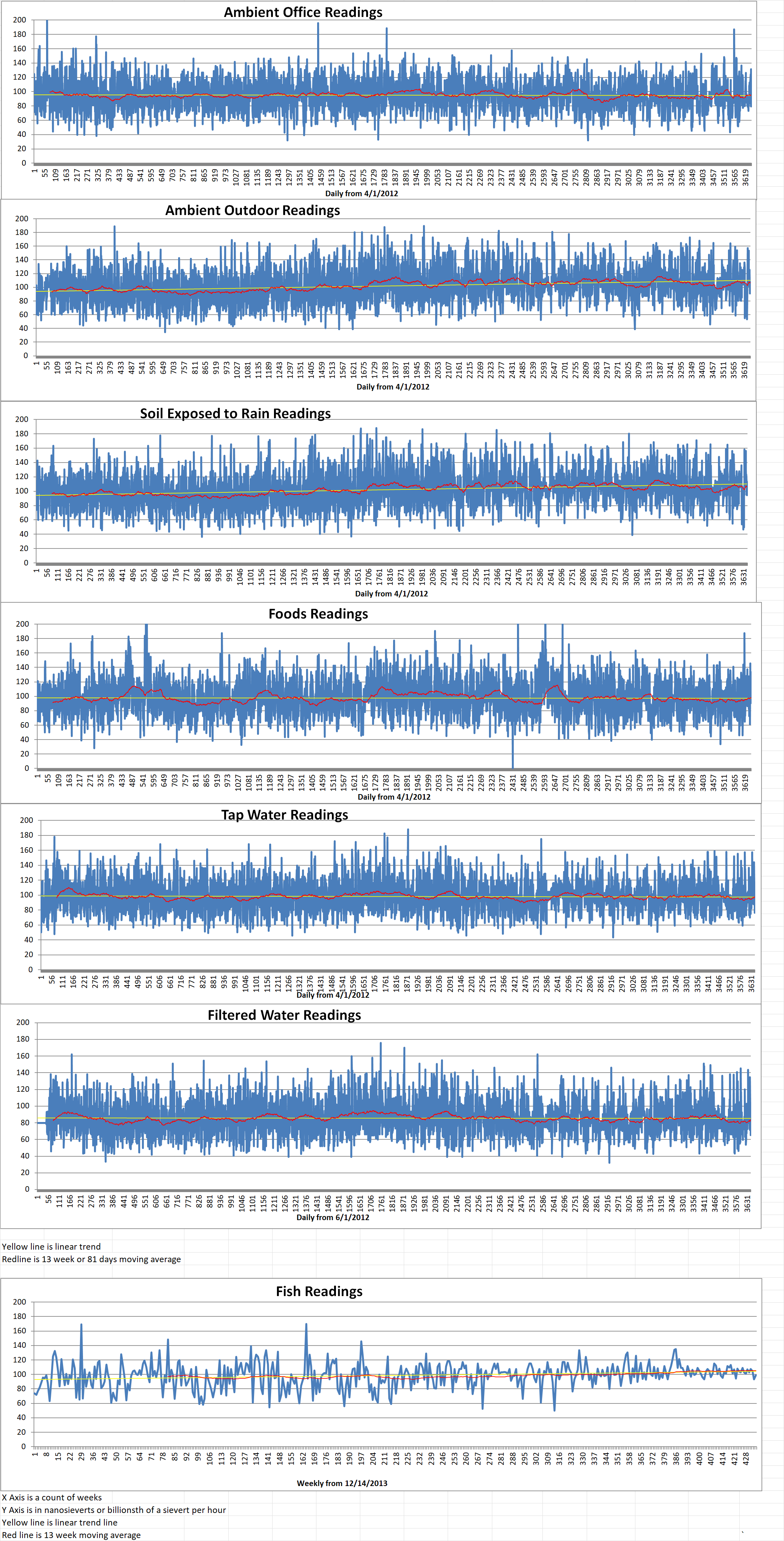
Geiger Readings for June 27, 2022
Ambient office = 96 nanosieverts per hour
Ambient outside = 108 nanosieverts per hour
Soil exposed to rain water = 113 nanosieverts per hour
Avocado from Central Market = 95 nanosieverts per hour
Tap water = 77 nanosieverts per hour
Filter water = 65 nanosieverts per hour
-
Nuclear News Roundup June 26, 2022
‘Effort and patience’ required to restore Iran nuclear agreement news.un.org
Construction permit issued for first Egyptian unit world-nuclear-news.org
Govt mulling Russia’s offer to develop nuclear energy in Indonesia en.antaranews.com
Time, venue of new round of nuclear talks being finalized: Iranian negotiator enclish.news.cn
-
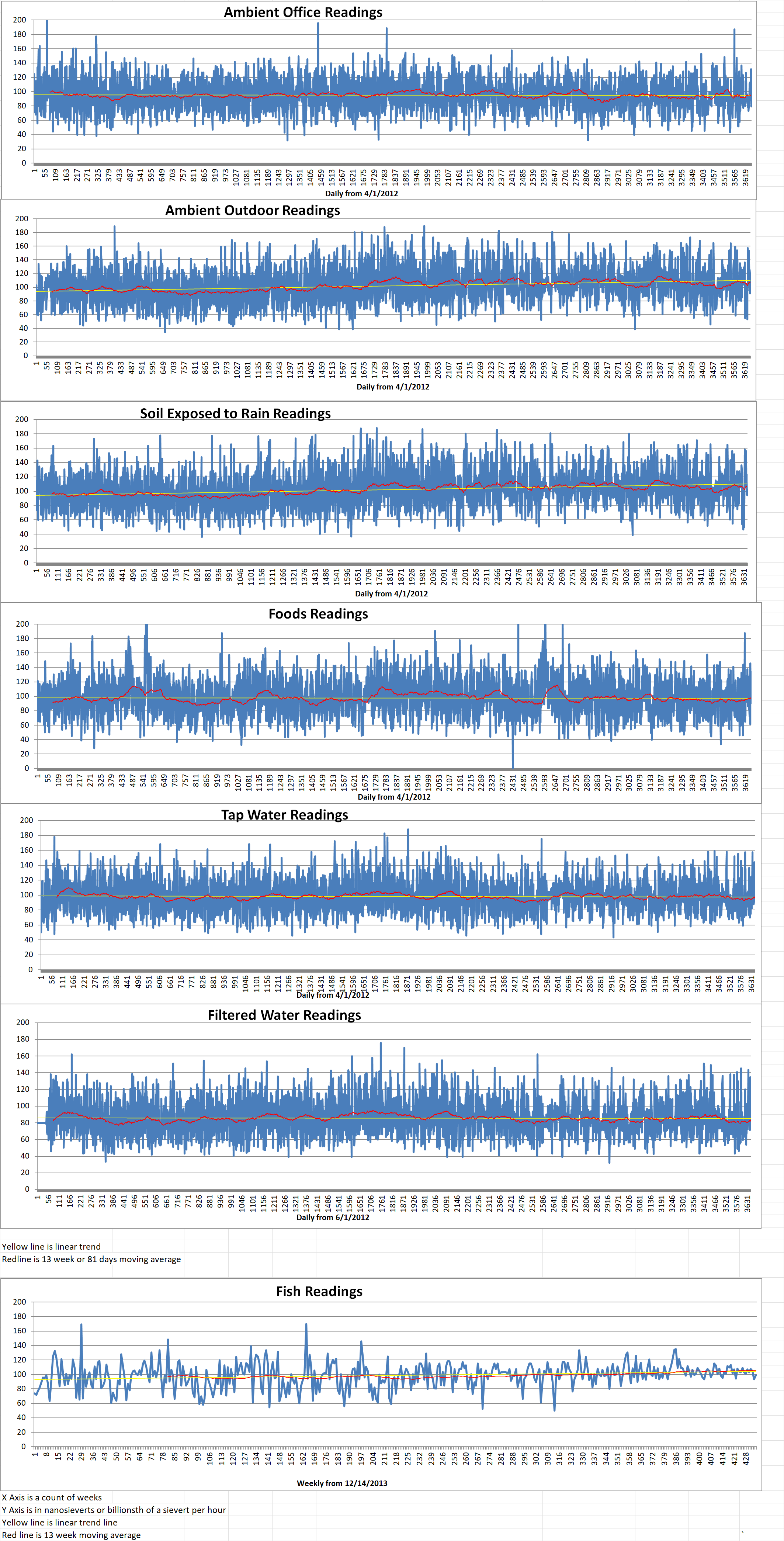
Geiger Readings for June 26, 2022
Ambient office =79 nanosieverts per hour
Ambient outside = 97 nanosieverts per hour
Soil exposed to rain water = 94 nanosieverts per hour
Watermelon from Central Market = 116 nanosieverts per hour
Tap water = 103 nanosieverts per hour
Filter water = 83 nanosieverts per hour