The South China Morning Post recently reported that nuclear scientists in China have discovered rich uranium deposits at shallow depths below the surface of the Earth. The discovery is being touted as a breakthrough for the China’s national security. It could also change the global scientific community’s understanding of formation of uranium deposits. This could provide a new avenue for the detection of uranium deposits worldwide.
Massive amounts of industrial-grade uranium deposits were discovered at depths previously thought to be impossible. The new deposits will increase China’s estimated total reserve of uranium one thousand percent to more than two million tons. If these claims are true, that would put China roughly at the same level as Australia, which is one of the world’s most uranium-rich countries.
The team behind the discovery used state-of-the-art technology and equipment to explore depths of up to 10,000 feet which they claim is six times deeper than most of China’s uranium mines.
The China National Nuclear Corporation issued a statement on its WeChat social media account on Tuesday that said, “This world-leading project is a major breakthrough for our country.”
The new deposits will help China meet its growing demand for nuclear power as the country shifts toward the use of nuclear fission for its energy needs as it aims to cut its carbon dioxide emissions. Uranium is also used in nuclear weapons production. The new deposits will reportedly help the country increase its military’s nuclear arsenal.
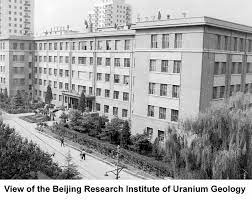
Li Ziying is the director of Beijing Research Institute of Uranium Geology. He claimed the discovery challenges widely held beliefs on uranium deposit formation.
Uranium was thought to concentrate mainly in shallow, geophysical stable areas. However, some of the largest deposits found by China in recent years are more than 5000 feet below the surface of the Earth. The regions in which they were found have experienced large tectonic movements. Long-standing theories would suggest that it would be impossible for uranium deposits to form at that depth.
Li and his colleagues believe that tectonic collisions might cause uranium to rise from the mantle before being trapped in small “hotspots” thousands of meters below the Earth’s surface.
The researchers utilized an airborne, ultra-sensitive remote sensor to detect tiny traces of heat produced by uranium from below the ground. Once such heat was detected, they used a drilling machine with a specially made bore head to obtain small samples from the depths. Finally, they used artificial intelligence to increase the speed of their data analysis.
The new method of uranium detection could be employed globally to help other countries find hidden uranium deposits. Nuclear power, until recently maligned due to the problem of radioactive waste and potential for catastrophic disasters, has seen a resurgence in recent years fueled by the world’s need to shift away from fossil fuel production.
The global uranium market is currently quite volatile due to the unstable nuclear market. Considering that there are plenty of known uranium reserves in the world, it is an open question of whether this Chinese discovery will have an impact on global uranium prices and supplies.
Blog
-
Nuclear Reactors 1037 – China Discovers Vast Uranium Deposits Deeper Than Was Thought Possible
-
Nuclear News Roundup June 10, 2022
Analysis: Syria’s Assad hoping for Iran nuclear deal success Aljazeera.com
Third Barakah unit receives operating license world-nuclear-news.org
New activity detected at North Korea’s nuclear testing facility Aljazeera.com
Rosatom and Yakutia planning for SHELF-M small nuclear plant world-nuclear-news.org
-
Geiger Readings for June 10, 2022
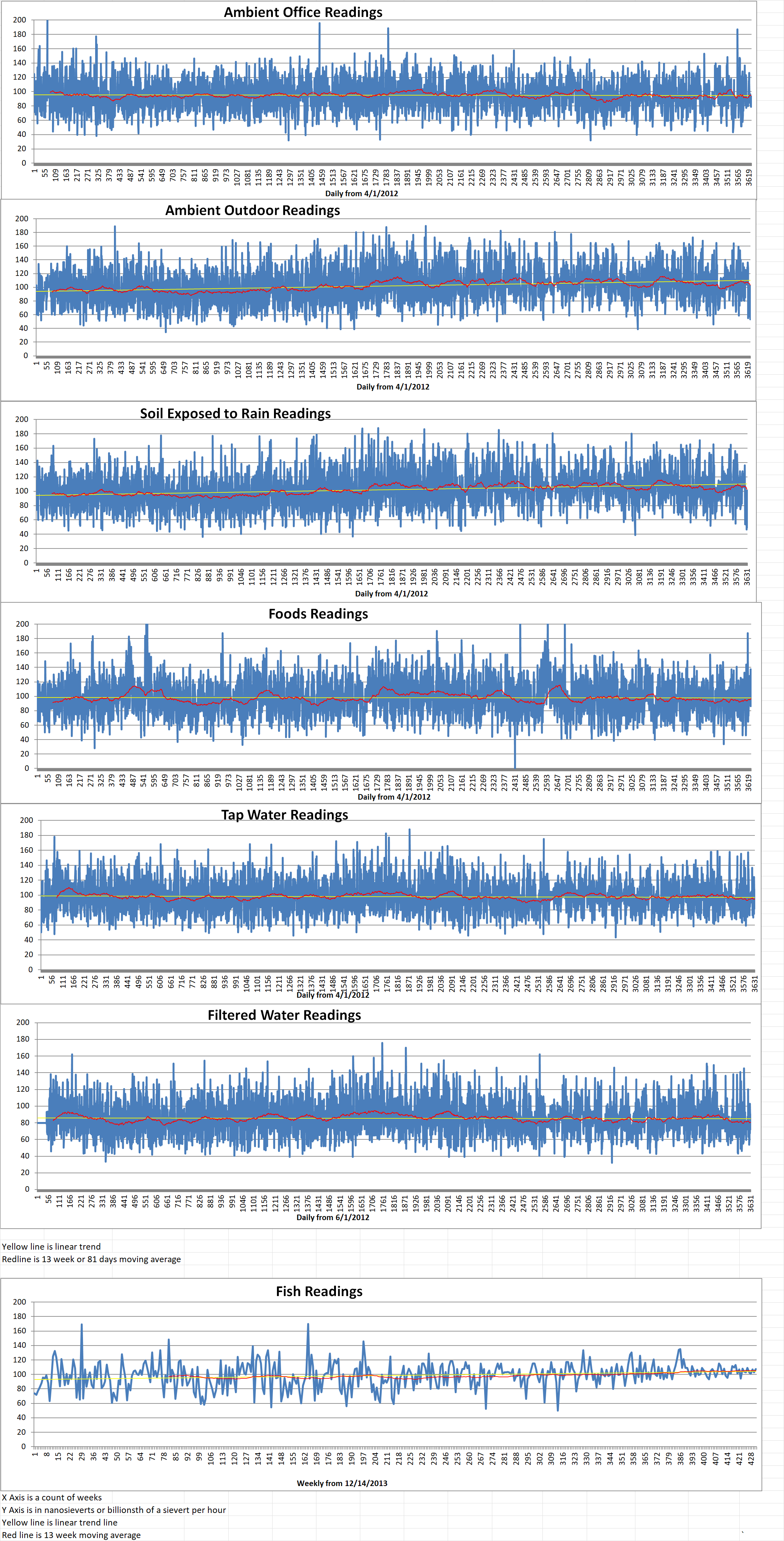
Ambient office = 93 nanosieverts per hour
Ambient outside = 54 nanosieverts per hour
Soil exposed to rain water = 50 nanosieverts per hour
Tomato from Central Market =108 nanosieverts per hour
Tap water = 82 nanosieverts per hour
Filter water = 72 nanosieverts per hour
-

Nuclear Reactors 1036 – Democratic Nations Need To Disentangle Their Energy Markets From Russia and China – Part 4 of 4 Parts
Part 4 of 4 Parts (Please read Parts 1, 2 and 3 first)
Accomplishing all this will not be easy and it will not be cheap. But the nuclear supporters say that the West will benefit from supporting its dynamic and innovative nuclear sector. Although traditional, large-scale nuclear projects have been struggling domestically in the U.S. and Europe, a new suite of nuclear technologies might start to shift the market in their favor. The U.S. has more than sixty companies working on advanced nuclear technologies. These include NuScale Power which is marketing small modular reactors. It has reached agreements to deploy them to Poland and Romania. The British company Rolls Royce is working to develop its own small modular reactor technology. It has signed a memorandum of understanding with the U.S. utility Exelon and entities in the Czech Republic. Westinghouse is a U.S. nuclear company that has assisted Ukraine to dramatically reduce its reliance on Moscow. It has also recently expanded its cooperation with the Czech Republic as well as Slovenia to explore deploying its newer AP1000 nuclear power reactors. In April of this year, the U.S. State Department announced that it would help Latvia explore the feasibility of nuclear energy.
These kinds of collaborations across allied democracies are exactly what the world needs to create energy supply chains that are secure, ethical and sustainable. They will help the West build resilience against the whims of authoritarian regimes. By changing away from fossil fuels, they will also assist nations to avoid supply shortages and price shocks. However, these collaborations show a recognition that the solution to Russia’s energy dominance and to climate change is not to support an attempt at green nationalism. Instead, it requires that allied nations work together to design energy systems and technologies that are robust because they are collaborative and interdependent.
While nuclear energy may be a path to energy independence from Russia and China, this will only be possible if the nuclear industry can reign in the schedule and cost overruns for nuclear power plants. The time needed to license and construct nuclear power plants are losing the battle for market share to renewable sources such as wind and solar. Unfortunately, nations cannot pursue both nuclear energy and renewable sources. This makes nuclear energy a poor bet to fight climate change which must be done as quickly as possible. And the elephant in the room for nuclear energy is the huge amount of spent nuclear fuel waste which still has not permanent geological repository anywhere in the world. It is probable that one more nuclear disaster on the level of the 2011 Fukushima disaster could sour both public opinion and investor interest. It will be an uphill battle to revitalize the global nuclear industry and it may not be the best solution to future energy needs.
A wild card in the energy sector is the huge investment in nuclear fusion research. While it has not yet been achieved, there are over a dozen companies in the U.S. alone working furiously to prototype a commercial nuclear fusion reactor within the next ten years. If any of these different approaches to nuclear fusion succeed, the global energy market will suffer massive changes. -
Nuclear News Roundup June 09, 2022
Nuclear-armed nations spent $82.4 billion dollars on weapons in 2021 aljazeera.com
Maryland and X-energy examine coal-to-nuclear switch world-nuclear-news.org
UW receives DOE award for nuclear energy project wyomingnews.com
Dismantling of Italian nuclear fuel plant completed world-nuclear-news.org
-
Geiger Readings for June 09, 2022
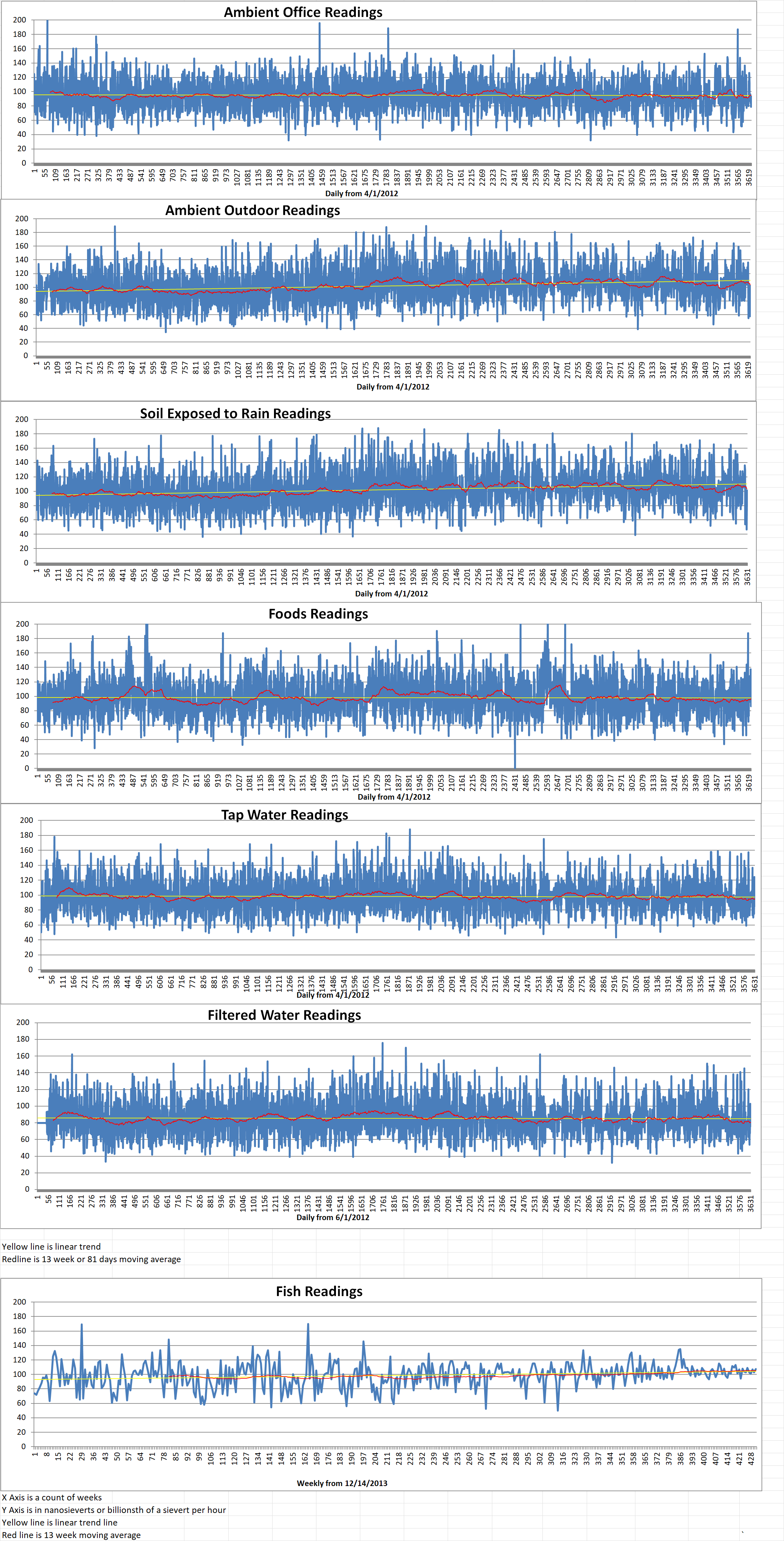
Ambient office = 93 nanosieverts per hour
Ambient outside = 86 nanosieverts per hour
Soil exposed to rain water = 87 nanosieverts per hour
Strawberry from Central Market = 120 nanosieverts per hour
Tap water = 107 nanosieverts per hour
Filter water = 90 nanosieverts per hour
-
Nuclear Reactors 1035 – Democratic Nations Need To Disentangle Their Energy Markets From Russia and China – Part 3 of 4 Parts
Part 3 of 4 Parts (Please read Parts 1 and 2 first)
Although many analysts believe that nuclear energy is critical to freeing Europe from Russian natural gas, it could still leave these states vulnerable to Russian influence. Even if states cancel nuclear projects with Russia, China will soon pass France to become the second-largest producer of nuclear energy. China has its own ambitions for dominating the global energy export market.
Some energy analysts believe that almost all green energy sources represent ethical dilemmas. The Democratic Republic of Congo currently mines sixty percent of the world’s cobalt. This mineral is critical for the electric vehicle market. However, the country’s cobalt producers have faced scrutiny and criticism from international organizations over their human rights, practices, including their use of child labor. In 2021, the Biden administration blacklisted several Chinese solar companies because they were accused of using forced labor and other abuses. Russia is a significant producer of nickel which is a critical material for the production of electric car batteries. There are concerns about future sanctions on nickel or other disruptions to its supply. The current price of nickel is at an eleven-year high.
In order to free itself from dependence on Russian energy, the world will need to be more proactive in ensuring that its energy supply chains are sustainable and ethical. But that should not be taken as a call to return to energy isolationism. Modern energy production systems are complex and interconnected. This is especially true for those who depend on critical minerals that are not evenly distributed across the world. They indicate that true energy independence where nations create power entirely by themselves is just no longer practical. Instead, democratic nations should focus on strengthening their energy interdependence with trusted partners.
To some extent, this process is underway with respect to nuclear energy. Romania canceled a contract with a Chinese owned company in 2020 for two new nuclear reactors because it preferred to move forward with a NATO ally. Russia and China had been competing for a nuclear tender in the Czech Republic, but the government ultimately excluded them from a formal document-sharing process and explicitly said that both countries were “not invited” to bid. Chinese companies are significant investors in two nuclear power projects in the U.K. However, in September of 2021, the U.K. government announced that it was attempting to force a sale of China General Nuclear Power Group’s share in one of its projects. In 2019, a U.S. nuclear company announced that it had canceled a project to build an experimental nuclear reactor in China after U.S. President Trump imposed further trade restrictions.
The West’s domestic nuclear industries have stalled in recent years. Now, the U.S. and European nuclear companies are struggling to find proper alternative to Russian and Chinese state-owned vendors. To catch up, many energy analysts believe that Western governments must construct an old-fashion industrial policy based on investing in domestic manufacturing capabilities all along the nuclear supply chain. They will need to successfully demonstrate new nuclear technologies that they can they export to the international market. Western counties should increase their funding for nuclear export projects through their own export-import banks and development financing. Large investment and development banks will need to change their policies on supporting nuclear energy.
Please read Part 4 next -
Nuclear News Roundup June 08, 2022
Ploughshares Fund Awards $565,000 in Grants to Counter Rising Nuclear Threat wfmz.com
Olkiluoto 3 test production to continue until December world-nuclear-news.org
Public got first tour of old nuclear missile site in Omaha area fox42kptm.com
Fukushima residents angered as court rules government is not liable for damages in nuclear crisis cbc.ca
-
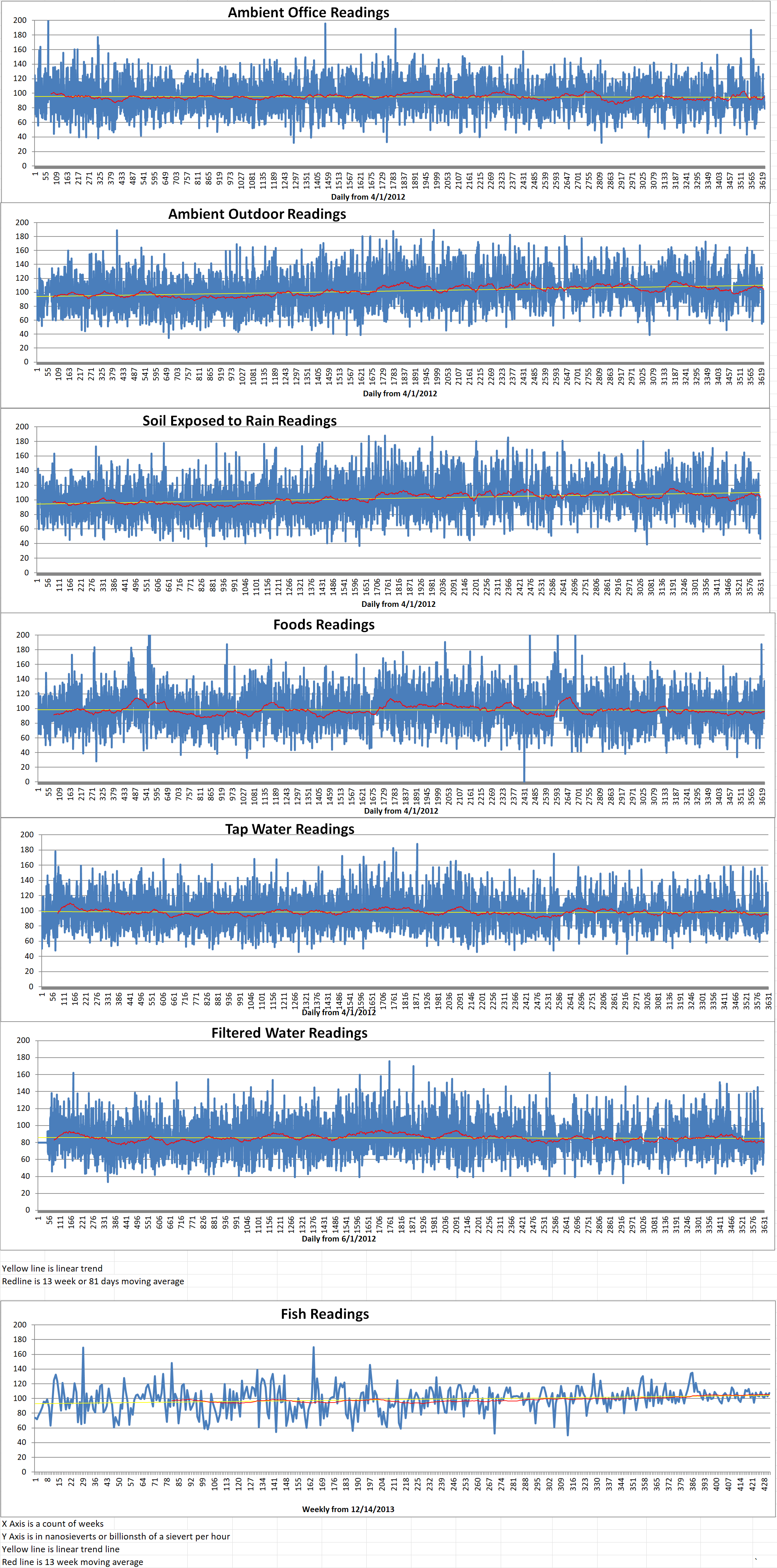
Geiger Readings for June 08, 2022
Ambient office = 79 nanosieverts per hour
Ambient outside = 102 nanosieverts per hour
Soil exposed to rain water = 101 nanosieverts per hour
Ginger root from Central Market = 86 nanosieverts per hour
Tap water = 86 nanosieverts per hour
Filter water = 76 nanosieverts per hour
-
Nuclear Reactors 1034 – Democratic Nations Need To Disentangle Their Energy Markets From Russia and China – Part 2 of 4 Parts
Part 2 of 4 Parts (Please read Part 1 first)
Over the past twenty years, Russia has become the world’s major supplier for nuclear technology. This is especially true for countries building their first nuclear projects. Russia has great experience constructing and maintaining nuclear power plants. It offers a one-stop-shop for all the items that are needed to create these plants. This includes reactors, fuel, financing and even training of workers. Since the year 2000, Russia has signed bilateral nuclear cooperation agreements with forty-seven countries. It currently has large commercial nuclear power plants under construction in Bangladesh, Belarus and Turkey. Russia is involved in nuclear power plants across Africa, Asia, the Middle East and South America.
Russia also has nuclear projects in Eastern Europe. For decades, one of Russia’s main nuclear clients was Ukraine. Before Russia invaded Ukraine in 2014, Ukraine obtained ninety-five percent of its nuclear fuel from Russia to fuel a majority of its total electricity supply. After Russia annexed Crimea and supported an insurgency in the Donbas, Ukraine accelerated its plans to diversify its uranium imports. Many other European countries also began expressing serious concerns about being dependent on Russian nuclear technology. These worries were validated in February of 2022 when Russia invaded Ukraine. Since the invasion started, Western nations have moved quickly to try to wean itself from Russian energy resources, including nuclear power. On May 2nd, a Finnish consortium announced that it was canceling a contract for a new one thousand two-hundred-megawatt Russia power reactor.
Europe’s most prominent dependence is ultimately on Russian coal, oil and natural gas, not on nuclear energy. The International Energy Agency (IEA) recently issued guidelines for how countries can best move off of Russian fuel. They highlighted the role that they believe nuclear energy can play. As the IEA noted, nuclear energy “the largest source of low emissions electricity in the EU.” They say that the expansion of nuclear energy could increase the continents access to fossil-free energy.
Not everyone agrees with this IEA assessment. The European Commission’s plan to reduce Russian natural gas imports does not mention nuclear energy. Germany has maintained its plans to close its three remaining nuclear reactors by the end of this year. This is happening in spite of the fact that Germany has imported close to ten billion euros world of fossil fuels from Russia since the invasion of Ukraine. However, other nations such as Belgium and Japan have promised new investments in nuclear energy to reduce their dependence of Russian natural gas. They are picking up on an old tradition of using nuclear energy to support energy independence. Nations with dwindling domestic coal supplies like the U.K. and Japan, turned to nuclear energy following World War II to fuel their growing industrial sectors. Following the oil embargoes of the 1970, France and Sweden also built out nuclear infrastructure to reduce their dependence on the Middle East.
Please read Part 3 next