
Part 2 of 2 Parts (Please read Part 1 first)
Direct nuclear power generation aboard a ship circumvents the efficiency losses of producing any hydrogen, ammonia, or methanol. Low-grad exhaust heat from land-based nuclear power plants can contribute to producing hydrogen but energy is required to cultivate and harvest the crops necessary for methanol production. On the other hand, direct use of nuclear power for commercial ship propulsion allows arable land to be utilized for food production instead of cultivating crops to produce biofuel. Over the whole service life of a vessel, there is a possibility that a nuclear-powered ship could be cost competitive against other low-carbon technologies.
Public pressure and concerns over safety have caused many coastal cities around the world to prohibit nuclear-powered vessels from entering ports. Currently, the Suez Canal Authority discourages nuclear power vessels from sailing through the Suez Canal. There have been rare occasions when negotiations have permitted a nuclear power vessel to travel through the canal. The threat of a breakdown happening aboard a nuclear-powered ship while sailing through the canal would result in the closure of the canal and massive losses of revenue for the Canal Authority.
The Suez Canal Authority does permit towed vessels to travel through the canal. Advanced notification and negotiations are usually required when a small vessel such as a tugboat tows a large vessel through the canal. Occasionally, a large vessel will tow a much smaller vessel through the canal. This provides a basis for future discussion and negotiation with the Suez Canal Authority. In the future, a small vessel generating electric power while being towed by a much larger vessel pulling on a towing cable that also incorporates electric power cables.
A molten salt nuclear reactor could be deactivated before a nuclear-powered ship arrived at the entrances of the Suez Canal. A towed electric generator cable would be attached to each deactivated nuclear ship by towing cables with power cables. This setup would provide propulsive energy and navigation control to the bigger ship. Electricity from the small-towed vessel would provide propulsion and navigation control for the bigger vessel. Such an operation is technically feasible but has never actually taken place through the Suez Canal. It would require a policy directive from the Suez Canal Authority.
South Korea is working on the development of a commercial ship powered by a molten salt nuclear reactor. It is one of the technological choices as the international shipping industry transitions to low-carbon emission and zero-carbon emission propulsion. There will most likely be future discussions with the Suez Canal Authority with respect to nuclear powered commercial ships needing to travel between the Mediterranean Sea and the Red Sea. There will also need to future discussions with port authorities internationally.
While nuclear powered commercial ships could be a good fit to reduce carbon emissions from vessel propulsion, such ships will be vulnerable to any disruptions in the global nuclear fuel supply chain. Perhaps other low or no carbon sources of propulsion such as sails should be more fully explored.
Blog
-
Nuclear Reactors 930 – Research Progressing On Development Of Small Nuclear Reactors For Commercial Vessels – Part 2 of 2 Parts
-
Nuclear News Roundup Jul 21, 2021
Bechtel, Westinghouse join forces to pursue Polish nuclear power plant project insidenova.com
Reactor disassembly work completed at Bruce 6 world-nuclear-news.org
Fuel loading under way at Korean APR-1400 world-nuclear-news.org
Nawah, Westinghouse Sign Support Agreement nuclearstreet.com
-
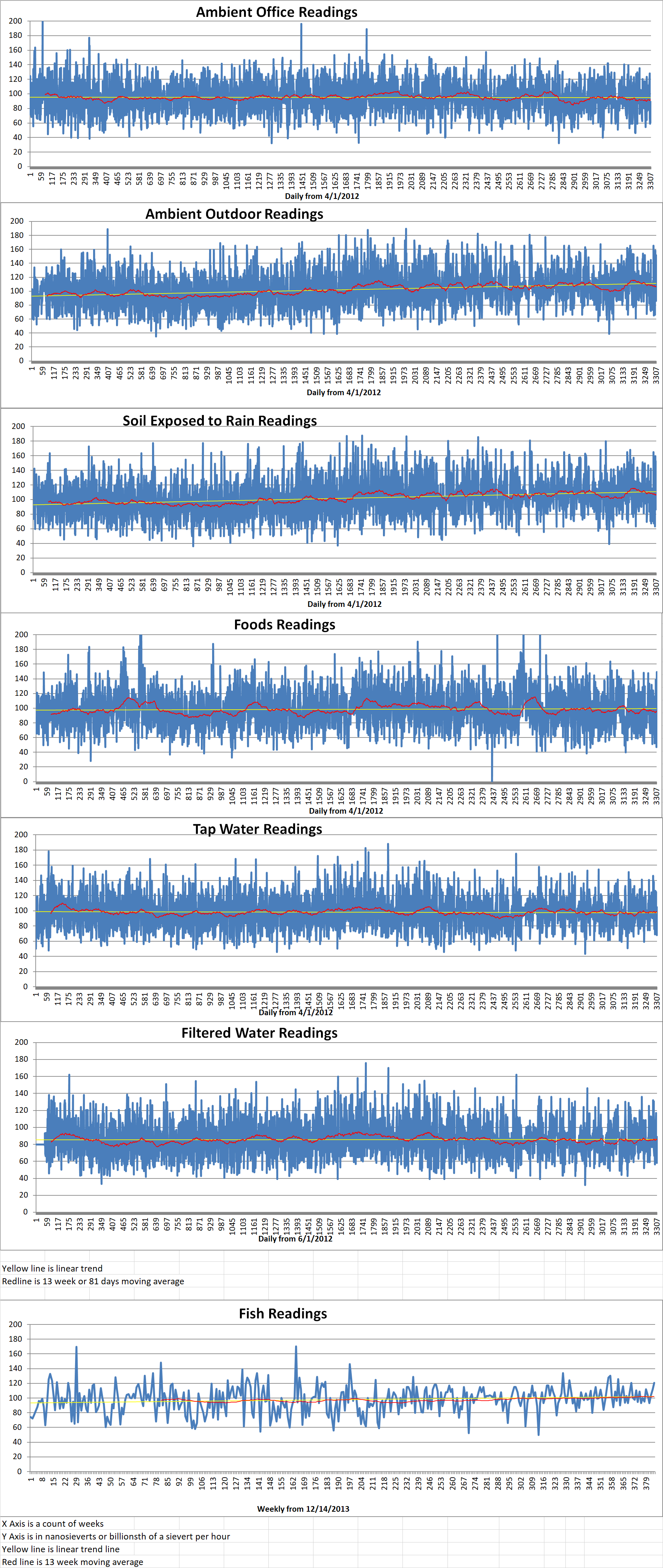
Geiger Readings for Jul 21, 2021
Ambient office = 89 nanosieverts per hour
Ambient outside = 151 nanosieverts per hour
Soil exposed to rain water = 152 nanosieverts per hour
White onion from Central Market = 52 nanosieverts per hour
Tap water = 105 nanosieverts per hour
Filter water = 89 nanosieverts per hour
-
Nuclear Reactors 929 – Research Progressing On Development Of Small Nuclear Reactors For Commercial Vessels – Part 1 of 2 Parts
Part 1 of 2 Parts
Research into small-scale nuclear energy conversion has made advances in reactor safety with the development of sodium-cooled reactors and molten salt nuclear technology. While the technology itself is feasible, a remaining problem is the need to negotiate to gain permission to pass through several channels and ports internationally.
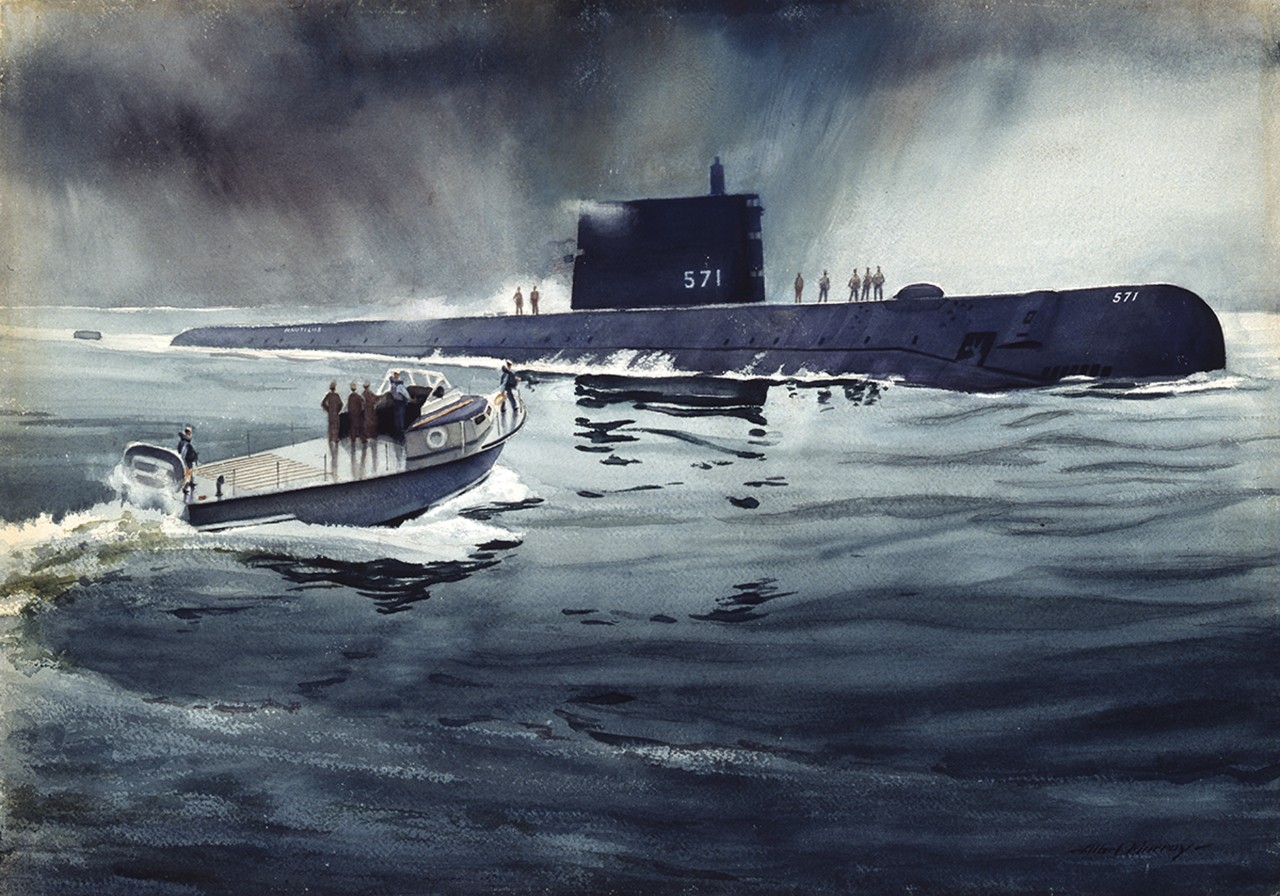
The first developments of nuclear ship propulsion date back to the mid-1950s when the U.S. developed the nuclear-powered Nautilus submarine. In late 1959, the Soviet Union launched the nuclear-powered Lenin icebreaker. Since that time, all nuclear-powered vessels have been either directly or indirectly connected to a national military or navy. Now, recent advanced in nuclear technology raise the possibility of commercial propulsive applications.
Concerns about carbon emissions in the maritime sector have stimulated research and development into a variety of alternative fuels and ship propulsion technologies. Alternative fuels such as liquefied petroleum gas and methanol fuels sustain the operation of internal combustions engines. Other fuels such as hydrogen and reprocessed ammonia support operation of fuel cells that can produce electricity for propulsion. Some new types of small-scale nuclear power solve the problem of reactor cooling with high pressure water or high-pressure helium gas. Broad acceptance of nuclear power commercial ships depends on convincing people that contemporary nuclear reactor technology has achieved greater safety than older reactor designs.
Nuclear disasters such as Three Mile Island (United States), Chernobyl (Ukraine) and Fukushima (Japan), as well as growing stockpiles of spent nuclear fuel have caused a great deal of public opposition to the expansion of nuclear power. Traditional commercial power reactors are cooled by water. Some modern high-temperature use helium gas at high pressure for cooling. Structural failures of high-pressure water-cooled or gas-cooled reactors have catastrophic results. There have been recent developments that resolve the pressure problem by cooling the reactor with a liquid metal that melts at two hundred- and ten-degrees Fahrenheit and remains liquid up to one thousand four hundred- and seventy-degrees Fahrenheit at atmospheric pressure.
Another new nuclear technology involves adding nuclear materials to a molten salt. This also resolves problems caused by cooling nuclear reactors with high-pressure steam or gas. Molten salt nuclear material becomes liquid at about seven hundred degrees Fahrenheit but is solid below that temperature. Some developing nuclear technology is able to reprocess semi-spent nuclear fuel. If there is a rupture in a molten salt reactor, the temperatures will fall and the molten salt fuel mixture will solidify. This increases the safety and suitability of molten salt reactors for commercial ship propulsion.
Green production of hydrogen requires electricity to power electrolysis which splits hydrogen from oxygen. Modern electrolysis systems achieved between sixty five percent and seventy five percent efficiency. Solid oxide fuel cells are able to convert hydrogen to electric power at between fifty five percent and sixty five percent efficiency. Overall, the efficiency of energy conversion from electricity back to electricity is between forty-five and fifty percent. A nuclear power plant can produce electricity of about thirty six percent efficiency from nuclear fuel to transmission line. This yields about eighteen percent peak overall efficiency from power station via hydrogen and fuel cell to ship propeller.
Please read Part 2 next -
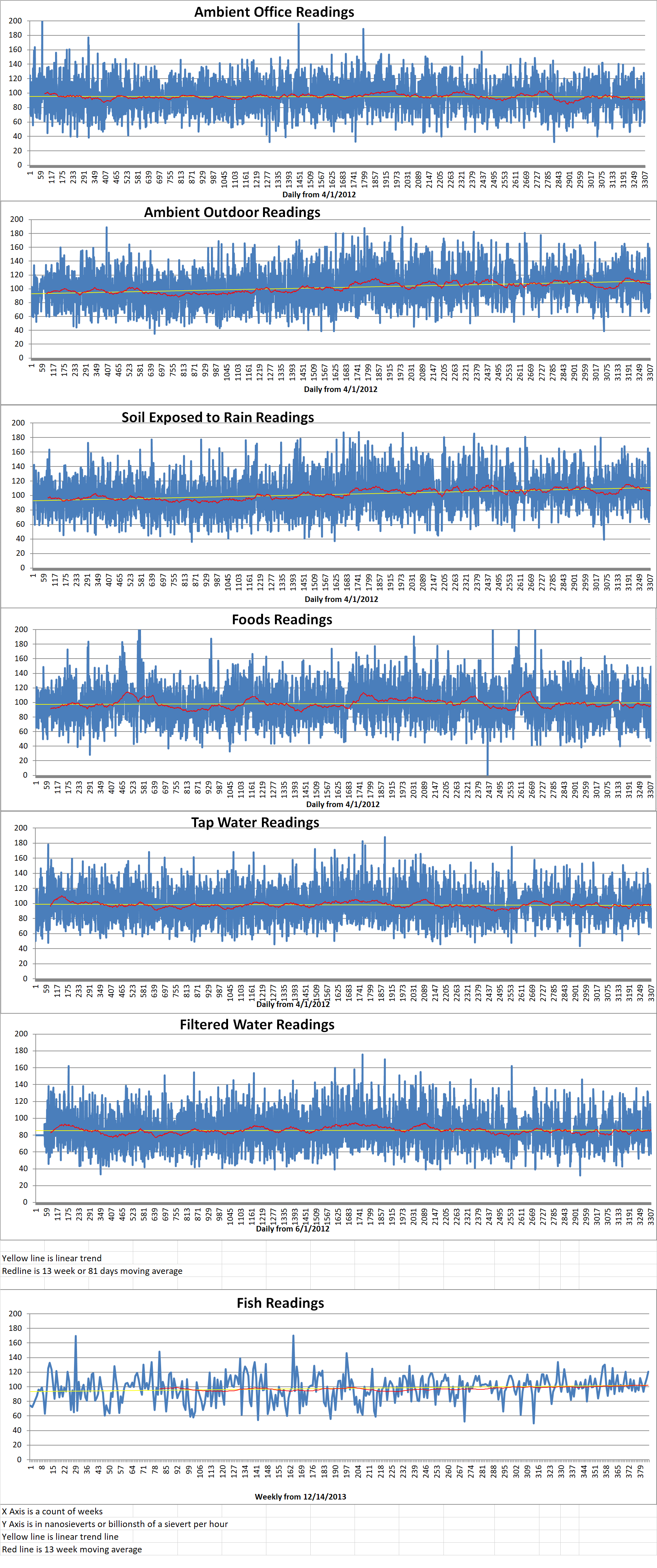
Geiger Readings for Jul 20, 2021
Ambient office = 88 nanosieverts per hour
Ambient outside = 86 nanosieverts per hour
Soil exposed to rain water = 87 nanosieverts per hour
Red bell pepper from Central Market = 149 nanosieverts per hour
Tap water = 68 nanosieverts per hour
Filter water = 58 nanosieverts per hour
-
Nuclear News Roundup Jul 20, 2021
Biden’s nuclear bailout is a tragedy newtimesslo.com
After Delays, the Navy Takes Delivery of First Improved Nuclear Warhead military.com
Ghana and USA sign nuclear co-operation MOU neimagazine.com
Remediation completed at former New Haven nuclear facility in USA neimagazine.com
-
Nuclear Weapons 754 – Transporting Nuclear Bombs And Materials In The United States
Nuclear material couriers (NMCs) transport nuclear bombs and other dangerous materials around the U.S. The fleet that transports these materials is operated by the Office of Secure Transportation (OST) which is part of National Nuclear Security Administration (NNSA). The NNSA is a semi-autonomous agency in the U.S. Department of Energy. The DoE recruits nuclear couriers year-round.
Curtis Johnson is the lead federal agent recruiter for the NNSA. He said, “Similar to other truck driving jobs, the NMC position does have its share of routine and monotonous long hours over the road,”. However, unlike most other trucking careers, these long-haul trips are part of a larger operation and every vehicle in the convoy is manned by multiple federal agents who share the driving, communications and security. We typically advertise the NMC position on www.usajobs.gov three or four times per year, with each job announcement being open to new applicants for one or two weeks at a time.”
After completing the hiring process NMC candidates will spend about eighteen weeks of training at Fort Chaffee, Arkansas. The training course is referred to as nuclear materials courier basic (NMCB) training and is a requirement for all NMC candidates. Johnson said, “I don’t believe that comparing NMCB to a military boot camp would be the best comparison. Our agency’s NMCB training would better compare to the specialized schooling that military service members attend after graduating from boot camp, such as infantry school or security forces training.” The NMCB offers two to three classes a year and applicants must have either military or law enforcement experience.
The NMCB has three primary phases of training in which candidates have the opportunity to develop the required knowledge skills and abilities to become an NMC. These include:
• Regular driver’s training supplies candidates with the fundamental skill that they need to drive OST transport vehicles. Candidates must have a commercial driver’s license and pass all driving performance tests.
• OST provides firearm training for their primary weapons. Candidates must qualify on these weapons on DoE-approved courses under night and day conditions.
• The final phase of training is dedicated to individual and small-unit tactics that are tailored to OST mission operations. All candidates must pass all tactics performance evaluations. In addition, candidates receive instruction on the Advanced Radio Enterprise System, federal agent legal authority and law enforcement tactics.
Throughout the NMCB program, all candidates must pass a physical fitness test, a variety of written examinations and multiple performance tests.
After they graduate, the candidates who have obtained a DoE security clearance participate in road mission operation with an active federal agent unit and undergo intense performance testing in convoy operations force-on-force exercise.
The DoE tries to offer three NMC training classes a year with about 20 students in each class. Johnson said, “The top three reasons for candidates not graduating are voluntary resignations, injuries and failing to satisfactorily complete a portion of the training.” The salary range for an NV-01 federal agent NMC is about forty-nine thousand dollars to seventy-seven thousand dollars.
After a candidate becomes an NMC, they are authorized to make warrantless arrests and to use lethal force if required during a mission. Mission travel is usually performed year-round and is almost always preplanned. Being a NMC does not require an agent to be available at all times. Missions are always transporting either nuclear weapons, nuclear weapons components or nuclear materials such as uranium to secure military sites across the U.S. Listening to the radio is allowable as long as it does not interfere with convoy communications.
Johnson said, “Though the travel element of the job can be less than exciting, NMCs train year-round when they are not on the road doing missions. “The mission pace changes from month to month, but most trips occur every other week with the other weeks being dedicated to training (shooting range, physical fitness, computer-based training, tactics).” -
Nuclear News Roundup Jul 19, 2021
French envoy to Israel: Iran should never possess nuclear bomb timesofisrael.com
Tax dollars shouldn’t bail out nuclear industry newtimesslo.com
S. Korea to export nuclear reactor tech to Bangladesh koreaherald.com
El Dabaa First of ‘Several’ Nuclear Reactors for Egypt powermag.com
-
Geiger Readings for Jul 19, 2021
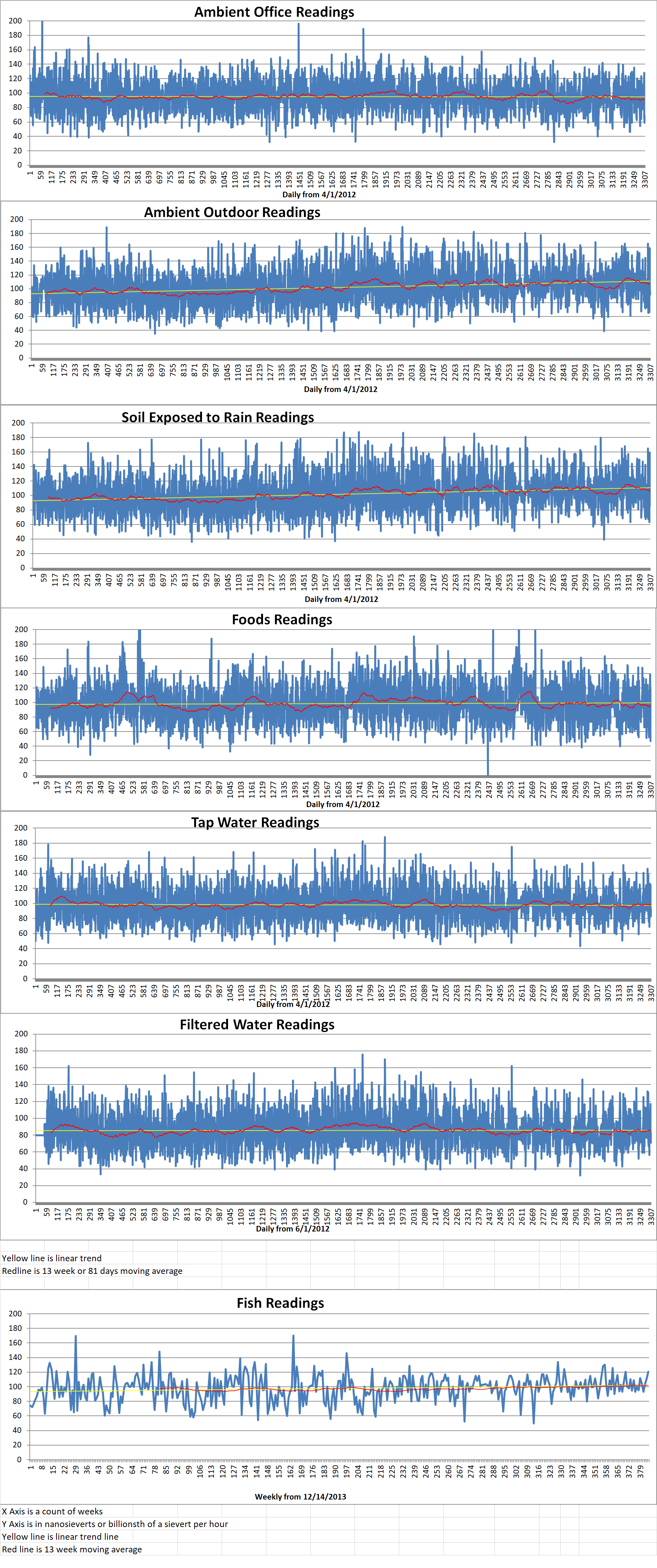
Ambient office = 60 nanosieverts per hour
Ambient outside = 93 nanosieverts per hour
Soil exposed to rain water = 87 nanosieverts per hour
Tomato from Central Market = 100 nanosieverts per hour
Tap water = 93 nanosieverts per hour
Filter water = 83 nanosieverts per hour
-
Nuclear News Roundup Jul 18, 2021
Holtec set to ramp up HI-STAR cask production world-nuclear-news.org
Work starts on IAEA nuclear security training facility world-nuclear-news.org
IAEA completes security advisory mission in Belarus world-nuclear-news.org
India’s BHEL awarded steam generator contract for domestic PHWRs world-nuclear-news.org