
The majority of nuclear power plants operating today were constructed and put into operation long before the facts of climate change were understood. Forty percent of nuclear power stations were built along a coast. One hundred out of the four hundred and forty-three operating nuclear power reactors in the world are only a few yards above sea level. It could be said that nuclear power is on the frontline of climate change.
Recent research indicates that global sea levels will rise more and rise faster than earlier predictions suggested. Over the next few decades there will be more frequent and more destructive extreme weather events. Strong winds and low atmospheric pressure will drive bigger storm surges that could threaten any coastal installations including nuclear power plants.
Huge quantities of cool water are consumed by nuclear power plants which is one reason that they are often built near the ocean. However, even nuclear plants that are further inland are going to also be under threat of flooding. In addition, higher water temperatures in lakes and rivers and reservoirs will make it more difficult to keep reactors cool and avoid meltdowns. Increasingly severe droughts and wildfires only add to the threat.
About five hundred and sixteen million people around the world live within a fifty-mile radius of at least one operating nuclear power plant. Twenty million people live within a ten-mile radius. These people will be subject to the health and safety risks of future nuclear accidents. There are efforts to design and build nuclear power plants that are more resistant to climate change. However, these changes will increase the already considerable expense that is involved in building, operating and decommissioning nuclear plants. And, of course, there is still the major problem of storing and disposing of spent nuclear fuel.
Nuclear power is often credited with providing energy security in an increasingly turbulent world. However, climate change will challenge these old certainties. Extreme floods, droughts and storms which were once rare are becoming much more common. This extreme weather is making industry protection measures which were drafted in an earlier age ever more obsolete. Unfortunately, climate risks to nuclear power plants won’t be linear or predictable. Rising seas, storm surges and heavy rainfall are eroding coastal and inland flood defenses and will push natural and built barriers to their limits.
The U.S. Nuclear Regulatory Commission has concluded that the vast majority of U.S. nuclear sites were never designed to deal with the future climate impacts that they face. Many have already experienced some flooding. A recent report from the U.S. Army War College also claims that nuclear power facilities are at high risk from future sea-level rise, severe storms, and cooling water shortages.
Before even considering building more nuclear power plants, the nuclear industry must take into account how models of future weather extremes and climate impacts are likely to affect them. They should account for changing weather patterns over seasons, years and decades. In addition, they must try to assume the worst in terms of the possibility for sudden extreme events. Before a project is approved, the costing of all these necessary precautions must feed into the final forecast.
Nuclear power generation may become a significant casualty of intensifying climate impacts. Some reactors may have to shut down soon because of climate change. This should trigger a substantial reassessment of the role of nuclear power in helping the world reach net zero carbon emissions.
Blog
-

Nuclear Reactors 916 – Nuclear Power Is Under Serious Threat From Climate Change
-
Nuclear News Roundup Jun 29, 2021
IAEA mission starts working at Belarusian nuclear power plant kyivpost.com
Editorial roundup for June 30, 2021: Going nuclear? Slow down wyomingnews.com
Dresden nuclear power plant inspections stay at baseline 1430wcmy.com
Russia offers advanced nuclear power plants tribuneindia.com
-

Geiger Readings for Jun 29, 2021
Ambient office = 64 nanosieverts per hour
Ambient outside = 112 nanosieverts per hour
Soil exposed to rain water = 115 nanosieverts per hour
Avocado from Central Market = 66 nanosieverts per hour
Tap water = 97 nanosieverts per hour
Filter water = 83 nanosieverts per hour
-

Nuclear Reactor 915 – Iran’s Only Nuclear Power Plant Shut Down Temporarily Due To Technical Problems
Iran has been in the news lately as a coalition of Western nations tries to reestablish the nuclear treaty canceled by the Trump administration. In addition to issues around the possibility of Iran constructing nuclear weapons, there are also other nuclear issues in Iran involving their single nuclear power plant.
Iran’s only nuclear power plant in the port city of Bushehr was constructed by Russia and brought online in 2011. The plant was shut down temporarily last week due to “technical issues”. The Atomic Energy Organization of Iran (AEOI) issued a statement on June 20th that the Bushehr plant was being temporarily shut down due to “technical issues”. This was the first time that an emergency shutdown of the plant has been reported. The cause of the problem was not specified. The plant was disconnected from the grid after a one-day notice was sent to the Iranian Energy Ministry.
Ali Akbar Salehi is the head of Atomic Energy Organization of Iran (AEOI). He said Saturday that the Bushehr plant would be restarting operations in the near future. He spoke during a meeting on Saturday afternoon with the deputy speaker of the parliament Ali Nikzad and other parliamentarians. One of the topics of discussion was nuclear power generation capacities. Salehi said that the problem at the Bushehr plant was almost fixed, and that electricity generated by the plant would be entering Iran’s grid within a few days.
Speaking to the parliament news website on Saturday, Salehi downplayed the seriousness of the emergency shutdown and said that such problems at nuclear power plants was “natural”.
When the news of the shutdown was made public, some analysts wondered if it was connected in some way with Russia withholding promised fuel or critical technical support for the reactor. This suspicion was reinforced when Salehi also announced on Saturday that Iran will pay Russia more than five hundred million that it owes.
Salehi also said on Saturday that because of U.S. sanctions imposed following the withdrawal of the U.S. from the 2015 nuclear agreement of world powers, that Iran has been unable to pay Russia five hundred million euros that it owes for the two other nuclear power plants currently being constructed in Iran by Russia. In addition to the construction projects, money was also owed for fuel for the Bushehr power plant.
Salehi blamed “financial issues” for not being able to reach the target of eight gigawatts of nuclear generated electricity. He added that Supreme Leader Ali Khamenei has always said that the AEOI should plan for twenty or even thirty gigawatts fuel cycles. The Iranian parliament has recommended that prepare for generating twenty gigawatts. The Bushehr plant generates just one gigawatt. This is a very small contribution to the more than sixty gigawatts of electricity that Iran consumes on a daily basis.
Tavanir is Iran’s power generation and distribution company. An official of the company said last week that the shutdown of the Bushehr reactor could cause more outages in the country. Iran is currently producing sixty gigawatts but is consuming sixty-two gigawatts daily.
Iran has been struggling with daily power cuts due to higher summer consumption. Officials have also blamed higher power consumption by cryptocurrency miners. In addition, there is wastage of over ten percent resulting from insufficient resources to maintain the infrastructure.
On Saturday, Salehi also said that the Bushehr power plant will run out of fuel in the next two or three months. Russia provides fuel for the Bushehr plant under the supervision of the International Atomic Energy Agency (IAEA). Fuel for the Bushehr power plant costs about thirty to forty million euros per year. -
Nuclear News Roundup Jun 28, 2021
MSU professors receive $1.6 million for two nuclear energy research projects msstate.edu
Curtiss-Wright to develop digital twin tech for nuclear reactors powerengineeringint.com
Iran says nuclear site images won’t be given to IAEA as deal has expired cnbc.com
Fifth Hongyanhe unit connected to the grid world-nuclear-news.org
-
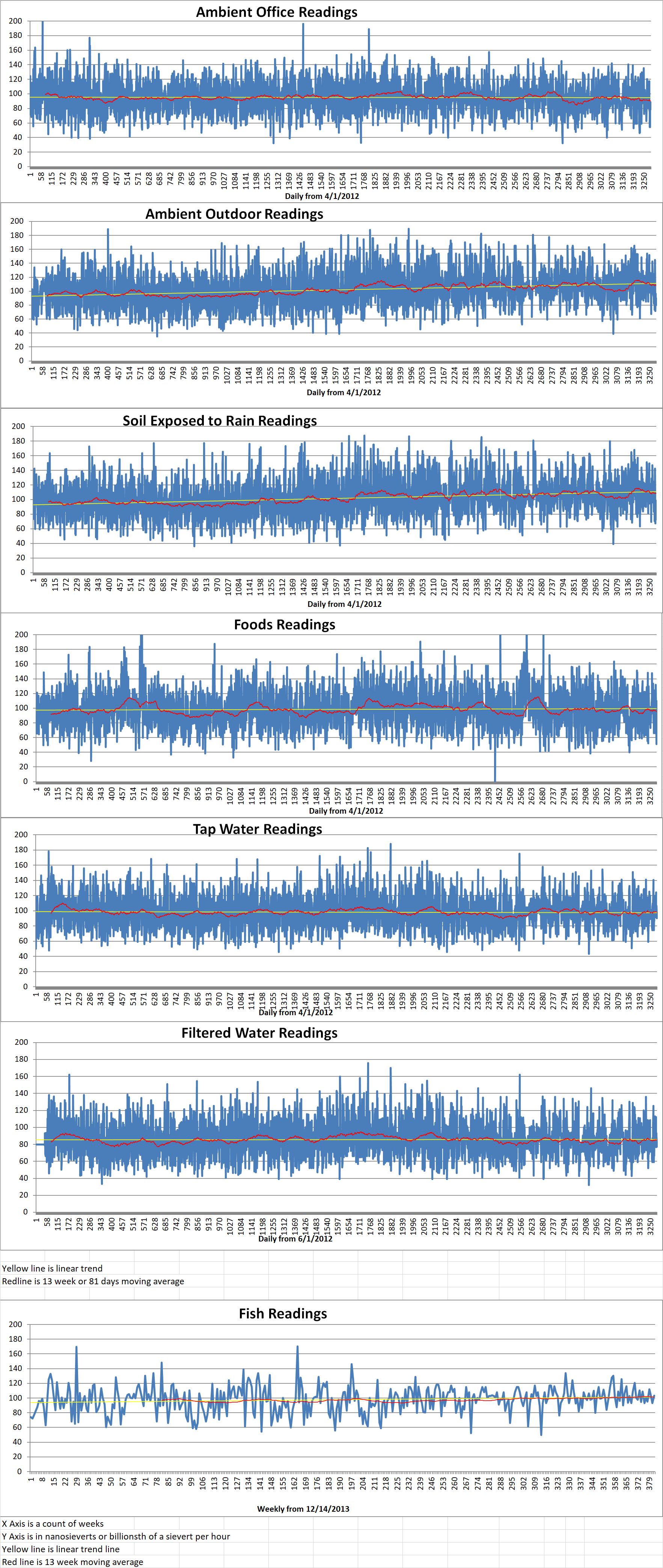
Geiger Readings for Jun 28, 2021
Ambient office = 89 nanosieverts per hour
Ambient outside = 80 nanosieverts per hour
Soil exposed to rain water = 73 nanosieverts per hour
Red bell pepper from Central Market = 81 nanosieverts per hour
Tap water = 97 nanosieverts per hour
Filter water = 82 nanosieverts per hour
-
Nuclear News Roundup Jun 27, 2021
Biden Administration Defends Airstrikes on Iran-Backed Militia finance.yahoo.com
U.S. Officials Double Down on Nuclear Modernization manufacturing.net
Utility asks to run South Carolina nuclear plants for 20 more years abcnews4.com
Iraq’s stability depends on Iran and the US re-entering the nuclear deal trtworld.com
-
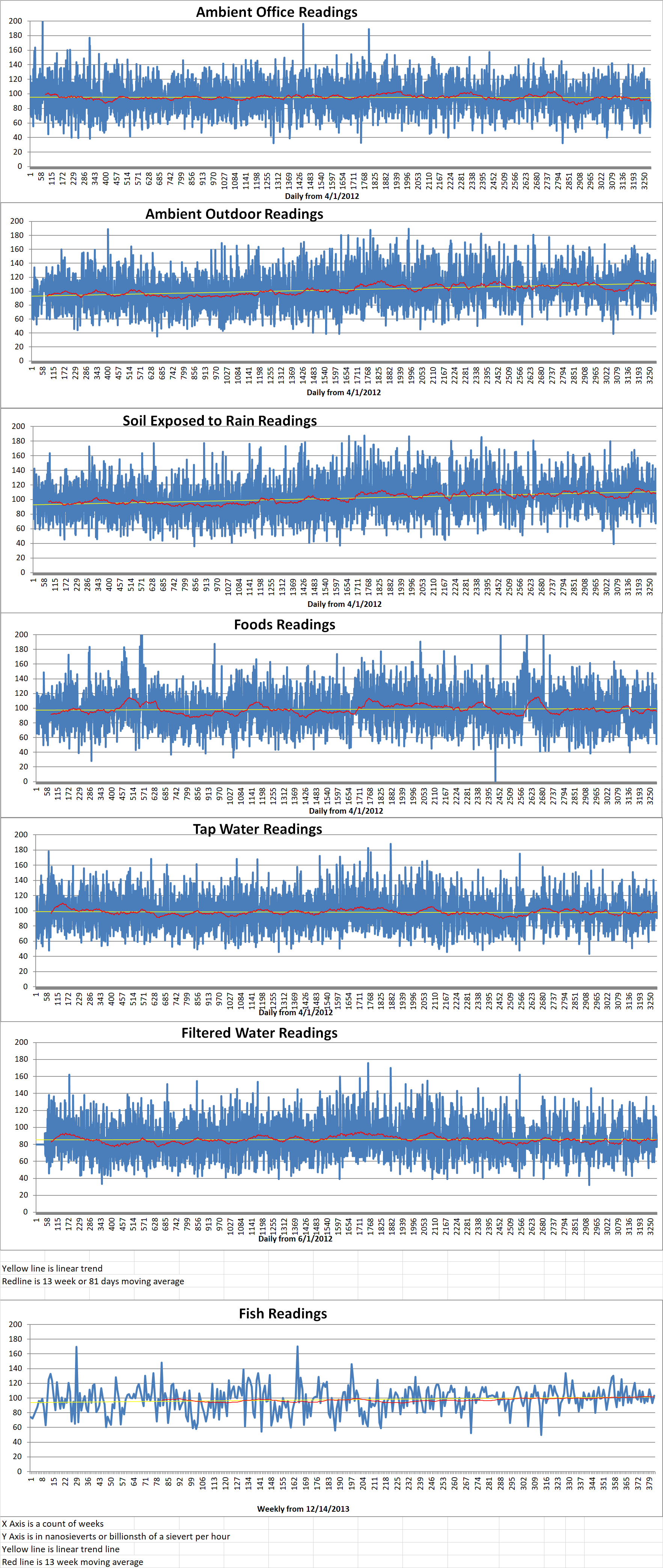
Geiger Readings for Jun 27, 2021
Ambient office = 79 nanosieverts per hour
Ambient outside = 90 nanosieverts per hour
Soil exposed to rain water = 89 nanosieverts per hour
Tomato from Central Market = 110 nanosieverts per hour
Tap water = 95 nanosieverts per hour
Filter water = 77 nanosieverts per hour
-
Nuclear News Roundup Jun 26, 2021
Bennett appears to hint at Israeli involvement in attack on Iran nuclear site timesofisrael.com
Iran complicates sanctions talks with demands that predate the U.S. nuclear deal woldoil.com
Report: Attack on Iran nuclear site damaged centrifuge factory jrn.org
8th panel for nuclear waste disposal at Waste Isolation Pilot Plant will be ready in 6 months currentargus.com
-

Geiger Readings for Jun 26, 2021
Ambient office = 87 nanosieverts per hour
Ambient outside = 86 nanosieverts per hour
Soil exposed to rain water = 93 nanosieverts per hour
English cucumber from Central Market = 51 nanosieverts per hour
Tap water = 90 nanosieverts per hour
Filter water = 81 nanosieverts per hour
Dover sole – Caught in USA = 103 nanosieverts per hour