Part 2 of 2 Parts
The new NEA report proposed what they call a circular approach to a decision-making framework. In this approach, all the elements of the system can vary while continuing to feed into each other. The adequacy of funding is assed by considering whether decision-making processes are actually capable of taking into account changes in critical parameters in a manner that is sufficiently robust and sophisticated to align and realign them in different patterns. These critical parameters will include the envisioned technical solution and its costs, constituted assets and rates of return, as well as the licensed lifetimes of nuclear power reactors and evolving preferences of society.
The report raised the theme of incentive compatibility in the sense that funding arrangements should be as cost-effective as possible in the long term in order to make them more politically and socially sustainable in different OECD countries. “Clearly, there is a wide range of solutions as national circumstances differ greatly both in economic and technical terms with respect to the historical allocation of responsibilities and social preferences.”
The NEA said that their report was inspired by a branch of economics referred to as Law and Economics. This branch links general economic notions of efficiency and cost minimization in a flexible and non-dogmatic manner to the working on institutions and the allocation of legal responsibilities. It is often focused on the optimal allocation of responsibilities, the alignment of incentives and risk management.
The approach taken by the report suggesed that financially, socially and politically sustainable funding arrangements will need to take into account two fundamental guiding principles. First, the parties that are best capable of managing the costs and risks related to decommissioning and radioactive waste management should ultimately be the ones responsible for the funding. Second, decommissioning and especially waste management concern commitments that reach far into the future for many centuries. The report said, “It is obvious that economic, political and technical framework conditions both on the asset and on the cost side will change over these period.”
The report goes on to say, “As long as commitments for disbursement are far away, maintaining a narrative of stable parameters can be a useful intermediate step to set up funding systems. However, as soon as real disbursements loom, the accuracy of estimates can no longer be taken for granted. In other words, funding frameworks will increasingly need to integrate the conscious and explicit management of change in a sustainable rhythm.”
The NEA pointed out that funding systems are already regularly reviewed to check whether they satisfy particular financial requirements. However, it stated that long-term sustainability also demands periodic reviews of the technical options and their likely costs, liability locations and institutional arrangements.
Many of the existing frameworks in NEA countries already respect these two guiding principles to varying degrees according to the report. “The adequacy of financing for decommissioning and radioactive waste management is a major issue that receives significant policy attention. The case studies show that sophisticated and by and large well-funded systems are in place and that much good work is being accomplished, although frequently in an ad hoc and implicit manner, rather than in a systematic and explicit one.”
Blog
-

2425 – Radioactive Waste 809 – A new OECD Nuclear Energy Agency Report Raises Issues With Funding Decommissioning and Nuclear Waste Disposal – Part 2 of 2 Parts
-
Nuclear News Roundup Jun 25, 2021
Pitt receives $1.6 million for nuclear energy research bizjournals.com
Curtiss-Wright Selected to Participate in the Development of Digital Twin Technology for Advanced Nuclear Reactors businesswire.com
Nuclear Law in Africa: Issues and Challenges Discussed at IAEA Virtual Workshop iaea.org
Pompeo to ‘Post’: Iran unwound nuclear deal in a matter of months jpost.com
-
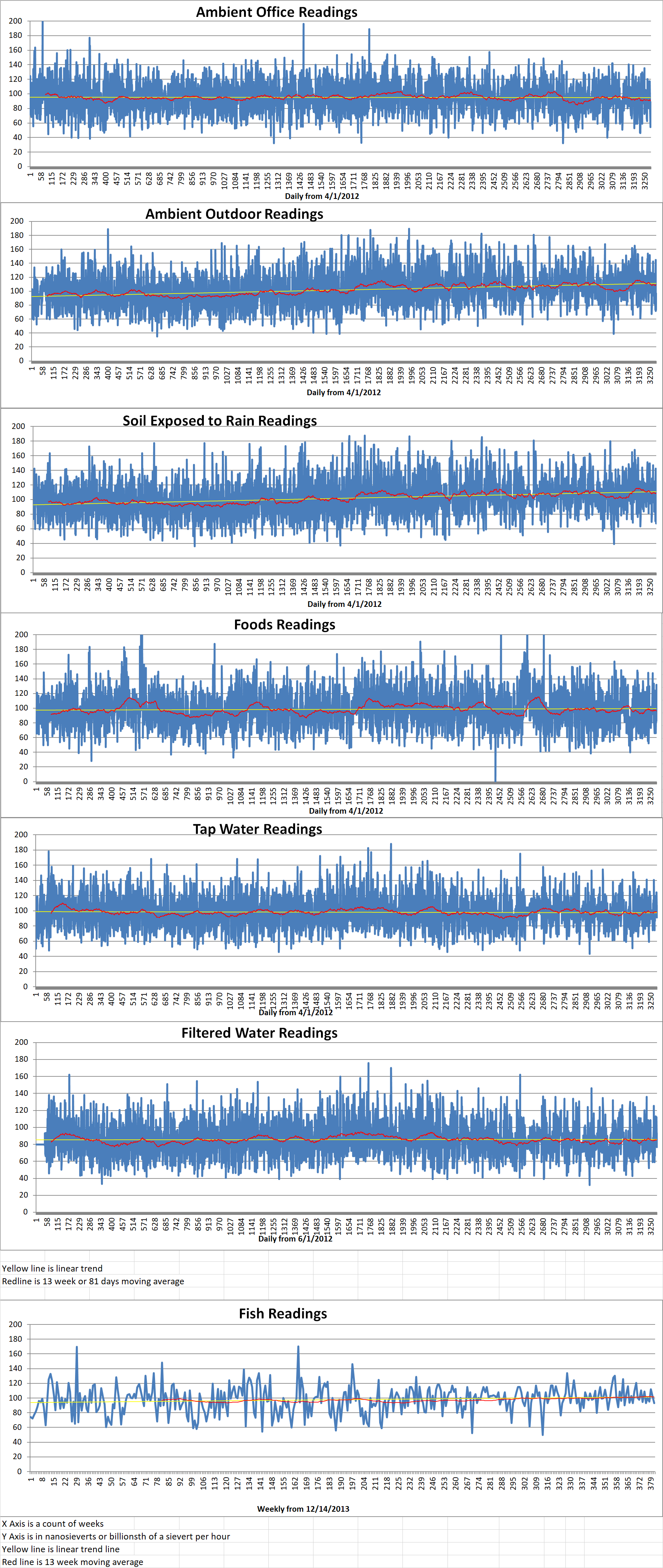
Geiger Readings for Jun 25, 2021
Ambient office = 8 nanosieverts per hour
Ambient outside = 97 nanosieverts per hour
Soil exposed to rain water = 99 nanosieverts per hour
Avocado from Central Market = 83 nanosieverts per hour
Tap water = 106 nanosieverts per hour
Filter water = 89 nanosieverts per hour
-

Radioactive Waste 808 – A new OECD Nuclear Energy Agency Report Raises Issues With Funding Decommissioning and Nuclear Waste Disposal – Part 1 of 2 Parts
Part 1 of two Parts
The current approaches to assessing financial adequacy for decommissioning and radioactive waste management is based on the linear discounting of estimated future costs. Critics say that it should be complemented with a broader “circular” approach according to a new Organization for Economic Co-operation and Development’s Nuclear Energy Agency (NEA) report. The report said that changes of different kinds will to be worked out between today’s decisions and future funding needs.
The title of the new NEA report is Ensuring the Adequacy of Funding Arrangements for Decommissioning and Radioactive Waste Management. The report consists of a conceptual framework, twelve country case studies on funding management that was prepared in collaboration with NEA countries, and some best policy guidelines. It focused on the interdependency of costs and funding requirements, changes in nuclear policy, such as long-term operation or premature shutdowns, and technological progress.
William Magwood is the Director General of the NEA.
When the report was released, he said, “We are at the threshold of a new consideration across the world to use nuclear energy to deal with the threat of climate change, along with other energy forms. This is a time of great uncertainty because we have new technologies that are being introduced. We have the idea of building new nuclear plants. But in order to proceed along those lines, we have to show that we know how to deal with the back-end of our fuel cycle, with decommissioning and radioactive waste. The fact that there is some uncertainty in the minds of the public and some policymakers about this is the reason this report was created.”
The NEA believes that now is an excellent time to debate the adequacy of funding for decommissioning and radioactive waste for at least four reasons.
• As the nuclear fleet ages, many reactors will approach the end of their lifespan according to their original operating licenses in the near future. Prospects for extending reactor licenses vary greatly across NEA countries.
• Changes in the macroeconomic environment are questioning many of the assumptions which have been the basis of discussions about funding.
• Changes in funding arrangements are already happening in a number of NEA countries.
• Decommissioning and radioactive waste management are highly sensitive topics in policy debates.
The current basis for funding Decommissioning and radioactive waste management is the linear approach. All elements of the system are based on the discounted value of the estimated future costs of a specific technical solution. The report said, “While the linear framework with its unidirectional causality from estimated costs to current assets is too simple, it remains, as long as stakeholders are aware of its limitations, a useful starting point. The challenge is to maintain the robustness of funding systems at a moment where a number of framework conditions are changing significantly, including macroeconomic framework conditions, energy policy making, societal preferences or the structure of electricity markets.”
The NEA report states that current funding systems in NEA countries are adequate. However, the report saidthat “Nevertheless, there are challenges as decommissioning and radioactive waste management programs move to implementation and societal preferences evolve over time. The very long-term nature of the solutions, in particular for radioactive waste disposal can also create challenges.”
Please read Part 2 next -
Nuclear News Roundup Jun 24, 2021
U.S. Seizes Iran-Linked Websites at Key Point in Nuclear Talks nytimes.com
‘Sabotage attack’ on Iranian nuclear building foiled Aljazeera.com
ČEZ begins ‘security assessment’ of Dukovany bidders world-nuclear-news.org
Swedish government must consider applications in parallel, says SKB world-nuclear-news.org
-

Geiger Readings for Jun 24, 2021
Ambient office = 54 nanosieverts per hour
Ambient outside = 74 nanosieverts per hour
Soil exposed to rain water = 67 nanosieverts per hour
Blueberry from Central Market = 87 nanosieverts per hour
Tap water = 100 nanosieverts per hour
Filter water = 93 nanosieverts per hour
-

Nuclear Reactors 914 – New U.S. Department Of Energy Awards For Nuclear Research
The U.S. Department of Energy (DoE) just announced that it is awarding more than sixty-one million dollars for ninety-nine advanced nuclear energy projects in thirty states and a U.S. territory. The funded projects will focus on nuclear energy research, cross-disciplinary technology development, and nuclear reactor infrastructure to improve the resiliency and utilization of the largest domestic energy source of low-carbon energy generation in the U.S. Fifty-eight million of the DoE funds will be awarded to U.S. universities. This DoE program will assist the Biden-Harris Administration’s goal of one hundred percent clean electricity by 2035 and net zero carbon emissions by 2050.
Jennifer M. Granholm is the U.S. Secretary of Energy. She said, “Nuclear power is critical to America’s clean energy future and we are committed to making it a more accessible, affordable and resilient energy solution for communities across the country. At DOE we’re not only investing in the country’s current nuclear fleet, but we’re also investing in the scientists and engineers who are developing and deploying the next generation of advanced nuclear technologies that will slash the amount of carbon pollution, create good-paying energy jobs, and realize our carbon-free goals.”
Nuclear power supplies about twenty percent of the total electricity in the U.S. In order to realize the full potential of nuclear power, much more research and development are needed to ensure the creation and operation of cost-effective nuclear power. New methods for securely transporting, storing, and disposing of spent nuclear fuel waste must be established.
The new awards are being managed through DoE’s nuclear energy programs including —the Nuclear Energy University Program (NEUP), the Nuclear Energy Enabling Technologies (NEET), and the Nuclear Science User Facilities (NSUF). The awardees will:
• Enhance America’s Nuclear Energy Infrastructure and Increase the Safety of Nuclear Waste Storage – The work developed through the NEUP awards will support a wide variety of students and faculty across the nation who are conducting outstanding, cutting edge research and will strengthen university training structures. Sixty-nine university-based projects in twenty seven states will receive about forty-nine million dollars in DoE funding to develop innovative solutions for increasing the nation’s nuclear energy capabilities. These include novel methods for isolating, immobilizing, and storing nuclear waste. In addition, twenty-four university based project will receive about six million dollars for research dedicated to improving nuclear reactor infrastructure and providing critical safety and performance upgrades to some of the twenty-five U.S. university research reactors.
• Improve Resiliency of Nuclear Reactor Facilities – Four projects getting awards through NEET and NSUF are housed at Iowa State University, North Carolina State University, GE Research and DOE’s Oak Ridge National Laboratory. They will develop advanced materials, manufacturing, and digital instrumentation technologies to support advanced nuclear reactors and to investigate the applications of nuclear fuel and materials. These projects will receive about three million dollars in funding. They will be supported by about four million dollars in facility access costs and expertise for experimental neutron and ion irradiation testing, post-irradiation examination facilities, synchrotron beamline capabilities, and technical assistance for design and analysis of experiments through NSUF.
Including these awards, the DoE’s Office of Nuclear Energy has now awarded more than eight hundred sixty-three million dollars to continue the U.S. leadership in clean energy innovation and to educate the next generation nuclear engineers and scientists through its competitive opportunities since 2009. -
Nuclear News Roundup Jun 23, 2021
As Japan reboots ageing Mihama nuclear reactor, experts express concern reuters.com
In A First, Iran’s Sole Nuclear Power Plant Undergoes Emergency Shutdown npr.org
Federal Licensing Board Considers Challenge To Wisconsin’s Last Nuclear Plant wpr.org
U.S. Seizes Iran-Linked Websites at Key Point in Nuclear Talks nytimes.com
-
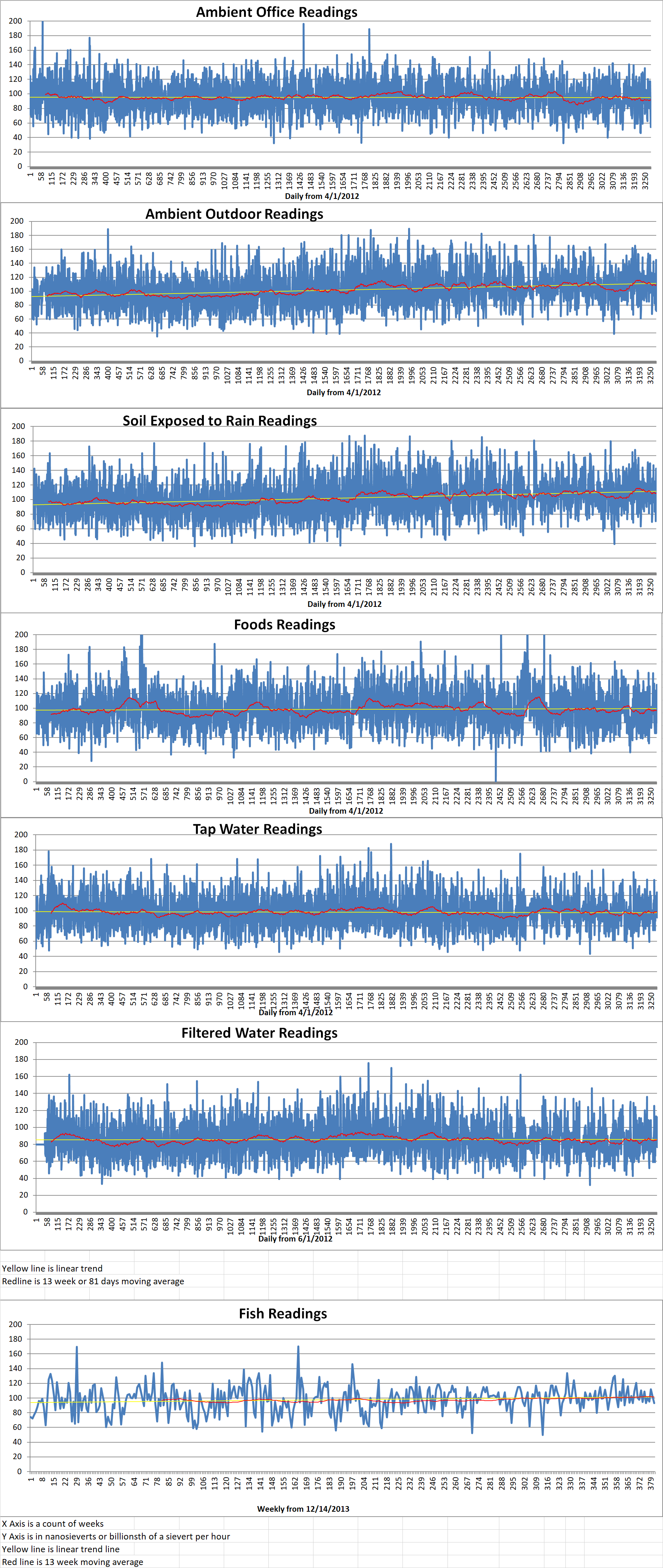
Geiger Readings for Jun 23, 2021
Ambient office = 55 nanosieverts per hour
Ambient outside = 72 nanosieverts per hour
Soil exposed to rain water = 74 nanosieverts per hour
Red bell pepper from Central Market = 132 nanosieverts per hour
Tap water = 91 nanosieverts per hour
Filter water = 77 nanosieverts per hour
-
Radioactive Waste 807 – The Problem Of Spent Nuclear Fuel – Part 2 of 2 Part
Part 2 of 2 Parts (Plea read Part 1 first)
Most of the current Generation III nuclear power reactors are light-water reactors. They dominate the field of nuclear power because of a variety of political, economic and strategic reasons. Southern Company is currently constructing twin Generation III pressurized water reactors in Geogia . Each reactor is a standard Westinghouse AP1000 design that generates just over one gigawatt.
The Generation IV reactor designs currently being developed come in all shapes and sizes. Some of the designs are so old that they date back to the dawn of the era of nuclear power. In contrast to Generation III reactors, Generation IV reators are a fraction of the size and capacity of the former. They also are being designed with a variety of cooling systems and materials.
Here are some examples of Generation IV reactor designs:
• Oregon-based NuScale Power’s seventy seven megawatt small modular reactors
• General Atomics has a fifty-megawatt helium cooled fast modular reactor
• Kairos Power is developeing a one hundred and forty megawatt molten fluoride salt reactor
There are many other Generation IV designs that would be attractive to different businesses with different policy objects.
Many Generation IV reactors designs either explicitly recycle used fuel or they can be reconfigured to use recycled fuel. On the 3rd of June, TerraPower, GE Hitachi and the State of Wyoming announced an agreement to build a demonstration version of their three hundred forty five-megawatt Natrium design which is a sodium-cooled fast reactor.
Natrium is technically able to recycle fuel for power generation. Oklo has already reached an agreement with Idaho National Laboratory to operate its one and a half megawatt “microreactor” with recycled used fuel. Elysium Industries has said that their molten salt reactor is designed to burn spent nuclear fuel. Alabama based Flibe Energy promotes the spent nuclear fuel burning capability of its thorium reactor design.
The success of Generation IV advanced reactors does not depend on the resolution of the nuclear waste issue. While Generation IV reactors may be capable of burning recycled fuel, they do not have to. However, incentizing waste recycling would certainly improve their economics.
The term “incentivize” is used here in the sense of “pay”. Policymakers who support the idea of fuel recycling should consider ways to make it more profitable for power plants to recycle fuel rather than having to import fresh nuclear fuel from Canada, Kazakhstan, Australia, Russia and other countries.
The political support for advanced nuclear technology which includes recycling is much deeper than might be expected. In 2019, the Senate confirmed Dr. Rita Baranwal as the Assistant Secretary for Nuclear Energy at the Department of Energy (DOE). She is trained as a materials scientist and is a strong supporter of recycling.
The new Biden administration has continued broadly bipartisan support for advanced nuclear reactors in it’s proposed Fiscal Year 2022 Budget Request to increase funing for the DoE’s Office of Nuclear Energy by almost three hundred and fifty million. Their proposal includes specific funding increases for research and developing reactor concepts (plus thirty two million dollars), fuel cycle research and development (plus fifty nine million dollars), and advanced reactor demonstrations (plus one hundred and twenty million dollars), and tripling funding for the Versatile Test Reactor (from forty million dollars to one hundred and forty five million dollars.)
Last month, the DoE’s Advanced Research Projects Agency-Energy (ARPA-E) announced a new $40 million program. The purpose of the new program is to support research in “optimizing” nuclear waste and disposal from the new generation of advanced reactors. This includes reactors that recycle nuclear fuel. The announcement explicitly states that the lack of a solution to the nuclear waste problem definitely “poses a challenge” to the future of Generation IV reactors.
The debate over the ultimate disposition of spent nuclear fuel is a reminder that recycling in general is a very messy process. Recycling is chemical, machine and energy intensive. Recycling of all kinds, from critical minerals to plastic bottles unfortunately produces new waste. Currently, federal and state governments are very active in recycling these other waste streams. They should be equally involved in recycling nuclear waste.