
Supporters of nuclear power often argue against renewables on the grounds that the sun does not always shine on a solar array and the wind does not always blow to turn the blades of a wind turbine. They contrast nuclear power with wind and solar by saying that nuclear power provides reliable constant base power while the renewables cannot be relied upon.
The truth is a bit more complex than “nuclear is reliable and wind and solar are not reliable.” This is partly based on the fact that large scale batteries, pump energy storage in reservoirs and other ways to regularly supplementing intermittent wind and solar power have been developed. This means that the baseload power provided by nuclear power is no longer so important. In addition, the output of the global fleet of commercial nuclear fission power reactors is falling while the output of wind and solar installations are increasing.
Output from electrical generating systems over a year is measured in terawatt hours (TWh). In 2020, the electricity generated from nuclear power in the U.K. was about fifty terawatt hours which is down eleven percent from nuclear electricity generation in 2019. Part of the reason for this is the need to deal with cracks and rust in aging reactors. The renewable output for electricity generation achieved a record high of one hundred and twenty terawatt hours in 2020.
Nuclear electricity generation was thirteen terawatts less in 2020 when compared to output for 1989 when nuclear provided about twenty percent of the U.K.’s electricity. The amount of wind and solar generation was tiny. Even though the massive Hinkley Point C nuclear power plant is currently being constructed, nuclear power is fading away in the U.K. In order to keep the lights on in the U.K., they are going to have to learn how to carefully manage the power produced by unreliable sun and wind.
While nuclear power is fairly reliable, it is not “on” one hundred percent of the time. For example, a power reactor in the U.S. with an maximum annual capacity of 5,098,320 MWh at full production actually only produced produced 4,697,675 MWh which is eight percent less than full production. Nuclear fission reactors need to be refueled every twelve to eighteen months. This means that they are not generating one hundred percent of the time. In addition, any necessary down time for maintenance and repair of the aging reactors will also take them out of producing electricity for weeks to months. This further reduced annual electricity production. As reactor age, they require more maintenance and repair which means that they are offline even more of time.
While baseload power is important in areas where the demand requires it, it turns out that baseload power is not always needed if the demand drops. Nuclear power reactors are difficult to turn on and off and most do not have the capability of load-following which means that their production of electricity cannot be easily raised or lowered to follow demand. On the other hand, it is easy to load-follow with renewables.
The bottom line is that while massive nuclear power reactors have supplied a lot of power for the U.K. in the past, their utility is falling for future electricity generation. And, for those who suggest that a combination of nuclear and renewables would be desirable, it turns out that if nuclear power is pursued, it can reduce the ability of a nation to also develop a robust renewables program.
Blog
-

Nuclear Reactors 906 – Nuclear Electricity Producting Is Falling In The United Kingdom
-
Nuclear News Roundup Jun 07, 2021
Nuclear clocks could outdo atomic clocks as the most precise timepieces sciencenews.org
Nuclear Weapons Spending Swelled $1.4 BN Amid Pandemic: Report thedefensepost.com
U.N. nuclear watchdog sees indications of plutonium work in North Korea reuters.com
Fate of Illinois nuclear plants in balance after PJM auction fail and stalled subsidy plan utilitydive.com
-
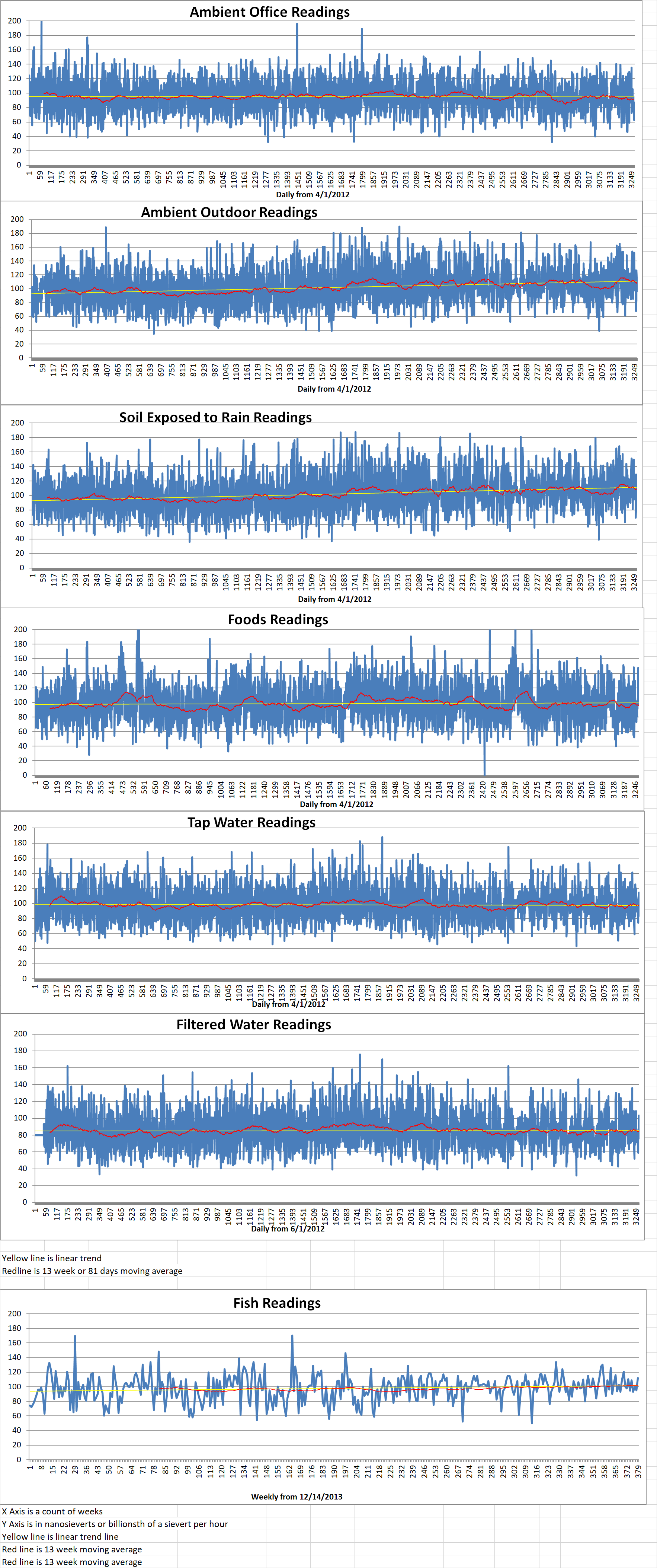
Geiger Readings for Jun 07, 2021
Ambient office = 87 nanosieverts per hour
Ambient outside = 97 nanosieverts per hour
Soil exposed to rain water = 96 nanosieverts per hour
Blueberry from Central Market = 114 nanosieverts per hour
Tap water = 112 nanosieverts per hour
Filter water = 103 nanosieverts per hour
-
Nuclear News Roundup Jun 06, 2021
Saudi-Russian cooperation includes construction of nuclear reactors, minister says tass.com
Nuclear power may play big role in cracker decarbonization icis.com
U.S. sees sixth round of Iran nuclear talks and likely more reuters.com
Turkey Point nuclear plant officials to test warning sirens Friday wsvn.com
-

Geiger Readings for Jun 06, 2021
Ambient office = 87 nanosieverts per hour
Ambient outside = 100 nanosieverts per hour
Soil exposed to rain water = 100 nanosieverts per hour
California avocado from Central Market = 100 nanosieverts per hour
Tap water = 114 nanosieverts per hour
Filter water = 89 nanosieverts per hour
-
Nuclear News Roundup Jun 05, 2021
Germany’s role in US-Russian nuclear arms control brookings.edu
US seeks bids to manage underground nuclear waste dump krqe.com
Ostrovets unit 1 receives operating license world-nuclear-news.com
Reactor vessel installed at first Turkish unit world-nuclear-news.com
-

Geiger Readings for Jun 05, 2021
Ambient office = 63 nanosieverts per hour
Ambient outside = 112 nanosieverts per hour
Soil exposed to rain water = 114 nanosieverts per hour
Mexican avocado from Central Market = 97 nanosieverts per hour
Tap water = 84 nanosieverts per hour
Filter water = 76 nanosieverts per hour
Dover sole – Caught in USA = 112 nanosieverts per hour
-
Nuclear Reactors 905 – A Consortium Led By TerraPower Will Construct A Demonstration Natrium Molten Salt Reactor in Wyoming
This week, TerraPower, PacifiCorp and Wyoming Governor Mark Gordon announced the construction of a Natrium reactor demonstration project at a closing coal plant in the U.S. state of Wyoming. The companies have analyzed several potential locations in Wyoming for the plant which will contain a three hundred forty-five megawatt sodium-cooled fast reactor combined with a molten salt energy storage system. The storage system can elevate the system’s output to over five hundred megawatts for more than five and a half hours when needed. The participants in the project expect to announce which site they have selected by the end of 2021.
TerraPower is a company mainly funded by Bill Gates who founded Microsoft. TerraPower and GE Hitachi Nuclear Energy (GEH) announced the launch of the Natrium concept in September of 2020. The partners expressed the hope that they will be able to commercialize the technology by the end of 2029.
TerraPower states that Natrium’s novel architecture has a simplified design compared to previous reactor types. They intend to house non-nuclear mechanical, electrical and other equipment in separate structures which will reduce complexity and cost. This innovative design is intended to allow significant cost savings by allowing major parts of the plant to be built to industrial standards. Some of the improvements use fewer equipment interfaces and significantly reduce the amount of nuclear grade concrete by as much as eighty percent when compared to currently operating big commercial nuclear power reactors. Natrium reactors are designed to produce firm but flexible power that can be seamlessly integrated into power grids that have experienced a high penetration of renewables.
The demonstration project in Wyoming will be a fully functional plant. It is intended to validate the design, construction and operational features of the Natrium technology according to a statement by TerraPower. TerraPower also said that the next steps include further project evaluation, education and outreach. They also need to obtain state and federal regulatory approval prior to the acquisition of a Natrium facility.
Along with Berkshire Hathaway Energy subsidiary PacificCorp and GEH, members of the demonstration project team also include engineering and construction partner Bechtel, Energy Northwest, Duke Energy and almost a dozen more additional companies, universities and national laboratory partners.
Chris Levesque is the President and CEO of TerraPower. He said, “Together with PacifiCorp, we’re creating the energy grid of the future where advanced nuclear technologies provide good-paying jobs and clean energy for years to come. The Natrium technology was designed to solve a challenge utilities face as they work to enhance grid reliability and stability while meeting decarbonization and emissions-reduction goals.”
Wyoming Governor Mark Gordon said that the Wyoming workforce is eagerly looking forward to the jobs that this project will provide.
Scott Melbye is the President of the Uranium Producers of America (UPA) and the executive vice president of the Uranium Energy Corporation. He said, “The UPA’s member companies have the production capability to support the fuel needs of this program and hopefully many new advanced and small modular reactors to follow. Wyoming uranium providing energy jobs and clean, reliable nuclear electricity here in Wyoming has a wonderful ring to it.”
The U.S. Department of Energy (DoE) awarded TerraPower eighty million dollars of initial funding to demonstrate the Natrium technology through their Advanced Reactor Demonstration Program (ARDP). The ARDP program intends to speed up the demonstration of advanced reactor technology through cost-shared partnerships with U.S. industry. TerraPower signed a cooperative agreement with the DoE in May of 2021. To date, the U.S. Congress has appropriated one hundred and sixty million dollars for the ARDP and DoE has committed additional funding the future, subject to the appropriations process. -
Nuclear News Roundup Jun 04, 2021
China threatens nuclear war, expanding arsenal in case of ‘intense showdown’ with US nypost.com
US FY2022 budget request includes record for nuclear energy world-nuclear-news.org
Backus may be fined for improperly disposing radioactive material left under lead waste norwichbulletin.com
Japan softens commitment to nuclear power in draft growth strategy English.kyodonews.net
-

Geiger Readings for Jun 04, 2021
Ambient office = 66 nanosieverts per hour
Ambient outside = 122 nanosieverts per hour
Soil exposed to rain water = 110 nanosieverts per hour
Strawberry from Central Market = 148 nanosieverts per hour
Tap water = 110 nanosieverts per hour
Filter water = 88 nanosieverts per hour