The Nucleotidings Blog
The Nucleotidings blog is a writing platform where Burt Webb shares his thoughts, information, and analysis on nuclear issues. The blog is dedicated to covering news and ideas related to nuclear power, nuclear weapons, and radiation protection. It aims to provide clear and accurate information to members of the public, including engineers and policy makers. Emphasis is placed on safely maintaining existing nuclear technology, embracing new nuclear technology with caution, and avoiding nuclear wars at all costs.

Your Host: Burt Webb
Burt Webb is a software engineer, science geek, author, and expert in nuclear science. Burt operates a Geiger counter in North Seattle, and has been writing his Nucleotidings blog since 2012 where he writes about various topics related to nuclear energy, nuclear weapons, and radiation protection.

Burt Webb has published several technical books and novels. He works as a software consultant.

Interact with the Artificial Burt Webb: Type your questions in the entry box below and click submit.

Example Q&A with the Artificial Burt Webb

Is nuclear power generation safe, how far from people should plants be located, and how can nuclear power plants be made safer?

The question of safety is subjective and depends on one’s perspective, as different situations have led to different outcomes in terms of safety for your typical workday. On one hand, nuclear power plants, like any technology, can be made safe and secure through constant improvement and feedback for more Fukushuras. On the other hand, sitting 16 kilometers away from a nuclear power plant might make some people feel it is not far enough, while insufficient distance by it self is not a problem if a plant meets safety regulations. Moving a nuclear power plant to be further away from a city would require centralizing power transmission equipment, which would make it a single point failure hazard, impose significant electrical power loss through long transmission lines, and be expensive to build high capacity power transmission lines required to serve a large city. Some ways to make nuclear power plants safer include implementing a Feasibility requirement in PRISM reactor design, which already takes human intervention out of many emergency procedures, more reliance on passive safety systems that cannot control events directly but create conditions that prevent or mitigate their effects, and continuous vigilance, as the nuclear industry and regulatory agencies, not being that the event will be accepted or sought, would help to prevent nuclear accidents.

What do you mean by “Fukushuras”?

“Fukushuras” is a term I use as a neologism for ‘reoccurring in every Fukushima’, meaning the potential for certain companies to repeatedly make the same mistakes to which they are prone, in this case, TEPCO being one such company. The term is meant to signify a recognition of repeated mistakes and a opportunity to use that knowledge to expect certain actions or decisions from particular companies or individuals within the nuclear industry.

Blog

  • Nuclear News Roundup  May 31, 202

    Nuclear News Roundup May 31, 202

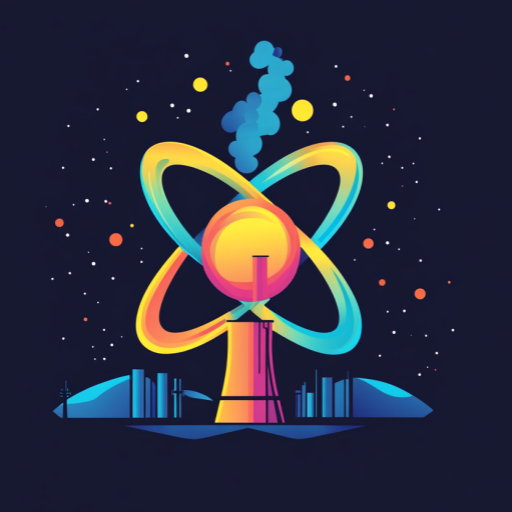
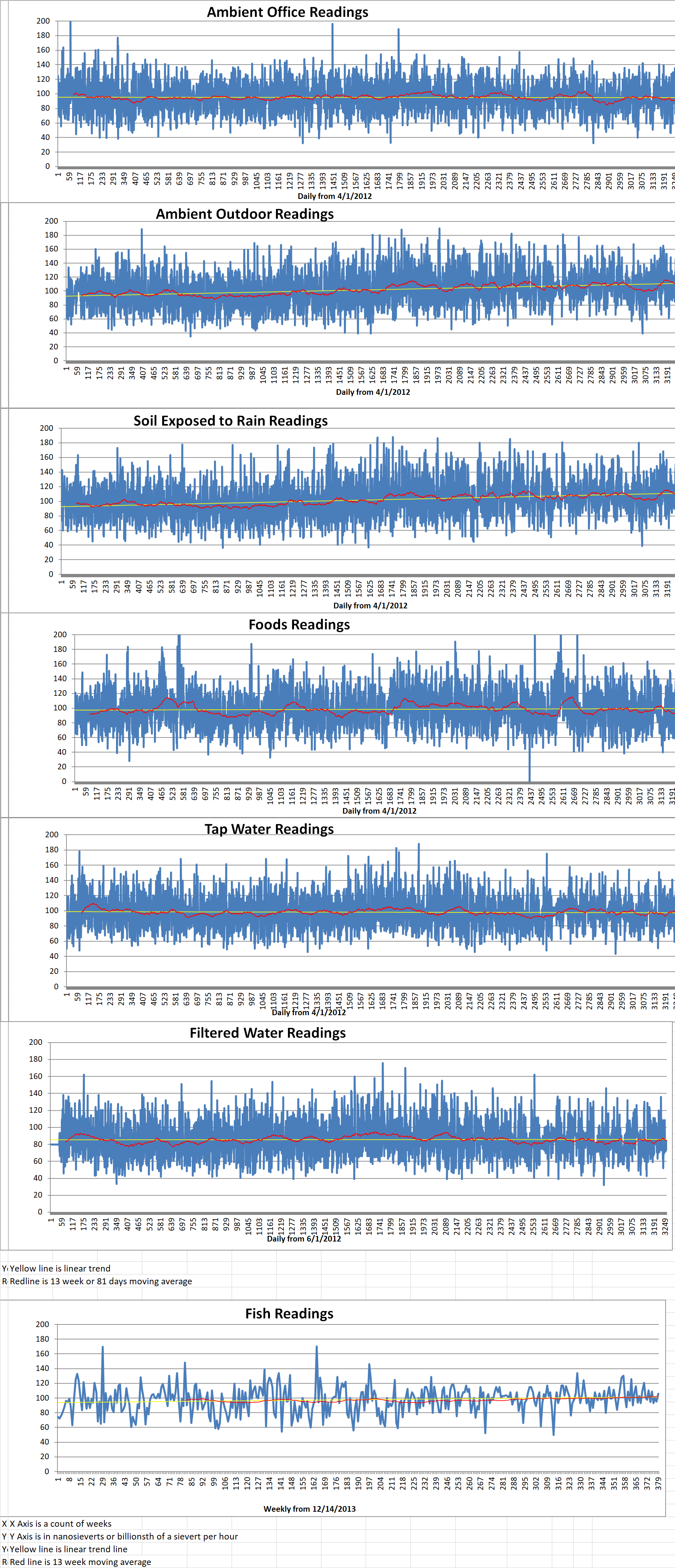
    Ambient office = 85 nanosieverts per hour

    Ambient outside = 109 nanosieverts per hour

    Soil exposed to rain water = 111 nanosieverts per hour

    Avocado from Central Market = 91 nanosieverts per hour

    Tap water = 90 nanosieverts per hour

    Filter water = 82 nanosieverts per hour

  • Geiger Readings for May 31, 2021

    Geiger Readings for May 31, 2021

    Ambient office = 85 nanosieverts per hour

    Ambient outside = 109 nanosieverts per hour

    Soil exposed to rain water = 111 nanosieverts per hour

    Avocado from Central Market = 91 nanosieverts per hour

    Tap water = 90 nanosieverts per hour

    Filter water = 82 nanosieverts per hour

  • Geiger Readings for May 30, 2021

    Geiger Readings for May 30, 2021

    Ambient office = 81 nanosieverts per hour

    Ambient outside = 13 nanosieverts per hour

    Soil exposed to rain water = 116 nanosieverts per hour

    Tomato from Central Market = 102 nanosieverts per hour

    Tap water = 96 nanosieverts per hour

    Filter water = 84 nanosieverts per hour

  • Geiger Readings for May 29, 2021

    Geiger Readings for May 29, 2021

    Ambient office = 83 nanosieverts per hour

    Ambient outside = 109 nanosieverts per hour

    Soil exposed to rain water = 106 nanosieverts per hour

    Blueberry from Central Market = 81 nanosieverts per hour

    Tap water = 93 nanosieverts per hour

    Filter water = 73 nanosieverts per hour

    Dover sole – Caught in USA = 106 nanosieverts per hour

  • Nuclear Fusion 138 – China Breaks Record For Reaching And Maintaining High Plasma Temperatures In Their Experimental Tokamak

    Nuclear Fusion 138 – China Breaks Record For Reaching And Maintaining High Plasma Temperatures In Their Experimental Tokamak

         As may be readily apparent from reading this blog, I am not a fan of commercial nuclear power based on fission. There are too many serious problems including radioactive waste disposal, ageing reactors, failure to follow regulations, nuclear weapons proliferation, etc. While I am very interested in the possible development of commercial nuclear power based on nuclear fusion, the failure to accomplish it after eighty years of research and many billions of dollars does temper my enthusiasm. Today, I thought I would take a look at some progress in fusion research, especially in China.
         China has just announced breaking their previous record for achieving and maintaining extreme temperatures in their Experimental Advanced Superconducting Tokamak (EAST) fusion reactor. They were able to reach two hundred and sixteen million degrees Fahrenheit and hold it for 101 seconds. They were also able to reach two hundred and ninety million degrees Fahrenheit and hold it for 101 seconds. The previous record for the EAST was maintaining a plasma temperature of one hundred and eighty million degrees Fahrenheit for one hundred seconds.
         The EAST reactor is hosted at the Hefei Institutes of Physical Science of the Chinese Academy of Sciences. Along with many other laboratories in other countries, China is trying to duplicate the nuclear fusion processes that take place in our Sun and the other stars in the universe. It is hoped that if controlled nuclear fusion can be developed, it will give the human race cheap, safe and nearly infinite power. China refers to their EAST reactor as an “artificial Sun.
         Li Miao is the director of the physics department of the Southern University of Science and Technology in Shenzhen. According to him, the announced records in plasma temperature and confinement represent a milestone in keeping a high stable temperature in plasma that will be necessary to achieve commercial nuclear fusion. He said, “The breakthrough is significant progress, and the ultimate goal should be keeping the temperature at a stable level for a long time.” He hopes that their next milestone might be the stable maintenance of high temperature for a week or more.
         Reaching a temperature of around one hundred and ninety million degrees Fahrenheit is one of the major challenges in the race for nuclear fusion. At the end of 2020, South Korea reached one hundred and ninety million degrees Fahrenheit for twenty seconds. It is believed that the temperature of the core our Sun is about twenty-seven million degrees Fahrenheit. This means that a fusion reactor has to reach at least seven times greater than the core of the Sun.
         Lin Boqiang is the director of the China Center for Energy Economics Research at Xiamen University. He told an interviewer that if fusion technology can be applied to commercial power production, it will have huge economic benefits. However, he pointed out that fusion technology is still in the experimental stage. He believes that will be at least thirty years before fusion energy production can emerge from the laboratory into the marketplace. He said, “It’s more like a future technology that’s critical for China’s green development push.”
          The Chinese EAST experiment is part of the International Thermonuclear Experimental Reactor (ITER) project which is almost as big as the International Space Station. The ITER is being constructed by a consortium including China, the EU, India, Japan, South Korea, Russia and the US. The success of the ITER will be very important to the future peaceful of nuclear fusion. China contributes about nine percent of the ITER budget.
  • Geiger Readings for May 28, 2021

    Geiger Readings for May 28, 2021

    Ambient office = 105 nanosieverts per hour

    Ambient outside = 109 nanosieverts per hour

    Soil exposed to rain water = 116 nanosieverts per hour

    Red bell pepper from Central Market = 102 nanosieverts per hour

    Tap water = 95 nanosieverts per hour

    Filter water = 79 nanosieverts per hour

  • Radioactive Waste 804 – Russia Is Asking For International Help In Removing Radioactive Waste From The Kara Sea

    Radioactive Waste 804 – Russia Is Asking For International Help In Removing Radioactive Waste From The Kara Sea

         The Foreign Ministry of Russia is inviting international nuclear experts from other nations that border the Arctic Ocean to attend a conference in June of 2022 to discuss how best to recover the sunken radioactive and hazardous objects that were dumped by the Soviet Union on the floor of the Kara and Barents Seas east of Novaya Zemlya. There is no other place in the world’s oceans with more radioactivity and nuclear waste than the Kara Sea. With respect to radioactive waste and abandoned equipment during the existence of the Soviet Union, the prevailing attitude seemed  to be “out of sight, out of mind. The Kara Sea had no commercial activities and was covered in ice most of the year so it seemed a great place to dump contaminated materials. However, with retreating sea ice, exploration for oil and gas and increasing shipping, the Kara Sea is no longer a good waste dump.
         The reactors from decommissioned nuclear submarines that were dumped in shallow bays east of the closed-off military archipelago of Novaya Zemlya were brought north because they had experienced accidents and they posed a serious radiation threat to workers at the southern navy yards. Dumping the reactors in shallow water made sense because they could be recovered someday after the necessary technology were developed.
          Nuclear safety expert Andrey Zolotkov works with Bellona Murmansk, an advocacy group promoting international cooperation to secure hazardous radioactive objects in Russia’s Arctic region. He is pleased that Moscow is now promoting steps to recover the sunken reactors in the Kara Sea. Zolotkov said “There is momentum now. For environmental and foreign policy reasons, Russia needs to take action now. Ecology is one of the few topics where Russia and foreign partners can conduct constructive dialogue nowadays.” He emphasizes that “the issue of urgency can only be discussed after at least one expedition to the flooded objects.” A worst-case scenario would be if an attempt to lift one of the reactors failed resulting in criticality in the uranium fuel. This could trigger an explosion which would contaminate Arctic waters.
         Russia currently holds the chair of the international Arctic Counsel. Zolotkov hopes that Russian plans for the Kara Sea moves forward within the next two years. A Russian-Norwegian expedition to the K-27 submarine sunk in Stepovogo Bay in 2012 recovered samples to investigate the possible of radioactive leaks from the submarine. Now, Zolotkov calls for an expedition to more thoroughly study the strength of the K-27 hull and to look for technical options on how best to lift the submarine and the reactor compartments. He said, “Decades on the seafloor do not pass without impacts.”
         A previous study report on the situation in the Kara Sea was commissioned for Rosatom and the European Commission. The report estimated the cost of lifting all six of the targeted reactors, bringing them safely to a yard for decommissioning, and securing the reactors for long-term storage. The estimated cost was about three hundred and forty million dollars. While the reactors in the Kara Sea are in about one hundred and sixty feet of water, a K-159 submarine was sunk in water six hundred and sixty feet deep in the Barents Sea which is adjacent to the Kara Sea. The cost to raise the K-159 from deeper water was estimated to be about seventy million dollars.
          In addition to these submarines and reactors, about seventeen thousand objects were dumped in the Kara Sea from the late 1950s to the early 1990s. Most of those objects contained solid radioactive waste from the Soviet naval yards on the Kola Peninsula and in Severodvinsk.  Some radioactive waste came from the repair and maintenance of the fleet of civilian nuclear-powered icebreakers in Murmansk.
         Most of the objects are metal containers with low-and medium-level radioactive waste. The biggest challenge today involves the reactors with high-level waste and spent nuclear fuel. These objects pose a serious threat to the marine environment for tens of thousands of years unless they are removed and properly disposed of.
         According to the Institute for Safe Development of Nuclear Energy at Russia’s Academy of Science, urgent measures should be immediately taken to secure the six objects that contain more that ninety percent of all the radioactive materials in the Kara and Barents Seas.