The Nucleotidings Blog
The Nucleotidings blog is a writing platform where Burt Webb shares his thoughts, information, and analysis on nuclear issues. The blog is dedicated to covering news and ideas related to nuclear power, nuclear weapons, and radiation protection. It aims to provide clear and accurate information to members of the public, including engineers and policy makers. Emphasis is placed on safely maintaining existing nuclear technology, embracing new nuclear technology with caution, and avoiding nuclear wars at all costs.

Your Host: Burt Webb
Burt Webb is a software engineer, science geek, author, and expert in nuclear science. Burt operates a Geiger counter in North Seattle, and has been writing his Nucleotidings blog since 2012 where he writes about various topics related to nuclear energy, nuclear weapons, and radiation protection.

Burt Webb has published several technical books and novels. He works as a software consultant.

Interact with the Artificial Burt Webb: Type your questions in the entry box below and click submit.

Example Q&A with the Artificial Burt Webb

Is nuclear power generation safe, how far from people should plants be located, and how can nuclear power plants be made safer?

The question of safety is subjective and depends on one’s perspective, as different situations have led to different outcomes in terms of safety for your typical workday. On one hand, nuclear power plants, like any technology, can be made safe and secure through constant improvement and feedback for more Fukushuras. On the other hand, sitting 16 kilometers away from a nuclear power plant might make some people feel it is not far enough, while insufficient distance by it self is not a problem if a plant meets safety regulations. Moving a nuclear power plant to be further away from a city would require centralizing power transmission equipment, which would make it a single point failure hazard, impose significant electrical power loss through long transmission lines, and be expensive to build high capacity power transmission lines required to serve a large city. Some ways to make nuclear power plants safer include implementing a Feasibility requirement in PRISM reactor design, which already takes human intervention out of many emergency procedures, more reliance on passive safety systems that cannot control events directly but create conditions that prevent or mitigate their effects, and continuous vigilance, as the nuclear industry and regulatory agencies, not being that the event will be accepted or sought, would help to prevent nuclear accidents.

What do you mean by “Fukushuras”?

“Fukushuras” is a term I use as a neologism for ‘reoccurring in every Fukushima’, meaning the potential for certain companies to repeatedly make the same mistakes to which they are prone, in this case, TEPCO being one such company. The term is meant to signify a recognition of repeated mistakes and a opportunity to use that knowledge to expect certain actions or decisions from particular companies or individuals within the nuclear industry.

Blog

  • Geiger Readings for May 01, 2021

    Geiger Readings for May 01, 2021

    Ambient outside = 90 nanosieverts per hour

    Soil exposed to rain water = 91 nanosieverts per hour

    Avocado from Central Market = 63 nanosieverts per hour

    Tap water = 141 nanosieverts per hour

    Filter water = 136 nanosieverts per hour

    Dover sole – Caught in USA = 109 nanosieverts per hour

  • Nuclear Weapons 752 – Swedish Security Service Reports That Iran Is Trying To Steal Nuclear Technology For A Nuclear Weapons Program

    Nuclear Weapons 752 – Swedish Security Service Reports That Iran Is Trying To Steal Nuclear Technology For A Nuclear Weapons Program

         Sweden’s Security Service has published some of the findings of its 2020 intelligence report. The report mentioned that Iran, China and Russia are the biggest threats to Sweden’s security. The report also said that the Islamic Republic of Iran is trying to obtain Swedish technology for its nuclear weapons program.
          One section of the report says that “Iran also conducts industrial espionage, which is mainly targeted against Swedish hi-tech industry and Swedish products, which can be used in nuclear weapons programs. Iran is investing heavy resources in this area and some of the resources are used in Sweden.”
         The Swedish Security Service report said, “Several countries engage in various forms of espionage and security-threatening activities against Sweden. Russia, China and Iran make up the biggest threat.” The report added that regimes “aim to strengthen their country’s economic, political status and military superpower.”
         The report went on to say that Iran uses its intelligence apparatus to wage industrial espionage against Sweden. Iran seeks information from Swedish universities and colleges and there are efforts to recruit students and faculty from Sweden’s research community.
          The Swedish revelations of Iran’s activities follows a German intelligence document made public last week that said that Iran continued to pursue nuclear weapons during 2020. The Bavarian Office for the Protection of the Constitution, the formal name for the state domestic intelligence agency, said that “Proliferation-relevant states like Iran, North Korea, Syria and Pakistan are making efforts to expand their conventional arsenal of weapons through the production or constant modernization of weapons of mass destruction. In order to obtain the necessary know-how and corresponding components, these states are trying to establish business contacts to companies in high-technology countries like Germany.” The Bavarian intelligence report defines proliferation as “the unauthorized spread of atomic, biological, chemical weapons of mass destruction or the products used for their manufacture as well as the corresponding weapon carrier systems, including the necessary know-how.”
         The German and Swedish intelligence findings confirm that Iran is still working on a nuclear weapons program. Many analysts believe that the 2015 Joint Comprehensive Plan of Action (JCPOA) is only a temporary restriction on Iran’s ambition to join the group of nations that possess nuclear weapons.
         The U.S. Trump administration withdrew from the JCPOA in 2018. The reason given by the administration for pulling out of the agreement was that the JCPOA would not prevent Iran from developing nuclear weapons.
          In 2012, the Swedish government tried to block robust EU sanctions on Iran in order to protect a business deal between Swedish telecommunications giant Ericsson and Iran. Carl Bildt was the Swedish Foreign Minister at the time. He had long been a proponent of diplomacy over sanctions as the way to deal with authoritarian regimes such as Iran and Syria. He expended great effort to prevent the EU from forcing Ericsson to cancel its contracts with the Syrian regime. This was reported in an Israeli newspaper in 2012. According to the Israeli article, Israeli diplomats questioned whether Bildt had “personal interests” in Iran that were preventing him from moving forward with sanctions.

  • Geiger Readings for Apr 30, 2021

    Geiger Readings for Apr 30, 2021

    Ambient office = 46 nanosieverts per hour

    Ambient outside = 108 nanosieverts per hour

    Soil exposed to rain water = 108 nanosieverts per hour

    Avocado from Central Market = 87 nanosieverts per hour

    Tap water = 95 nanosieverts per hour

    Filter water = 84 nanosieverts per hour

  • Nuclear Reactors 885 – Nuclear Development LLC Trying To Buy Bellefonte Nuclear Power Plant From the TVA – Part 2 of 2 Parts

    Nuclear Reactors 885 – Nuclear Development LLC Trying To Buy Bellefonte Nuclear Power Plant From the TVA – Part 2 of 2 Parts

    Part 2 of 2 Parts (Please read Part 1 first)
         Nuclear Development (ND) pushed officials to take another look at the original proposal for the purchase of the Bellefonte plant from the TVA. The TVA responded to the ND suggestion in a statement that read, “Nuclear Development recently lost on the key issue in the pending litigation against TVA — the issue of whether TVA could have legally closed on the sale even though Nuclear Development had not procured all required licenses and approvals. The federal court recently agreed with TVA that it would have been illegal to close the transaction. Having lost on this key legal issue, Nuclear Development now seeks to dredge up old proposals that TVA has rejected time and time again.”
         ND agreed to buy the Bellefonte plant in the last days of President Obama’s administration. They spent the Trump administration trying to get financing and close the deal. Now, under the Biden administration, ND is attempting a new tactic. They are trying to take advantage of the political desire for energy sources with low carbon dioxide emissions including nuclear power.
        McCollum continued in his statement, “Congress created TVA to serve the region, and with half of TVA’s supply coming from coal or natural gas, it will be difficult if not impossible for them to meet the 2035 decarbonization targets without a deal like this. Decarbonization goals are one factor, but when you add in the jobs, and the long-term benefits for the economy, selling and completing the facility is a no-brainer. TVA’s previous leadership’s choice to back out of the Bellefonte agreement was shortsighted, but there is nothing preventing better thinking today.”
         The Biden administration is working to decarbonize the U.S. electricity supply by 2035. This is a very ambitious goal that would require billions of dollars in new investment. The TVA now generates about sixty percent of its electricity from what it claims are carbon-free sources. About forty percent of that energy comes from nuclear power which may be low carbon but is not zero carbon.
         The TVA still uses coal to generate fourteen percent of its electricity. In 2005, coal generated fifty seven percent. Natural gas, which emits less carbon dioxide than coal, currently generates about twenty seven percent of the TVA fuel mix. In 2005, natural gas only generated about seven percent. Jeff Lyash, the CEO of the TVA, describes natural gas as a “bridge fuel” to take the TVA from carbon emitting fossil fuels to the carbon free future.
         On Wednesday, Lyash appeared at an event hosted by the Atlantic Council which is a think tank. He was there with U.S. Sen. Joe Manchin, D-West Virginia. At that meeting, Lyash lobbied for more use of small modular reactors (SMRs) which generate under three hundred megawatts compared to full sized reactors which often generate over a gigawatt. SMRs are in the process of development but there are none operating today.
         Lyash said that the TVA is ready to lead the nations in that kind of technology. The utility’s statement to The Commercial Appeal newspaper mentioned that the TVA had “received the nation’s first early site permit from the Nuclear Regulatory Commission for the development of small modular reactors at our Clinch River site. Our focus is on bringing new carbon-free technologies to the market.”
         ND spent years during the Trump’s administration trying to buy Bellefonte and to secure billions of dollars in public financing for the project. The documents unsealed in the lawsuit between ND and the TVA reveal that ND spent years trying to influence politicians and policy makers in their pursuit of a deal to by Bellefonte.
         The owner of ND spent hundreds of thousands of dollars on political consultants and campaign donations in Memphis. He attempted to secure the support of the Memphis City Council which is the elected body that would make the final decision on whether MLGW should leave the TVA. U.S. Representative Steve Cohen of Memphis is a friend of the owner of ND. Cohen facilitated introductions to powerful leaders in Memphis. These leaders included Memphis Mayor Jim Strickland.

  • Geiger Readings for Apr 29, 2021

    Geiger Readings for Apr 29, 2021

    Ambient office = 47 nanosieverts per hour

    Ambient outside = 93 nanosieverts per hour

    Soil exposed to rain water = 96 nanosieverts per hour

    Avocado from Central Market = 77 nanosieverts per hour

    Tap water = 93 nanosieverts per hour

    Filter water = 87 nanosieverts per hour

  • Nuclear Reactors 884 – Nuclear Development LLC Trying To Buy Bellefonte Nuclear Power Plant From the TVA – Part 1 of 2 Parts

    Nuclear Reactors 884 – Nuclear Development LLC Trying To Buy Bellefonte Nuclear Power Plant From the TVA – Part 1 of 2 Parts

    Part 1 of 2 Parts
         Nuclear Development (ND) is a private company owned by real estate developer Franklin Haney and his family. ND has been involved in a long legal battle to purchase an unfinished nuclear plant from the Tennessee Valley Authority (TVA). The company just sent out a press release that revealed a new tactic in their quest to buy Bellefonte. The ND press release connected plans to buy the Bellefonte Nuclear Plant to the new push by the Biden Administration to mitigate climate change.
         Bill McCollum is the CEO of ND and a former TVA executive. In the press release, he said, “There is a major mismatch between the strategy TVA’s previous leadership adopted and the new federal decarbonization targets. The public-private Bellefonte partnership we originally put forward — which is still on the table — is a real opportunity for TVA’s current leadership to fix that. That is why we are calling on TVA leadership and local and energy policymakers to take a fresh look at it.” 
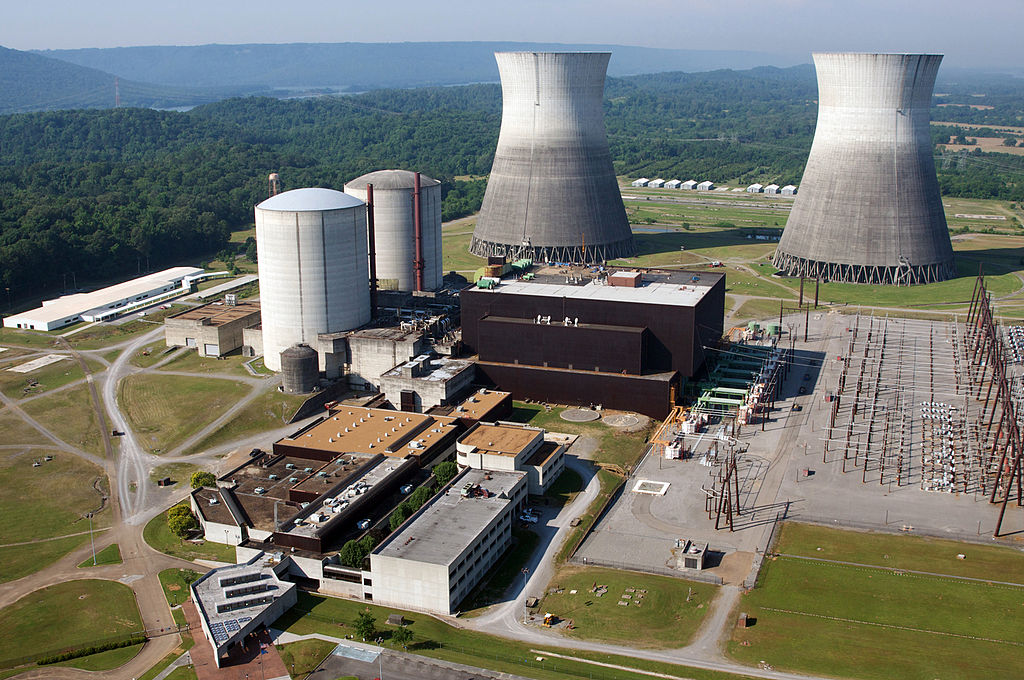
          For many years, ND has tried to buy Bellefonte and sell power generated by the plant to the city of Memphis. The Bellefonte plant is owned by the TVA and located in the city of Hollywood, Alabama. Billions of dollars have been invested in the plant which has never generated a single watt of energy.
         ND agreed to buy Bellefonte in 2016 for one hundred and eleven million dollars. ND then began an aggressive attempt to find cities that would buy the electricity generated by the plant. Memphis Light, Gas and Water (MLGW) is the city owned utility and largest local power company that belongs to the TVA. The pending deal between TVA with ND and ND negotiations with MLGW tempted MLGW to leave the TVA.
         The deal for the purchase of Bellefonte by ND was supposed to close in 2018. However, the TVA did not sell the plant to ND because they said that ND had not secured the necessary permits from the Nuclear Regulatory Commission (NRC). ND and the TVA continue to argue over the Bellefonte plant in U.S. District Court Northern District of Alabama, the jurisdiction where the plant is located.
         The Commercial Appeal newspaper in Memphis fought to unseal records of the case. They found that there is a dispute over the reasons that the deal was never completed. The TVA claims that the reason was because ND did not get the proper permits. ND argues that the decision by TVA was punitive and was based on the TVA fear that they would lose MLGW who was their biggest utility customer.
         U.S. District Judge Liles Burke ruled on March 31 that the TVA had acted within the law when they did not sell the plant to ND because ND lacked the proper permits. However, his ruling also mentioned the remaining ambiguity with respect to the true motive of the TVA. The ruling set the stage for a trial.
    Please read Part 2 next