
Part 1 of 2 Parts
I have often blogged about the problem of nuclear waste, especially spent nuclear fuel. Nuclear experts at Stanford University say that the Biden administration will need to find a way to permanently dispose of nuclear waste if his ambitious climate mitigation plans are to be met.
When Biden took over the presidency in January 2021, he inherited around eighty-three thousand metric tons of highly radioactive spent nuclear fuel distributed at above ground sites around the U.S. This amounts to three times the weight of the Statue of Liberty including the concrete foundation. Biden also inherited a stalemate on the U.S. policy of disposing of spent fuel. Four decades have passed since the U.S. started working on a permanent underground repository for spent nuclear fuel. More than thirteen billion dollars have been spent. Unfortunately, there is still no widely accepted strategy for disposing of spent nuclear fuel permanently.
Sally Benson is the Precourt Family Professor and a professor of energy resources engineering at Stanford. She said, “Nuclear power might not be needed everywhere, but in some parts of the country it might be the best and maybe even only reliable low-carbon option. But it’s hard to make the case that we should move ahead with nuclear power until we have a solution on nuclear waste.”
Retired Admiral James Ellis is the Annenberg Distinguished Visiting Fellow at the Hoover Institution and former Navy commander. He says that even if nuclear power is not the best answer to our energy needs in the long run, it is too early to abandon it. He believes that nuclear energy is an important source of clean and reliable power. He said that with respect to renewable energy sources, there are still grid-scale storage and reliability problems that must be solved. He added that “There’s an old saying in the Navy that you never let go of one rope until you get a firm grip on the other.”
Rodney Ewing is the Frank Stanton Professor in Nuclear Security and foremost nuclear waste expert at Stanford. He believes that it is indisputable that the U.S. is very advanced with respect to nuclear knowledge and technology. However, our nuclear waste program is plagued by a complex web of factors. He said, “We’ve spent more money than anyone else on this subject. We have more reactors than any other country in the world. And yet our nuclear waste strategy is at a standstill while other countries are making greater progress.”
Over the last ten years, several studies have made a comprehensive survey of the nuclear waste issue. One such study was produced in 2012 by the Obama administration’s Blue-Ribbon Commission on America’s Nuclear Future. Ewing headed a three-year project to improve understanding of why the U.S. nuclear waste program has not been successful and to recommend a way forward to turn it around. The result of this work was the 2018 report titled Reset of America’s Nuclear Waste Management Strategy and Policy.
Please read Part 2 next.
Blog
-

Nuclear Reactors 881 – Stanford University Nuclear Experts Investigate Solutions To Nuclear Waste Disposal – Part 1 of 2 Parts
-
Nuclear News Roundup Mar 25, 2021
Scientists will test the world’s first nuclear fusion reactor this summer thenextweb.com
Smaller uranium companies buy up material atop global hype for nuclear power spglobal.com
Scottish government firmly opposed to nuclear weapons and demands complete withdrawal of all nuclear weapons from Scotland helsinkitimes.fi
Sizewell C Consortium signs MoU on investment potential world-nuclear-news.org
-

Geiger Readings for Mar 25, 2021
Ambient office = 100 nanosieverts per hour
Ambient outside = 102 nanosieverts per hour
Soil exposed to rain water = 102 nanosieverts per hour
Tomato from Central Market = 100 nanosieverts per hour
Tap water = 84 nanosieverts per hour
Filter water = 69 nanosieverts per hour
-

Nuclear Reactors 880 – The U.S. Department Of Defense Is Working On the Development Of Small and Portable Nuclear Reactors
The U.S. Department of Defense (DoD) has chosen two companies to proceed with the development of small, portable nuclear reactors for military use in the field.
BWXT Advanced Technologies and X-energy were chosen by the Strategic Capability Office (SCO) to continue with Project Pele. This project seeks to develop a nuclear fission reactor in the one to five megawatt output range that can operate within three days of delivery and be safety removed in as few as seven days if this is needed.
The two companies, along with Westinghouse Government Services, were each given preliminary contracts of less than fifteen million dollars in March of 2020 to begin the design of the new reactors. The final design is due to be delivered to the SCO in 2022. At that point, the DoD will make a decision on whether to move forward with the creations of prototypes which can be tested.
Jeff Waksman is the program manager for Project Pele. He issued a statement that said, “We are thrilled with the progress our industrial partners have made on their designs. We are confident that by early 2022 we will have two engineering designs matured to a sufficient state that we will be able to determine suitability for possible construction and testing.”
The DoD has been long been interested nuclear power as a potential way to reduce energy costs and also reduce vulnerability due to dependence on local energy grids. According to a recent press release, the DoD uses approximately 30 Terawatt-hours of electricity per year and more than 10 million gallons of fuel per day.”
According to an October 2018 technical report issued by the Nuclear Energy Institute (NEI), ninety percent of military installations have “an average annual energy use that can be met by an installed capacity of nuclear power” of about forty megawatts of electricity or less.
The new Biden administration is expected to pursue alternative energy options across the DoD. Defense Secretary Lloyd Austin is pledging to lower the department’s carbon footprint. Consideration of the impact of climate change will be included in strategic decisions. The question of whether nuclear energy will provide a way forward or not may, in the end, depend on whether the taboo around nuclear power can be assuaged for local defense communities and members of Congress.
Project Pele is not the only attempt to introduce small nuclear reactors to the DoD inventory. There is a second effort that is being managed through the office of the Under Secretary of Defense for Acquisition and Sustainment (USDAS). That project was ordered in the 2019 National Defense Authorization Act. It involves a pilot program aimed at demonstrating the efficacy of a small nuclear reactor in the two to ten megawatt range. It will undergo initial testing at a Department of Energy site around 2023.
While Project Pele is focused on the potential for deployable reactors, the acquisition and sustainment effort is focused on domestic military installations. The goal of the acquisition and sustainment effort is to have an operational system by 2027. -
Nuclear News Roundup Mar 24, 2021
Japan’s nuclear watchdog to order TEPCO to fix “severe security breaches” xinhuanet.com
Low-Yield Warhead, Nuclear Sea-Based Cruise Missile Will Survive, HASC Ranking Member Says seapowermagazine.org
Aneel and its appeal neimagazine.com
Critics: Nuclear Not Needed in Snake River Replacement Plan publicnewsservice.org
-
Geiger Readings for Mar 24, 2021
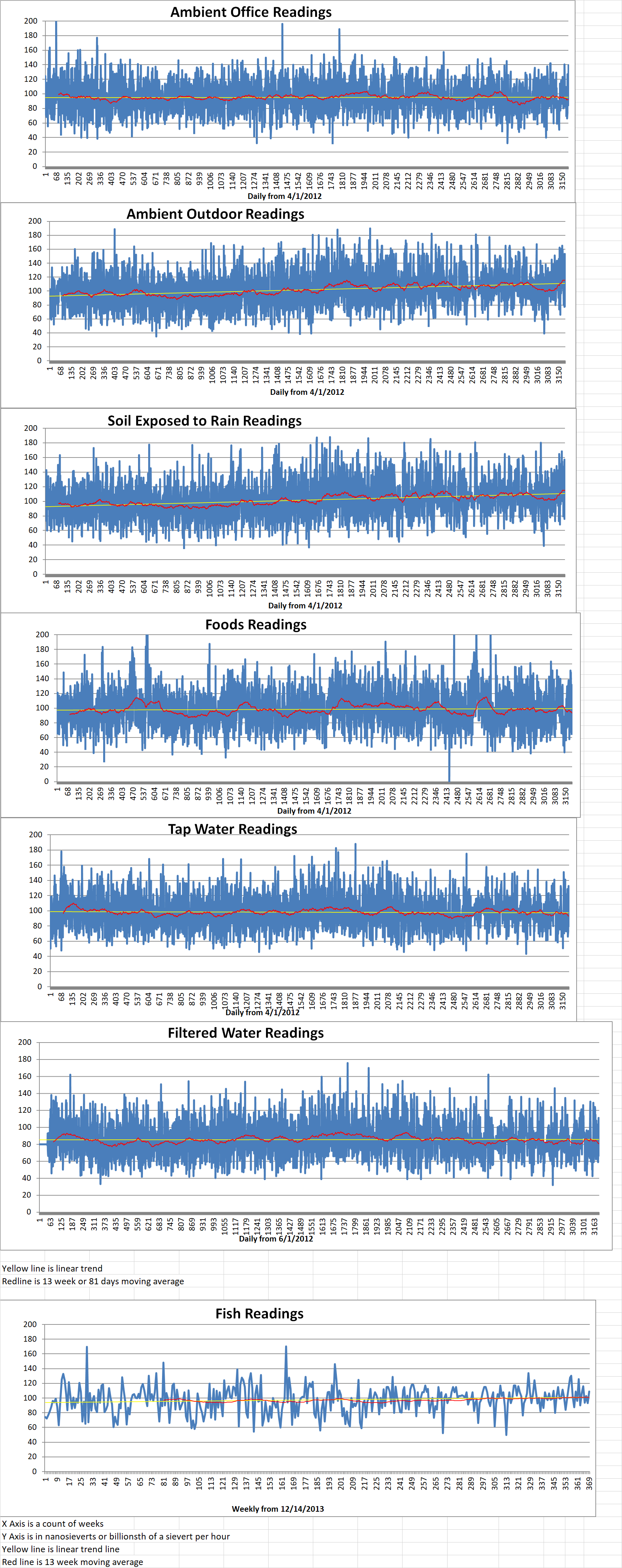
Ambient office = 139 nanosieverts per hour
Ambient outside = 79 nanosieverts per hour
Soil exposed to rain water = 82 nanosieverts per hour
English cucumber from Central Market = 1002 nanosieverts per hour
Tap water = 85 nanosieverts per hour
Filter water = 70 nanosieverts per hour
-

Nuclear Reactors 879 – Problems With Welds Discovered At The Flamaneville EPR In France
EDF is a major nuclear company in France. They notified the nuclear safety regulator of France which is the Autorité de Sûreté Nucléaire (ASN) on March 3rd of a significant event related to a design anomaly on three nozzles of the main primary system of the European Pressurized Reactor (EPR) currently under construction at Flamanville. The nozzles in question were manufactured in 2011 based on a 2006 design file. ASN has asked EDF to explain how it plans to deal with this problem.
The main primary system contains that water that is used to cool the reactor core and transfer energy in the form of heat from the nuclear reaction to the steam generator. This system consists of four piping loops installed in the reactor building. Several auxiliary systems are connected to the main primary system by the nozzles that are at issue. The largest nozzles are integral forgings made during manufacture of the main pipe. The small diameter nozzles (less than six inches) are connected to the main primary system piping by a “set-in” weld to the main pipe. Three of these nozzles are affected by the reported anomaly.
In 2006, in order to make it easier to inspect the “set-in” welds on the main piper, EDF and Framatome altered the design of these three nozzles to increase the diameter of the weld. When these design changes were made, the engineers did not identify the fact that the break size to be considered in the event that this weld ruptured now exceeded the diameter dictated by safety studies.
The design anomaly was identified by EDF and Framatome in 2013 after the pipes involved had already been manufactured. In 2014, EDF decided to deal with this anomaly by extending to these welds the break preclusion approach that was applied to the primary system pipes. This approach was implemented by EDF on certain pipes of the Flamanville EPR. It consisted of reinforcing the design, manufacture and in-service monitoring requirements. This was done in order to ensure that of any breaks in this equipment would be highly improbable. They felt that this removed the need to study all the consequences of a break in the installation’s safety case.
Following anomalies detected on the welds of the main steam letdown pipes in early 2017, the ASN asked EDF to examine the conformity of the main primary systems with the “break preclusion” baseline requirements. The subsequent ASN examination of the explanations supplied by EDF regarding the nozzles, at the end of 2020, revealed that the welds of these three nozzles did not comply with all the break preclusion requirements.
Before making a position statement, the ASN has asked EDF to reveal its strategy to deal with this anomaly. The ASN also requested that EDF identify the root cause and the reason for its belated detection. The regulator asked that EDF take corrective measures, especially to ensure that there are no other anomalies on the main primary system.
Framatome is supporting EDF. They said that they have launched a review aimed at determining the exact cause of the event. In order to propose an adequate repair plan, they also began reassessing the characteristics of the nozzles compared with the reference study.
In March of 2018, a quality deviation of the main secondary system was detected. This system conducts steam from the steam generator to the steam turbines. More deviations in secondary system welds were subsequently detected.
In June of 2019, the ASN requested that EDF repair eight containment penetration welds in the Flamanville EPR in which quality deviations had been discovered. There problematic welds are located in difficult-to-access areas of the reactor. In October of 2019, EDF adjusted the schedule and estimated cost of constructing the Flamanville EPR. The ASN said that, assuming that it approved its preferred option for repairing the welds using robots, the loading of fuel into the EPR would be further delayed until the end of 2022. The estimated cost of building Flamanville 3 would increase to about fourteen billion dollars up from an earlier estimate of about thirteen billion dollars. Construction began in December of 2007 on the one thousand six-hundred-and-fifty megawatt unit at the Flamanville site in Normandy. The EPR reactor was expected to begin commercial operation in 2013. -
Nuclear News Roundup Mar 23, 2021
Lawmakers support ‘low-carbon’ hydrogen, stay mute on nuclear euractiv.com
Testing begins at UAE’s nuclear power plant – operator reuters.com
Rosatom starts building reactor for Akkuyu unit 3 world-nuclear-news.org
Lightbridge and Framatome end Enfission joint venture world-nuclear-news.org
-
Geiger Readings for Mar 23, 2021
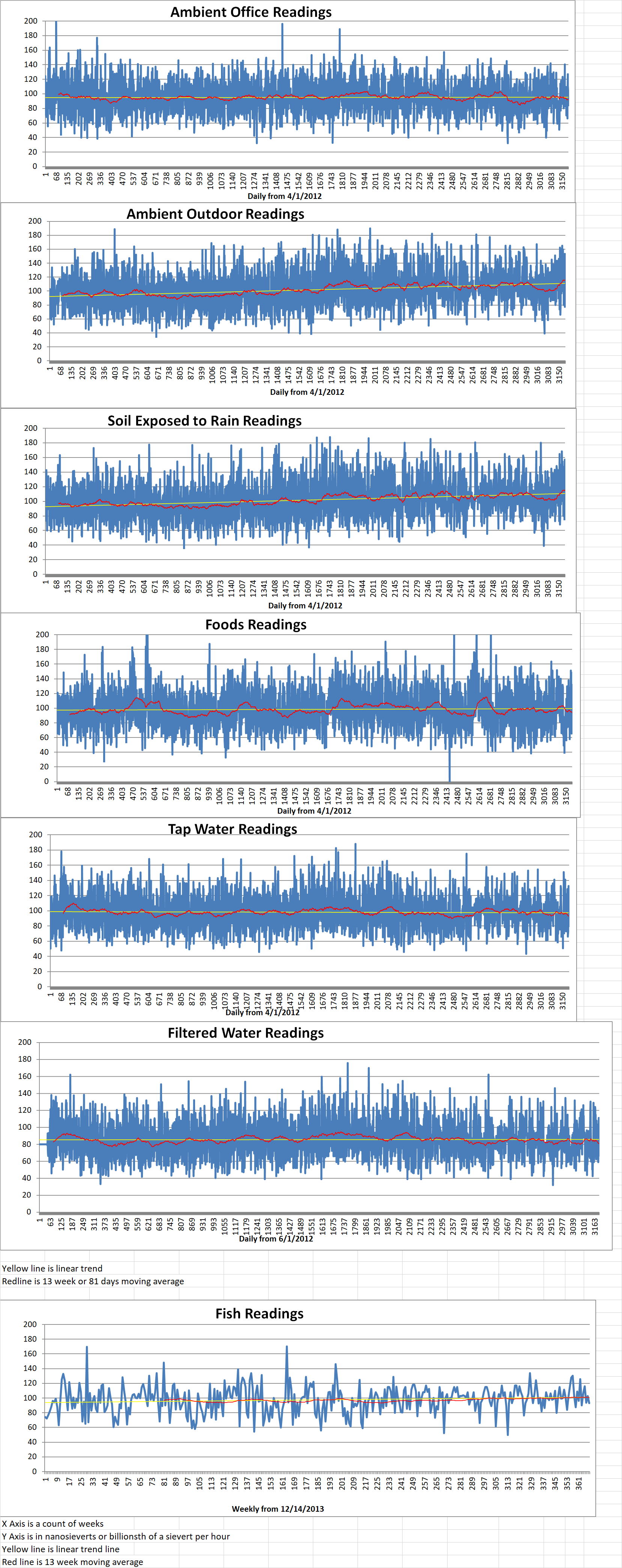
Ambient office = 84 nanosieverts per hour
Ambient outside = 95 nanosieverts per hour
Soil exposed to rain water = 96 nanosieverts per hour
Blueberry from Central Market = 102 nanosieverts per hour
Tap water = 103 nanosieverts per hour
Filter water = 80 nanosieverts per hour
-

Nuclear Reactors 878 – Lightbridge To Concentrate On Fuel For Small Modular Reactors
Lightbridge Corporation has decided to prioritize the development of fuel for future small modular reactors rather than producing fuel for current large power reactors. The company is also considering a zirconium-plutonium version of its fuel. Seth Grae is the President and CEO of Lightbridge. He made these comments in a public statement before a webcast.
Lightbridge has taken steps to reduce many of the risks associated with its business, said Grae. These include the recently announced settlement agreement with Framatome terminating their Enfission joint venture. Lightbridge is now free to pursue “various promising opportunities.”
In a webcast, Grae commented that the company had initially focused on fuel for large-pressurized water reactors (PWEs). It now expects that Chinese and Russian companies will account for most of the new worldwide growth in large reactors between the present and 2050.
Grae said, “We believe that what we are seeing is an overall shift from government and private sector, from large pressurized water reactors to SMRs and advanced technologies. We understand that the Biden Administration will prioritize advanced nuclear technologies – including advanced fuels and SMRs – as part of its nuclear energy policy.”
“Finally, we have taken the critical step of prioritizing our fuel development program towards powering small modular reactors of the future. SMRs are expected to have much lower capital costs per module than larger reactor designs, making their deployment easier to finance and support by private and government sectors. In addition, we expect SMR plants with Lightbridge Fuel to have the ability to load follow renewables, helping to expand markets for renewables and SMRs together as countries seek to decarbonize energy generation. We believe that Lightbridge Fuel’s most significant economic benefit to SMRs will be to provide a 30% power uprate that will allow SMRs greater flexibility in power levels.”
“We want to position Lightbridge as an essential company for the world to meet its climate goals. While existing large reactors can present an additional market opportunity for Lightbridge Fuel, we do not expect significant future growth in the number of these large reactors, so they will not move the needle on climate change. Lightbridge is going where the industry is heading, along with the significant government funding opportunities we expect to go toward SMRs in the coming years, and we remain focused on our pursuit of the full-scale commercialization of Lightbridge Fuel as quickly as possible.”
The Enfission joint venture was launched in January of 2018 to develop, license and sell nuclear fuel assemblies based on Lightbridge’s innovative metallic nuclear fuel technology, which focuses on metallic fuel rods that offer economic and safety benefits over traditional nuclear reactor fuel. The joint venture was to produce Lightbridge fuel assemblies initially for the operators of U.S. commercial nuclear power reactors. This would be followed by production of Lightbridge fuel assemblies for other types of reactors and nuclear markets around the world. Grae said that Lightbridge was not going to abandon existing light water reactors in its strategy. He added that the R&D work the company is doing remains applicable to existing reactors as well as shorter-length fuel for SMRs.
Lightbridge believes that the Biden administration will attempt to use a recent agreement between the presidents of the U.S. and Russia to extend the New Start arms limitation treaty to begin negotiations on further arms reductions, and to eliminate plutonium from dismantled weapons.
Grae said, “Recently, the presidents of the U.S. and Russia agreed to extend the New START treaty for an additional five years. The New START treaty will prevent an increase in the number of certain types of nuclear weapons in the US and Russian arsenals. We understand that the Biden Administration may seek to use this opportunity to enter into negotiations with Russia, and perhaps China, to reduce the number of weapons and eliminate plutonium from the weapons that would be dismantled, making it harder to replace the weapons in the future. While there would still be careful analysis ahead of us, we believe that a zirconium-plutonium version of Lightbridge Fuel could be an ideal solution in disposing of the plutonium from weapons, using it to generate energy.”
He added that it could also be used for disposing or reactor-grade plutonium arising from reprocessing of civil nuclear fuel. He went on to say that “Our patent portfolio includes zirconium-plutonium fuel. We will explore these opportunities over the coming months for potential government interest and funding support.”