
Part 2 of 2 Parts (Please read Part 1 first)
The report discovered that between the current companies in the NTPL market, there is definitely is more than enough capacity volume to cover the obligatory financial security amounts demanded or proposed by the legal conventions. The full scope of the revised NTPL cover demanded remains unaccomplished. The report said that the risk transfer market is prevented from providing both this full scope and materially more capacity today because of the challenges of modelling and accounting for the long tail element of the revised Conventions’ NTPL cover.
There is considerable new capacity that could be available for the insurance-linked securities market for the transfer of nuclear third-party liability risks. However, the new capacity would only be available under the right structures and terms.
The report points out that there is more capacity for NTPL from insurers available. However, this only exists with triggers that identify the loss event activate cover. There is also an obligation that requires operators to purchase what additional capacity is available. The study said that the operators of nuclear power plants are very concerned that any increases security obligations will cost them a materially higher premium than they already pay.
The ENCO study recommended optimal concepts that were based on the research and analysis conducted. Those recommended concepts yielding short-term results with minimal complications include the following. All NTPL insurance policies should have single, lifetime period limits. The NTPL mutuals’ must participate with new mechanisms for reinsurance.
For the medium terms, the report suggests the following. There should be a build up of funds to cover the Paris Convention 1st tier amount or the Vienna Convention full amount for all EU member states. Creating a new catastrophe-only, EU-wide, NTPL insurance cover excess of the current legal conventions. An EU-wide protection gap entity should be established.
The study concludes with the following statement. “Implementation of these concepts, either individually or combined, will permit the deployment of materially greater NTPL capacity than is currently available; achieving this greater internalization of the costs of higher financial security amounts will enhance the credibility of the nuclear industry and offer greater private market compensation for victims of a severe nuclear accident.”
The report also notes, “However, to help the nuclear sector develop a stronger social license to operate and allow it to continue its vital contribution towards reducing global emissions, further internalization of the cost of higher financial security must be achieved. We believe this study guides the EC towards the most appropriate mechanisms that can help achieve these outcomes at a reasonable cost to the operators and ultimately electricity consumers.”
There have been a lot of concern expressed about the current nuclear disaster insurance conventions. Critics point out that while current insurance sets time limits for liability, radiation from nuclear fall out can last for thousands of years. What ever time limits are set on liability, there will be residual radiation endangering public health and the environment for many years beyond any time limit that is set.
Blog
-

Nuclear Reactors 868 – There Is A Need For Improving The Liability Insurance Requirements For Nuclear Power Plant – Part 2 of 2 Parts
-
Nuclear News Roundup Feb 09, 2021
South China Sea: challenge to Beijing as French nuclear submarine patrols contested waterway scmp.com
The Dangers of Nuclear Virtue Signaling defenseone.com
Lawmakers call for ‘nuclear renaissance’ to support EU’s energy transition euractiv.com
Norway intelligence warns about new nuclear weapons technology developed by Russia thebarentsobserver.com
-
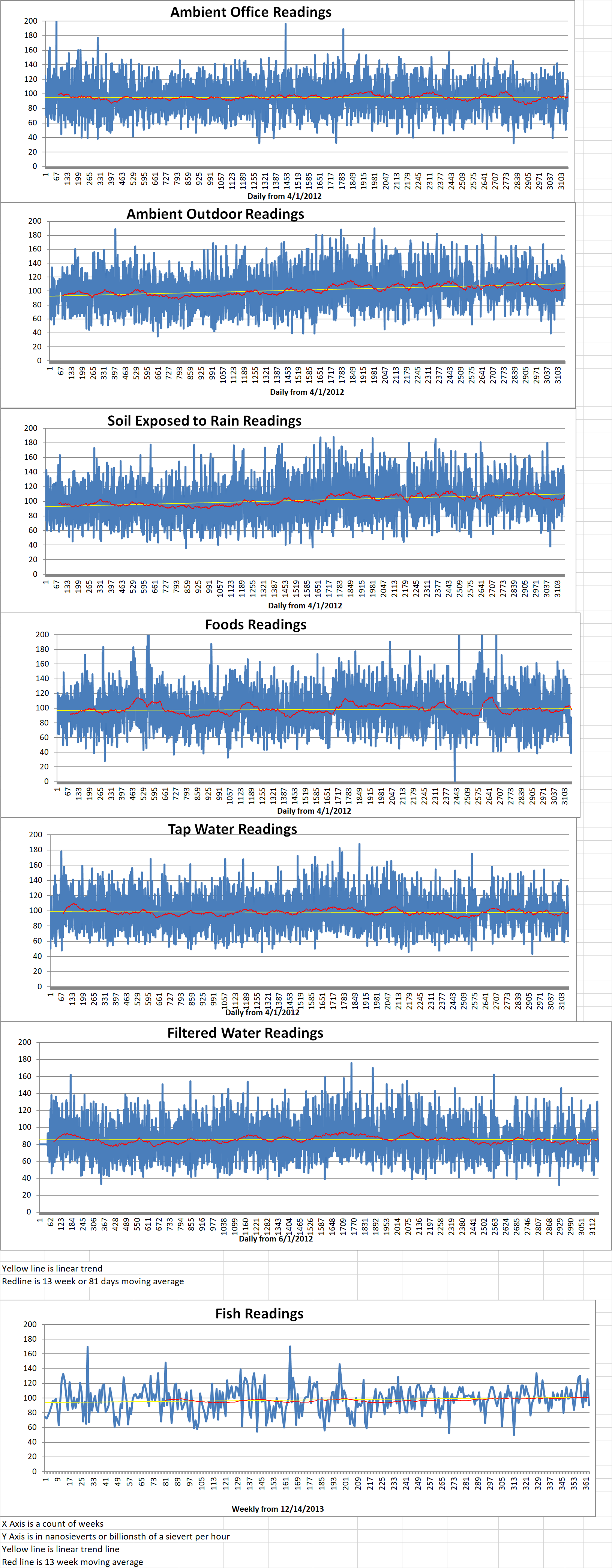
Geiger Readings for Feb 09, 2021
Ambient office = 111 nanosieverts per hour
Ambient outside = 90 nanosieverts per hour
Soil exposed to rain water = 94 nanosieverts per hour
Tomato from Central Market = 66 nanosieverts per hour
Tap water = 77 nanosieverts per hour
Filter water = 63 nanosieverts per hour
-

Nuclear Reactors 867 – There Is A Need For Improving The Liability Insurance Requirements For Nuclear Power Plant – Part 1 of 2 Parts
Part 1 of 2 Parts
A major issue with respect to the use of nuclear power has to do with liability insurance for nuclear accidents. There are currently three international conventions that provide the foundations for nuclear liability arrangements. These include the Paris/Brussels Conventions, the Vienna Convention and the Convention on Supplementary Compensation. Liability for nuclear disasters is limited in time and amount by these conventions and by national legislation that is largely based on the principles established by these conventions. In addition to the financial security limits imposed on operators of nuclear power plants, individual nations can accept responsibility as a nuclear insurer of last resort.
Operators of nuclear power plants are held to be liable for any and all damage caused by nuclear disasters, regardless of who is at fault. They are usually required to take out insurance for this nuclear third-party liability (NTPL). However, in the event of a major nuclear disaster, there would be limited compensation due to the lack of adequate nuclear insurance capacity to cover the full scope of the nuclear plant operators financial security requirements. In addition to these provisions for nuclear insurance, the expanding of the coverage demanded by the revisted nuclear liability conventions presents traditional insurers with significant problems. The new cover requirements seem to push the boundaries of nuclear insurability even more.
With respect to the amount of money available from insurance to deal with the aftermath of a nuclear disaster, current amounts will be exhausted long before any complete cleanup could be accomplished. Critics say that the U.S. government is protecting the nuclear industry with low time limits and low insurance amounts when they should be more aggressive in forcing responsible members of the world nuclear industry to accept responsibility for dealing with nuclear disasters.
India has stringent industrial liability laws that allow even the manufacturers of equipment involved with any industrial disaster. There laws were passed after the horrific Bhopal chemical plant disaster. In 1984, a Union Carbide India Limited pesticide plant sprang a leak. There are estimates that almost four thousand people died and over half a million people were injured.
U.S. nuclear companies have been eager to bid on the construction of nuclear reactors for India. With the power shortages and huge population, there is significant demand for new nuclear reactors. However, the stringent liability laws in India have kept U.S. companies out of building nuclear power plants in India because of the fear that settlements for any nuclear disaster in India could bankrupt them. So the improvement of international conventions for nuclear risk insurance and not just a matter of security but also future expansion of the U.S. nuclear industry.
A new report was just published with the title Study on the insurance, private and financial markets in the field of nuclear third party liability based on a study which examines the state of the nuclear liability insurance market today. The study was carried out by the Vienna-based safety and CBRN-E security consultancy firm ENCO on behalf of the EC’s Directorate-General for Energy analyses the insurers difficulty with the revisions of the nuclear liability conventions. The report proposes new solutions to encourage the deployment of more nuclear liability capacity (including for the full scope of the liability.
Please read Part 2 next -
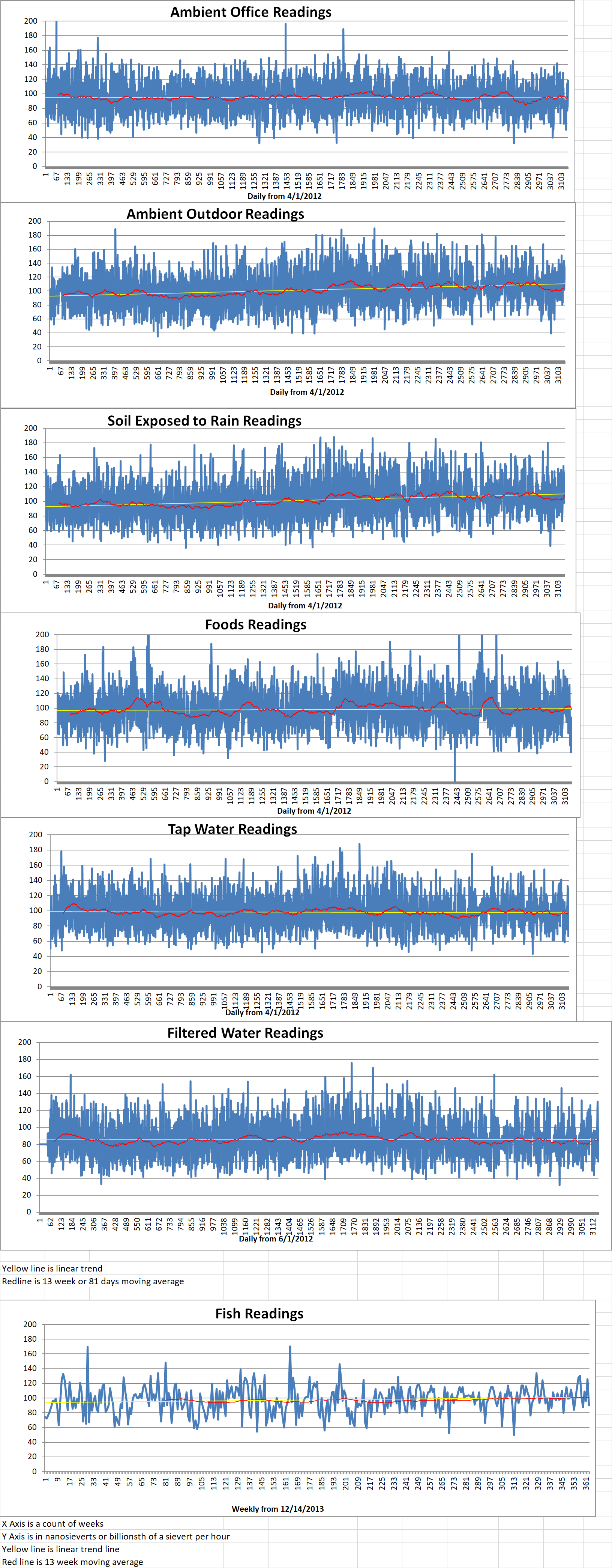
Geiger Readings for Feb 08, 2021
Ambient office = 109 nanosieverts per hour
Ambient outside = 116 nanosieverts per hour
Soil exposed to rain water = 116 nanosieverts per hour
Red bell pepper from Central Market = 74 nanosieverts per hour
Tap water = 97 nanosieverts per hour
Filter water = 85 nanosieverts per hour
-
Nuclear News Roundup Feb 08, 2021
U.S. approves five-year extension of nuclear weapon treaty with Russia politico.com
The U.S. is closer to a major war than at any point since the height of the cold war. Futurism.com
Japan needs nuclear power, says energy minister world-nuclear-news.org
Viewpoint: How to make the Emerald Isle green world-nuclear-news.org
-
Nuclear News Roundup Feb 07, 2021
Trident nuclear submarine replacement delayed by another year theguardian.com
Brazil’s Eletrobras says nuclear unit hit with cyberattack finance.yahoo.com
Poland approves new energy policy neimagazine.com
Unions call for European taxonomy to include nuclear world-nuclear-news.org
-
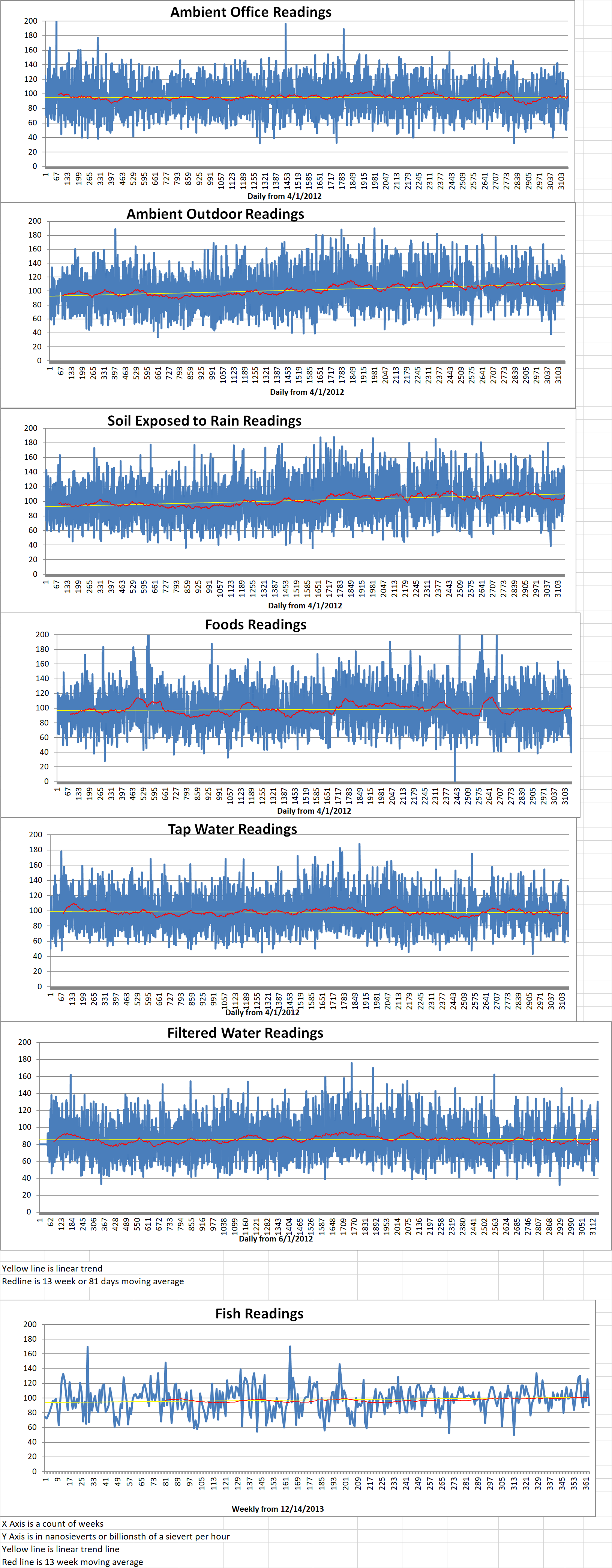
Geiger Readings for Feb 07, 2021
Ambient office = 103 nanosieverts per hour
Ambient outside = 123 nanosieverts per hour
Soil exposed to rain water = 120 nanosieverts per hour
Avocado from Central Market = 59 nanosieverts per hour
Tap water = 87 nanosieverts per hour
Filter water = 77 nanosieverts per hour
-
Nuclear News Roundup Feb 06, 2021
Israel on Iranian nuclear threat: ‘A violent confrontation is the last resort’ dw.com
Israel sees 6-month Iran nuclear breakout, longer than Blinken projection reuters.com
Duke Energy wants to keep Brunswick Nuclear Plant running portcitydaily.com
Villages in Japan Are Competing to Become a Nuclear Waste Site Bloomberg.com
-
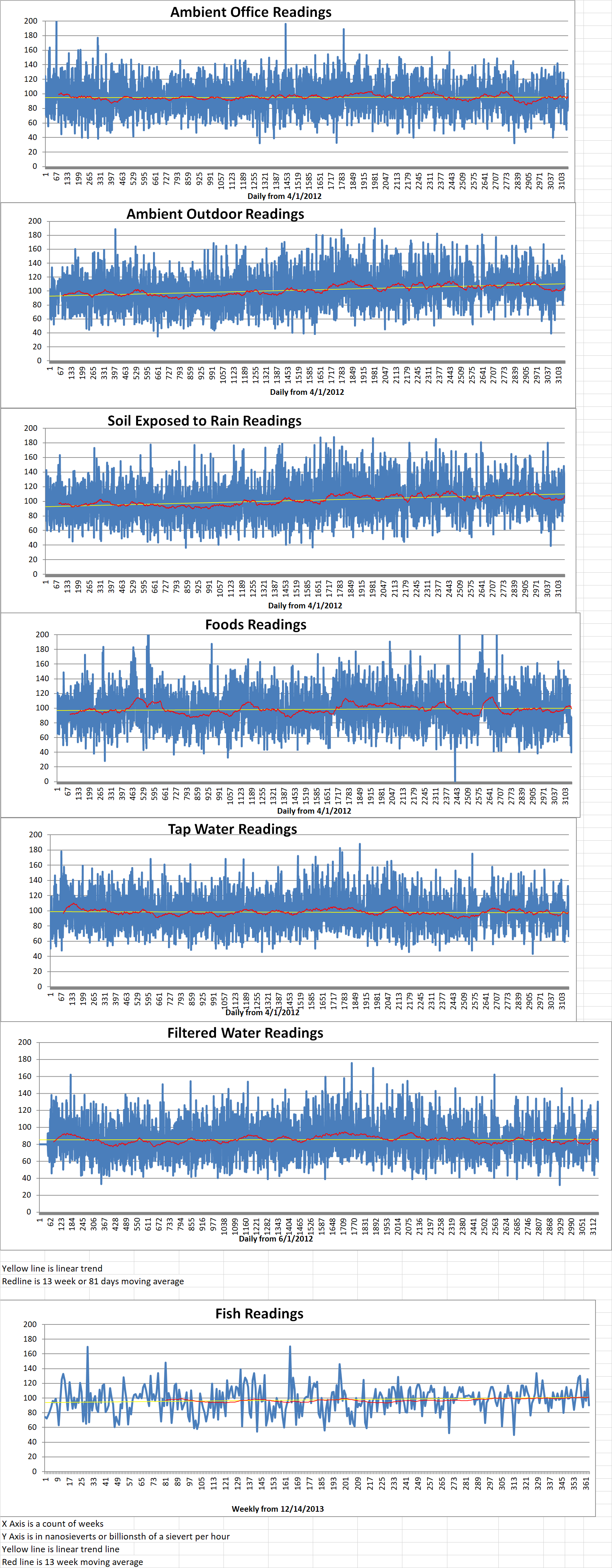
Geiger Readings for Feb 06, 2021
Ambient office = 119 nanosieverts per hour
Ambient outside = 135 nanosieverts per hour
Soil exposed to rain water = 134 nanosieverts per hour
Russet potato from Central Market = 78 nanosieverts per hour
Tap water = 95 nanosieverts per hour
Filter water = 85 nanosieverts per hour
Dover sole – Caught in USA = 90 nanosieverts per hour