
Part 3 of 3 Parts (Please read Parts 1 and 2 first)
As an alternative, the U.K. plutonium might be used in reactors that are better suited to deal with the plutonium stockpile according to their vendors. One choice would be a CANDU-EC6 heavy water reactor. Another choice would be the small, fast sodium cooled reactor concept called the PRISM. The use of recycled MOX in CANDU reactors appears to be feasible. On the other hand, the use of recycled MOX in a light water reactor would bring no addition benefits and would be more difficult to implement. In March of 2019, the NDA officially removed the PRISM reactor from the list of viable options for MOX fuel. As early as 2011, the NDA had stated in internal memos that the “technology maturity for the PRISM fuel, reactor, and recycling plant are considered to be low.” However, the NDA has said that it would continue to monitor progress in fast reactor programs.
Setting aside any questions about the viability of MOX fuel production, costs, and everything else related to actual of operation of the PRISM reactor, an analysis was conducted of the claim by Hitachi that PRISM could “could conceivably make the entire UK plutonium stockpile proliferation-resistant in 20 years” through irradiation. The analysis indicated that the Hitachi claims were highly optimistic.
Using plutonium as a reactor fuel has two major results. Some uranium is burned and the remaining is left mixed with highly radioactive spent fuel. That radioactivity creates a barrier for any malicious actors who might steal and separate the plutonium from that fuel. This results in proliferation resistance. However, because of radioactive decay in the spent nuclear fuel, the height of the proliferation barriers steadily decreases. The analysis mentioned here was only applied specifically to the PRISM reactor, the analysts assume that there would be similar effect for other irradiation options. During the time that would be required to reprocess the entire huge U.K. stockpile of plutonium, the material that had already been treated would be slowly decaying and losing much of its proliferation resistance.
Why should the public sector continue to pay money for “new” reactor concepts when it is not clear whether or not any of these new reactors could solve the problem under consideration. Some of these “new” reactor concepts have been under development for decades. The U.K. needs a practical and economical solution to the disposal of plutonium as soon as possible. The British government, the NDA and reactor operators in general should finally accept that plutonium is a burden and not a resource. A closer look should be taken at immobilization. These do not have the attraction of new, high tech solutions such as special reactors to burn the plutonium. The fact that urgent action needs to be taken suggest that established and working concept should be seen as the way forward to a solution. Other countries including the U.S., Japan and South Korea have also flirted with plutonium recycling for nuclear fuel without any significant progress in decades.
Blog
-

Radioactive Waste 766 – United Kingdom Debating Ultimate Fate Of 139 Metric Tons Of Reprocessed Uranium – Part 3 of 3 Parts
-
Nuclear News Roundup Apr 23, 2020
Interim waste storage facility completed at Unterweser world-nuclear-news.org
Kernel formation marks progress towards TRISO restart world-nuclear-news.org
Argentinean projects to resume after hiatus world-nuclear-news.org
Indian Point closure during pandemic is wrong, says climate group world-nuclear-news.org
-
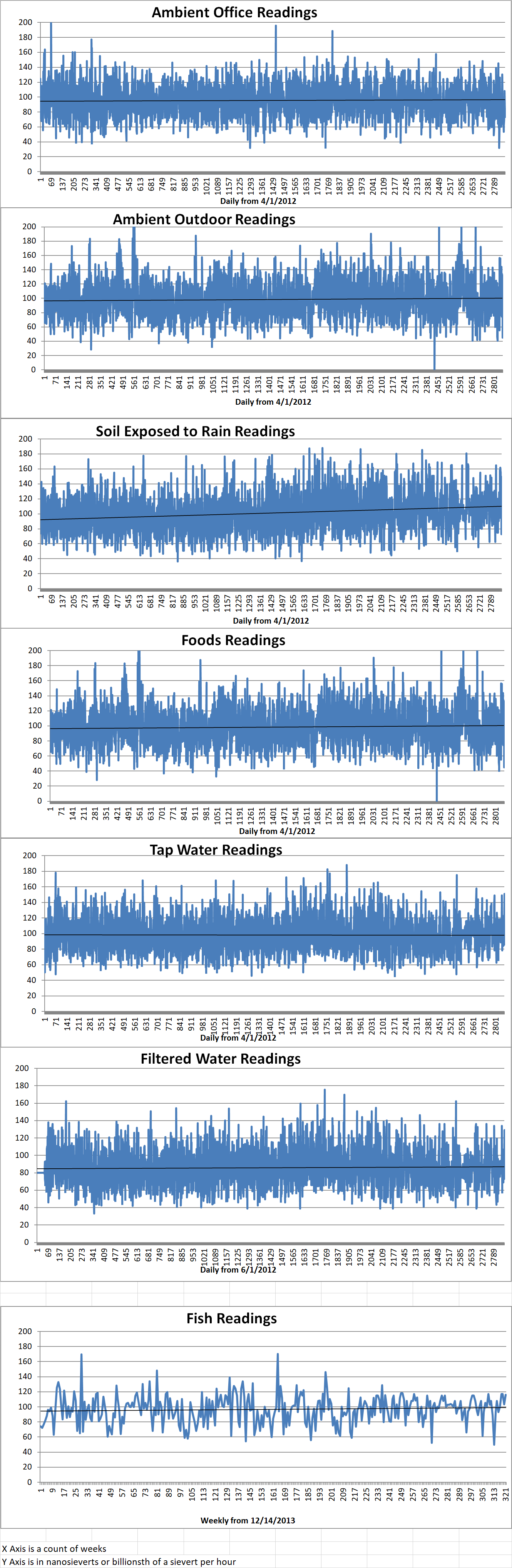
Geiger Readings for Apr 23, 2020
Ambient office = 84 nanosieverts per hour
Ambient outside = 73 nanosieverts per hour
Soil exposed to rain water = 73 nanosieverts per hour
Red bell pepper from Central Market = 45 nanosieverts per hour
Tap water = 151 nanosieverts per hour
Filtered water = 129 nanosieverts per hour
-

Radioactive Waste 765 – United Kingdom Debating Ultimate Fate Of 139 Metric Tons Of Reprocessed Uranium – Part 2 of 3 Parts
Part 2 of 3 Parts (Please read Part 1 first)
In 1976, the U.K. began operating a new type of reactor called the Advanced Gas-cooled Reactor (AGR). They still have fifteen AGRs in operation. The U.K. constructed the Thermal Oxide Reprocessing Plant in 1995 to reprocess spent nuclear fuel from these reactors as well as spent nuclear fuel from reactors overseas. It has had a very difficult history. It never operated at full capacity, it suffered a serious leakage of radioactive materials in 2005, and the cost far exceeded the initial estimates. It was finally shut down before it reached the end of its planned and licenses service life. By the time it was permanently shuttered, it had only reprocessed twenty-three metric tons of plutonium
Was the fleet of fast breeder reactors that were designed to burn reprocessed fuel ever constructed? Unfortunately, there are only two such fast reactors in current commercial operation in the world today. These two reactors are the BN-600 and the BN-800, both designed by Russia. In spite of rosy projections of a nuclear reactor boom, the 1960s and 1950s did not see a steep rise in reactor construction so uranium demand was lower than anticipated. In addition, during that time new deposits of uranium were discovered which relieved concerns about a uranium shortage.
It was found that the use of multi-cycle spent nuclear fuel turned out to be far more difficult that was expected. There are also some difficulties and risks that are only associated with fast reactors. There is a serious latent proliferation risk in the use of the technology to separate plutonium and uranium from spent nuclear fuel.
Today, the U.K.’s civilian stockpile contains one hundred and thirty-nine metric tons of plutonium. This includes twenty-three metric tons of which are owned by other countries. The U.K. Nuclear Decommissioning Authority (NDA) has considered two options for the disposal of their plutonium. The first possibility is to burn the recovered plutonium in reactors. It is claimed that such reuse would be proliferation resistant because the spent nuclear fuel being reprocessed as well as the recovered plutonium would be highly radioactive and very dangerous to handle.
A second possible option for the disposal of the plutonium stockpile would be what is called immobilization. This process involves mixing the plutonium with other materials that would reduce the risk of leaching and also complicate any attempt at extraction. It is thought that the radioactive waste in the mix would be a toxic obstacle to any attempt at proliferation. Both of these two options would ultimately require the burial of the plutonium in a deep geological repository.
The NDA would prefer to reuse the recovered plutonium in a mixed-oxide (MOX) fuel also including uranium as a fuel in light water reactors. The use of such an option depends on the availability of reactor owners to construct such reactors and their willingness to burn the MOX fuel. Not all operators of commercial power reactors are excited by this possibility. EDF is a French owned utility that is constructing the first new commercial power reactors in Britain at Hinkley Point C. They considered and then rejected the use of MOX at Hinkley Point C in 2013.
Please read Part 3 next -
Nuclear News Roundup Apr 22, 2020
Iran’s Launch of Military Satellite a Cover for Nuclear Weapons Advancement, According to U.S. Officials freebeacon.com
COVID-19 and British nuclear deterrence wartontherocks.com
Russia prepares for next icebreaker series world-nuclear-news.org
Missile Investments Are Needed to Meet China’s Nuclear Challenge thediplomat.com
-
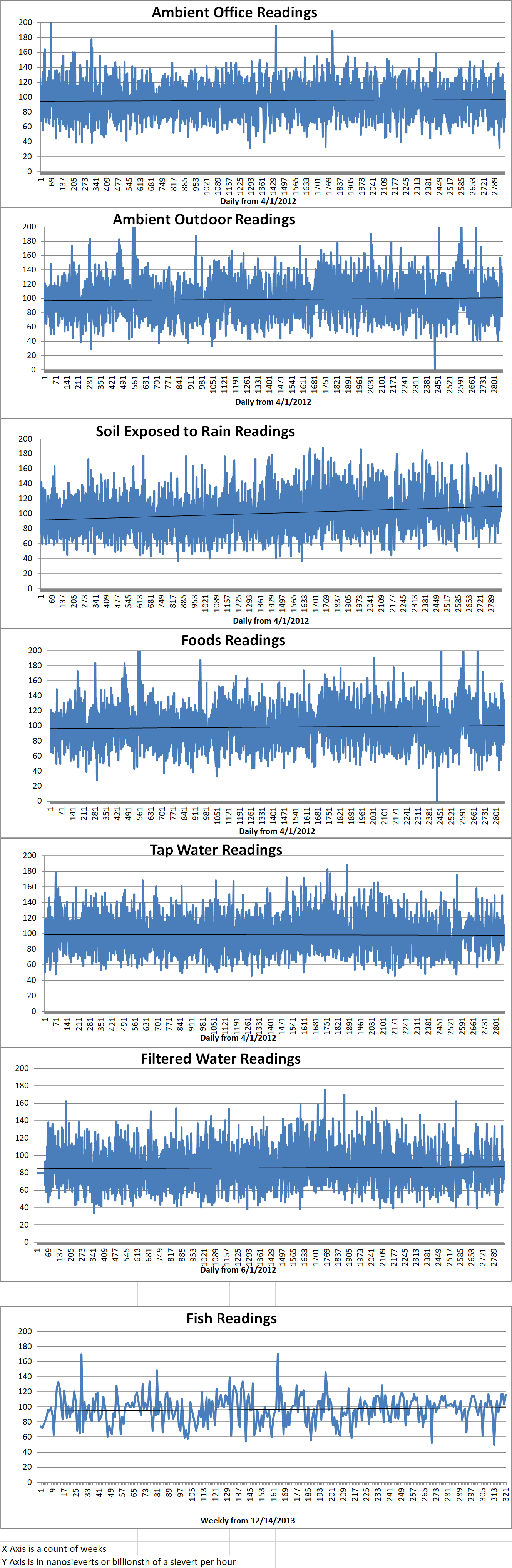
Geiger Readings for Apr 22, 2020
Ambient office = 83 nanosieverts per hour
Ambient outside = 148 nanosieverts per hour
Soil exposed to rain water = 149 nanosieverts per hour
Tomato from Central Market = 79 nanosieverts per hour
Tap water = 86 nanosieverts per hour
Filtered water = 73 nanosieverts per hour
-
Radioactive Waste 764 – United Kingdom Debating Ultimate Fate Of 139 Metric Tons Of Reprocessed Uranium – Part 1 of 3 Parts
Part 1 of 3 Parts
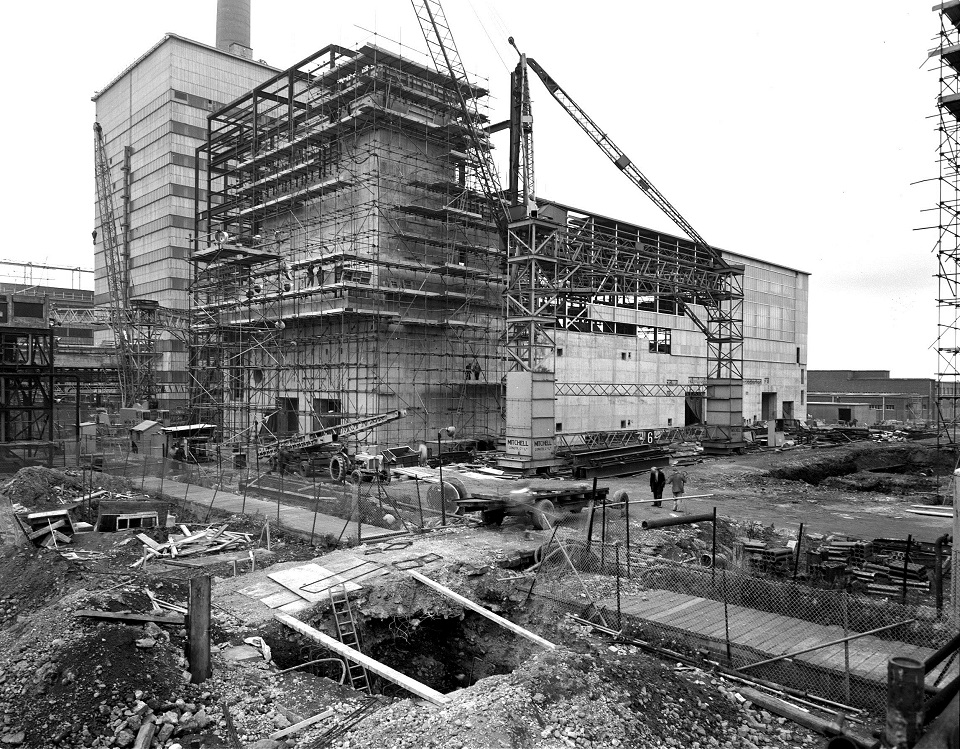
The U.K.’s last uranium processing plant, B205, located in Sellafield in norther England will be shut down permanently by the end of 2020. This closing will mark the end to sixty-eight years of plutonium separation in the U.K. The U.K. only used the recovered plutonium for the construction of nuclear weapons. Currently, the U.K. has a stockpile of nearly one hundred thirty-nine metric tons of weapons grade plutonium.
The plutonium stored at Sellafield is highly toxic and represents a permanent threat of nuclear proliferation. Tens of thousands of nuclear weapons could be constructed from this plutonium stockpile. The U.K. parliament has estimated that the British government will have to spend about ninety million dollars a year for the next one hundred years to safely store the plutonium. There have been decades of public and private consultation, but no plan has emerged for the ultimate disposition of the plutonium.
During this time, the Nuclear Decommissioning Authority is working on collecting all the plutonium into one place. They are also developing the capability to retreat the packages of plutonium to allow for its long-term storage after the government has made a final decision on exactly how to permanently dispose of it.
The U.K. views the plutonium as a resource and is pursuing options that could involve burning the plutonium in reactors as a fuel. However, multiple analyses have revealed that immature concepts and technology make this disposal methods very risky. Critics of the idea of using the plutonium for fuel say that a much better option would be to treat the plutonium as waste and plan for permanent immobilization and burial.
In the beginning, U.K. separation of plutonium was seen as being justified by military needs. After a few years, there was a wave of enthusiasm for nuclear power and many power reactors were constructed. It was anticipated that the supply of uranium would not be sufficient to fill future needs. Therefore, the idea of a “closed” fuel cycle was developed. Instead of a single use and then disposal of nuclear fuel, the spent fuel would be reprocessed and reused. Most of this reuse would be in fast reactors. The theory was that this would allow for the greater utilization of the uranium that was available. However, this idea of a closed fuel cycle has never been demonstrated on an industrial scale. Only a few countries that use nuclear power are still considering such a closed fuel cycle.
Between 1956 and 2015, the U.K. operated twenty-six Magnox reactors for commercial power generation. Magnox nuclear reactors use natural uranium moderated by graphite as a fuel. The reactors are cooled with carbon dioxide gas and are designed for the efficient production of plutonium. B204 was a pilot reprocessing plant which started operation in 1952. It was replaced in 1964 by the B205 reprocessing plant. These two reprocessing plants together have separated over eighty-five metric tons of plutonium from spent nuclear fuel.
Please read Part 2 next -
Nuclear News Roundup Apr 21, 2020
Ukraine- Parliament plans to renew state oversight of nuclear energy use Menafn.com
French sparks spike on lower nuclear availability argusmedia.com
Mass. Delegation Seeks Details on Seabrook Nuclear Plant’s Pandemic Operations nhpr.org
Entergy confirms some employees of Grand Gulf Nuclear Plant tested positive for coronavirus wlbt.com
Could nuclear reactors called SMRs be a possible energy source for Queensland? Abc.net.au
-
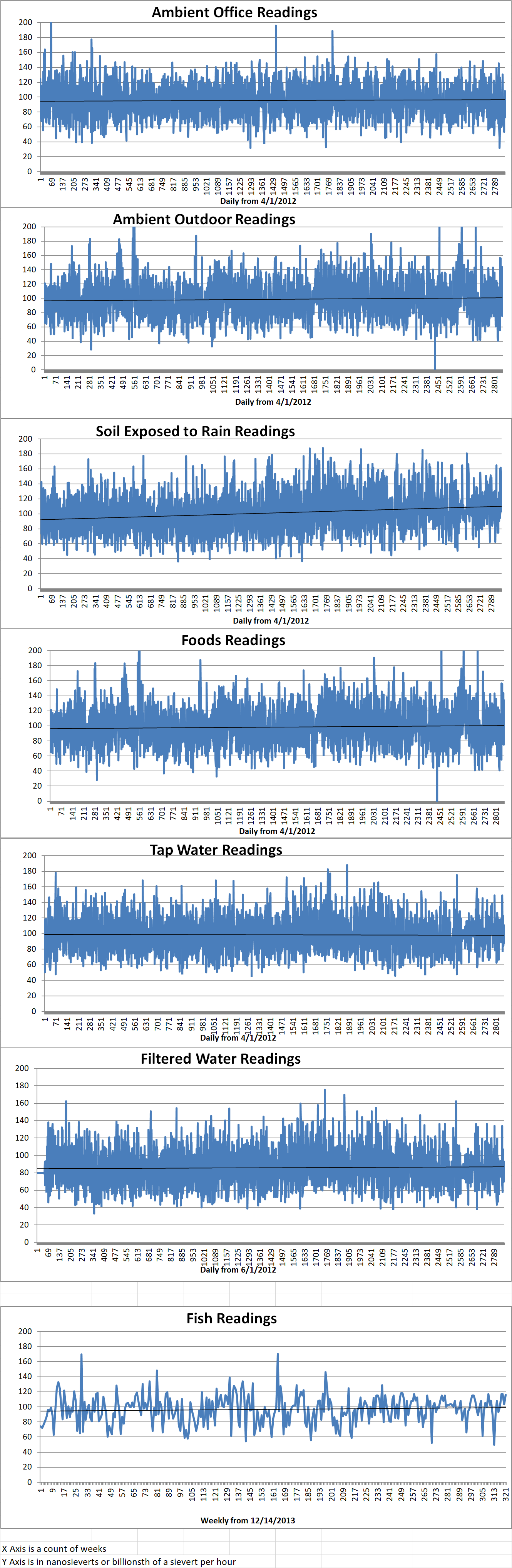
Geiger Readings for Apr 21, 2020
Ambient office = 73 nanosieverts per hour
Ambient outside = 125 nanosieverts per hour
Soil exposed to rain water = 126 nanosieverts per hour
Blueberry from Central Market = 105 nanosieverts per hour
Tap water = 88 nanosieverts per hour
Filtered water = 80 nanosieverts per hour
-

Moscow Institute of Physics and Technology Working On Modeling The Effects Of Nanobubbles On Nuclear Fuel Aging
During the operation of a nuclear fission reactor in a nuclear power plant, fission fragments crash trough the crystal lattice of the nuclear fuel creating defects such as vacancies, interstitial atoms and their clusters. The vacancies combine together to form bubbles that fill up with fission produced gas during the burning of the nuclear fuel. These “nanobubbles” have a significant effect of the properties of the nuclear fuel and the release of gaseous fission products from the fuel.
The processes connected to the aging of nuclear fuel are difficult to research experimentally. Such aging processes are very slow and gathering experimental during the operation of the reactor is very difficult if not impossible. In order to deal with this problem, integrated models are currently being developed in order to calculate the evolution of nuclear fuel material properties during the burning of nuclear fuel. The diffusion coefficients of the nanobubbles is one of the important parameters for such models. The Moscow Institute of Physics and Technology (MIPT) and the Joint Institute for High Temperatures (JIHT) of the Russian Academy of Sciences are working on such integrated models.
Researches from the Laboratory of Supercomputer Methods in Condensed Matter Physics at MIPT investigated atomistic models of nuclear fuel involving hundreds of thousands of atoms. Using their supercomputer, the researchers calculated the trajectories over hundreds of millions or even billions of integrations steps. The gamma uranium interatomic interaction model employed was obtained by the researchers as part of their previous work. That work was based on resolving the quantum mechanical problems for a multielectron system.
Alexander Antropov is an MIPT doctoral student and a co-author of the paper reporting the findings of the researchers. He said, “For the nanobubble to move, it is necessary for the lattice atoms to cross over to the other side of the bubble. This is similar to an air bubble moving in water. However, in solid materials, this process is much slower. When working on the project, we demonstrated that there is another difference: The pores in the lattice take the form of polyhedra and the stable faces inhibit the diffusion process. In the 1970s, the possibility of such an effect was predicted theoretically based on general considerations. Our method makes it possible to obtain quantitative results for a specific material.”
Vladimir Stefgalilv is the head of the MIPT Laboratory of Supercomputer Methods in Condensed Matter Physics. He said, “Due to the fact that the diffusion of nanobubbles is very slow, the only real way to model their movement is to somehow give them a push. The problem, however, is how do you push a void? While working on the project, we proposed and established a method, in which an external force acts on the material surrounding the nanopore. The bubble begins to float upwards, similarly to a bubble in water under the buoyant force of Archimedes’ principle. The proposed method is based on the Einstein-Smoluchowski relation and makes diffusion coefficient calculations dozens of times faster. In the future, we plan to use it for other materials that are exposed to severe radiation damage in nuclear reactors.”