
Part 2 of 2 Parts
Carte Blanch was primarily an air war carried out over six days. A total of about twenty-five hundred aircraft were allocated to both sides. The referees controlled the pace of the conflict. They informed the personnel of air bases when they were hit by a nuclear weapon. This included the distance from the base where the shell landed and the damage that it caused.
British Air Commodore Peter Wykeham-Barnes was the Chief of Staff of Allied Air Forces in Europe at the time. He briefed the press on the outcome of Carte Balance. It was concluded that tactical nuclear war would probably favor the aggressor. He said, “in an all-out atomic war, there would be no winners and no losers and little left to assess. Any similar conflict would be short and horrible.”
The details of Carte Blanche were leaked to Der Spiegel, a major West German newspaper. The leaked info said that targets in West Germany had been the most severely impacted of NATO nations with two hundred and sixty-eight of the three hundred and thirty nuclear weapons used in the conflict being detonated in West Germany.
The tally of such a war on West Germany indicated that there could be as many as one million seven hundred thousand killed and three million five hundred thousand wounded. This would kill more people in hours than strategic bombing killed in Germany in all of World War II.
These predictions shocked citizens of NATO countries, especially in West Germany as would be expected. The Carte Blanche exercise had a great influence in forming public attitudes towards nuclear weapons and the role they should play in defending Europe. Serious public opposition to the deployment and use of tactical nuclear weapons in West Germany rose.
Henry Kissinger was an academic at the time of Carte Blanch. He concluded that Carte Blanche had become a “a demonstration that the power of nuclear weapons inhibits their use unless there exists a doctrine which poses alternatives less stark than total devastation.”
Although the results of Carte Blanche seriously increased the concern over the use of tactical nuclear weapons in NATO nations, the overall consensus of military planners was that there was still a valid need for tactical nuclear weapons in Western Europe.
One effect that Carte Blanche did have was to compel NATO nations including West Germany to demand a greater say in the formulation of NATO’s nuclear strategy. This resulted in greater U.S. consultation with its NATO allies in the form of NATO’s Nuclear Planning Group.
The issue of tactical nuclear weapons is still hotly debated today. Russia has said that if it were involved in a land war in Europe and were losing to conventional NATO weapons, it would consider being the first to use tactical nukes. The U.S. is currently deploying a tactical nuclear gravity bomb with variable yield. The big concern about tactical nuclear weapons is that they make it more possible for military planners to consider their use on the assumption that escalation to a global nuclear conflict would be less likely. Let us hope that they are right.
Blog
-

Nuclear Weapons 717 – Early Cold War Military Exercise Called Carte Blanche Indicated Use Of Tactical Nuclear Weapons Would Devastate Germany – Part 2 of 2 Parts
-
Nuclear News Roundup Feb 6, 2020
Dismantling scheduled for closed California nuclear plant villagenews.com
Saugeen Ojibway Nation vote ends company’s plans to store nuclear waste near Lake Huron. Thetimesherald.com
Kurk II Cooling Tower To Be Russia’s Tallest nuclearstreet.com
-
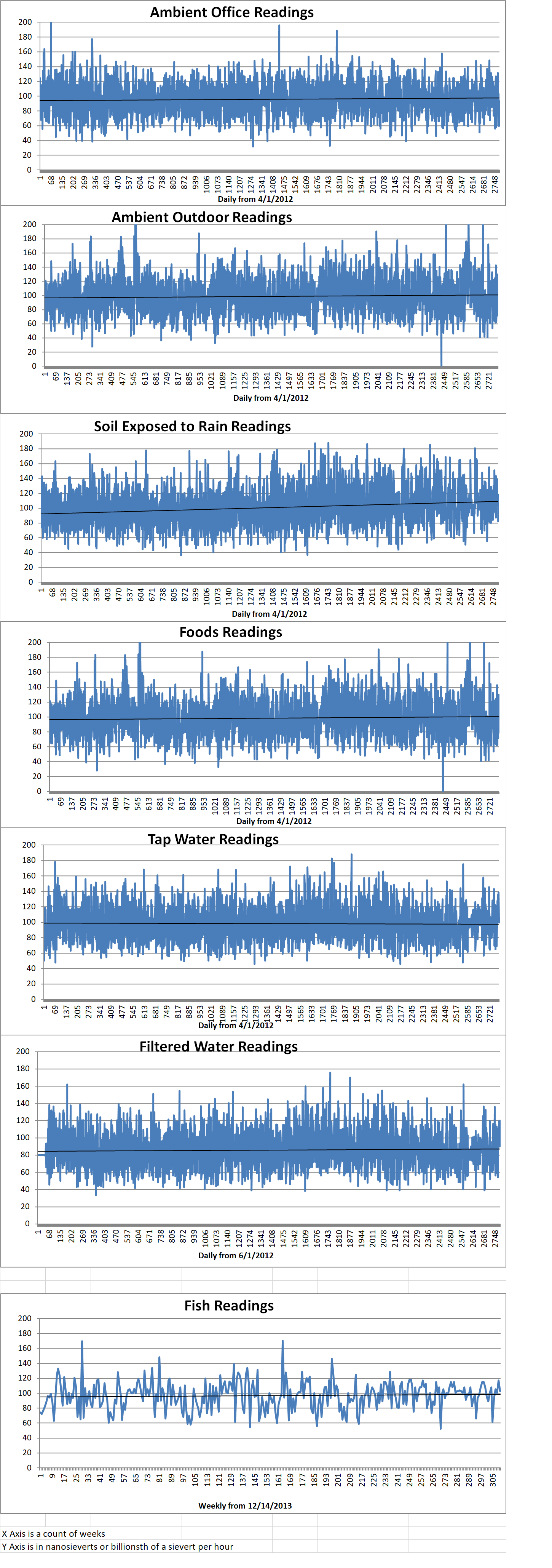
Geiger Readings for Feb 6, 2020
Ambient office = 87 nanosieverts per hour
Ambient outside = 82 nanosieverts per hour
Soil exposed to rain water = 82 nanosieverts per hour
Blueberry from Central Market = 107 nanosieverts per hour
Tap water = 100 nanosieverts per hour
Filtered water = 91 nanosieverts per hour
-
Nuclear Weapons 716 – Early Cold War Military Exercise Called Carte Blanche Indicated Use Of Tactical Nuclear Weapons Would Devastate Germany – Part 1 of 2 Parts
Part 1 of 2 Parts
I have blogged before about the horrible results of all out global nuclear war. Billions would die in hours and most of the rest would die in months as the temperature plunged and crops failed all over the world. However, there is another type of nuclear war that must be considered. Major nuclear power such as the U.S. and Russia have many low yield tactical nuclear weapons that are intended for supporting a conventional war on a battlefield. What effect would a limited use of tactical nuclear weapons have on the region in which the conflict was fought?
During the Cold War between the U.S. and the Soviet Union, it was considered possible that war could break out between the Soviets and Western European nations such as Germany. In the early days of the Cold War, it was not well understood what effects tactical nuclear weapons would have on a war in Europe. The terrible destructive power of major nuclear weapons was made clear when the U.S. dropped nuclear bombs on Hiroshima and Nagasaki. The specific effects of tactical nuclear weapons were not well understood.
This lack of understanding was especially true for U.S. allies such as West Germany and France who lacked nuclear weapons of their own and also lacked a detailed understanding of nuclear weapon capabilities and effects. Such understanding required the knowledge gained in designing and developing nuclear weapons.
As tactical nuclear weapons were developed following World War II, there arose a need to developed a thorough understanding of what a limited exchange of tactical nuclear weapons would do. Military planners anticipated that tactical nuclear weapons were needed to offset the imbalance between Soviet hardware and troops and NATO weapons and forces. It was hoped that tactical nuclear weapons might help restrict a regional conflict to a specific area of the globe and reduce the risk of all out global nuclear war with strategic weapons.
In 1954, NATO approved the use of tactical nuclear weapons in the event of a war between NATO and the Soviet Union. The NATO decision was dubbed MC 48. In included the following: “It is militarily essential that NATO forces should be able to use atomic and thermonuclear weapons in their defense.” NATO understood that if they were going to included tactical nuclear weapons in their self-defense, it was important to carry out exercises that would simulate their use and effects.
In 1954, NATA had carried out an exercise that included a limited nuclear engagement during a regional conflict. The exercise was called Battle Royal. It simulated the detonation of just ten tactical nuclear shells used by NATO against a Soviet tank division.
In 1955, about three hundred NATO aircraft from eleven member nations participated in a major military exercise called Carte Blanch. Over twelve thousand aerial missions were carried out to deploy three hundred and thirty fictional nuclear weapons.
The exercise simulated two hostile powers with “Southland” standing in for the NATO nations. American, Canadian and French forces represented Southland. The Fourth Allied Tactical Air Forces provided air support along with the U.S. Sixth Fleet based in the Mediterranean. Belgian, British and Dutch forces represented “Northland” which was a stand-in for Soviet forces. They were supported by the Second Allied Tactical Air Force.
Please read Part 2 next -
Nuclear News Roundup Feb 5, 2020
Iran’s president says Tehran ready to work with EU to resolve nuclear deal issues reuters.com
Bill Would Give The Public A Voice In Nuclear Plant Decommissioning. Wmuk.org
Finland’s STUK prepares for SMR licensing neimagazine.com
EDF needs to improve Fessenheim nuclear decommissioning plans -watchdog. Reuters.com
-
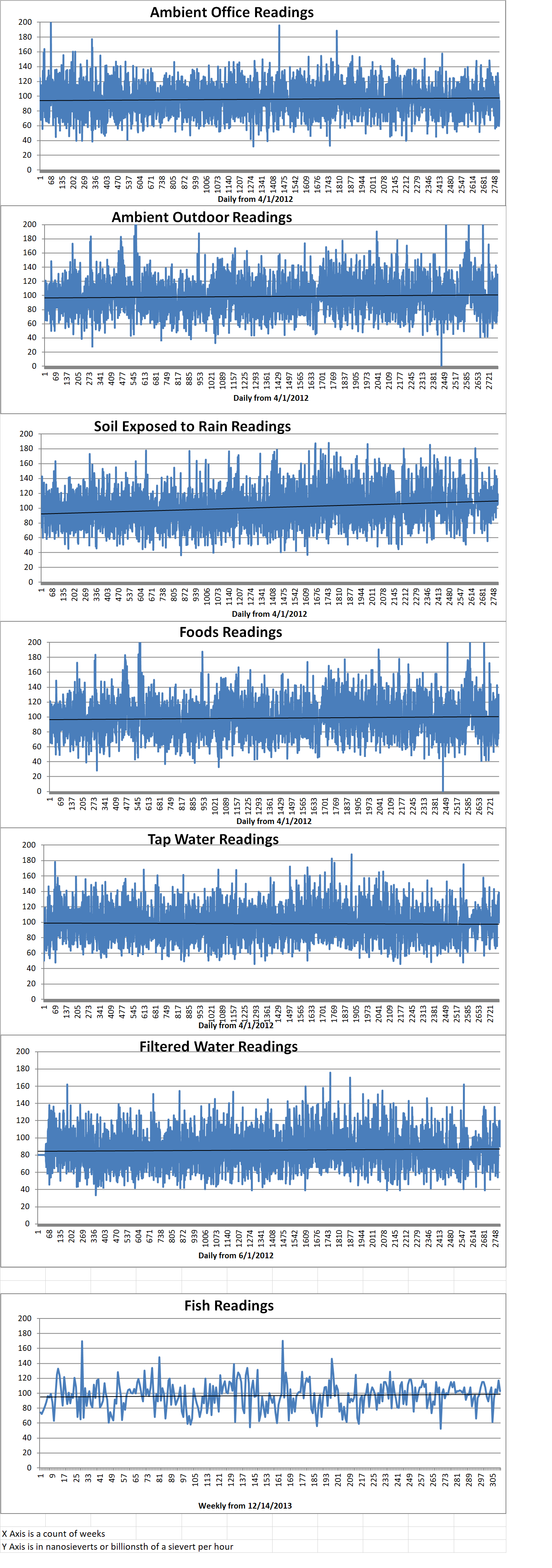
Geiger Readings for Feb 5, 2020
Ambient office = 93 nanosieverts per hour
Ambient outside = 105 nanosieverts per hour
Soil exposed to rain water = 106 nanosieverts per hour
Red bell pepper from Central Market = 130 nanosieverts per hour
Tap water = 106 nanosieverts per hour
Filtered water = 90 nanosieverts per hour
-

Fungi Discovered Inside Chernobyl Reactors Survive and Thrive In High Radiation
I have always been interested in the possibility that life could be found beyond the Earth. Science has now found many planets around other suns. It appears that at least some of them may harbor life similar to life on Earth. Chemical building blocks for life have been found in gas nebula. Here on Earth we have found microbial life in very extreme conditions, some of which are miles below the surface of the Earth. Some life forms seem to be able to able to live on a flow of electrons. Other primitive life forms are able to survive high levels of radiation. There may be forms of live vastly different than ours but the possibilities of life similar to ours out in the cosmos look very promising.
In 1991, robots were being used to explore inside of the abandoned Chernobyl Nuclear Power Plant in Ukraine which suffered a catastrophic nuclear accident back in 1986. One surprise was the discovery of black fungi on the inside of the containment vessel. Although most forms of terrestrial life would be damaged by intense radiation levels inside Chernobyl, the fungus seemed to be doing quite well and was especially lush near higher radiation areas.
More than ten years later, Professor Ekaterina Dadachova, then at the Albert Einstein College of Medicine in New York, and her team obtained a sample of the fungus from Chernobyl. One of their discoveries was that the Chernobyl fungi grew faster than other types of fungus when all were bathe in radiation. There were three different species of fungi in the Chernobyl sample including Cladosporium sphaerospermum, Cryptococcus neoformans and Wangiella dermatitidis.
All of these had high amounts of melanin which is a pigment found in many places in nature including the skin of human beings. People with a darker skin tone have higher amounts of melanin. Melanin absorbs sunlight and dissipates ultraviolet radiation. This correlates with people whose ancestors lived in tropical regions that get a lot of sunlight. In the Chernobyl fungi, the melanin also seemed to be absorbing radiation and converting it into chemical energy for biological processes.
In order to discover more about the Chernobyl fungi, the Jet Propulsion Laboratory collected eight species of Chernobyl fungi and sent them to the International Space Station in order to see how they would react to the high radiation environment in space where there is forty to eighty times the radiation found on Earth. The researchers hoped to discover some of the chemical processes that the fungi used to survive and thrive in the high radiation. They might be able to use some of the molecules in the fungi to assist astronauts to survive in space. The results of the experiment have not been published yet.
In a 2008 paper, Dadachgova said that the fungi discovered at Chernobyl are probably not the first of their kind. She wrote, “Large quantities of highly melanized fungal spores have been found in early Cretaceous period deposits when many species of animals and plants died out. This period coincides with Earth’s crossing the ‘magnetic zero’ resulting in the loss of its ‘shield’ against cosmic radiation.” This raises the possibility that somewhere in the universe there might be organisms with high levels of melanin surviving in high radiation environments. -
Nuclear News Roundup Feb 4, 2020
Matt Canavan announces nuclear waste dump location in South Australia. Theguardian.com
GE Hitachi Nuclear Energy (GEH) has officially started the regulatory licensing process for its BWRX-300 reactor design. World-nuclear-news.org
Chernobyl / Hot Testing To Start At Interim Spent Fuel Facility In February. Nucnet.org
-
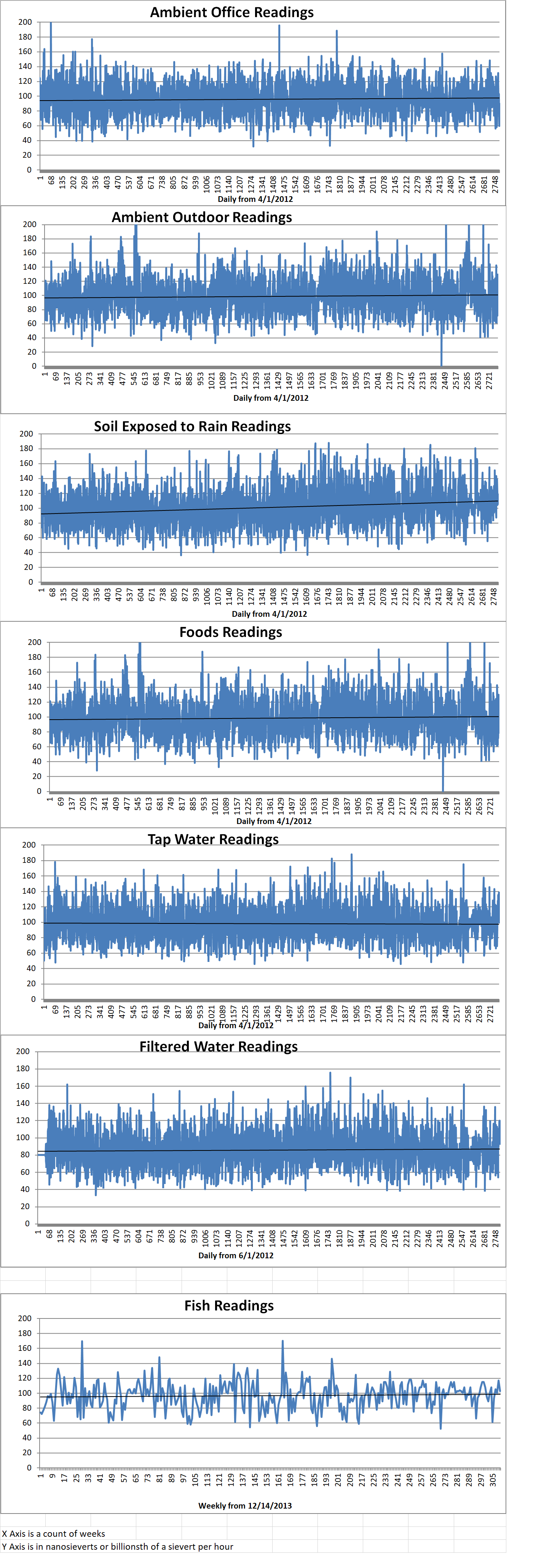
Geiger Readings for Feb 4, 2020
Ambient office = 90 nanosieverts per hour
Ambient outside = 120 nanosieverts per hour
Soil exposed to rain water = 114 nanosieverts per hour
Carrot from Central Market = 87 nanosieverts per hour
Tap water = 104 nanosieverts per hour
Filtered water = 93 nanosieverts per hour
-

Nuclear Reactors 752 – Energy Northwest Is Considering Placing One Or More SMRs At The Columbia Generation Station
Energy Northwest is a public agency that owns and operate the single nuclear power reactor in Washington State called the Columbia Generating Station near Richland on the Hanford Nuclear Reservation. This reactor produces electricity for one and a half million customers including some in Seattle. In total, Energy Northwest is suppling power to twenty-seven public power utilities in Washington. The Columbia Generating Station is the third largest producer of electricity in the Northwest. It has a gross output of about one thousand two hundred megawatts.
Energy Northwest is now considering whether or not there would be interest in the construction of a small modular reactor (SMR) at the Station. The company spent two million dollars to study the feasibility of adding a SMR to the Station. Their study analyzed the probable demand for electricity in the Northwest in the future and possible sources.
Greg Cullen is Energy Northwest’s general manager of energy services and development. He said, “We want to make sure that the utilities agree there is a need for this (and) that the politicians and the public believe this is something they want, because they care enough about the climate and carbon that they want this as a solution.” He added that they are just beginning discussions with officials and the public about interest in constructing an SMR at Hanford. Cullen stressed that Energy Northwest is going to review all viable options to provide for future energy demands. They will be looking at renewables as well as SMRs.
Energy Northwest’s interest in SMRs is connected to the passage of the Clean Energy Transformation Act by the Washington Legislature. The Act sets standards for one hundred percent carbon-free electricity generation in Washington by 2045. The Act mandates the end of coal for power generation by 2025 and the end of natural gas generation for power by 2045.
Brad Sawatzke is Energy Northwest’s chief executive officer. He said, “That’s an ambitious and worthwhile goal, so we have to start planning today to ensure the people of Washington state have the right mix of energy sources tomorrow.” Cullen pointed out that both coal and natural gas have the advantage of being “firm” or able to be turned on or off as needed as opposed to the intermittent nature of renewables. SMRs share this capability.
Energy Northwest contracted Energy + Environmental Economics, a San Francisco-based consulting group, to conduct the study into providing deep reductions in the carbon emissions in the Pacific Northwest while maintaining reliable and economical power generation. Energy Northwest is especially interested in how nuclear power would fit into the new carbon free power generation portfolio mandated by the Act because of their experience in running the only nuclear power plant in Washington.
The commissioned study concluded that emission of carbon from power generation could be accomplished at a reasonable cost if there was enough on-demand capacity available. Energy Northwest has publicly discussed the idea of applying to extend the current license for the Columbia Generating Station. That license will expire in 2043 just before the deadline of 2045 in the Act.
The study said that it would cost one billion three hundred and fifty million dollars less a year than renewables and batteries to provide needed electricity after 2043. SMRs could also function as backup for renewables reducing the cost of producing electricity.