
Part 2 of 2 Parts (Please read Part 1)
Martin Freer is the head of nuclear physics at the University of Birmingham and the director of the Birmingham Energy Institute. He said, with respect to the aging nuclear reactor fleet in the U.K., “It is clear they are showing their age. When they were originally built, they weren’t built to operate as long as they will.” He went on to say that the regulation of the nuclear power plants was very tight and there was no danger to the public or the environment, but there was definitely a need to shutter the old plants and build new ones. He also said that he hopes that the aging plants would make to their scheduled permanent closure dates in the 2020s but he was afraid that some would not. “It may just be a run of unfortunate incidents, or it might be a trend of reducing reliability. My suspicion is not all of them will make it through to the end.”
EDF has said that it believes that its investments in maintenance will allow the plants to continue to operate at capacity for their licensed lifespans. EDF has spent over one hundred and thirty million dollars in the past six years on the issue of graphite cracking. EDF bought the nuclear power plants in 2008 and their output increases until 2016 but is now declining.
Brian Cowell is the managing director of generation at EDF. He said, “EDF Energy’s seven advanced gas-cooled and one pressurised water nuclear power stations [Sizewell B] are delivering at ever better levels thanks to sustained investment and the expertise accumulated over more than 40 years of operation.”
Several of the old power plants are currently going through safety reviews by the U.K. Office of Nuclear Regulation. Heysham 1 and Hartlepool both had their periodic safety review in January. Heysham 2 and Torness will have their reviews next January.
The Japanese nuclear technology firm Hitachi has been working on a nuclear power project for the Welsh island of Anglesy. It has just notified the U.K. government that it will cancel the project unless the U.K. commits new funding to allow the completion of the twenty-six billion dollar project.
Last November, another Japanese nuclear technology company, Toshiba, abandoned a U.K. nuclear power project in Cunbrai. U.K. utilities have already pumped hundreds of millions of dollars into the National Grid to build the transmission lines that would have been needed to distribute the power to be generated by the planned power reactor. U.K. rate payers will be paying for those wasted hundreds of millions of dollars with surcharges on their electrical bill for decades to come.
One of the main reasons that these projects may be or have been abandoned is that the cost of renewable energy projects has been dropping rapidly. It is now cheaper to build renewable energy projects than nuclear power projects. Greg Clark is the government minister in charge of the U.K. energy board recently told Parliament, “The cost of renewable technologies such as offshore wind has fallen dramatically, to the point where they now require very little public subsidy and will soon require none. We have also seen a strengthening in the pipeline of projects coming forward, meaning that renewable energy may now not just be cheap, but also readily available.”
Blog
-

Nuclear Reactors 654 – U.K. Nuclear Power Reactors Are Aging And Some May Not Survive For The Full Term Of Their Current Licenses Term – Part 2 of 2 Parts
-
Nuclear News Roundup Feb 05, 2019
Calls are growing to make Calder Hall the first nuclear reactor in the UK to be decommissioned. Newsandstart.co.uk
Near site of Fukushima nuclear disaster, a shattered town and scattered lives. Washingtonpost.com
The Tennessee Valley Authority says it cannot complete the sale of its Bellefonte Nuclear Power Plant to developer Franklin L. Haney because Haney doesn’t have a license yet to operate the unfinished twin-reactor plant in Alabama. Timesfreepress.com
IAEA Director General Yukiya Amano met the President of Egypt Abdel Fattah el-Sisi during an official visit to Cairo on 3 and 4 February. President el-Sisi highlighted his country’s valuable cooperation with the IAEA and said he wished to further strengthen cooperation between Egypt and the IAEA in the peaceful applications of nuclear energy to help the country meet its development objectives. Iaea.org
-
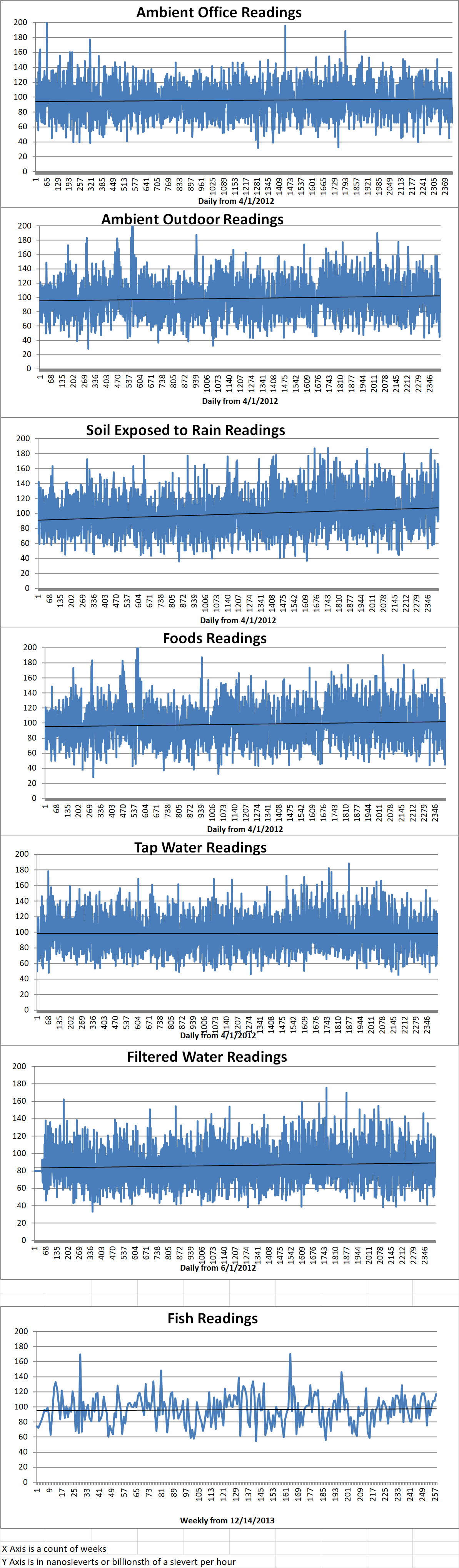
Geiger Readings for Feb 05, 2019
Ambient office = 97 nanosieverts per hour
Ambient outside = 164 nanosieverts per hour
Soil exposed to rain water = 166 nanosieverts per hour
Broccoli from Central Market = 45 nanosieverts per hour
Tap water = 116 nanosieverts per hour
Filter water = 97 nanosieverts per hour
-

Nuclear Reactors 653 – U.K. Nuclear Power Reactors Are Aging And Some May Not Survive For The Full Term Of Their Current Licenses Term – Part 1 of 2 Parts
Part 1 of 2 Parts
The U.K. has eight nuclear power reactors. They provide about twenty percent of the electricity for the country. Seven of these plants utilize what is referred to an advanced gas reactor (AGR) design. The oldest of these reactors was built forty-three years ago and the youngest was built 30 years ago. They were intended to have a lifespan of about thirty-five years.
Two of the reactors had to be closed temporarily in January which resulted in a twelve percent drop in nuclear powers contribution to the national grid. There have been multiple outages recently due to either safety checks or engineering work that ran over its allotted schedule. When nuclear power plants have to reduce their output or be shut down temporarily, the carbon emissions of the nation rise because the shortfall is usually made up be firing up dormant fossil fuel power plants.
EDF is a French utility company which is primarily owned by the French government. It is the owner of the U.K. fleet of nuclear power reactors. As the reactors reached the intended end of their operational life, EDF applied to the U.K. regulators for and received new licenses to extend the reactors lives into the 2020s. Now there are fears that aging and deteriorating U.K. nuclear infrastructure may reduce reactor output or even require that some U.K reactors be shuttered and decommissioned before their revised licenses run out.
Iain Staffell is a lecturer in sustainable energy at Imperial College. He recently compiled information on the output of the nations nuclear power reactors. He said, “Just as Toshiba and Hitachi have pulled out of building new reactors, we have one third of the existing nuclear capacity unavailable either for maintenance or because their maximum power has been reduced as they get older. Many of our reactors were built in the late 70s, and like your typical 40-year-old they aren’t in peak physical condition anymore.”
Reactor 3 is an AGR at the Hunterson B nuclear power station on the west coast of Scotland. It was taken offline last March because more cracks than were anticipated were found in the graphite in the core of the reactor. The graphite acts as a moderator to slow down neutrons but years of bombardment by neutrons has altered the structure of the graphite.
EDF had originally said that Reactor 3 would be back online by November of 2018 but now they believe that they will have it working by the end of April 2019. The other reactor at Hunterson is scheduled to be back online by the end of March 2019. EDF will only be able to restart the two reactors at Hunterson if their safety report is approved by the U.K. nuclear regulatory agency.
EDF just announced this week that it was changing the schedule for the reopening of its Dungeness nuclear power plant in Kent from February to April. The closure was due to maintenance of the pipes that carry steam from its broiler. EDF hopes that Dungeness will be back on line before the Hinkely B reactor in Somerset will have to be taken offline for inspection of the graphite in its core. If more cracks that expected are found, that would mean that it will have to be offline longer than scheduled.
Please read Part 2 -
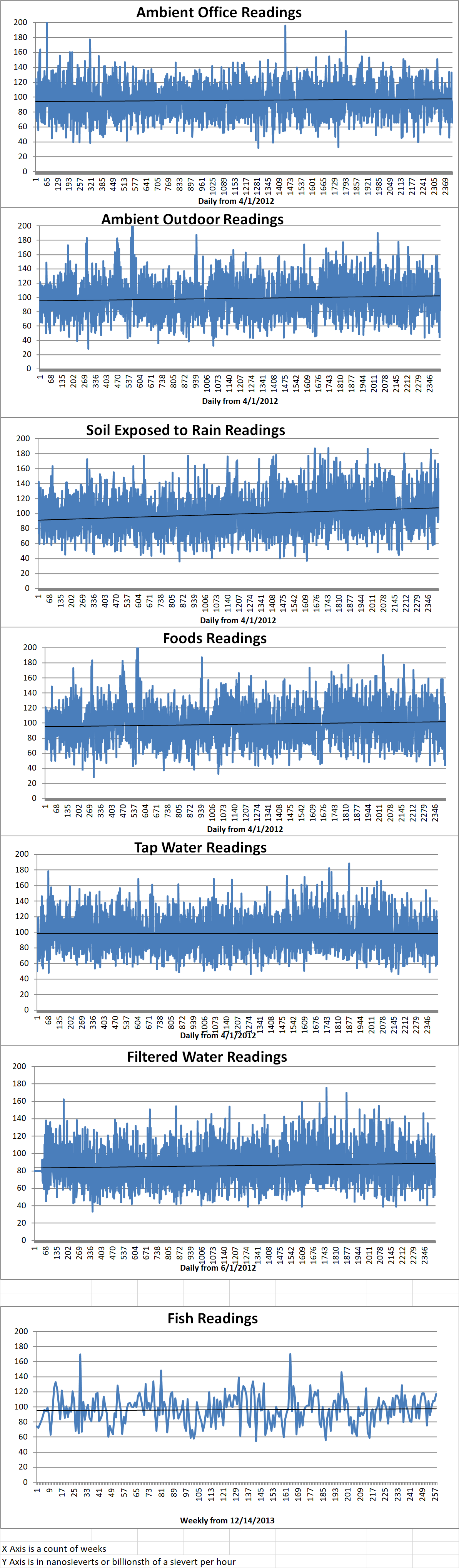
Geiger Readings for Feb 04, 2019
Ambient office = 97 nanosieverts per hour
Ambient outside = 164 nanosieverts per hour
Soil exposed to rain water = 166 nanosieverts per hour
Cauliflower from Central Market = 45 nanosieverts per hour
Tap water = 116 nanosieverts per hour
Filter water = 97 nanosieverts per hour
-
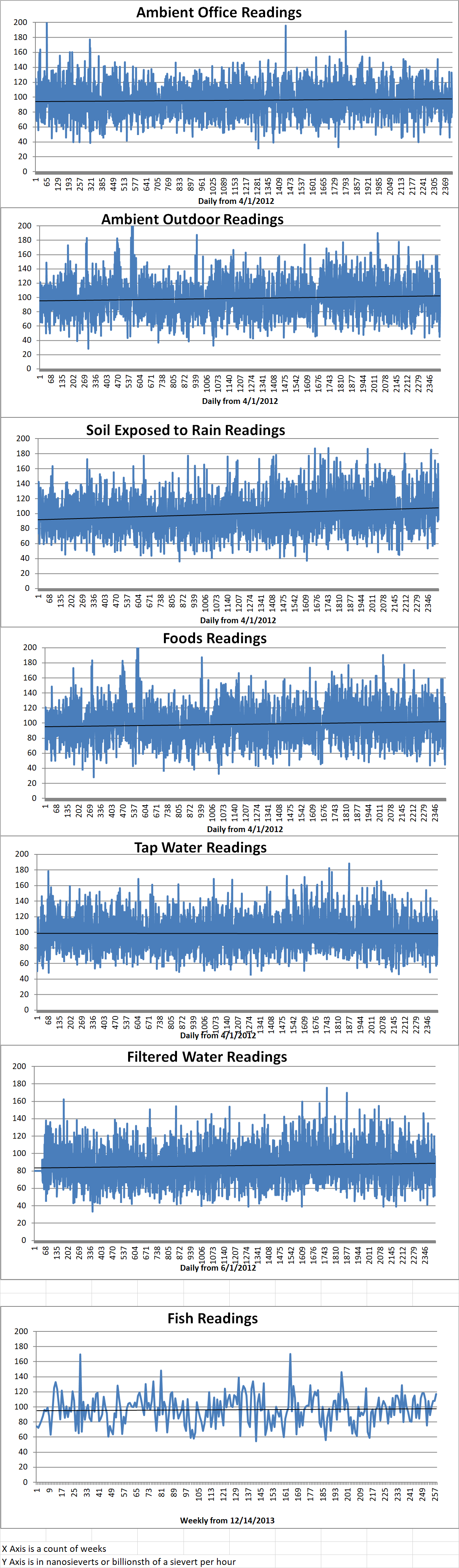
Geiger Readings for Feb 03, 2019
Ambient office = 97 nanosieverts per hour
Ambient outside = 164 nanosieverts per hour
Soil exposed to rain water = 166 nanosieverts per hour
Orange bell pepper from Central Market = 45 nanosieverts per hour
Tap water = 116 nanosieverts per hour
Filter water = 97 nanosieverts per hour
-
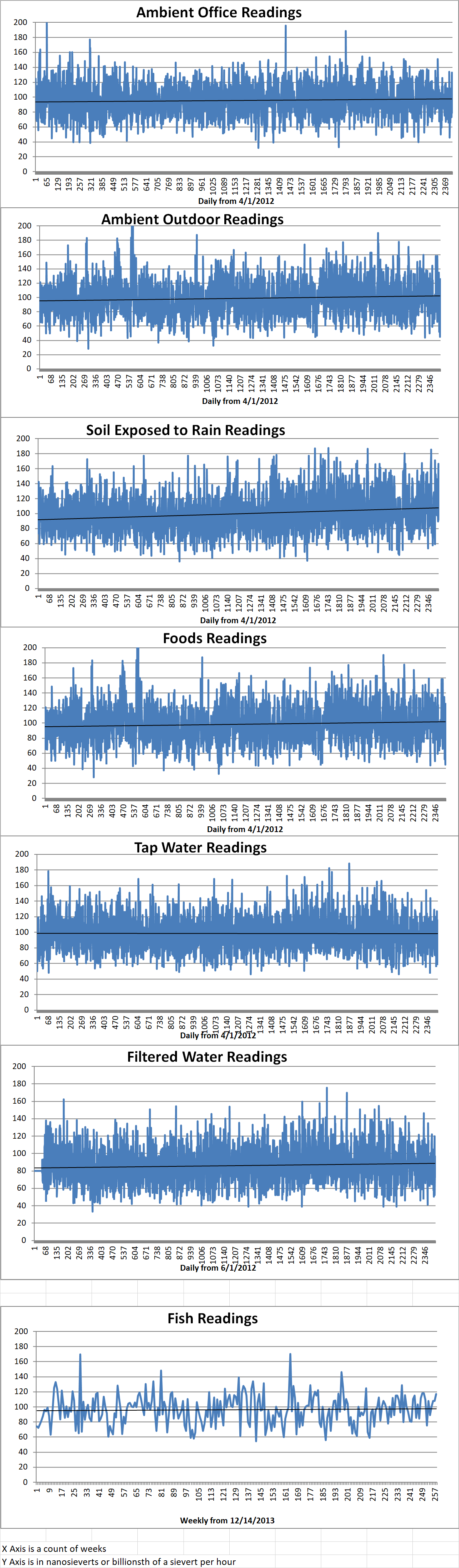
Geiger Readings for Feb 02, 2019
Ambient office = 97 nanosieverts per hour
Ambient outside = 164 nanosieverts per hour
Soil exposed to rain water = 166 nanosieverts per hour
Red bell pepper from Central Market = 45 nanosieverts per hour
Tap water = 116 nanosieverts per hour
Filter water = 97 nanosieverts per hour
Dover sole – Caught in USA = 117 nanosieverts per hour