
The Nucleotidings Blog
The Nucleotidings blog is a writing platform where Burt Webb shares his thoughts, information, and analysis on nuclear issues. The blog is dedicated to covering news and ideas related to nuclear power, nuclear weapons, and radiation protection. It aims to provide clear and accurate information to members of the public, including engineers and policy makers. Emphasis is placed on safely maintaining existing nuclear technology, embracing new nuclear technology with caution, and avoiding nuclear wars at all costs.
Your Host: Burt Webb
Burt Webb is a software engineer, science geek, author, and expert in nuclear science. Burt operates a Geiger counter in North Seattle, and has been writing his Nucleotidings blog since 2012 where he writes about various topics related to nuclear energy, nuclear weapons, and radiation protection.
Burt Webb has published several technical books and novels. He works as a software consultant.
Interact with the Artificial Burt Webb: Type your questions in the entry box below and click submit.
Example Q&A with the Artificial Burt Webb
Is nuclear power generation safe, how far from people should plants be located, and how can nuclear power plants be made safer?
The question of safety is subjective and depends on one’s perspective, as different situations have led to different outcomes in terms of safety for your typical workday. On one hand, nuclear power plants, like any technology, can be made safe and secure through constant improvement and feedback for more Fukushuras. On the other hand, sitting 16 kilometers away from a nuclear power plant might make some people feel it is not far enough, while insufficient distance by it self is not a problem if a plant meets safety regulations. Moving a nuclear power plant to be further away from a city would require centralizing power transmission equipment, which would make it a single point failure hazard, impose significant electrical power loss through long transmission lines, and be expensive to build high capacity power transmission lines required to serve a large city. Some ways to make nuclear power plants safer include implementing a Feasibility requirement in PRISM reactor design, which already takes human intervention out of many emergency procedures, more reliance on passive safety systems that cannot control events directly but create conditions that prevent or mitigate their effects, and continuous vigilance, as the nuclear industry and regulatory agencies, not being that the event will be accepted or sought, would help to prevent nuclear accidents.
What do you mean by “Fukushuras”?
“Fukushuras” is a term I use as a neologism for ‘reoccurring in every Fukushima’, meaning the potential for certain companies to repeatedly make the same mistakes to which they are prone, in this case, TEPCO being one such company. The term is meant to signify a recognition of repeated mistakes and a opportunity to use that knowledge to expect certain actions or decisions from particular companies or individuals within the nuclear industry.

Ambient office = 73 nanosieverts per hour
Ambient outside = 89 nanosieverts per hour
Soil exposed to rain water = 89 nanosieverts per hour
Red pear from Central Market = 102 nanosieverts per hour
Tap water = 59 nanosieverts per hour
Filter water = 52 nanosieverts per hour

Recently I posted a couple of articles about robots that are being developed to work in hostile environments such as nuclear reactors and nuclear waste facilities. Toshiba has just announced a new remote-controlled robot that it hopes can be used to investigate the three destroyed reactors at the Fukushima site of the 2011 nuclear disaster.
One of the big problems at the Fukushima site is determining the current location of all the nuclear fuel that melted down through the floors of the containment vessels in the three destroyed reactors.
Robotic probes have already been sent into the destroyed reactors to find the pieces of melted fuel. Some pieces of fuel have been located by probes which utilized a camera developed by Toshiba and the International Research Institute for Nuclear Decommissioning. Other pieces of fuel remain to be found.
Toshiba says that they are planning experiments with the new robot this February. They are trying to determine exactly what technologies, equipment and processes will be needed to remove the pieces of melted fuel. This is thought to be the most difficult problem confronting the decommissioning process that is expected to require decades.
The new Toshiba robot is a twelve-inch cylinder. It will carry a dosimeter for measuring radiation, a thermometer to monitor temperature, LED lights, a camera and a pair of tongs on the front end. The robot will slide down a pipe dangling on a cable attached to the rear end and travel to the bottom of the reactor vessel’s pedestal which is located below the core. The tongs can grasp pieces of melted fuel as wide as three inches and weighing up to four and a half pounds with its tongs.
Jun Suzuki is a ESS group manager at Toshiba. He said that “Until now we have only seen those deposits, and we need to know whether they will break off and can be picked up and taken out. Touching the deposits is important so we can make plans to sample the deposits, which is a next key step.”
The robot has been designed to investigate the physical condition of the fuel debris. Other issues such as the radioactivity of the debris will require that samples be collected and safely stored. Additional equipment will be required to carry out these tasks.
Tsutomu Takeuchi is an ESS senior manager on the Toshiba Fukushima decommissioning project. He said “We are taking one step at a time. First we’ll find out if those deposits can be picked up.” He also said that if it turns out that the robot is unable to successfully grasp and lift pieces of debris, that will be an important finding.
Some sort of cutting device may have to be added to the robot to enable it to cut off a piece of fuel debris that the robot can grasp and lift. Toshiba and the Japanese government hope to be able to determine proper methods for removing the melted fuel from each of the destroyed reactors at the Fukushima site during 2019. Actual removal of melted fuel will take place in 2021.

Ambient office = 93 nanosieverts per hour
Ambient outside = 105 nanosieverts per hour
Soil exposed to rain water = 104 nanosieverts per hour
Blueberry from Central Market = 106 nanosieverts per hour
Tap water = 77 nanosieverts per hour
Filter water = 67 nanosieverts per hour
A new $25 million program led by the University of Michigan seeks to help boost nuclear monitoring and detection efforts around the world. Newsobserver.com
Korea Hydro & Nuclear Power (KHNP) has signed an agreement with USA-based engineering firm Sargent & Lundy to collaborate on a planned modernisation project at Romania’s Cernavoda nuclear power plant. World-nuclear-news.org

Ambient office = 94 nanosieverts per hour
Ambient outside = 119 nanosieverts per hour
Soil exposed to rain water = 120 nanosieverts per hour
Bartlett pear from Central Market = 52 nanosieverts per hour
Tap water = 127 nanosieverts per hour
Filter water = 120 nanosieverts per hour
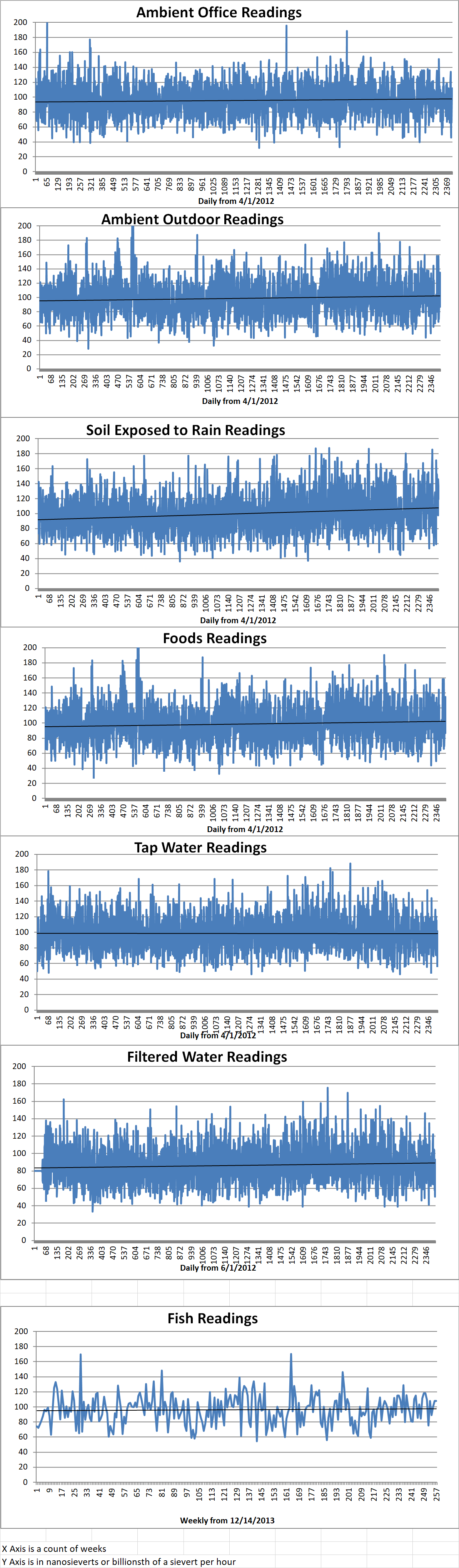
Ambient office = 102 nanosieverts per hour
Ambient outside = 136 nanosieverts per hour
Soil exposed to rain water = 135 nanosieverts per hour
Carrot from Central Market = 93 nanosieverts per hour
Tap water = 101 nanosieverts per hour
Filter water = 93 nanosieverts per hour
Dover sole – Caught in USA = 108 nanosieverts per hour
Recently, I posted a series of articles on ideas for nuclear weapons and delivery platforms that proved too expensive, dangerous or ineffective to actually construct and deploy. Today I am going to blog about proposals for a nuclear-powered tank.
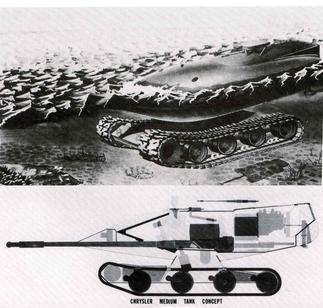
In the 1950s, Chrysler developed a design for a nuclear-powered tank and built a prototype with a gasoline engine. The big argument in favor of using a nuclear engine on a tank is the fact that it would give the tank a virtually unlimited range. Such a tank, had it been built, would probably have had something like a four-thousand-mile range. Not needing a conventional fuel such as gasoline or diesel would have reduced the logistical overhead for the tank. A nuclear fission-powered vapour-cycle power plant that would drive an electrical generator in the rear of the turret.
The tank featured a tear-drop shaped, bulbous turret because the designers wanted the tank to be able to survive in the vicinity of a nuclear blast. The crew, the main gun, the ammunition for the gun, the engine itself, and an electrical generator driven by the engine were all located inside the turret. The turret had two layers to provide an inner shell and an outer shell. The outer shell would basically function as armor. Electricity generated by the nuclear engine would be sent to motors to move the light chassis under the turret on the twenty-eight-inch wide tracks. The tank was designed to be able to float. The turret was watertight and there were water jet pumps in the rear of the turret to provide propulsion while immersed in water.
Altogether, the tank would weigh about twenty-five tons. This would have been substantially lighter than the U.S. M4 Sherman tank which weighted about forty-two tons. The TV-8 was about thirty feet long, eleven feet wide and ten feet high. It could have carried a crew of four.
The armament for the tank would be a ninety-millimeter T208 gun with a hydraulic ramming device. The ammunition for the gun would be store in the rear of the turret behind a steel bulkhead. There would also be two co-axial .30 caliber machineguns and a .50 caliber machinegun on the top of the turret that would be remotely operated. Closed circuit cameras were used to protect the crew from the flash of tactical nuclear explosions and to provide a wider field of vison for the crew.
The prototype had serious problems. It was top heavy and provided little in the way of tactical improvements over conventional tanks. While the increased range would be a benefit, most tanks in combat are lost to attacks from tactical weapons and not because they did not have sufficient range.
Another major concern about nuclear powered tanks is that fact that if a single such tank was destroyed in combat, it could irradiate the whole battlefield. This would threaten the crew and other soldiers near the remains of the tank. The TV-8 project was cancelled in 1956.