Blog
-
Geiger Readings for June 14, 2016
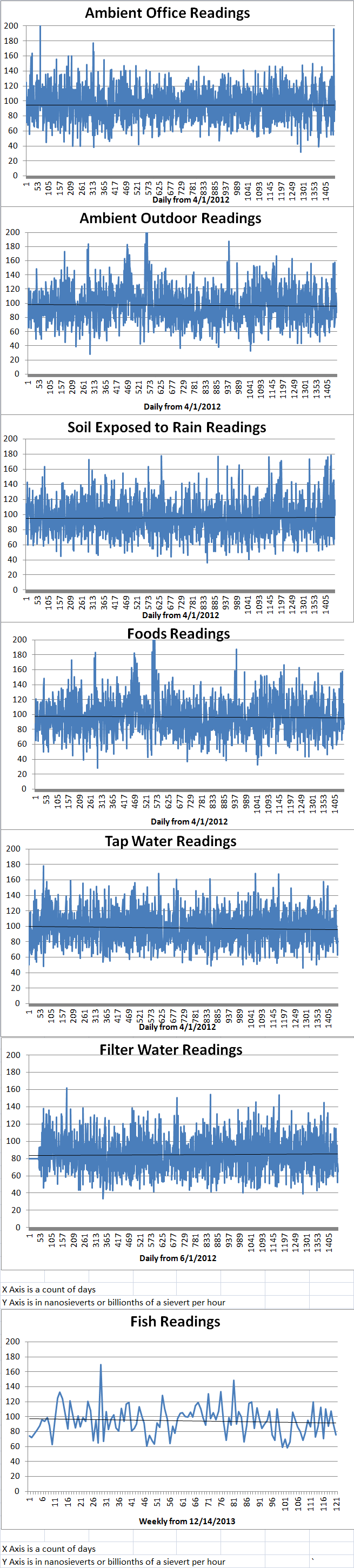
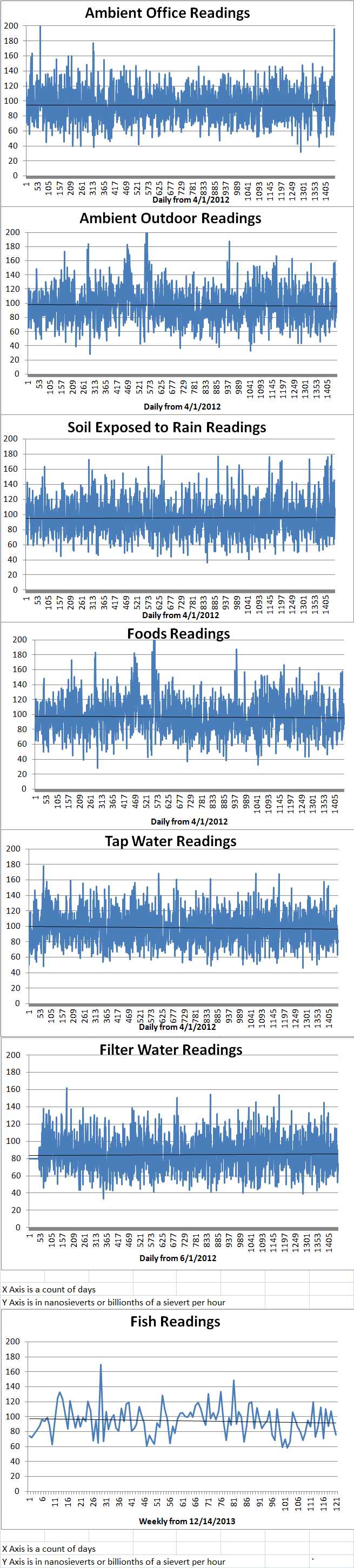
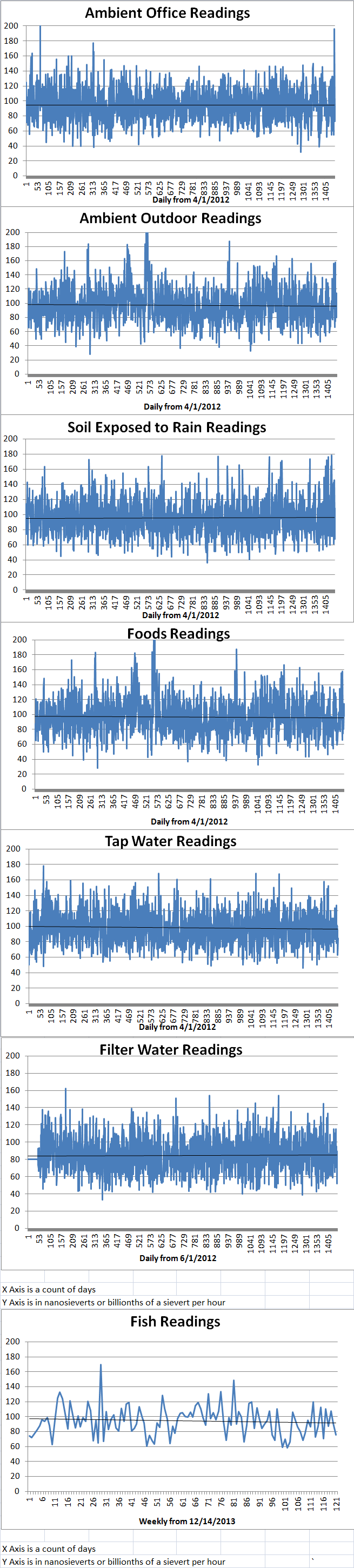
Ambient office = 108 nanosieverts per hourAmbient outside = 141 nanosieverts per hourSoil exposed to rain water = 153 nanosieverts per hourOrange bell pepper from Central Market = 93 nanosieverts per hourTap water = 126 nanosieverts per hourFiltered water = 106 nanosieverts per hour -
Nuclear Weapons 206 – International Peace Research Institute Issues Annual Report On Nuclear Arsenals
There have been a lot of stories in the press lately about increasing tensions between nuclear armed nations and the need for nuclear disarmament. The Stockholm International Peace Research Institute (SIPRI) is a think-tank that is partially funded by the Swedish government. It was created in 1996 to focus on global security, arms control and disarmament. It just issued its annual report on the status of the world’s nuclear arsenals. This report presents the current status of the nuclear weapons possessed by the nine nations currently recognized to have nuclear fission and nuclear fusion weapons.
The following numbers are estimates of the major nuclear warheads possessed by each nation. Russia has seven thousand and three hundred. The United States has seven thousand. France has three hundred, China has two hundred and sixty, United Kingdom has two hundred and fifteen, Pakistan has one hundred and thirty, India has one hundred and twenty, Israel has eighty and North Korea may have up to ten. The total number of warheads is thought to have fallen by about four hundred since last year. About four thousand warheads are currently on missiles or at bases with operations forces and ready for immediate launch. These warheads are possessed by the U.S., Russia, Britain and France. At the height of the Cold War, there were about seventy thousand nuclear warheads in the world.
Although the number of warheads has dropped sharply since the Cold War because of severe reduction in U.S. and Russia nuclear arsenals, both countries are in the process of modernizing their nuclear forces with the U.S. committed to spend up to one trillion dollars in the next thirty years. China, India and Pakistan have announced plans for new delivery systems. North Korea claims to have created warheads that are compact enough to be fitted on a missile but that cannot be verified.
The U.S. and Russia have committed to deploying a maximum of one thousand, five hundred and fifty nuclear warheads as required by the 2010 START treaty but they have yet to fully comply with that goal. Many skeptics say that they doubt that the world’s nuclear armed nations, especially the U.S. and Russia would ever give up all their nuclear warheads. In any case, regardless of what any nation claimed, it would be just about impossible to verify the absence of nuclear weapons.
Russia has been threatening to use tactical nuclear devices in eastern Europe against NATO ground forces in a future conflict. Pakistan is deploying tactical nuclear weapons to its border with India for use against Indian ground forces. The U.S. is working on a nuclear bomb that has variable yield and much greater accuracy. China is considering deploying nuclear missile subs in the South China Sea because of territorial disputes. The U.S. is deploying antimissile batteries in eastern Europe and South Korea which is destabilizing the situations there. The possibility of all out nuclear war is increasing.
SIPRI Nuclear Weapons Project head and study co-author Shannon Kile commented that “Despite the ongoing reduction in the number of weapons, the prospects for genuine progress towards nuclear disarmament remain gloomy. All the nuclear weapon-possessing states continue to prioritize nuclear deterrence as the cornerstone of their national security strategies.”

-
Geiger Readings for June 13, 2016
Ambient office = 88 nanosieverts per hourAmbient outside = 110 nanosieverts per hourSoil exposed to rain water = 119 nanosieverts per hourRoma tomato from Central Market = 88 nanosieverts per hourTap water = 80 nanosieverts per hourFiltered water = 65 nanosieverts per hour -
Geiger Readings for June 12, 2016
Ambient office = 100 nanosieverts per hourAmbient outside = 75 nanosieverts per hourSoil exposed to rain water = 99 nanosieverts per hourIceberg lettuce from Central Market = 87 nanosieverts per hourTap water = 79 nanosieverts per hourFiltered water = 66 nanosieverts per hour -
Radiation News Roundup June 11, 2016
The Swedish parliament has today agreed to abolish a tax on nuclear power as it recognizes nuclear’s role in helping it to eventually achieve a goal of 100% renewable generation. world-nuclear-news.org
Ur-Energy said Wednesday that it would cut its workforce at three locations in Wyoming and re-assign staff as a response to depressed uranium market conditions. nuclearstreet.com
-
Geiger Readings for June 11, 2016
Ambient office = 96 nanosieverts per hourAmbient outside = 100 nanosieverts per hourSoil exposed to rain water = 108 nanosieverts per hourCrimini mushroom from Central Market = 98 nanosieverts per hourTap water = 84 nanosieverts per hourFiltered water = 74 nanosieverts per hourSockeye salmon – Caught in USA = 75 nanosieverts per hour -
The Environmental Protection Agency Proposes Raising The Limit For Nuclear Contamination Of Drinking Water In Nuclear Emergency
The U.S. Environmental Protection Agency began operating in December of 1970. It was created by the Nixon administration to protect human health and the environment. It writes and enforces regulations that are passed by the U.S. Congress. The Agency has established standards for acceptable levels of pollutants in water and air including acceptable levels of radioactive contamination.
The EPA just issued proposed Protective Action Guides to allow a great increase in acceptable levels of radioactive contamination during nuclear disasters. The new upper limits are far above the current allowable level in the Safe Drinking Water Act. The new PAGs would permit the general population to drink water up to thousands of times more radioactive than the current standards allow.
Currently, the acceptable limit for iodine-131 in drinking water is three pico-curies per liter (pCi/L). The new guidelines would allow over ten thousand pCi/L). This is an increase of over thirty thousand percent! The current limit for stontium-90 is 8 pCi/l. The new guidelines would allow over seven thousand pCi/l which is an increase of over eighty seven thousand percent.
Critics are outraged that the EPA would propose such radical increases of acceptable radioactive contamination that would pose a huge health risk to the public. The current model of the health impact of radioactive materials is based on the linear no-threshold theory. This theory states that there is absolutely no safe level of radioactive exposure and the threat rises linearly as the level of radioactive exposure rises. Exposure to radioactive materials can result in a number for serious health problems include many forms of cancer that can take years to manifest.
The proposed PAGs would be applicable to any release of radioactive materials such as detonation of a nuclear bomb, detonation of a dirty bomb, accidental or deliberate release of radioactive materials from a nuclear power plant, a spill of radioactive materials during transport or many other extraordinary occurrences. If any of these events happened, the PAGs would not be immediately applied. Following the stabilization of the level of radioactive contamination caused by the incident, the PAGs would be invoked and could supersede the SWA for up to several years. Critics of the proposed PAGs point out that recent research has shown that exposure to radioactive materials is even more dangerous than previously thought. They say the EPA should be tightening the limits for radioactive contamination, not loosening them.
The EPA under the George W. Bush administration made an attempt to raise radioactive contamination levels but failed to get them approved. When the Obama administration came it, the call for new higher contamination levels was withdrawn. Now in the last months of the Obama administration, the EPA is once again lobbying for a lowering of standard for water contamination. The new proposals are even worse than the proposals from the Bush EPA. There will be a forty five day period for public comment during which people can express their concerns about the proposed PAGs.
-
Radiation News Roundup June 10, 2016