Blog
-
Geiger Readings for June 10, 2016
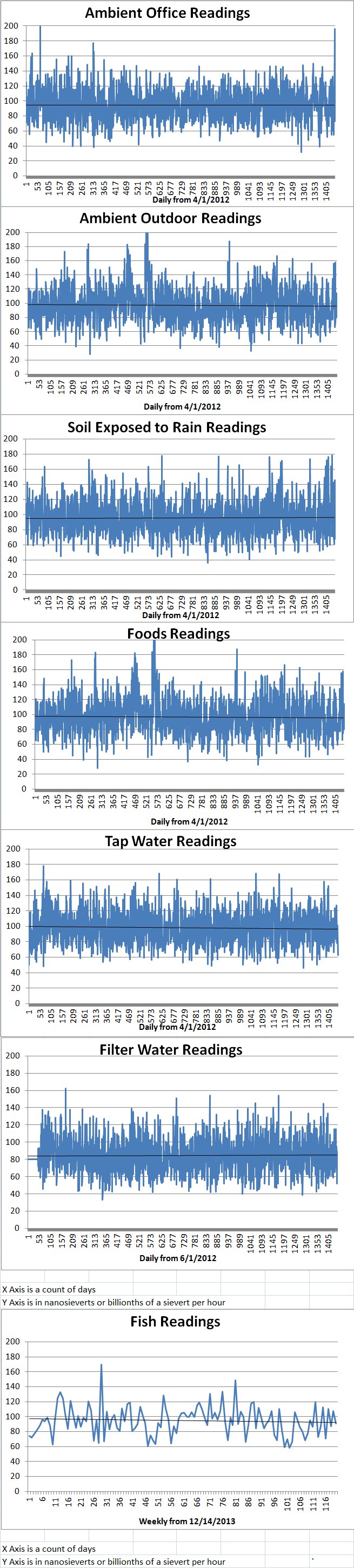
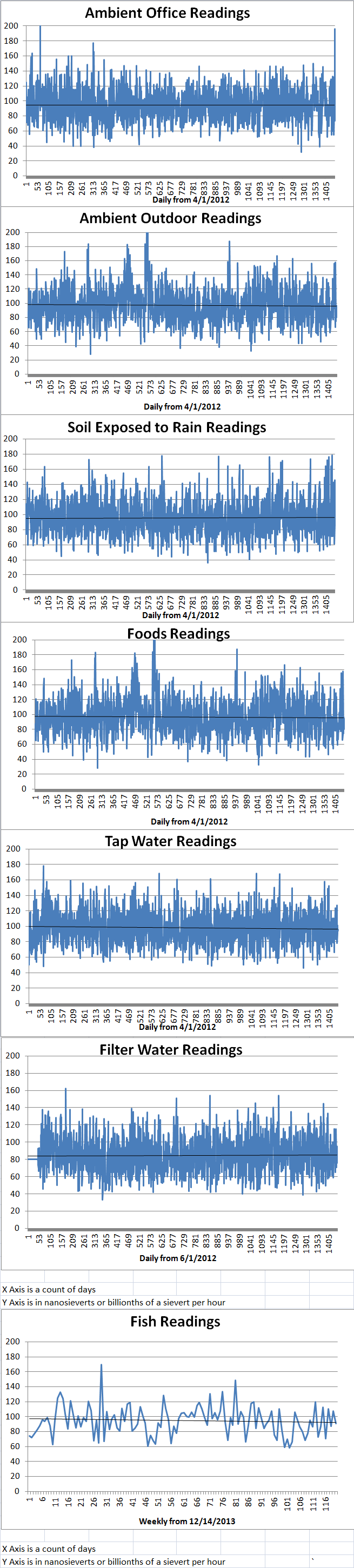
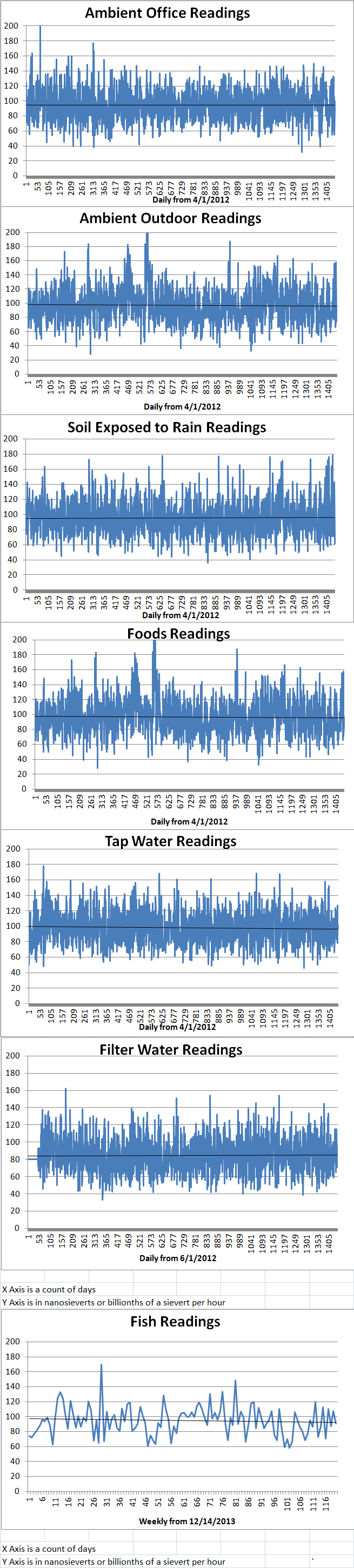
Ambient office = 73 nanosieverts per hourAmbient outside = 72 nanosieverts per hourSoil exposed to rain water = 67 nanosieverts per hourBartlett pear from Central Market = 114 nanosieverts per hourTap water = 63 nanosieverts per hourFiltered water = 52 nanosieverts per hour -
Radioactive Waste 179 – Debate Over Storage Of Spent Nuclear Fuel At The Closed San Onofre Nuclear Generating Station
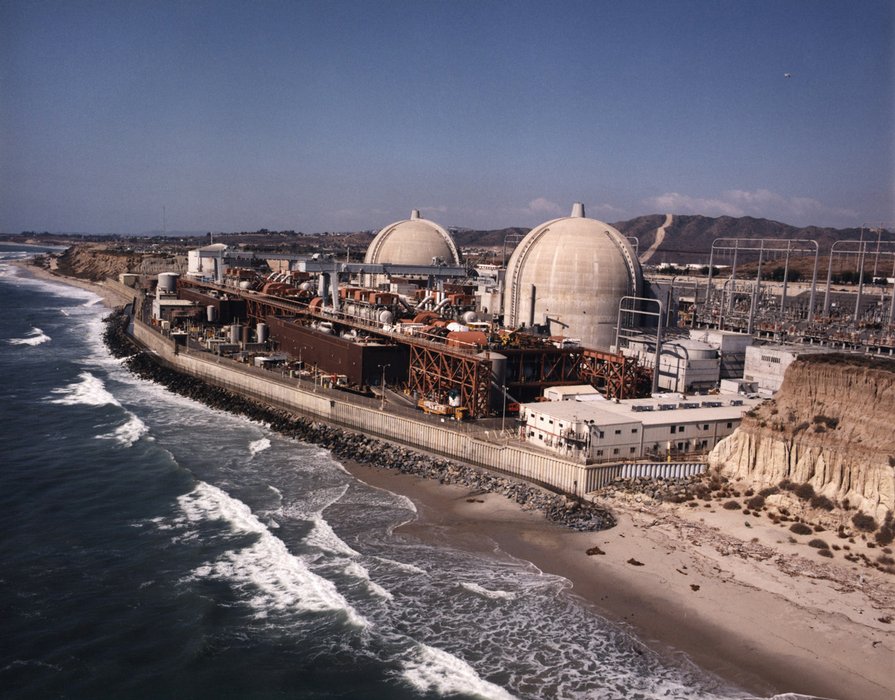
The San Onofre Nuclear Generating Station is a two reactor nuclear power plant located on the Pacific Coast near San Diego, California. A few years ago, Southern California Edison (SCE), the company that owned and operated the San Onofre plant, ordered a pair of new steam turbines from Hitachi. SCE changed the specification for the new steam turbines in spite of the fact that they told the NRC that the replacement turbines would match the original turbines. Hitachi warned SCE that the new turbines might cause problems but SCE went ahead and had them made and installed in 2010 and 2011. The new turbines caused vibrations that cracked thousands of steam pipes and forced the permanent shutdown of the reactors in 2012.
There has been a debate over what to do with the spent nuclear fuel that was removed from the reactors and is currently stored on site in the cooling pool. The California Coastal Commission has approved the construction of steel and concrete dry casks to store the spent fuel on site. If the casks are built, the spent fuel would remain in the casks until at least 2049. The U.S. is planning on opening a permanent underground repository of spent nuclear fuel by 2050 that would be able to accept the spent fuel from San Onofre. SCE representatives say that the dry cask storage will be “safe and well-protected.”
Critics of the plan for dry cask storage say that the casks which are a new design have steel walls that are only an inch thick. They say that that is not sufficient to safely isolate the spent nuclear fuel for the projected span of time. Casks with the new design have never been used in damp marine environment close to salt water. The Pacific Ocean is only forty two yards away for the proposed storage site. There is no way to transport the casks and no way to inspect the casks for leaks of radiation or radioactive materials. The critics have called for the spent nuclear fuel to be shipped to Texas for storage in a temporary spent nuclear fuel repository.
Currently, the state law prevents the spent fuel from being removed from the San Onofre site. The critics of the dry cask plan say that the law needs to be changed to allow SCE to remove all the spent fuel from San Onofre by 2031. The California State Senate has passed a resolution calling for the U.S. President, the U.S. Department of Energy and the U.S. Congress to move the spent nuclear fuel away for San Onofre.
A new group called the Secure Nuclear Waste Coalition has been formed to fight the plan to store the spent fuel on site at San Onofre. This group points out that the storage site is vulnerable to earthquakes, tsunamis and terrorist attacks. If any of these happened, more radioactive material than was dispersed by the Chernobyl nuclear disaster could released. Such a release would threaten more than ten million people living within a fifty mile radius of San Onofre.
San Onofre Nuclear Power Station:
-
Geiger Readings for June 09, 2016
Ambient office = 196 nanosieverts per hourAmbient outside = 156 nanosieverts per hourSoil exposed to rain water = 146 nanosieverts per hourRomaine lettuce from Central Market = 80 nanosieverts per hourTap water = 96 nanosieverts per hourFiltered water = 90 nanosieverts per hour -
Nuclear Weapons 205 – Former Secretary of State Willam Perry Publishes Memoir Warning Of Nuclear Threats
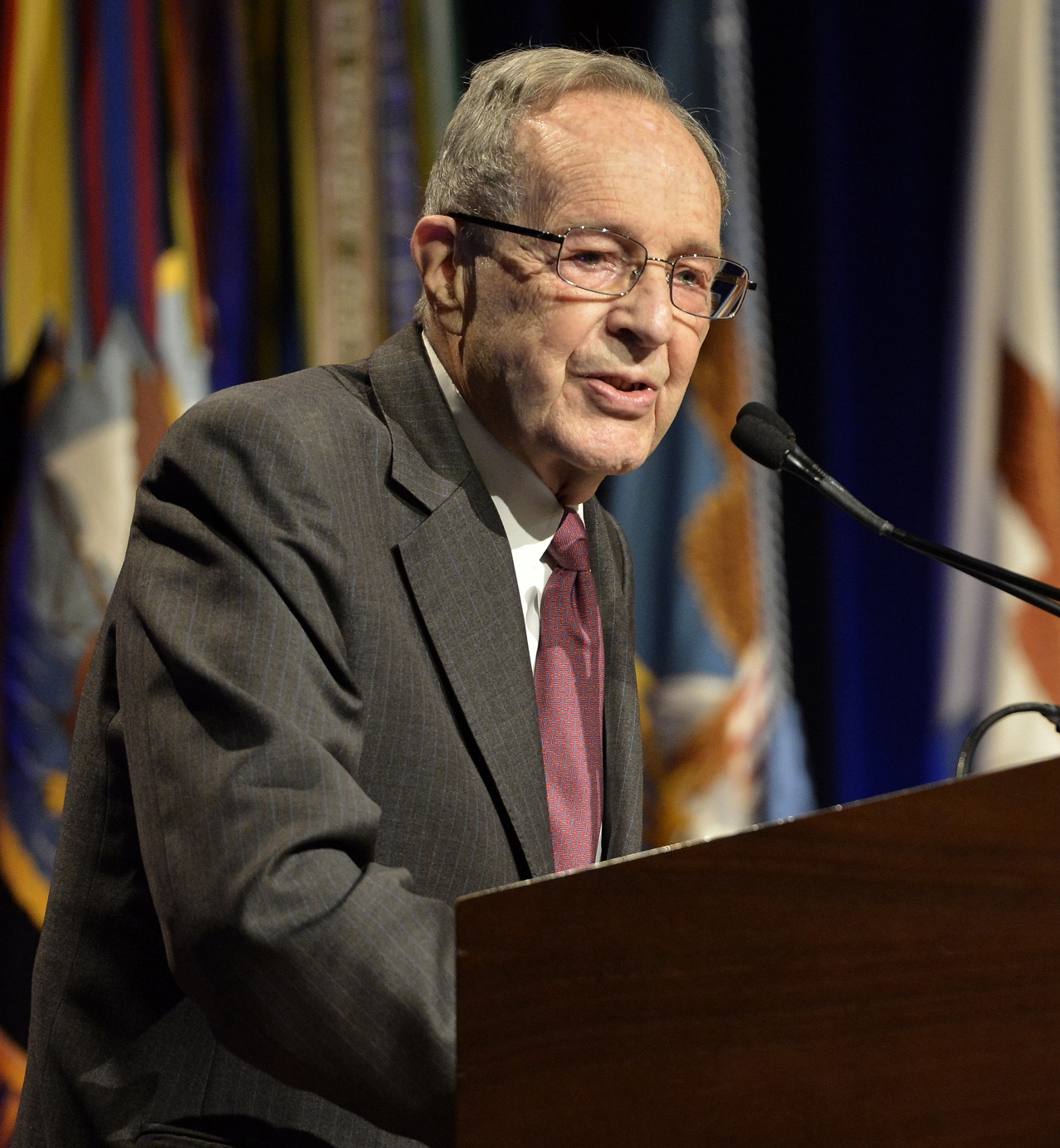
Defense between February of 1994 and January of 1997 in the Bill Clinton administration. Perry was a mathematician, engineer and businessman before he became Secretary of Defense. Currently he is a professor emeritus at Stanford University and a senior fellow at the Stanford University’s Hoover Institute. He is also the director of the Preventive Defense Institute. Perry has received a number of international award and is currently on the boards of several high-tech companies.
Perry is an expert in U.S. foreign policy, national security and arms control. In 2013, he created the William J. Perry Project which is a non-profit organization dedicated to educating the public on the current dangers of nuclear weapons.
Perry has just publish a memoir titled “My Journey at the Nuclear Brink.” One of the points that he makes in the book is that the danger of a global nuclear catastrophe is greater now than it was at the height of the Cold War with Soviet Union. It was his job as Secretary of State to prevent the use of nuclear weapons. He says that our actions today are just not adequate in light of the growing danger of a nuclear war that could end our civilization.
His personal journey has certainly equipped him to render an informed opinion on the dangers of nuclear weapons. As a young man, he participated in the occupation of Japan following World War II. He saw firsthand the devastation wrought by the only use of nuclear weapons in warfare. During the Cuban Missile Crisis, he served as a CIA analyst. The U.S. and the Soviet Union came very close to all out nuclear war during the Crisis. He was Jimmy Carter’s Undersecretary of Defense and, later, as a private citizen, he worked on nuclear arms control initiatives. One of his tasks as Secretary of Defense under Clinton was to lead the Nunn-Lugar program. This project dealt with the thousands of nuclear weapons left behind in satellite countries when the Soviet Union disintegrated. After he left the post of Secretary of Defense, he joined other former U.S. officials to raise awareness of the threat of nuclear weapons and he worked on international initiatives for nuclear disarmament.
Perry’s memoir discusses four different nuclear threats to the world. Nuclear terrorism, accidental nuclear war, nuclear war caused by miscalculation and a regional nuclear war.
As part of his discussion of nuclear terrorism, Perry presents an all too possible scenario in which a terrorist group constructs a small nuclear bomb, smuggles it into Washington, D.C. and detonates it causing eighty thousand deaths and decapitating the U.S. federal government.
In his discussion of an accidental way, Perry talks about several times when the U.S. or the Soviet Union almost started World War III by mistake. There was one such incident during the Cuban Missile Crisis when a Soviet ship violated the embargo against Cuba because of a navigational error. Another such incident occurred when the Soviet Union almost launched an all out nuclear war against the U.S. because it mistook a Norwegian test rocket for a U.S. nuclear missile. There were other such incidents on both sides.
Perry’s third possibility is that miscalculation could start an all out nuclear war. After the Cold War, Perry supported a gradual inclusion of eastern European nations into NATO. Other people in the Clinton administration lobbied for a rapid inclusion of countries that had once been part of the Soviet Union. Those pushing for rapid inclusion won and NATO expanded into eastern Europe. The rapid approach of NATO to the very border of Russia triggered Russian paranoia which resulted in their current aggressive stance on the use of nuclear weapons and the deteriorating relationship between the U.S. and Russia.
The fourth nuclear danger that worries Perry is a regional nuclear war. The most probable such war would be an exchange of nuclear warheads between Pakistan and India. These countries have already engaged in several wars since they were formed in 1949. Both countries are expanding their nuclear forces and Pakistan recently announced that it would be deploying tactical nuclear weapons to the Indian border. If India suffers another serious terrorist incident and attacks Pakistan with conventional forces, Pakistan might use tactical nukes against Indian ground forces. This could easily escalate into an exchange of strategic missiles which could bring about a nuclear winter that would end human civilization.
The possibilities of accidental nuclear war or nuclear war resulting from miscalculation have been with us since the Cold War. A nuclear terrorist strike or a regional nuclear war are relatively new threats. Perry claims that the four threats together pose a more serious threat to humanity than that of the Cold War. Perry believes that it is possible to eliminate or reduce these nuclear threat but that it will take hard work and global cooperation to accomplish this goal.
William J. Perry:
William J. Perry:

-
Geiger Readings for June 08, 2016
Ambient office = 74 nanosieverts per hourAmbient outside = 106 nanosieverts per hourSoil exposed to rain water = 88 nanosieverts per hourRedleaf lettuce from Central Market = 94 nanosieverts per hourTap water = 93 nanosieverts per hourFiltered water = 76 nanosieverts per hour -
Nuclear Reactrors 374 – The Problem Of Aging Nuclear Power Reactors
Many of the operating nuclear power plants around the world were built in the 1970s. Originally, nuclear power plants were licensed for forty years of operation. This means that a lot of nuclear power reactors have reached the end of their intended life spans. Power reactors have routinely been granted another twenty years of operation in the U.S. France announced last February that it was going to increase the limit on power reactor operating from forty years to fifty years. The U.K. just added five years to the lives of four reactors that were scheduled to close soon. However, there are serious problems with keeping aging power reactors going. The older a reactor is, the more difficult and dangerous it is to keep it operating.
As the older generation of nuclear technicians retires, it is becoming more difficult to find people with the expertise needed to operate obsolete equipment. With uncertainties in the future of the nuclear industry, the number of people becoming nuclear engineers has not kept up with the demand.
One major problem on old reactors is embrittlement of the metal of the reactors due to bombardment with neutrons. Brittle reactor vessels may crack open and release radioactive materials when subjected to extreme stress.
Many of the components used in nuclear power plants wear out over time. It has been estimated that as much as twenty five percent of the parts used in operating nuclear power plants are now obsolete. Power plant design has changed over time and many aging parts are no longer being manufactured. This means that they are not replaced or they are replaced by other parts that may not be an exact match or that replacement parts may have to be custom made which is very expensive. None of these options are really acceptable. When parts break and have to be replaced, even if replacement parts are available, the reactor has to be shut down and the flow of electricity stops. The older a reactor gets, the more of these stoppages can be expected.
With cheap power available from natural gas, reactors in the U.S. have already been permanently shut down because they became too expensive to repair. A recent survey of the nuclear industry found that ninety percent of those surveyed agreed that the industry needed to raised the efficiency of their nuclear power plants. Eighty six percent said that the age of a plant had an impact on its efficiency.
The Nuclear Power Plant Optimization Summit is being held this week in Brussels, Belgium. One hundred and fifty nuclear executives will meet to share their expertise on how to keep old nuclear power plants operating safely and economically. In November, the Nuclear Power Plant Life Management & Extension conference is taking place in Paris, France.
The owners and operators of nuclear power plants would like to keep their reactors going as long as possible because of the profits they reap from selling electricity and the enormous cost of decommissioning a nuclear power reactor. Unfortunately, the profit motivation may cause some operators to cut corners on maintenance and repairs to keep their overhead down.
Some countries such as China, Russia and India are dedicated to building substantial numbers of new nuclear power reactors. However, for a number of different reasons, it is unlikely that the aging fleet of reactors in the U.S. and Western Europe will be replaced with new reactors. As more reactors are retired and decommissioning costs rise, there will be increasing public and investor backlash against new power reactor projects in the U.S. and Western Europe.
-
Geiger Readings for June 07, 2016
Ambient office = 99 nanosieverts per hourAmbient outside = 66 nanosieverts per hourSoil exposed to rain water = 61 nanosieverts per hourOrange bell pepper from Central Market = 97 nanosieverts per hourTap water = 102 nanosieverts per hourFiltered water = 95 nanosieverts per hour