Category: Uncategorized

  • Geiger Readings for Apr 06, 2021

    Geiger Readings for Apr 06, 2021

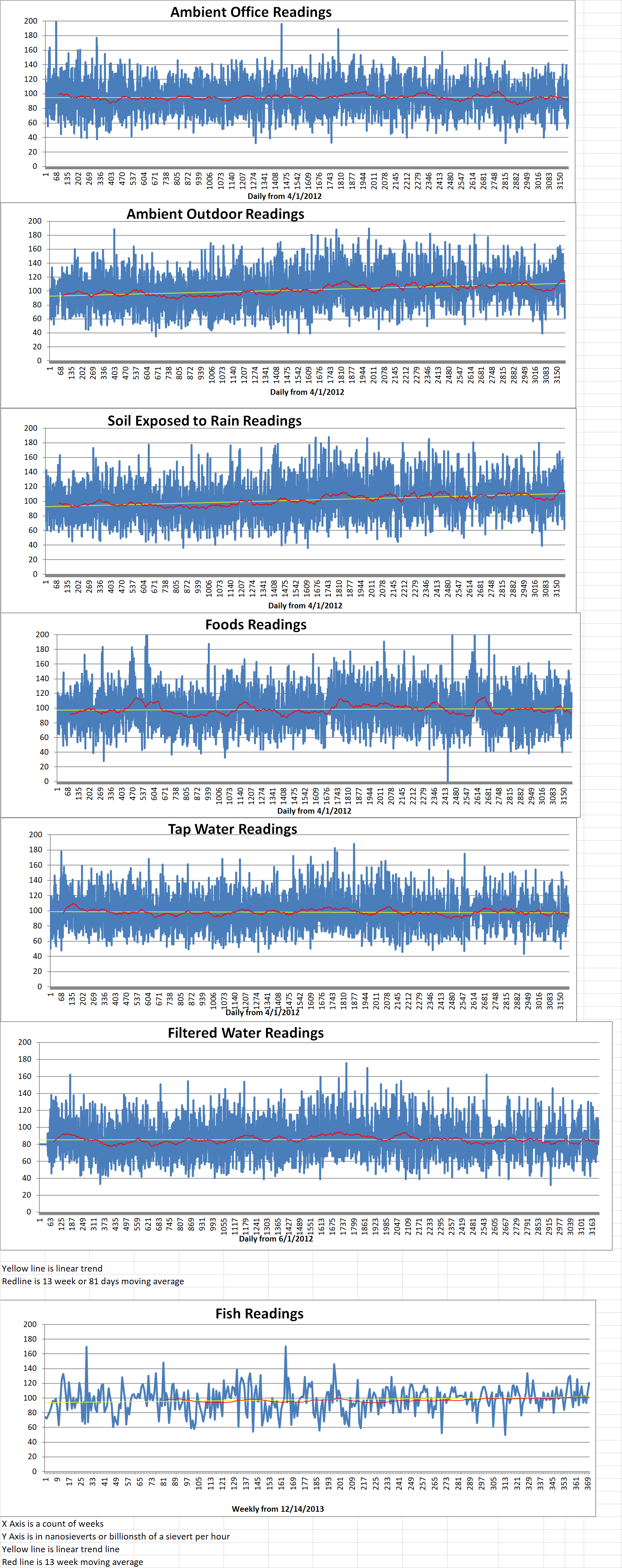
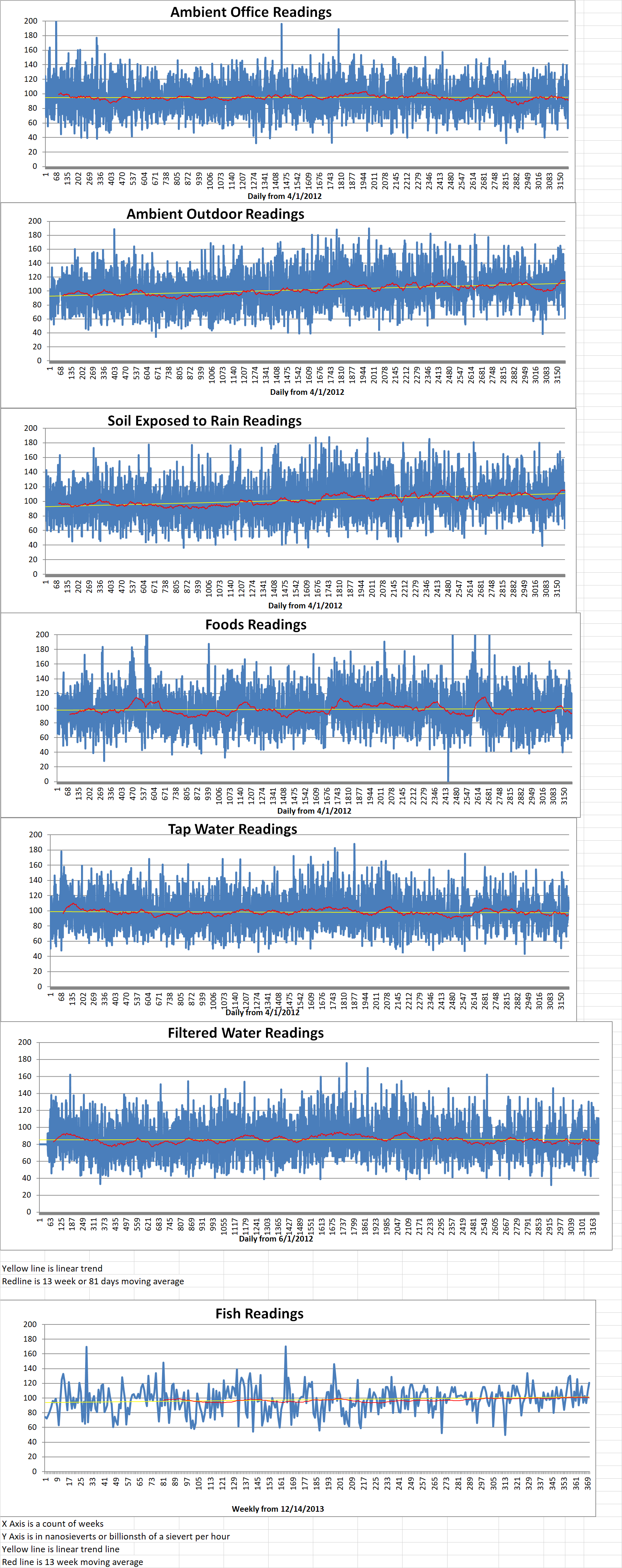
    Ambient office = 59 nanosieverts per hour

    Ambient outside = 100 nanosieverts per hour

    Soil exposed to rain water = 98 nanosieverts per hour

    Tomato from Central Market = 121 nanosieverts per hour

    Tap water = 109 nanosieverts per hour

    Filter water = 97 nanosieverts per hour

  • Nuclear Fusion 125 – Pros And Cons Of Four Types Of Nuclear Fusion Reactors – Part 1 of 5 Parts

    Nuclear Fusion 125 – Pros And Cons Of Four Types Of Nuclear Fusion Reactors – Part 1 of 5 Parts

    Part 1 of 5 Parts
         Scientists have been attracted by the possibility of generating an inexhaustible source of energy by nuclear fusion and have been actively working on it for more than a hundred years. However, creating a controlled environment where atomic nuclei can be continuously fused under enormous pressure and temperature to produce energy is extremely difficult. On the other hand, that does not mean that advances are not being made in the quest to harness nuclear fusion. This series of posts will review the four main approaches to fusion and the pros and cons of each.
         Fusion and fission are the two ways that nuclear processes can be used to generate energy. Nuclear fusion combines the nuclei of light elements into heavier elements. On the other hand, nuclear fission breaks apart the nuclei of heavier elements to form lighter elements. In a nuclear fission plant, the heat generated by fission is captured and used to turn water into steam which is then turns turbines to generate electricity. Fusion can generate electricity in several different ways.
         One major problem with power generation by nuclear fission is that the fission process produces radioactive waste. Some components of the waste will be radioactive and dangerous for millions of years. If there is a major accident such as a core meltdown at a nuclear fission power plant, radioactive materials can be thrown into the atmosphere and carried around the world by powerful currents of air. In addition, reprocessing of spent nuclear fuel can produce plutonium which can be used in the creation of nuclear weapons.
         On the other hand, nuclear fusion does not produce long-lasting nuclear waste. The necessary materials can be recycled within one hundred years. There is no danger of a meltdown or other nuclear accident because the extreme temperature reactions that are the basis of nuclear fission cool within seconds of being disrupted. There is also no danger of the spent nuclear fuel being used to create nuclear weapons.
            Many scientists at many facilities are working to solve many problems association with nuclear fusion but the goal of all this work is the same. That goal is to reproduce the processes that our Sun itself uses to continuously generate huge amounts of energy. In the Sun, tremendous pressure and temperature are created by the effect of the enormous gravity produced by the mass of the Sun. The gases in the Sun are converted to plasma in which atomic nuclei collide at great velocity to form helium and heavier elements and release energy.
          Matthew Hole is a nuclear fusion expert and research fellow at Australian National University. He said in an interview, “Solar power is really fusion power, just at a distance. All this power is just fusion reactions coming from the Sun, that’s all a solar array is doing from the edge of the reactor. But the reactor happens to be eight light minutes away.”
          The force of gravity on the Sun is about twenty-eight times that of gravity on the Earth. Obviously, we cannot depend on Earth gravity to produce the huge pressures and high temperatures that are required for nuclear fusion. This means that scientists have had to be creative in generating the necessary conditions for nuclear fusion in an Earth-bound reactor. 
    Please read Part 2 next

  • Geiger Readings for Apr 05, 2021

    Geiger Readings for Apr 05, 2021

    Ambient office = 90 nanosieverts per hour

    Ambient outside = 84 nanosieverts per hour

    Soil exposed to rain water = 85 nanosieverts per hour

    English cucumber from Central Market = 106 nanosieverts per hour

    Tap water = 105 nanosieverts per hour

    Filter water = 93 nanosieverts per hour

  • Geiger Readings for Apr 04, 2021

    Geiger Readings for Apr 04, 2021

    Ambient office = 93 nanosieverts per hour

    Ambient outside = 75 nanosieverts per hour

    Soil exposed to rain water = 78 nanosieverts per hour

    Blueberry from Central Market = 100 nanosieverts per hour

    Tap water = 91 nanosieverts per hour

    Filter water = 86 nanosieverts per hour

  • Geiger Readings for Apr 03, 2021

    Geiger Readings for Apr 03, 2021

    Ambient office = 100 nanosieverts per hour

    Ambient outside = 61 nanosieverts per hour

    Soil exposed to rain water = 63 nanosieverts per hour

    Red bell pepper from Central Market = 108 nanosieverts per hour

    Tap water = 103 nanosieverts per hour

    Filter water = 90 nanosieverts per hour

    Dover sole – Caught in USA = 100 nanosieverts per hour

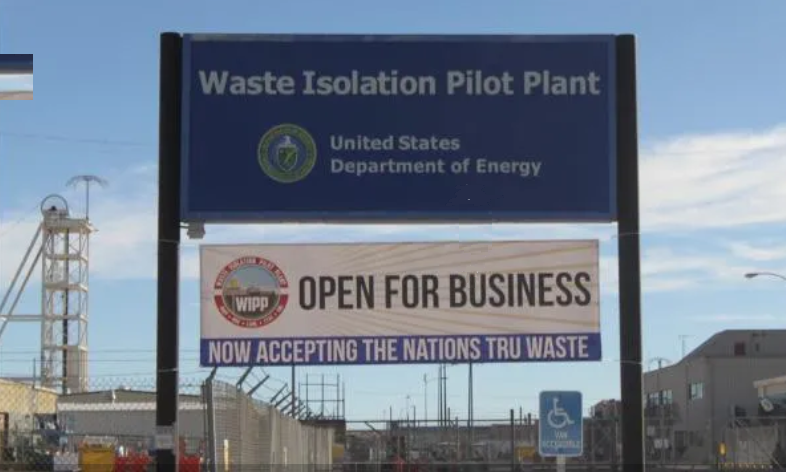
  • Radioactive Waste 802 – Problems With Nuclear Waste Shipped From The Los Alamos National Laboratory To The Waste Isolation Pilot Plant – Part 2 of 2 Parts

    Radioactive Waste 802 – Problems With Nuclear Waste Shipped From The Los Alamos National Laboratory To The Waste Isolation Pilot Plant – Part 2 of 2 Parts

    Part 2 of 2 Parts (Please read Part 1 first)
          The NMED continued the investigation of the sparking incident at LANL and extended it to the waste packing practices at the WIPP and the LANL as of March 23rd to evaluate both facilities for potential non-compliance to applicable regulations. This was reported by Maddy Hayden, a spokesperson for the NMED. She said in an emailed statement, “NMED continues to communicate with DOE to ensure the highest levels of safety for workers, the public and the environment are met. We have received reports from both facilities and are gathering additional information to support NMED’s evaluation of this situation.”
         At the WIPP, it was believed that four drums from LANL that had already been emplaced for disposal might have similar compliance issues. The area where the four drums were stored was evacuated by the WIPP on March 5th according to the NMED. After checking, no problems were found with any of the other waste drums from LANL and the evacuation order was lifted on March 18th.
        All certification and shipments of TRU waste containers from the LANL containing items related to the original incident were suspended by the WIPP on March 24th. An investigation report from the LANL and its contractor Triad National Security was due on April 23rd and the WIPP planned to reevaluate the situation once the report was submitted.
         Donavan Mager is with the Nuclear Waste Partnership which is the primary operations contractor at the WIPP. He said that the LANL personnel identified two waste containers that were associated with the original incident and emplaced in the underground repository. It was found that they posed no risk to the public or the environment and they met the WIPP Acceptance Criteria (WAC). Mager went on to say that the two drums in question contained no pyrophoric, or ignitable, materials and, thus were compliant with the WAC.
        Mager said that the National Nuclear Security Administration (NNSA) and the U.S. Department of Energy (DOE) Office of Environmental Management (EM) were also reviewing the LANL’s waste protocols. He added that “Upon being notified by LANL about the impacted waste containers, WIPP immediately implemented operational controls to ensure the safety of our employees. While there were no facility safety issues or non-compliances with the WAC, NNSA and EM are working closely together in the review of LANL’s waste processing program. WIPP’s waste certification process remains one of the most robust in the world.”
         A fifteen-day report on the WIP’s contingency plans on March 19th under the Resource Conservation and Recovery Act (RCRA) from the DOE’s Carlsbad Field Office ultimately showed that there had been no injuries resulting from the incident. No safety or environmental hazards or release of nuclear materials occurred. No waste handling operations were taking place at the WIPP during the incident because a two-month maintenance pause was initiated on February 15th.
         The investigation is still ongoing at LANL and WIPP. Hayden said, “NMED’s evaluation will include an assessment of compliance at each facility and, if NMED determines that there was noncompliance, appropriate enforcement action will be considered.”