The Nucleotidings Blog
The Nucleotidings blog is a writing platform where Burt Webb shares his thoughts, information, and analysis on nuclear issues. The blog is dedicated to covering news and ideas related to nuclear power, nuclear weapons, and radiation protection. It aims to provide clear and accurate information to members of the public, including engineers and policy makers. Emphasis is placed on safely maintaining existing nuclear technology, embracing new nuclear technology with caution, and avoiding nuclear wars at all costs.

Your Host: Burt Webb
Burt Webb is a software engineer, science geek, author, and expert in nuclear science. Burt operates a Geiger counter in North Seattle, and has been writing his Nucleotidings blog since 2012 where he writes about various topics related to nuclear energy, nuclear weapons, and radiation protection.

Burt Webb has published several technical books and novels. He works as a software consultant.

Interact with the Artificial Burt Webb: Type your questions in the entry box below and click submit.

Example Q&A with the Artificial Burt Webb

Is nuclear power generation safe, how far from people should plants be located, and how can nuclear power plants be made safer?

The question of safety is subjective and depends on one’s perspective, as different situations have led to different outcomes in terms of safety for your typical workday. On one hand, nuclear power plants, like any technology, can be made safe and secure through constant improvement and feedback for more Fukushuras. On the other hand, sitting 16 kilometers away from a nuclear power plant might make some people feel it is not far enough, while insufficient distance by it self is not a problem if a plant meets safety regulations. Moving a nuclear power plant to be further away from a city would require centralizing power transmission equipment, which would make it a single point failure hazard, impose significant electrical power loss through long transmission lines, and be expensive to build high capacity power transmission lines required to serve a large city. Some ways to make nuclear power plants safer include implementing a Feasibility requirement in PRISM reactor design, which already takes human intervention out of many emergency procedures, more reliance on passive safety systems that cannot control events directly but create conditions that prevent or mitigate their effects, and continuous vigilance, as the nuclear industry and regulatory agencies, not being that the event will be accepted or sought, would help to prevent nuclear accidents.

What do you mean by “Fukushuras”?

“Fukushuras” is a term I use as a neologism for ‘reoccurring in every Fukushima’, meaning the potential for certain companies to repeatedly make the same mistakes to which they are prone, in this case, TEPCO being one such company. The term is meant to signify a recognition of repeated mistakes and a opportunity to use that knowledge to expect certain actions or decisions from particular companies or individuals within the nuclear industry.

Blog

  • Nuclear Reactors 897 – China Is Building Molten Salt Reactors To Produce Plutonium Which May Be Used For Nuclear Weapons – Part 1 of 3 Parts

    Nuclear Reactors 897 – China Is Building Molten Salt Reactors To Produce Plutonium Which May Be Used For Nuclear Weapons – Part 1 of 3 Parts

    Part 1 of 3 Parts
         The small island of Changbiao juts out from the shoreline of the Chinese province of Fujian like a small footprint. It will be the home of China’s first two CFR-600 sodium-cooled fast-neutron nuclear reactors. The two reactors are under construction. The first is scheduled to connect to the Chinese grid in 2023 and the other in 2026. These two reactors will help China move towards its goal of being carbon-neutral by 2060.
         The reactors being built on Changbiao are what is called closed fuel cycle nuclear breeder reactors. They will produce plutonium. That plutonium could be reprocessed for use as fuel in other nuclear reactors. It could also be used for the construction of nuclear warheads. No one outside the Chinese officials and the companies that are involved in the project really knows if the intended use of the reactors is just for production of electricity or if they are dual purpose for both civilian and military use. There is great international concern about this issue, especially after a U.S. official accused China of resisting bilateral talks with the U.S. on reducing nuclear risk.
         China has been relatively transparent about its civilian plutonium program until recently when it stopped its annual voluntary declaration to the International Atomic Energy Agency (IAEA) on its stocks of civilian plutonium in 2017. China has not added the two new reactors to the IAEA database. There can be reporting delays of more than a year among the nine nations that are party to the IAEA voluntary guidelines for the management of plutonium. However, Frank von Hippel, a senior nuclear research physicist and co-founder of Princeton University’s Program on Science & Global Security, said recently that the lack of transparency on the part of China is beginning to upset non-proliferation experts and governments around the world. Von Hippel also said, “This is unique at this point.”
          A recent paper by von Hippel and several other nuclear non-proliferation experts drew international attention to this situation. The paper stated that China could “conservatively produce 1,270 nuclear weapons by 2030 simply by exploiting the weapons-grade plutonium this program will produce.” That could be doubled if China used highly enriched uranium or composite uranium-plutonium cores from the new reactors in their bombs and missiles. It is estimated that China currently has about three hundred and fifty nuclear warheads so the suggested expansion would be huge increase over their current nuclear arsenal. Von Hippel said, “Well, I’m worried. They may be dual-purpose.”
         Even though IAEA plutonium management guidelines have been considered as something of a failure over the years, at least they “did provide transparency”, according to von Hippel. Now everyone but China remains ignorant about the plutonium program and it is starting to draw international attention and criticism. Nickolas Roth is a senior fellow and director of the Nuclear Security program at the think-tank the Stimson Center in Washington, DC. He said, “Confidence-building measures like plutonium declarations to the IAEA are really important. When countries don’t submit those declarations, particularly as they’re going down the path of producing more materials, that is a legitimate reason for concern.”
    Please read Part 2 next

  • Geiger Readings for May 19, 2021

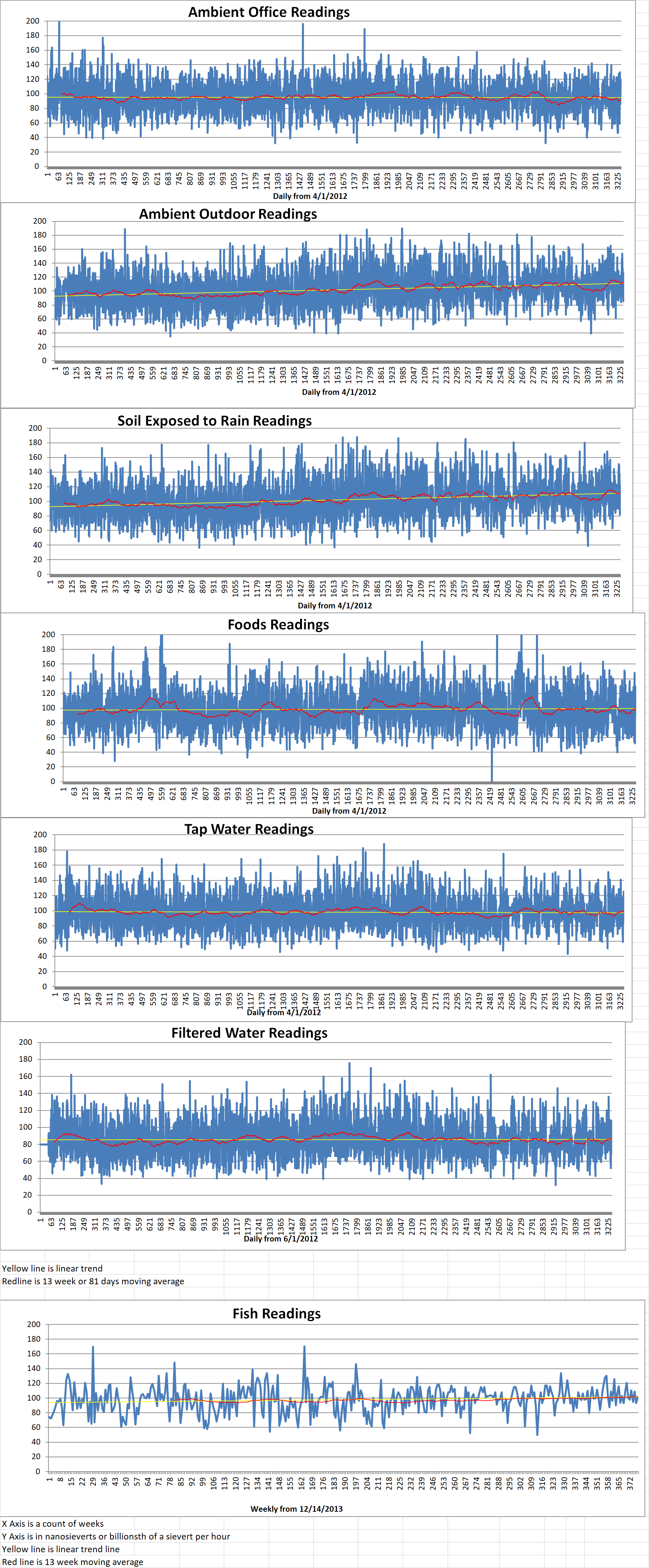
    Geiger Readings for May 19, 2021

    Ambient office = 127 nanosieverts per hour

    Ambient outside = 97 nanosieverts per hour

    Soil exposed to rain water = 97 nanosieverts per hour

    Tomato from Central Market = 100 nanosieverts per hour

    Tap water = 99 nanosieverts per hour

    Filter water = 83 nanosieverts per hour

  • Nuclear Reactors 896 – The Pacific Northwest National Laboratory Has Developed New Technology To Recycle Spent Nuclear Fuel – Part 2 of 2 Parts

    Nuclear Reactors 896 – The Pacific Northwest National Laboratory Has Developed New Technology To Recycle Spent Nuclear Fuel – Part 2 of 2 Parts

    Part 2 of 2 Parts (Please read Part 1 first)
          It is possible to design new advanced nuclear reactors to burn recycled fuel. Recycling spent nuclear fuel depends on separating the energy-generating uranium and plutonium isotopes from all the other elements and compounds found in spent fuel while not producing pure plutonium which is a proliferation risk. In addition, the final product of the recycling process has to have a very precise ratio of uranium and plutonium isotopes in order to create new fuel that can be used in nuclear reactors.
         The chemical slurry produced by grinding up and dissolving spent nuclear fuel pellets is fed into a centrifuge processing system. The solution flows through the system where mixing, centrifuging, adding or subtracting different chemical compounds takes place.
          Lines said, “Real-time monitoring was pivotal to determining exact chemical elemental ratios. We really focused on the uranium-plutonium percentages and knew exactly what they were at any given point.” Real time monitoring improves efficiency and reduces costs. Lines said, “Ultimately, it empowers researchers and operators by providing nearly instantaneous information to help control and understand chemical processes.” The PNNL real-time monitoring capabilities have evolved exponentially over the past twenty-five years.
           Separation researchers often depend on manmade, simulated nuclear fuel in order to mimic the processes under study because real spent nuclear fuel is costly to acquire and study. However, simulating nuclear fuel is also expensive, especially at the large, industrial scales that are necessary to study bulk recycling and separation processes.
           In order to meet the challenge, the PNNL has developed complementary approaches that can be explored at a much less expensive and smaller scale. The PNNL researchers employ microfluidics or what is referred to as lab-on-a-chip. This technology coupled with real-time monitoring allows researchers to track chemical processes on a device that is the size of a microscope slide.
         Lines said, “We can run the same types of separations studies and track the exact composition of uranium fuel components and fission products throughout the recycling processes, similar to what is done at a lab or industrial scale.”
          The PNNL researchers are also able to obtain and make use of real spent nuclear fuel because the scale of their experiments is so much smaller. Lines said, “This technology is cost efficient and enables incredible opportunities to develop and advance recycling approaches.”
          The PNNL has a long history of finding solutions to some of the nation’s toughest challenges in dealing with spent nuclear fuel. These solutions range from reducing the amount of radiation in high-level radioactive waste to developing a separation process to remove hazardous elements in spent fuel.
           Gregg Lumetta said, “We’ve been advancing fuel-cycle operations for decades. This most recent work is a platform for us to expand upon as we continue to pursue chemical separations for advanced fuel-cycle options.”
          With plentiful deposits of uranium and new extraction processes that can remove uranium from seawater, only time will tell if recycling spent nuclear fuel can ever be a practical way to obtain fuel for nuclear reactors.
  • Geiger Readings for May 18, 2021

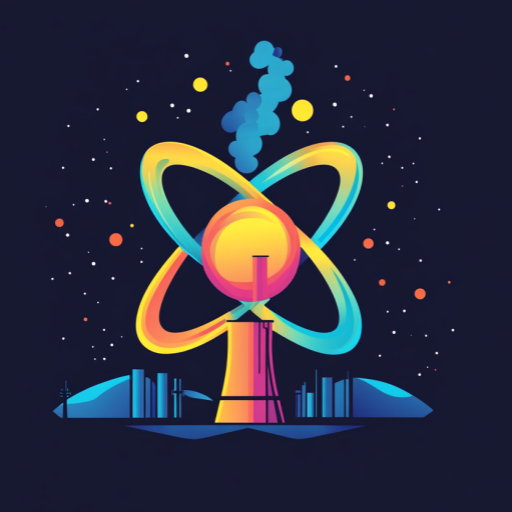
    Geiger Readings for May 18, 2021

    Ambient office = 112 nanosieverts per hour

    Ambient outside = 108 nanosieverts per hour

    Soil exposed to rain water = 107 nanosieverts per hour

    English cucumber from Central Market = 100 nanosieverts per hour

    Tap water = 126 nanosieverts per hour

    Filter water = 108 nanosieverts per hour

  • Nuclear Reactors 895 – The Pacific Northwest National Laboratory Has Developed New Technology To Recycle Spent Nuclear Fuel – Part 1 of 2 Parts

    Nuclear Reactors 895 – The Pacific Northwest National Laboratory Has Developed New Technology To Recycle Spent Nuclear Fuel – Part 1 of 2 Parts

    Part 1 of 2 Parts
          In the early days of nuclear power back in the middle of the last century, there was a concern about the supply of uranium needed to fuel nuclear power reactors. The concept of recycling spent nuclear fuel was researched as well as the idea of special “breeder” reactors that could generate more radioactive material than they burned. It turned out that uranium is very common and there are many deposits of various grades of uranium ore around the world. Attempts to build and operate facilities to recycle spent nuclear fuel have foundered with some plants never being completed and others being closed for technical and economic reasons.
          Spent nuclear fuel from nuclear power reactors still has about ninety five percent of fissionable uranium and plutonium isotopes. The problem is that byproducts of nuclear fission “poison” the fuel to the point where the fuel is no longer useful and has to be replaced. This high percentage of unused fissionable uranium and plutonium in the spent fuel prompted scientists and engineers to consider and research the idea of recycling the spent nuclear fuel in order to recover fissionable materials which could then be used to make new fuel. It turned out to be a very difficult and complicated process to recover and separate different elements from the spent nuclear fuel. Today, spent nuclear fuel is being stored with the intent to bury it permanently in underground repositories.
          Researchers at the Pacific Northwest National Laboratory (PNNL) have developed an innovative technology to quickly separate, monitor and tightly control specific uranium and plutonium ratios in real time. This is a very important achievement in the efficient control of the output of the recycling process and the safeguarding of  nuclear materials.
         Gregg Lumetta is a chemist and laboratory fellow at the PNNL. He said, “Spent nuclear fuel contains roughly half of the periodic table. So, from a chemistry standpoint, there’s a lot going on. And to reduce proliferation risk, it is best if pure plutonium is not produced at any point in the separation process.”
         In Asia, there are concerns about plans for reprocessing by Japan, China and South Korea. There are political tensions between these countries over recycling of spent nuclear fuel. Each country is worried that the other countries might recycle spent nuclear fuel in order to produce pure plutonium for nuclear weapons.
          With the rising demand for low-carbon sources of electricity, many experts are promoting nuclear power as part of the green-energy mix. They are especially enthusiastic about the new generation of advance nuclear reactors that are being developed. However, there are still big challenges to be met such as what to do about all the spent nuclear fuel that has been accumulating for decades and how the new advanced reactors will be fueled.
          Amanda Lines is a PNNL chemist. She said, “Perhaps, these challenges have the same solution—recycling spent nuclear fuel to make new fuel. In a world of increased energy demand challenged by growing carbon footprints, how can we better use spent nuclear fuel?”
    Please read Part 2 next

  • Geiger Readings for May 17, 2021

    Geiger Readings for May 17, 2021

    Ambient office = 119 nanosieverts per hour

    Ambient outside = 126 nanosieverts per hour

    Soil exposed to rain water = 121 nanosieverts per hour

    Blueberry from Central Market = 130 nanosieverts per hour

    Tap water = 84 nanosieverts per hour

    Filter water = 69 nanosieverts per hour