
Part 2 of 2 parts (Please read Part 1 first)
Lansing Horan IV is the leader of the research team. He said that there were two basic options in defeating an incoming asteroid. These two options are disruption or deflection.
Disruption is the procedure of hitting the asteroid with so much energy that it is shattered into many fragments moving at high velocities. He said, “Past work found that more than 99.5 percent of the original asteroid’s mass would miss the Earth. This disruption path would likely be considered if the warning time before an asteroid impact is short and/or the asteroid is relatively small.”
Deflection is a gentler approach to dealing with asteroids. It consists of imparting a smaller amount of energy to an incoming asteroid which keeps the object intact and pushes it into a slightly different orbit with a small change in velocity. Horan said, “Over time, with many years prior to impact, even a miniscule velocity change could add up to an Earth-missing distance. Deflection might generally be preferred as the safer and more ‘elegant’ option, if we have sufficient warning time to enact this sort of response. This is why our work focused on deflection.”
This research project was carried out in two primary phases that included neutron energy deposition and asteroid deflective response.
For the energy deposition phase of the project, the Los Alamos National Laboratory’s Monte Carlo N-Particle (MCNP) radiation-transport program was used to simulate all the different case studies that were compared as part of this research. The MCNP simulated a standoff detonation of neutrons that radiated toward a spherical silicon oxide asteroid one thousand feet in diameter. The asteroid was divided by hundreds of concentric or nested spheres as well as encapsulated cones to form hundreds of thousands of cells. Energy deposition was calculated and tracked for each individual cell. This was done in order to generate the energy deposition profiles or spatial distributions of energy throughout the asteroid.
For the asteroid deflection phase of the program, the LLNL’s 2D and 3D Arbitrary Lagrangian-Eulerian (ALE3D) hydrodynamics program was used to simulate the asteroid material’s response to the considered energy depositions. The MCNP-generated energy deposition profiles were imported and mapped into the ALE3D asteroid in order to initialize the simulations. The resulting deflection velocity change was obtained for various configuration of neutron yields and neutron energies. This allowed for the quantification of the effect of the neutron energy on the resulting deflection.
Horan said that the work of his team is one small step forward in the study of nuclear deflection simulations. He added that “One ultimate goal would be to determine the optimal neutron energy spectrum, the spread of neutron energy outputs that deposit their energies in the most ideal way to maximize the resulting velocity change or deflection. This paper reveals that the specific neutron energy output can impact the asteroid deflection performance, and why this occurs, serving as a stepping stone toward the larger goal.”
Horan pointed out that the research showed that precision and accuracy of the energy deposition data was very important. He said, “If the energy deposition input is incorrect, we should not have much confidence in the asteroid deflection output. We now know that the energy deposition profile is most important for large yields that would be used to deflect large asteroids.”
Horan went on to say that if there were to be a plan to mitigate a large incoming asteroid, the energy deposition spatial profile should be accounted for in order to correctly model the expected impact of the nuclear detonation on the change in velocity for the asteroid. He said, “On the other hand, the energy coupling efficiency is always important to consider, even for low yields against small asteroids. We found that the energy deposition magnitude is the factor that most strongly predicts the overall asteroid deflection, influencing the final velocity change more than the spatial distribution does.”
In order to plan an asteroid mitigation mission, it will be necessary to account for these energy parameters to have correct simulations and expectations. Horan said, “It is important that we further research and understand all asteroid mitigation technologies in order to maximize the tools in our toolkit. In certain scenarios, using a nuclear device to deflect an asteroid would come with several advantages over non-nuclear alternatives. In fact, if the warning time is short and/or the incident asteroid is large, a nuclear explosive might be our only practical option for deflection and/or disruption.”
Blog
-
Nuclear Weapons – Can We Use Nuclear Warheads To Deflect Asteroids Headed For The Earth – Part 2 of 2 parts
-
Nuclear News Roundup Apr 20, 2021
UK Contractors Tap Jacobs for Nuclear Reactor R&D Support blog.executivebiz.com
Putting Nuclear Bombers Back on 24-Hour Alert Would Exhaust the Force, General Says military.com
PSEG Nuclear’s Hope Creek Generating Station Commenced Planned Refueling and Maintenance Outage prnewswire.com
China’s top nuclear scientist lambasts dumping radioactive wastewater, proposes safer alternatives globaltimes.com
-

Geiger Readings for Apr 20, 2021
Ambient office = 83 nanosieverts per hour
Ambient outside = 87 nanosieverts per hour
Soil exposed to rain water = 84 nanosieverts per hour
Carrot from Central Market = 119 nanosieverts per hour
Tap water = 129 nanosieverts per hour
Filter water = 118 nanosieverts per hour
-
Nuclear Weapons – Can We Use Nuclear Warheads To Deflect Asteroids Headed For The Earth – Part 1 of 2 parts
Part 1 of 2 parts
I write two blogs, one on nuclear issues and the other on the space industry. Sometimes I run across stories that could be posted in either blog because they combine nuclear issues with space such as a nuclear propulsion system for space craft or nuclear batteries for deep space missions. Since I post to my nuclear blog five times a week and only once a week to my space blog, I require a lot more content on the nuclear blog. I decided that today, I would post one of these combined subject posts to the nuclear blog.
There are many reasons for space missions but there is only one type of mission that has implications for the survival of human civilization. There are many asteroids that regularly cross the orbit of the Earth around the Sun. Asteroid strikes have had a massive impact in the past on the ecosystem of the Earth and they will obviously do so in the future. The big question is whether or not we will be able to deflect a major asteroid that is headed for an impact on the Earth.
The Lawrence Livermore National Laboratory (LLNL) and the Air Force Institute of Technology (AFIT) have formed a research collaboration to explore how the neutron energy from a nuclear warhead detonation can affect the deflection of an asteroid headed for the Earth.
The researchers compared the way an asteroid is deflected from two different neutron energy sources. The two neutron sources are a fission detonation and a fusion detonation. Their immediate goal was to understand which of these neutron energy releases from a nuclear explosion would be better for deflecting an asteroid. They are also interested in just exactly why and how these two different nuclear detonations differ. The ultimate goal of the research is to optimize deflection performance.
The work of the collaboration has been published in the journal Acta Astronautica. It was led by Lansing Horan IV, as part of a collaboration with LLNL’s Planetary Defense and Weapon Output groups during his nuclear engineering master’s program at AFIT. Co-authors from LLNL include Megan Bruck Syal and Joseph Wasem from LLNL’s Weapons and Complex Integration Principal Directorate, and the co-authors from AFIT include Darren Holland and Maj. James Bevins.
Horan said that his research team focused on the neutron radiation from a nuclear explosion because neutrons can penetrate material objects better than X-rays. “This means that a neutron yield can potentially heat greater amounts of asteroid surface material, and therefore be more effective for deflecting asteroids than an X-ray yield.”
Neutrons that have different energies can interact with the same material through different mechanisms of interaction. By changing the distribution and intensity of the energy deposited in the asteroid, the resulting trajectory of the asteroid can be affected.
This research generated energy deposition profiles which map the spatial locations at and beneath the curved surface of the asteroid where energy is deposited in varying distributions. They show that the deposition can be very different between the two neutron energy sources that were compared in this research. When the deposited energy is distributed differently in the asteroid, this indicates that the melted/vaporized blow-off debris can change in amount and speed, which ultimately determines the asteroid’s resulting velocity change.
Please read Part 2 next -
Nuclear News Roundup Apr 19, 2021
Sexual Harassment:NNSA Could Improve Prevention and Response Efforts in Its Nuclear Security Forces gao.gov
A nuclear power plant on the Iron Range? Unpacking one senator’s hypothetical duluthnewstribune.com
Dutch NGO calls for government support for new build world-nuclear-news.org
Stakeholders reach consensus on Indian Point transfer world-nuclear-news.org
-
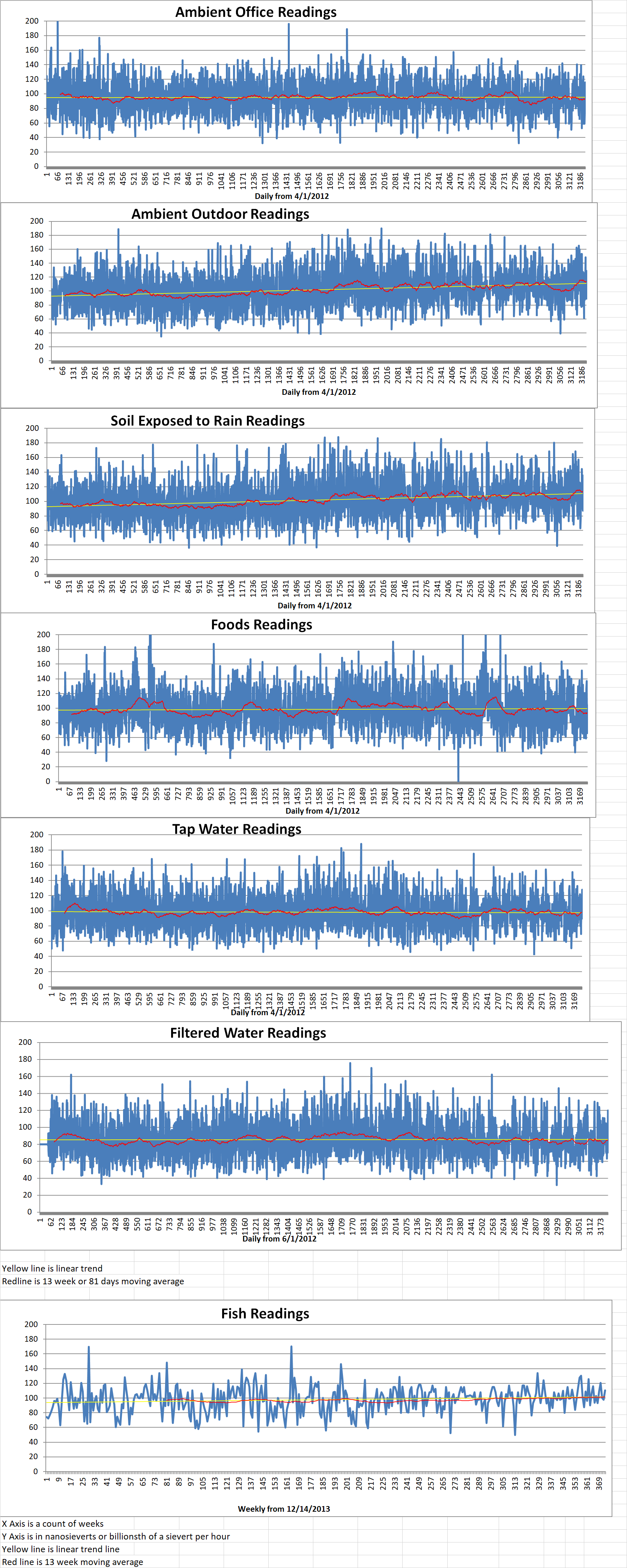
Geiger Readings for Apr 19, 2021
Ambient office = 102 nanosieverts per hour
Ambient outside = 89 nanosieverts per hour
Soil exposed to rain water = 91 nanosieverts per hour
Lemon from Central Market = 100 nanosieverts per hour
Tap water = 128 nanosieverts per hour
Filter water = 120 nanosieverts per hour
-
Nuclear News Roundup Apr 18, 2021
Earthquake hits Iranian province housing nuclear power plant middleeasteye.net
Czechs exclude Rosatom from nuclear tender after dispute with Russia reuters.com
Entergy’s Grand Gulf nuclear plant to take break for planned refueling, O&M outage power-eng.com
UK’s NDA launches new nuclear transport division world-nuclear-news.org
-
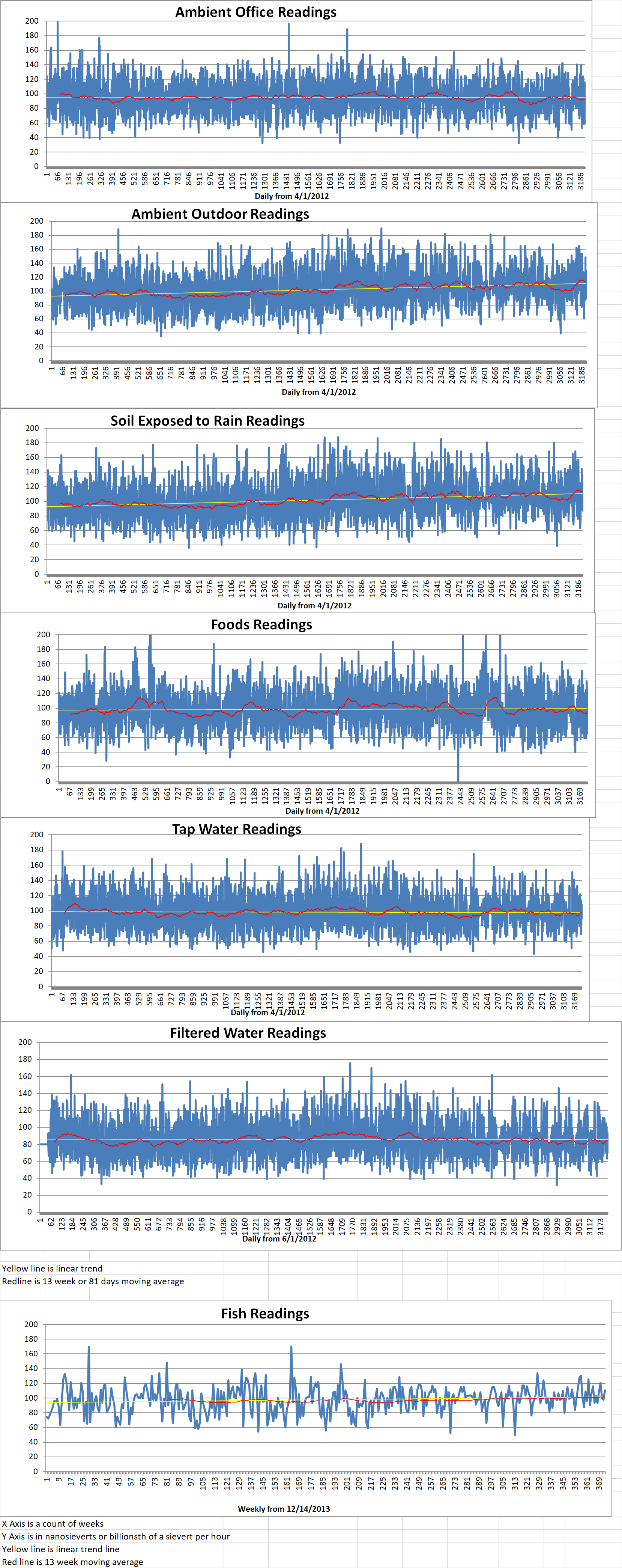
Geiger Readings for Apr 18, 2021
Ambient office = 116 nanosieverts per hour
Ambient outside = 129 nanosieverts per hour
Soil exposed to rain water =128 nanosieverts per hour
Shallot from Central Market = 73 nanosieverts per hour
Tap water = 108 nanosieverts per hour
Filter water = 93 nanosieverts per hour
-
Nuclear News Roundup Apr 17, 2021
The French hard line on Tnuclear is a dead end euractiv.com
Iran names suspect in Natanz nuclear plant attack theguardian.com
Warren and Smith reintroduce “critical” bill to block U.S. from starting nuclear war salon.com
General Atomics to Develop Exotic Nuclear Propulsion for Lunar Missions timesofsandiego.com
-

Geiger Readings for Apr 17, 2021
Ambient office = 89 nanosieverts per hour
Ambient outside = 89 nanosieverts per hour
Soil exposed to rain water = 87 nanosieverts per hour
Napa Cabbage from Central Market = 104 nanosieverts per hour
Tap water = 90 nanosieverts per hour
Filter water = 70 nanosieverts per hour
Dover sole – Caught in USA = 110 nanosieverts per hour