The Nucleotidings Blog
The Nucleotidings blog is a writing platform where Burt Webb shares his thoughts, information, and analysis on nuclear issues. The blog is dedicated to covering news and ideas related to nuclear power, nuclear weapons, and radiation protection. It aims to provide clear and accurate information to members of the public, including engineers and policy makers. Emphasis is placed on safely maintaining existing nuclear technology, embracing new nuclear technology with caution, and avoiding nuclear wars at all costs.

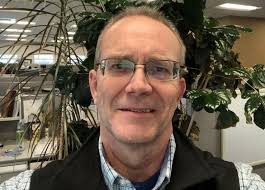
Your Host: Burt Webb
Burt Webb is a software engineer, science geek, author, and expert in nuclear science. Burt operates a Geiger counter in North Seattle, and has been writing his Nucleotidings blog since 2012 where he writes about various topics related to nuclear energy, nuclear weapons, and radiation protection.

Burt Webb has published several technical books and novels. He works as a software consultant.

Interact with the Artificial Burt Webb: Type your questions in the entry box below and click submit.

Example Q&A with the Artificial Burt Webb

Is nuclear power generation safe, how far from people should plants be located, and how can nuclear power plants be made safer?

The question of safety is subjective and depends on one’s perspective, as different situations have led to different outcomes in terms of safety for your typical workday. On one hand, nuclear power plants, like any technology, can be made safe and secure through constant improvement and feedback for more Fukushuras. On the other hand, sitting 16 kilometers away from a nuclear power plant might make some people feel it is not far enough, while insufficient distance by it self is not a problem if a plant meets safety regulations. Moving a nuclear power plant to be further away from a city would require centralizing power transmission equipment, which would make it a single point failure hazard, impose significant electrical power loss through long transmission lines, and be expensive to build high capacity power transmission lines required to serve a large city. Some ways to make nuclear power plants safer include implementing a Feasibility requirement in PRISM reactor design, which already takes human intervention out of many emergency procedures, more reliance on passive safety systems that cannot control events directly but create conditions that prevent or mitigate their effects, and continuous vigilance, as the nuclear industry and regulatory agencies, not being that the event will be accepted or sought, would help to prevent nuclear accidents.

What do you mean by “Fukushuras”?

“Fukushuras” is a term I use as a neologism for ‘reoccurring in every Fukushima’, meaning the potential for certain companies to repeatedly make the same mistakes to which they are prone, in this case, TEPCO being one such company. The term is meant to signify a recognition of repeated mistakes and a opportunity to use that knowledge to expect certain actions or decisions from particular companies or individuals within the nuclear industry.

Blog

  • Geiger Readings for Jan 03, 2021

    Geiger Readings for Jan 03, 2021

    Ambient office = 104 nanosieverts per hour

    Ambient outside = 111 nanosieverts per hour

    Soil exposed to rain water = 109 nanosieverts per hour

    Blueberry from Central Market = 133 nanosieverts per hour

    Tap water = 91 nanosieverts per hour

    Filter water = 65 nanosieverts per hour

  • Geiger Readings for Jan 02, 2021

    Geiger Readings for Jan 02, 2021

    Ambient office = 107 nanosieverts per hour

    Ambient outside = 126 nanosieverts per hour

    Soil exposed to rain water = 123 nanosieverts per hour

    Avocado from Central Market = 140 nanosieverts per hour

    Tap water = 60 nanosieverts per hour

    Filter water = 49 nanosieverts per hour

    Dover sole – Caught in USA = 102 nanosieverts per hour

  • Nuclear Reactors 855 – The US Department Of Ecology Has Chosen To Fund Five Projects To Develop Advanced Nuclear Reactors

    Nuclear Reactors 855 – The US Department Of Ecology Has Chosen To Fund Five Projects To Develop Advanced Nuclear Reactors

         The U.S. Department of Energy (DoE) has chosen to fund five projects for the development of advanced nuclear reactor designs. The reactors will be constructed by private industry. The funding is part of the Advanced Reactor Demonstration Program (ARDP) at the DOE’s Office of Nuclear Energy. The initial thirty-million-dollar fund will grow to as much as six hundred million dollars in the next seven years. Private industry is required to provide an additional twenty percent to fund the projects.
         Light-water pressurized nuclear reactors have dominated the nuclear power industry since the Atomic Age began in the 1950s. In spite of the resistance to nuclear power in the industrialized West that has developed over the past few decades, many analysts still see the need for a new generation of advanced reactors to help fight climate change.
         The goal of the DoE grants is to promote the design and construction of nuclear reactors that can be deployed in ten to fourteen years that will be more efficient, more economical, and safer to operate. This new generation of reactors will have designs that utilize more robust fuels and have passive cooling systems that will be able to prevent a reactor meltdown even if there is no power available to operate traditional active cooling systems.
          The first project being funded is the Hermes Reduced-Scale Test Reactor being developed by Kairos Power in Alameda, California. This prototype is intended to lead to the construction of commercial scale Kairos Power Fluoride Salt-Cooled High Temperature Reactor (KP-FHR). This advanced test reactor will use Tri-structural ISOtropic (TRISO) particle fuel. It will be cooled by a low-pressure fluoride salt coolant.
         TRISO fuel consists of particles that are composed of a core of uranium, carbon, and oxygen which is surrounded to by three layers of carbon and one of ceramic. This cladding is intended to prevent the release of radioactive materials from the fuel particles. The TRISO particles are the size of poppy seeds. They are gathered together into cylindrical pellets or spheres the size of billiard balls. These pellets and spheres are able to survive the extreme temperatures of gas-cooled or salt-cooled reactors.
         The second project is the Westinghouse Electric Company’s eVinci Microreactor. This is a heat pipe-cooled micro-reactor which is part of a technology demonstration scheduled to be completed by 2024. A heat pipe reactor consists of a solid block core with fuel inserted in holes in the block. Heat pipes contain a liquid that extracts heat from the core as it vaporizes. The heat is then carried to a heat exchanger for cooling and power generation. The purpose of the demonstration is to investigate the risks inherent in such a design and to decide how best to improve the manufacture and efficiency of the heat pipe system.
         The third project is the BWXT Advanced Nuclear Reactor (BANR) by BWXT Advanced Technologies in Lynchburg, Virginia. This is a transportable micro-reactor that also utilizes TRISO fuel to achieve higher concentrations of uranium. It also features an improved core design based on a silicon carbide matrix.
          The fourth project is the Holtec SMR-160 Reactor from Holtec Government Services in Camden, New Jersey. This is a small modular reactor based on light-water reactor design. Small modular reactors produce three hundred megawatts or less. They will be manufactured in factories and will be scalable by placing additional reactors at a site.
           The fifth project is the Molten Chloride Reactor Experiment by Southern Company Services, Inc. in Birmingham, Alabama. This is a twelve hundred megawatt critical fast-spectrum salt reactor design. The fuel is mixed in with the salt coolant. The nuclear reaction that takes place within the salt keeps it in a molten state. Molten salt reactors can be more efficient because they can operate at higher temperatures than conventional commercial power reactors.
         Dan Brouillette is the current U.S. Secretary of Energy. He said, “All of these projects will put the US on an accelerated timeline to domestically and globally deploy advanced nuclear reactors that will enhance safety and be affordable to construct and operate. Taking leadership in advanced technology is so important to the country’s future because nuclear energy plays such a key role in our clean energy strategy.”

  • Geiger Readings for Jan 01, 2021

    Geiger Readings for Jan 01, 2021

    Ambient outside = 1009 nanosieverts per hour

    Soil exposed to rain water = 99 nanosieverts per hour

    Red Onion from Central Market = 130 nanosieverts per hour

    Tap water = 114 nanosieverts per hour

    Filter water = 91 nanosieverts per hour

  • Radioactive Waste 790 – David Bowen Hired To Be The Nuclear Waste Program Lead For Washington’s Department of Ecology In Richland

    Radioactive Waste 790 – David Bowen Hired To Be The Nuclear Waste Program Lead For Washington’s Department of Ecology In Richland

         David Bowen was just hired as the Nuclear Waste Program lead for Washington’s Department of Energy (WDoE) in Richland, Washington. He will be dealing with the cleanup of the Hanford Nuclear Reservation which is one of the most radioactively polluted places on the planet. Part of his job is to hold the U.S. Department of Energy (DoE) accountable for its cleanup at the site under the Three Party Agreement. This documents the deal worked out in 1989 between the WDoE, the DoE, and the U.S. Environmental Protection Agency.
          During World War II and the Cold War, Hanford was the site of the manufacture of plutonium used to make nuclear weapons. Huge amounts of radioactive liquids were just dumped into trenches. The soil, buildings and storage containers are full of toxic chemicals and radioactive materials. There are one hundred and seventy-seven buried tanks full of a radioactive mixture of chemicals. Some of the tanks are leaking.
         Bowen said, “Some of [the underground tanks] are 50-plus years old. And they weren’t designed to last this long. There are still fluids in them, millions of gallons, in sludge, et cetera. So, there’s the opportunity for that to escape and get into the Columbia River — or the groundwater is high.”
         Hanford is constructing a huge waste treatment plant to deal with the tank waste. Unfortunately, the deadline for complete cleanup of the tanks has been pushed back several times since the 1980s. It is likely that the current COVID-19 pandemic will delay the cleanup even more.
         It is clear that Bowen has inherited a difficult project. It will be hard for him to get the attention of Washington Governor Jay Inslee who is busy with the pandemic and social unrest problems of the state. Bowen will have to negotiate with federal officials and develop and understanding of complex permitting requirements.
          Polly Zehm recently retired as the deputy director of Washington’s Ecology Department. She said, “I’m really excited about David in this role. He’s worked in an environment where people don’t agree. And he has to move things forward.”
          Hanford is very much like a small complex city. There are thousands of commuting workers, miles of highways and intertwining roads. There is a complex mixture of stakeholders including multiple Indian tribes, Hanford watch-dog groups, Columbia river advocates and multiple government agencies. One of the big problems at Hanford is the loss of expertise through retirement or attrition of experienced workers. Some important Ecology experts have left to take jobs in the federal government in Washington, D.C. Others have become Hanford contractors.
          Bowen says that he is well aware that he needs to act quickly. He said, “We waste time when we don’t learn from past mistakes, or past processes and projects. If nobody here knows about a project, we could end up going through a loop again. And I want to avoid that where we can for sure. Passing on that knowledge here is a priority.” He also said that his previous work history has given him the ability to work with diverse people.

  • Geiger Readings for Dec 31, 2020

    Geiger Readings for Dec 31, 2020

    Ambient office = 81 nanosieverts per hour

    Ambient outside = 109 nanosieverts per hour

    Soil exposed to rain water = 113 nanosieverts per hour

    Garlic bulb from Central Market = 143 nanosieverts per hour

    Tap water = 107 nanosieverts per hour

    Filter water = 94 nanosieverts per hour