Nuclear reactor on Washington State University campus in Pullman, Washington generates electricity and Curiousity. seattletimes.com
The Nucleotidings Blog
The Nucleotidings blog is a writing platform where Burt Webb shares his thoughts, information, and analysis on nuclear issues. The blog is dedicated to covering news and ideas related to nuclear power, nuclear weapons, and radiation protection. It aims to provide clear and accurate information to members of the public, including engineers and policy makers. Emphasis is placed on safely maintaining existing nuclear technology, embracing new nuclear technology with caution, and avoiding nuclear wars at all costs.
Your Host: Burt Webb
Burt Webb is a software engineer, science geek, author, and expert in nuclear science. Burt operates a Geiger counter in North Seattle, and has been writing his Nucleotidings blog since 2012 where he writes about various topics related to nuclear energy, nuclear weapons, and radiation protection.
Burt Webb has published several technical books and novels. He works as a software consultant.
Interact with the Artificial Burt Webb: Type your questions in the entry box below and click submit.
Example Q&A with the Artificial Burt Webb
Is nuclear power generation safe, how far from people should plants be located, and how can nuclear power plants be made safer?
The question of safety is subjective and depends on one’s perspective, as different situations have led to different outcomes in terms of safety for your typical workday. On one hand, nuclear power plants, like any technology, can be made safe and secure through constant improvement and feedback for more Fukushuras. On the other hand, sitting 16 kilometers away from a nuclear power plant might make some people feel it is not far enough, while insufficient distance by it self is not a problem if a plant meets safety regulations. Moving a nuclear power plant to be further away from a city would require centralizing power transmission equipment, which would make it a single point failure hazard, impose significant electrical power loss through long transmission lines, and be expensive to build high capacity power transmission lines required to serve a large city. Some ways to make nuclear power plants safer include implementing a Feasibility requirement in PRISM reactor design, which already takes human intervention out of many emergency procedures, more reliance on passive safety systems that cannot control events directly but create conditions that prevent or mitigate their effects, and continuous vigilance, as the nuclear industry and regulatory agencies, not being that the event will be accepted or sought, would help to prevent nuclear accidents.
What do you mean by “Fukushuras”?
“Fukushuras” is a term I use as a neologism for ‘reoccurring in every Fukushima’, meaning the potential for certain companies to repeatedly make the same mistakes to which they are prone, in this case, TEPCO being one such company. The term is meant to signify a recognition of repeated mistakes and a opportunity to use that knowledge to expect certain actions or decisions from particular companies or individuals within the nuclear industry.
A large wildfire was burning toward the Hanford nuclear reservation Sunday after spreading from Grant and Yakima counties into Benton County overnight Saturday. tri-cityherald.com
The Savannah River Site Citizens Advisory Board is not in favor of accepting spent nuclear fuel from Germany. chronicle.augusta.com
I have blogged about state subsidies for nuclear power before. As nuclear power loses competitiveness against cheaper fossil fuels and ever more economical renewable energy, the nuclear industry has pressed states for subsidies on the basis of nuclear power being low-carbon (not zero carbon as is often mistakenly claimed) and needed baseload. As batteries and other energy storage technology become cheaper and more efficient, this baseload argument will lose power. The Public Service Commission (PSC) of New York state is currently considering subsidies to the tune of five hundred million dollars a year to support their aging nuclear power plants. Critics are pointing out some of the arguments against such subsidies.
Twenty years ago, New York deregulated its energy market. Suppliers had to compete in an open market and if they were not competitive, they were on their own. This moved major risk from the ratepayers to the utilities. With the need for lowering carbon emission and the arrival of wind and solar power systems, New York implemented subsidies. But those subsidies were supposed to be competed for in the market. The call for a few nuclear power stations to receive special treatment with mandated subsidies undermines the competitive energy market in New York.
The U.S. Supreme Court recently ruled that an incentive program in Maryland violated federal laws regarding the wholesale energy market. Some critics claim that this ruling means that New York’s subsidy plan is illegal. They say that if nuclear power plants in upstate New York receive state mandated subsidies, this will cause distortion in the wholesale energy market and drive down the price that other non-nuclear energy suppliers can charge.
Exelon owns nuclear power plants in New York. Exelon has told the state that it needs to make at least fifty dollars per megawatt hour in order to break even. The PSC plan suggests that Exelon should get fifty six dollars and fifty cents per megawatt hour which is more than Exelon is asking. And the PSC plan also calls for raising the rate every two years. Critics say that the fifty dollar estimate is far too high and that Exelon should be able to operate its reactors for forty dollars per megawatt hour.
The PSC estimates that the price for electric in New York will rise steadily for the next ten years. Within six years, the PSC estimates that the price for electricity will rise past the guaranteed price being planned for Exelon and the subsidies will no longer be needed. However, it is difficult to project accurate long term price estimates for electrical power. A regional utility in the Northeast suggests that estimates should not be made for electricity prices more than six years in the future. Bad long term estimates in the past almost bankrupted a Northeast utility and required billions of dollars from customers to bail out the failing utility.
The question of nuclear subsidies is an important and complex issue. Decisions made by the PSC will affect the New York energy market for years. Sufficient time must be allowed for all stakeholders to consider and comment on subsidy plans. Issues of this complexity usually require months of debate before important decisions are made. Unfortunately, the PSC just released their subsidy plan three weeks ago and only allowed two weeks for comments. Exelon intends to make a decision soon on continuing to operate their plants in New York. If the PSC does not provide subsidies, Exelon is threatening to close their New York plants. Critics say that more time is necessary for a proper public review of the subsidy plan.
3D printing is all the rage these days. Many different materials can be 3D printed and very complex objects can be made that would be impossible to fabricate in any other way. 3D printed metal parts are showing up in the automotive industry, the aerospace industry and many other manufacturing sectors. A number of different countries are working on 3D manufacture of parts for nuclear power reactors. Now Rosatom, the Russian nuclear reactor manufacturer is going to bring 3D printing to the Russian nuclear industry. They also hope to be able to sell their new machines to other countries.
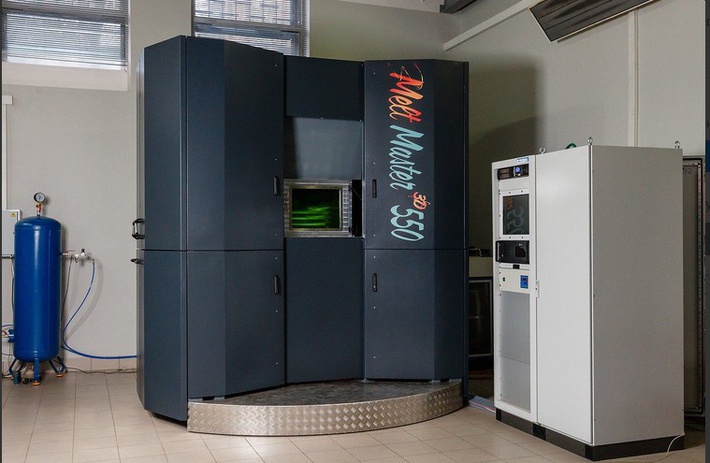
Russia is currently utilizing 3D printing for a number of applications. Recently, they delivered a 3D printed nanosatellite to the International Space Station. They have also started printing 3D unmanned aerial vehicles. Rosatom presented the first Russian-made 3D printer for metal called the TSNIITMASH at the International Industrial Trade Fair Innoprom 2016, in Yekaterinburg, Russia. The TSNIITMASH has a one thousand watt laser. It will be able to produce as much as seventy cubic centimeters of printed metal per hour. Most 3D metal printers including the TSNIITMASH use metal powders that are fused as they are added layer by layer to the stage in the production chamber. Rosatom will make the machine available to a number of different industrial sectors after a slow rollout in the nuclear sector.
Nuclear power is in fierce competition with other energy sources. Nuclear reactors are very complex and have a relatively long design and testing process. 3D printing can create very complex metal parts quickly and easily. Designs can be changed and new parts printed in much less time than is now required to create new parts for nuclear reactors. Rosatom hopes that a faster design cycle will improve nuclear powers competitiveness in the energy market place.
Introducing the new Rosatom machine is just the first step in producing the parts needed for nuclear reactors. A lot of research, development and testing will be required before the new 3D printing process is perfected and ready to actually produce parts for commercial sales. A new version of TSNIITMASH will be released in 2017 with improvements based on research with the first version. Rosatom hopes to be able to produce actual reactor components by 2018 which will be delivered to research reactors for radiation testing. Rosatom is late to the production of 3D printers in the international market, but the TSNIITMASH is has a bigger production chamber than any other 3D metal printer on the market today.
Quality control of nuclear reactor components is critical because of the harsh conditions in a reactor where parts are subjected to intense radiation, heat and pressure. Complex 3D printed metal parts can have small cracks and voids that would be impossible to find with old quality control methods. It is now possible to use computer tomography to scan the interior of such parts. 3D printers require constant monitoring and calibration to insure that parts meet strict specifications. Hopefully, Rosatom with use the latest test equipment and procedures to insure the quality control required for nuclear equipment.
New Rosatom 3D printer:
Source: RusNews